White Sapphire Stud Earrings vs Diamonds: A Material Comparison
Compare white sapphire stud earrings to diamonds. Discover hardness, brilliance, pricing, and metal pairings to make the best choice.

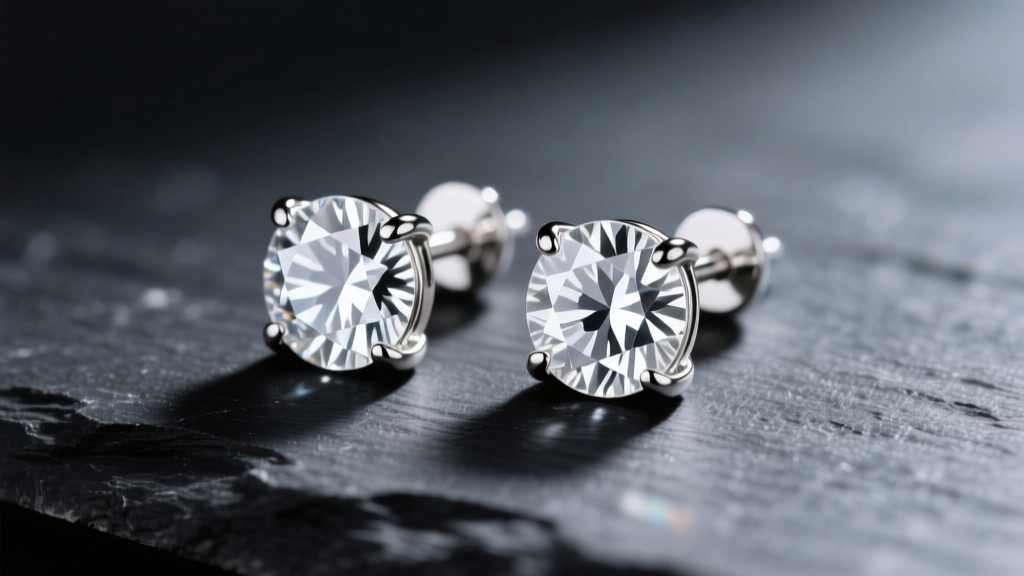
The Rise of the White Sapphire Alternative
When building a fine jewelry collection, the search for the perfect everyday stud often leads to a crossroads: diamond or white sapphire? White sapphire stud earrings have surged in popularity as a sophisticated, budget-friendly alternative to diamonds. However, treating white sapphire as a mere 'diamond simulant' is a disservice to its unique gemological profile. As a naturally occurring (and lab-grown) variety of corundum, white sapphire possesses distinct optical and physical properties that dictate how it should be cut, set, and maintained. In this comprehensive material comparison, we dissect the exact physics, durability metrics, and value propositions of white sapphire stud earrings versus their diamond counterparts to help you make an informed, expert-level purchasing decision.
Mohs Hardness & Absolute Durability
The most common selling point for white sapphire is its hardness. On the Mohs scale of mineral hardness, sapphire ranks at a 9, second only to diamond at 10. However, the Mohs scale is ordinal and logarithmic, not linear. In absolute terms (measured by Vickers or Knoop indentation testing), a diamond is actually four to five times harder than a sapphire. According to the Gemological Institute of America (GIA), corundum's exceptional hardness still makes it highly resistant to scratching from everyday environmental dust, which contains quartz (Mohs 7). This makes white sapphire stud earrings incredibly safe for daily wear in the earlobe, where impacts are less frequent than on the hands.
Toughness and Cleavage Planes
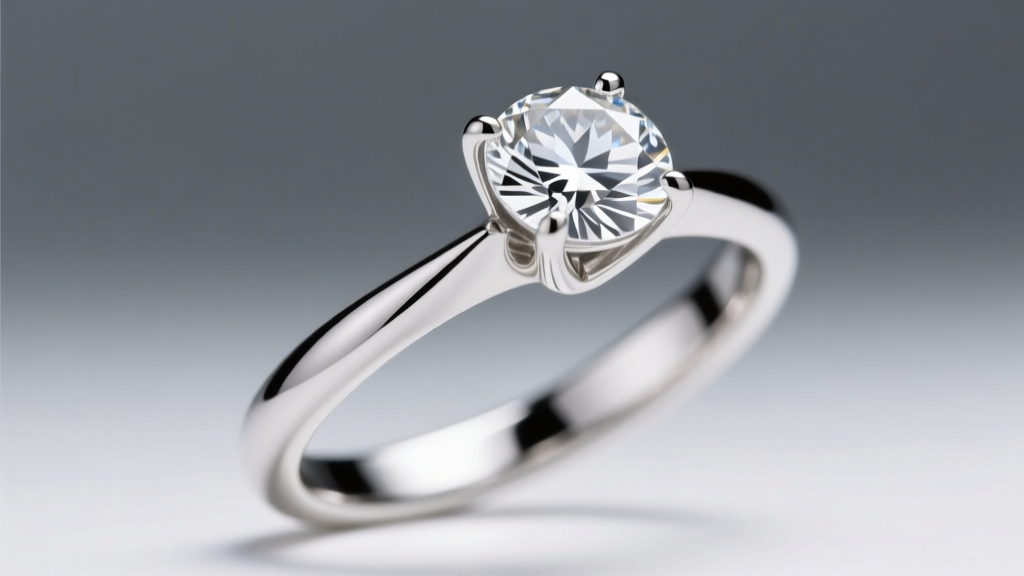
Hardness measures scratch resistance, but toughness measures resistance to chipping and breaking. Here, sapphire holds a distinct advantage in certain scenarios. Diamonds have four perfect cleavage planes, meaning a sharp blow at the right angle can split the stone. White sapphire has no true cleavage planes. While it can still fracture under extreme force, its structural integrity makes it highly resilient in secure settings like the classic four-prong martini or bezel settings commonly used for studs.
Optical Properties: Brilliance, Fire, and Scintillation
The visual difference between white sapphire and diamond comes down to two critical optical metrics: Refractive Index (RI) and Dispersion.
- Refractive Index (Brilliance): Diamond has an RI of 2.42, while white sapphire's RI is 1.76 to 1.77. This means diamond bends light much more sharply, creating that signature 'mirror-like' brilliance.
- Dispersion (Fire): Diamond's dispersion is 0.044, creating vivid rainbow flashes. White sapphire's dispersion is only 0.018, meaning it lacks 'fire' and instead offers a crisp, icy, monochromatic sparkle.
Because of its lower RI, white sapphire requires different cutting proportions than diamond. If a lapidary cuts a white sapphire with the shallow pavilion angles used for diamonds, light will leak out the bottom, causing a washed-out 'windowing' effect. High-quality white sapphire stud earrings must be cut with steeper pavilion angles to achieve total internal reflection. Poorly cut white sapphires often look milky or glassy—a flaw to avoid at all costs.
Pricing & Value: What You Actually Pay For
The financial argument for white sapphire stud earrings is undeniable, especially with the advent of modern lab-grown corundum. Below is a comparative pricing matrix for 2026 market averages, illustrating the stark contrast in value retention and initial capital outlay.
| Material | 0.50 ct Total Weight | 1.00 ct Total Weight | 2.00 ct Total Weight |
|---|---|---|---|
| Natural Diamond (VS1/G) | $1,200 - $1,800 | $3,500 - $6,000 | $10,000 - $18,000 |
| Natural White Sapphire | $300 - $600 | $800 - $1,500 | $2,500 - $4,500 |
| Lab-Grown White Sapphire | $40 - $80 | $80 - $150 | $150 - $300 |
Note: Lab-grown white sapphires are chemically and optically identical to natural ones but are created via the Czochralski or Verneuil processes, resulting in flawless clarity at a fraction of the cost.
Best Metal Pairings for White Sapphire Studs
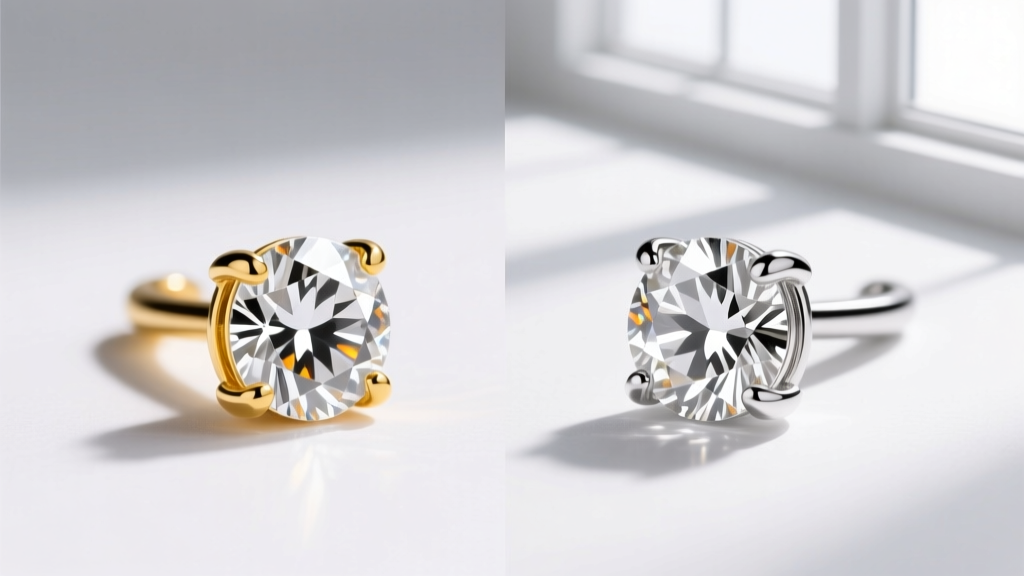
Because white sapphire lacks the internal brilliance to mask external color influences, the metal you choose drastically alters the stone's perceived color.
- Platinum & White Gold (Rhodium-Plated): The absolute best choices. The cool, reflective white metal bounces light back into the stone, enhancing its icy, colorless appearance.
- Yellow Gold: While aesthetically striking, yellow gold will reflect its warm hue into the transparent sapphire, making the stone appear slightly yellow or 'champagne' toned. If you prefer yellow gold, opt for a setting with a solid white metal basket or backing behind the stone.
- Rose Gold: Similar to yellow gold, it will impart a pinkish hue. This can be a deliberate stylistic choice, but it defeats the purpose if you are seeking a pure 'white' diamond alternative.
Maintenance: The Oleophilic Factor
A critical, often overlooked property of corundum is its oleophilic (oil-attracting) nature. White sapphires attract skin oils, lotions, and hairspray faster and more stubbornly than diamonds. Because sapphire relies on precise light return rather than sheer dispersion, even a microscopic layer of oil on the pavilion will cause the stone to look dull, milky, and lifeless. The International Gem Society (IGS) recommends regular cleaning to maintain brilliance. For untreated or heat-treated white sapphire studs, an ultrasonic cleaner is perfectly safe and highly effective at removing grease from beneath the girdle. Avoid ultrasonics only if your stones are fracture-filled, which is rare in high-quality white sapphires but common in lower-grade rubies and blue sapphires.
Expert Buying Checklist
When evaluating white sapphire stud earrings, use this framework to ensure you are getting a high-quality pair:
- Clarity: Demand 'Eye-Clean' or better. Because white sapphires are transparent, inclusions (like rutile silk) are highly visible and will scatter light, causing milkiness.
- Cut Quality: Look for stones with excellent symmetry. Avoid stones that look overly flat (shallow) or excessively bulky (deep), as both ruin light return.
- Origin Disclosure: Ensure the seller explicitly states whether the stones are natural, lab-grown, or simulated (like cubic zirconia). Lab-grown sapphire is a phenomenal, durable choice, but you should not pay natural prices for it.
- Setting Security: Ensure the prongs are thick enough to protect the girdle. V-prongs are recommended if the stud features a princess or pear cut to protect the fragile corners.
"White sapphire is not a diamond substitute; it is a distinct gemstone that offers a subtle, elegant, and understated brilliance for those who appreciate a softer, icy sparkle over aggressive rainbow fire."
Final Verdict
White sapphire stud earrings are an exceptional choice for the pragmatic luxury buyer. They offer 99% of the daily-wear durability of diamonds at a fraction of the cost, provided you select a precision-cut stone and commit to a regular cleaning routine to combat oil buildup. Whether you opt for the geological romance of a natural mined stone or the flawless, budget-friendly reality of lab-grown corundum, white sapphire remains a premier material for timeless, elegant earlobe styling.


