Expert Care & Cleaning Guide for Blue Opal Stud Earrings
Learn how to safely clean, store, and maintain your blue opal stud earrings. Expert tips on preventing cracks, cloudiness, and tarnish.

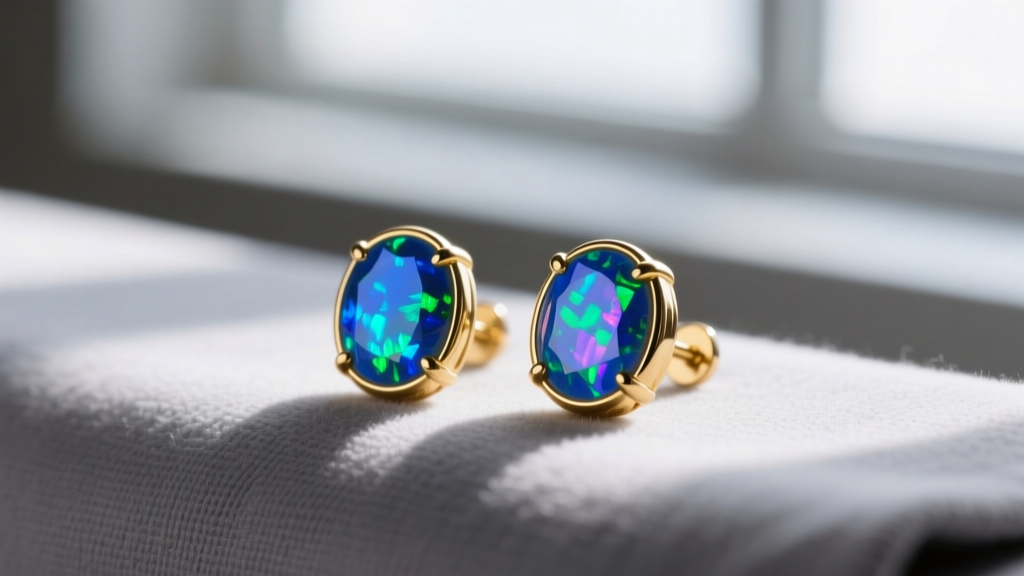
Blue opal stud earrings are a captivating addition to any jewelry collection, offering a mesmerizing play-of-color that shifts from deep ocean blues to vibrant flashes of green and violet. However, opals are fundamentally different from crystalline gemstones like diamonds or sapphires. They are non-crystalline, hydrated silica, meaning they contain anywhere from 3% to 21% water within their microscopic structure. This unique composition gives them their legendary optical phenomena but also makes them exceptionally vulnerable to improper care, sudden temperature changes, and harsh chemicals.
If you own a pair of blue opal studs, whether they are solid Australian opals, lab-created synthetics, or assembled triplet stones, standard jewelry cleaning methods can permanently ruin them. In this comprehensive guide, we break down the exact protocols for cleaning, storing, and maintaining your blue opal stud earrings to ensure their structural integrity and optical brilliance for decades to come.
The Anatomy of Your Blue Opal Studs: Solid vs. Assembled
Before you apply any water or cleaning solution to your earrings, you must identify the exact construction of your opals. The Gemological Institute of America (GIA) categorizes opal jewelry into three main types, and the cleaning rules change drastically depending on which type you own.
Solid Opals
A solid opal is a single, continuous piece of natural or lab-created opal. While they are the most valuable, they are also highly sensitive to extreme dryness and sudden thermal shock, which can cause 'crazing'—a network of fine, permanent cracks that ruins the stone's structural integrity and visual appeal.
Doublets and Triplets
Because solid blue opals are rare and expensive, many stud earrings on the market feature doublets or triplets. A doublet consists of a thin slice of opal glued to a dark backing (often black onyx or potch) to enhance the blue color. A triplet adds a third layer: a clear, domed cap of quartz or glass glued on top to protect the soft opal. Critical Warning: If your blue opal studs are triplets or doublets, you must never submerge them in water. Prolonged exposure to moisture will degrade the adhesive resin, causing the layers to separate and the stone to take on a cloudy, white appearance that cannot be reversed.
The Step-by-Step Cleaning Protocol
For routine maintenance, your goal is to remove skin oils, lotions, and environmental dust without compromising the stone's hydration or the setting's adhesive. Follow this precise methodology for safe cleaning.
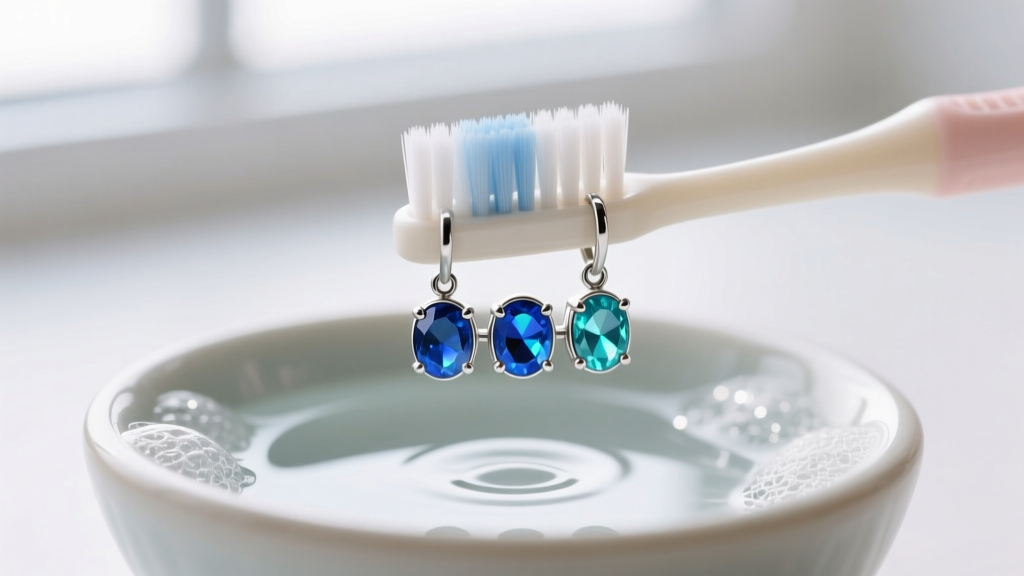
Step 1: Prepare a Mild Cleaning Solution
Fill a small glass bowl with lukewarm water. The temperature is critical: water that is too hot or too cold can induce thermal shock and cause solid opals to craze. Add exactly one drop of phosphate-free, mild dish soap (such as original Dawn). Avoid any soaps containing moisturizers, citrus extracts, or harsh degreasers, as these can strip the natural moisture from the opal or cloud the quartz cap of a triplet.
Step 2: The Wipe-Down Method (For Triplets/Doublets)
If your earrings are assembled stones, do not soak them. Instead, dip a lint-free microfiber cloth into the soapy solution, wring it out until it is only slightly damp, and gently wipe the surface of the opal and the metal setting. Use a dry cotton swab to carefully clean the crevices where the metal meets the stone.
Step 3: The Gentle Brush Method (For Solid Opals Only)
If you are certain your studs are solid opals, you may briefly dip them into the solution. Use an extra-soft baby toothbrush to gently agitate the dirt around the prongs or bezel. Opals rank between 5.5 and 6.5 on the Mohs hardness scale, making them softer than quartz and dust (which often contains silica particles). Scrubbing with a stiff brush can leave microscopic scratches that dull the play-of-color over time.
Step 4: Rinsing and Drying
Rinse the earrings briefly under a slow stream of lukewarm water. Immediately pat them dry with a soft, absorbent microfiber cloth. Never use a hairdryer or place them on a heated surface to speed up the drying process.
Critical Hazards: What to Avoid at All Costs
The most common way opal earrings are destroyed is through the use of automated or chemical jewelry cleaners. To protect your investment, strictly avoid the following:
- Ultrasonic Cleaners: The high-frequency cavitation bubbles generated by ultrasonic machines will easily shatter solid opals and violently separate the glued layers of triplets and doublets.
- Steam Cleaners: The intense, localized heat from a jewelry steam cleaner will instantly cause thermal crazing in natural opals and melt the adhesive resins in assembled stones.
- Harsh Chemicals: Bleach, ammonia, and commercial silver dips will permanently etch the surface of the opal, destroying its polish and leaving a chalky, white residue.
- Extreme Dryness: Leaving your opal studs in direct sunlight, near a radiator, or in a safety deposit box for years without humidity control will draw the water out of the silica structure, leading to irreversible cracking.
Maintaining the Metal Setting
Blue opal stud earrings are typically set in 925 sterling silver, 14k gold, or platinum. The metal requires its own specific care regimen, which must be balanced against the fragility of the opal.
Sterling silver is highly prone to tarnishing (silver sulfide formation) when exposed to sulfur in the air and skin oils. However, you cannot use liquid silver dips or abrasive polishing pastes, as these will ruin the opal. Instead, use a treated, anti-tarnish polishing cloth. Gently rub the metal setting, being incredibly careful not to snag the cloth on the prongs or scratch the opal surface with any tarnish residue transferred to the cloth.
| Cleaning Agent | Effect on Solid Opal | Effect on Triplet/Doublet | Effect on Sterling Silver |
|---|---|---|---|
| Mild Soap & Lukewarm Water | Safe (Brief exposure) | Unsafe (Causes delamination) | Safe |
| Ultrasonic Machine | Destructive (Shatters) | Destructive (Shatters) | Safe |
| Commercial Silver Dip | Destructive (Etches) | Destructive (Etches) | Effective (Removes tarnish) |
| Steam Cleaner | Destructive (Crazing) | Destructive (Melts glue) | Safe |
| Anti-Tarnish Cloth | Safe (Avoid friction) | Safe (Avoid friction) | Safe and Effective |
Proper Storage to Prevent Crazing and Scratching
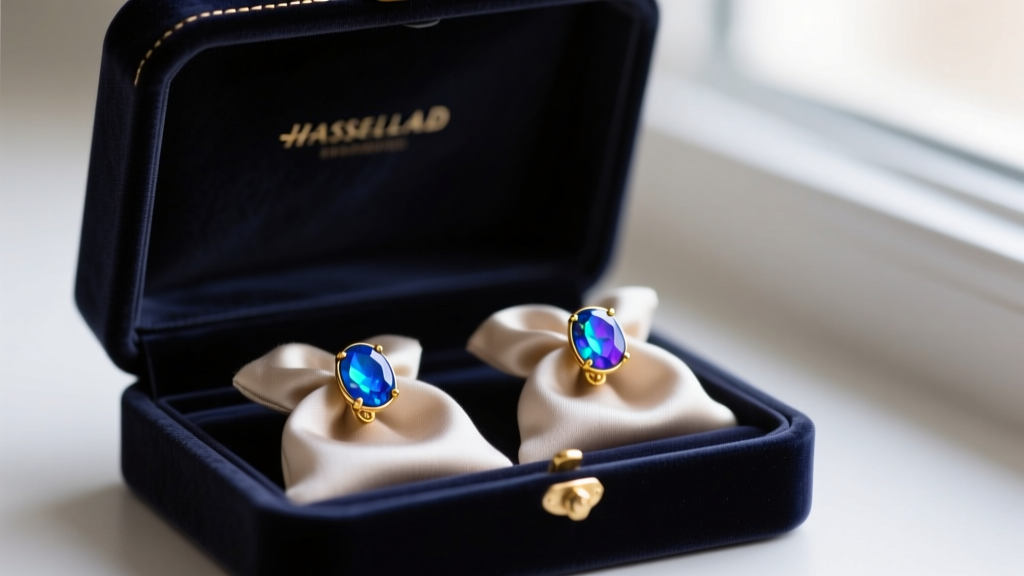
How you store your blue opal stud earrings when they are not being worn is just as important as how you clean them. Because opals are relatively soft (Mohs 5.5-6.5), they will easily be scratched if tossed into a jewelry box alongside diamonds (Mohs 10), sapphires (Mohs 9), or even quartz (Mohs 7).
Always store your opal studs in individual, soft silk or flannel pouches. For solid opals living in arid climates or during winter months when indoor heating drastically drops humidity levels, the American Gem Society (AGS) recommends a specific storage trick to prevent crazing. Place a slightly damp (not wet) cotton ball inside a small, sealed ziplock bag along with your opal earrings. This creates a micro-environment with stable humidity, ensuring the opal retains its vital water content without being exposed to liquid water.
Identifying Early Signs of Damage
Catching damage early can sometimes save a stone or at least prevent further deterioration. Inspect your earrings under a bright, direct LED light every few months.
- Crazing: Look for a web-like pattern of internal fractures. If you see this, the opal has dried out or suffered thermal shock. Stop wearing them and consult a gemologist.
- Cloudiness (Triplets): If the clear dome of your triplet looks foggy or you see condensation trapped under the glass, the seal has failed. A skilled jeweler may be able to carefully remove the cap, dry the opal, and re-glue it, though this is a delicate and costly procedure.
- Loss of Polish: If the surface looks dull or scratched, the opal needs to be professionally re-polished using specialized cerium oxide compounds. Do not attempt this at home.
When to Seek Professional Maintenance
Opal stud earrings are frequently set in prong or bezel settings. Prongs can wear down and loosen over time, posing a massive risk because an opal that falls out and hits a hard floor will almost certainly shatter or chip due to its cleavage properties.
Expert Tip: Have a professional jeweler inspect the prongs or bezel of your opal studs every 12 to 18 months. Ensure they use a laser welder or low-heat soldering techniques if the setting needs tightening, as traditional jeweler's torches can easily overheat the metal and transfer fatal amounts of heat directly into the opal stone.
By understanding the unique chemical and physical properties of your blue opal stud earrings, you can avoid the common pitfalls that destroy these delicate gems. Stick to gentle, manual cleaning methods, respect the boundaries of assembled stones, and prioritize humidity-controlled storage to keep their brilliant blue flashes alive for a lifetime.


