Expert Guide to Blue and Pearl Earrings: Grading & Settings
Master the material science of blue and pearl earrings. Explore Mohs hardness, grading matrices, gauge sizes, and setting techniques for fine jewelry.

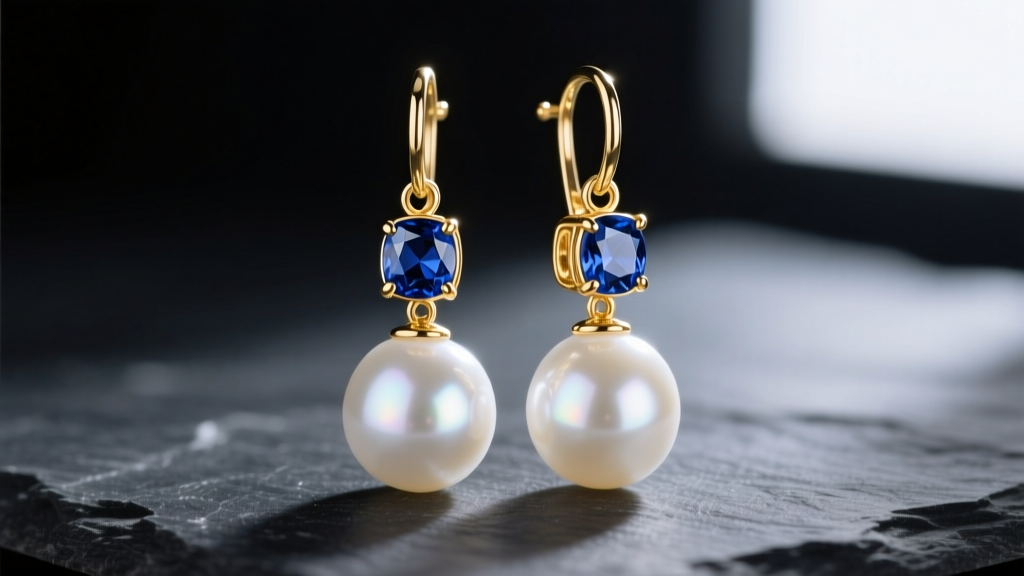
Designing and selecting high-quality blue and pearl earrings requires far more than an eye for color contrast. It demands a rigorous understanding of gemological material science, structural engineering at the millimeter level, and the chemical interactions between organic gemstones and metal alloys. When you pair the soft, porous nature of nacre with the crystalline hardness of blue gemstones like sapphire, tanzanite, or lapis lazuli, you introduce a complex set of physical vulnerabilities. This expert deep dive explores the technical specifications, grading matrices, and structural requirements necessary to evaluate, wear, and maintain fine blue and pearl earrings.
The Material Science of Pairing Porous Pearls with Hard Gemstones
The primary challenge in engineering blue and pearl earrings lies in the extreme disparity on the Mohs scale of mineral hardness. A pearl is an organic gemstone composed of microscopic aragonite platelets bound by conchiolin. According to the Gemological Institute of America (GIA), pearls rank between 2.5 and 4.5 on the Mohs scale, making them highly susceptible to abrasion.
Conversely, blue sapphires (corundum) rank at a 9, while tanzanite ranks between 6.5 and 7. If a fully drilled pearl is strung on a wire alongside a faceted sapphire in a dangle earring design, the natural swing and friction of daily wear will cause the sapphire to act like sandpaper against the pearl. Over time, this will grind away the nacre, exposing the shell bead nucleus and destroying the gem's luster.
Setting Techniques: Half-Drilled vs. Fully Drilled
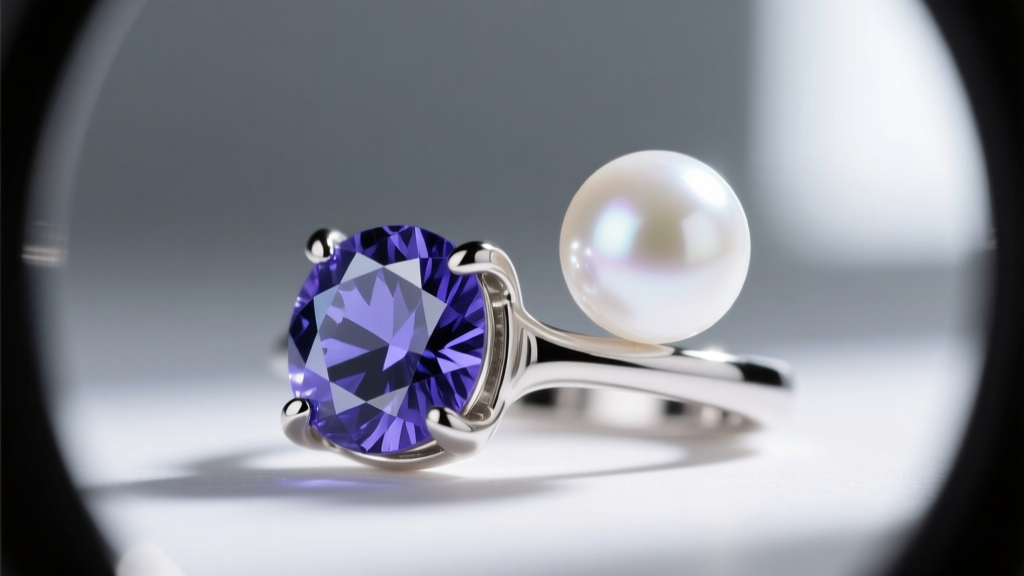
To mitigate abrasion, master jewelers avoid wire-threading pearls in mixed-gemstone drops. Instead, they utilize half-drilled pearls mounted on metal pegs. A half-drilled pearl (drilled approximately 1/3 to 1/2 of its depth) is secured using a two-part jeweler's epoxy, such as G-S Hypo Cement, which remains slightly flexible and resists yellowing. This allows the jeweler to rigidly position the pearl with a precise 1.5mm to 2.0mm air gap between the pearl's nacre and the blue gemstone's pavilion, ensuring they never make contact during kinetic movement.
Gemstone & Pearl Grading Matrix for High-End Earrings
Not all blue stones interact with pearls in the same way. Below is a technical grading and pairing matrix used by bespoke jewelers to determine the ideal pearl type, setting requirement, and structural approach for various blue gemstones.
| Blue Gemstone | Mohs Hardness | Ideal Pearl Pairing | Setting Requirement | Est. Price Range (Pair) |
|---|---|---|---|---|
| Blue Sapphire | 9.0 | Akoya (High Luster) | Bezel set stone, peg-mounted pearl | $2,500 - $10,000+ |
| Tanzanite | 6.5 - 7.0 | South Sea (White/Silver) | V-prongs (cleavage protection), peg | $1,800 - $6,000 |
| Lapis Lazuli | 5.0 - 5.5 | Tahitian (Peacock/Dark) | Bezel or cabochon flush setting | $400 - $1,500 |
Note on Lapis Lazuli: Lapis is a porous rock containing calcite and pyrite. It is highly sensitive to acids and pressure. Pairing it with dark Tahitian pearls creates a stunning moody aesthetic, but both stones require bezel or channel settings to protect their edges from chipping.
Metal Alloys and Galvanic Corrosion Risks
The metal framework holding blue and pearl earrings together is just as critical as the stones. For high-end pieces, 18k Yellow Gold (750) and Platinum (950) are the industry standards. However, many commercial manufacturers use Sterling Silver (925) to lower price points. This introduces a severe chemical risk to the pearls.
Sterling silver contains 7.5% copper and is prone to tarnishing when exposed to sulfur compounds in the air and human sweat. This tarnish (silver sulfide) can chemically transfer to the porous surface of a pearl, causing irreversible gray or brown staining on the nacre. Furthermore, if a silver earring requires re-rhodium plating to restore its white color, the pearl must be removed first. The harsh chemical baths and ultrasonic processes used in rhodium plating will instantly strip or craze a pearl's surface. Therefore, investing in platinum or high-karat gold is not merely an aesthetic choice; it is a vital preservation measure for organic gemstones.
Post and Clutch Technical Specifications
When designing drop earrings featuring a 12mm South Sea pearl and a 2-carat sapphire, the total weight per earring can easily exceed 8 to 12 grams. A standard 20-gauge (0.81mm) earring post is structurally insufficient for this weight and will bend under the leverage of the drop, potentially tearing the earlobe piercing.
- 18-Gauge (1.02mm) Posts: The minimum standard for heavy pearl and gemstone drops, providing the necessary tensile strength to resist bending.
- 16-Gauge (1.29mm) Posts: Recommended for oversized South Sea pearl chandeliers or elaborate ear cuffs that place high torque on the lobe.
- Clutch Mechanisms: Standard friction backs (butterfly clutches) will fail to secure heavy drops, leading to loss. Experts mandate La Pousette screw-backs or heavy-duty silicone O-ring clutches with wide metal backing discs to distribute the weight across a larger surface area of the earlobe, preventing the "drooping" effect.
Maintenance and Ultrasonic Cleaning Failures
The most common catastrophic failure in the ownership of blue and pearl earrings occurs during cleaning. Many consumers mistakenly place their jewelry into ultrasonic cleaners, assuming the high-frequency sound waves are safe for all gems. While ultrasonic cavitation is excellent for removing dirt from the hard crevices of a sapphire setting, it is lethal to pearls.
The microscopic bubbles created by ultrasonic waves implode with immense localized force. According to GIA care guidelines, this cavitation can literally shatter the delicate aragonite crystals of the nacre or cause the pearl to detach from its epoxy-mounted peg. Furthermore, if the blue stone is Tanzanite, which possesses perfect cleavage in one direction, the ultrasonic vibrations can cause internal fracturing.
The Correct Cleaning Protocol
"Pearls should never be cleaned in an ultrasonic or steam cleaner. The heat and vibrations can damage the nacre and loosen the adhesives used in half-drilled settings." — Gemological Institute of America
To properly maintain blue and pearl earrings, follow this strict protocol:
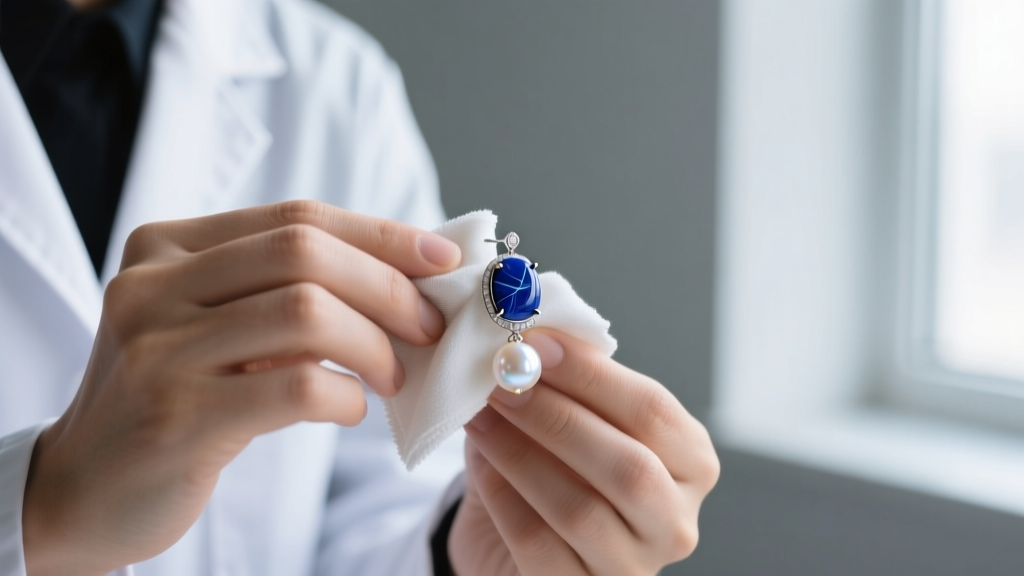
- Isolate the Stones: Use a soft, untreated microfiber cloth. Do not use silver polishing cloths, as they contain mild abrasives and chemical tarnish removers that will etch the pearl.
- Damp Wipe Only: If the pearls have accumulated skin oils (which degrade conchiolin over time), lightly dampen the cloth with distilled water. Never submerge the earrings in water, as moisture can seep into the half-drill hole, degrading the jeweler's epoxy and causing the pearl to spin or fall off the peg.
- Brush the Blue Stone Separately: Use a baby-soft bristle brush with a drop of mild, phosphate-free dish soap to clean the sapphire or tanzanite and the metal prongs, carefully avoiding contact with the pearl. Dry immediately with compressed air or a lint-free swab.
By respecting the extreme material differences between crystalline blue gemstones and organic pearls, collectors and jewelers can ensure these striking earrings remain structurally sound and optically brilliant for generations.


