Kpop Demon Hunter Earrings: 2026 Anatomy & Styling Guide
Master Kpop demon hunter earrings in 2026. Explore technical specs, gauge sizes, weight distribution, and cartilage placement for dark fantasy setups.

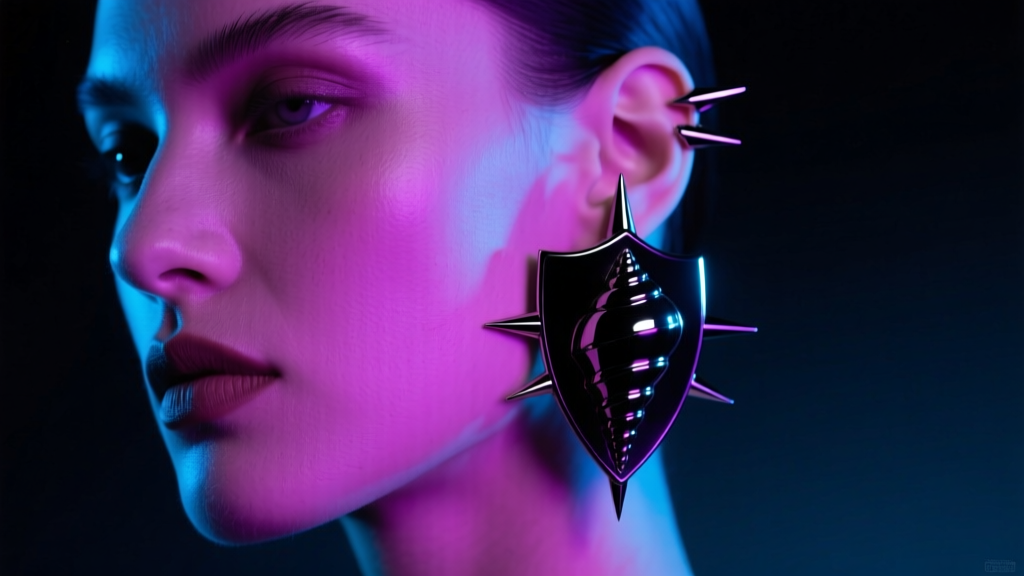
The Architecture of Dark Fantasy Earscapes
The "Kpop demon hunter" earring aesthetic, heavily popularized by the dark fantasy and cyberpunk concepts of groups like ATEEZ, ENHYPEN, and Stray Kids, has evolved from a niche stage costume element into a dominant global jewelry trend for 2026. Unlike standard minimalist ear stacks, the demon hunter aesthetic relies on aggressive asymmetry, mixed-metal hardware, and structural complexity. This style incorporates ear chains, conch shields, tragus chains, and spike motifs to create an armored, otherworldly silhouette.
However, achieving this look requires more than simply buying cheap costume jewelry. The intricate webbing of chains and heavy metallic shields introduces significant biomechanical challenges. Drag, tension, and localized weight can lead to cartilage migration, lobe tearing, and premature jewelry failure if the underlying architecture is not properly engineered. In this technical deep dive, we break down the metallurgy, gauge requirements, and physics required to safely execute a stage-ready demon hunter ear setup.
Material Grades & Metallurgy for Stage-Ready Durability
The defining visual trait of the demon hunter aesthetic is darkened metal—typically blackened steel, gunmetal, or oxidized silver. How this dark finish is achieved dictates the lifespan and biocompatibility of the jewelry.
PVD Coating vs. Electroplating
Fast-fashion retailers typically use electroplating or black enamel paints to achieve dark finishes. These methods sit on the surface of the metal and will flake, chip, or tarnish within weeks of exposure to sweat and skin oils. For a durable setup, you must seek out PVD (Physical Vapor Deposition) coatings. According to AZoM Materials Science, PVD processes vaporize materials like titanium nitride or black ruthenium in a vacuum chamber, bonding them to the base metal at a molecular level. A 2-micron PVD black coating will withstand years of daily wear without flaking.
Base Metal Selection
For fresh piercings or sensitive cartilage, the base metal must be ASTM F136 implant-grade titanium. While 316L surgical steel is common in mid-tier body jewelry, it contains trace amounts of nickel that can trigger contact dermatitis when combined with the friction of heavy ear chains. The Association of Professional Piercers (APP) strictly recommends titanium for initial piercings and long-term cartilage wear due to its inert nature and superior strength-to-weight ratio, which is critical when supporting heavy chains.
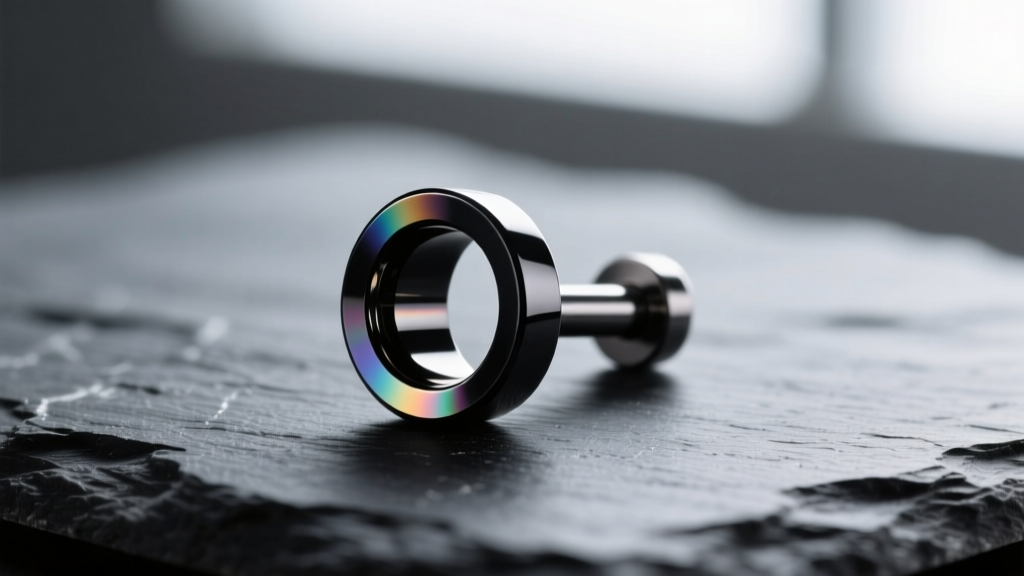
Gauge Sizing & Cartilage Placement Matrix
The demon hunter look requires precise placement across multiple ear zones. Using the wrong gauge for a specific anchor point will result in the "cheese-cutter effect," where thin jewelry under tension slowly slices through the tissue. Below is the technical matrix for standard placements used in this aesthetic.
| Ear Zone | Standard Gauge | Primary Jewelry Type | Weight Tolerance & Notes |
|---|---|---|---|
| Standard Lobe | 18g - 16g | Flat-back labret, clicker hoop | High. Can support multi-chain drapes if using 16g and an 8mm+ back disc. |
| Helix / Forward Helix | 16g (1.2mm) | Threadless push-pin labret | Medium. Primary anchor for ear chains. Requires strong pin bend to resist drag. |
| Conch | 14g - 12g | Conch shield, large flat-back | Very High. Thick tissue supports heavy ornamental shields and spikes. |
| Tragus | 16g | Small flat-back, tragus cuff | Low. Avoid attaching chains directly to the tragus to prevent tearing. |
| Non-Pierced Cuff | 22g - 20g wire | Tension ear cuffs | N/A. Must be removed during sleep to prevent tissue necrosis from clamping. |
Managing Weight Distribution on Multi-Chain Setups
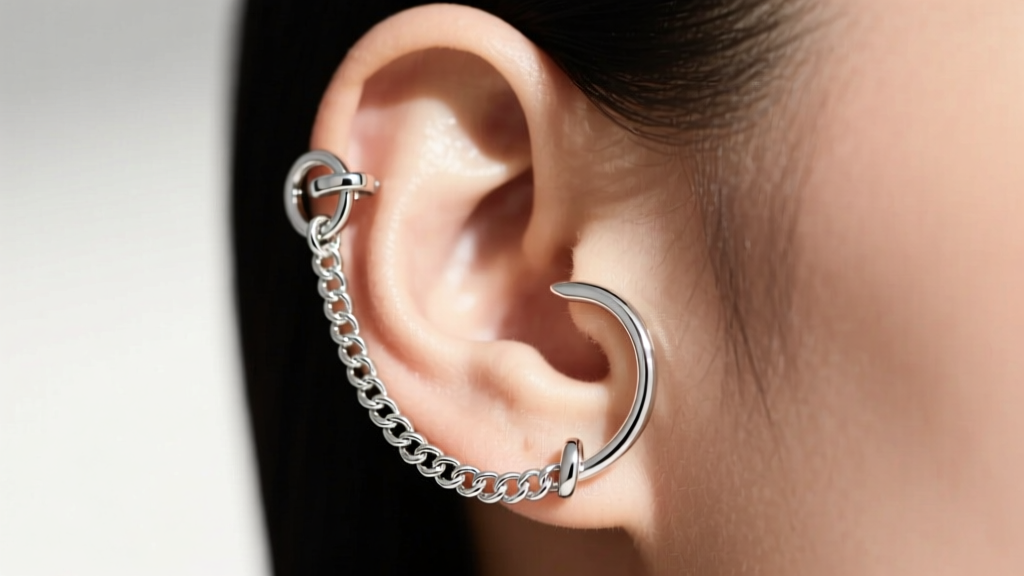
Ear chains are the hallmark of the Kpop demon hunter style, typically running from a helix anchor down to a lobe anchor, or wrapping around the conch. The physics of an ear chain introduce lateral drag. When the head moves, the chain swings, pulling horizontally on the piercing fistula.
To mitigate this, professional piercers and high-end jewelry fabricators utilize threadless (press-fit) jewelry for the upper anchors. A threadless pin, when bent correctly to a 15-degree angle before insertion, creates immense internal tension against the inside of the post, making it nearly impossible for chain drag to pull the jewelry out. Furthermore, the back of the post should feature an oversized flat disc (minimum 8mm for lobes, 4mm for cartilage) paired with a 2mm silicone O-ring. The O-ring acts as a shock absorber, preventing the metal disc from digging into the back of the ear while increasing grip against the skin.
2026 Sourcing & Price Benchmarks
As the aesthetic has matured, the market has stratified into distinct tiers. Understanding what you are paying for is crucial to avoiding allergic reactions and mechanical failures.
- Tier 1: Fast Fashion & Costume ($15 - $45)
Brands like Dolls Kill or Amazon marketplace sellers. These pieces use brass or zinc alloy bases with thin electroplating. They are suitable for a single photoshoot or stage performance but should not be worn for more than 4-6 hours due to the risk of contact dermatitis and the high likelihood of chain clasps snapping under tension. - Tier 2: Mid-Tier Alternative Jewelers ($60 - $150)
Brands like Vitaly or specialized Etsy fabricators. These typically use 316L stainless steel with PVD black coatings. The chains are welded or soldered properly, and the jump rings are reinforced. Excellent for healed piercings and daily wear, provided you do not have a severe nickel allergy. - Tier 3: High-End & Custom Body Jewelry ($180 - $400+)
Artisans like Maria Tash (for dark metal collections) or custom APP-compliant machinists on Instagram. These pieces are CNC-machined from solid ASTM F136 titanium, featuring black ruthenium PVD and internally threaded or threadless mechanisms. This is the only tier recommended for fresh piercings or heavy, multi-point chain setups.
Maintenance & Tarnish Prevention for Blackened Metals
Maintaining the aggressive, darkened look of demon hunter jewelry requires specific care protocols. Never use ultrasonic cleaners or harsh chemical dips (like silver polish) on PVD-coated or oxidized jewelry. The chemicals will strip the intentional blackening from the recesses of the spikes and chains, leaving you with a patchy, uneven finish.
Instead, clean your ear chains and shields weekly using a mild, fragrance-free liquid soap and warm water. Use a soft-bristled baby toothbrush to gently dislodge sebum and dead skin cells that accumulate in the chain links and behind the conch shields. After washing, dry the jewelry immediately with a microfiber cloth to prevent water spots, which can dull the matte black finishes popular in 2026 dark fantasy collections. Store the pieces in an airtight anti-tarnish bag when not in use to protect the structural integrity of the micro-welds on the chain links.


