Art and Craft Earrings: 2026 Trend Analysis & Styling Guide
Explore the 2026 art and craft earrings trend. Discover artisan materials, gauge standards, styling tips, and how to spot authentic studio jewelry.

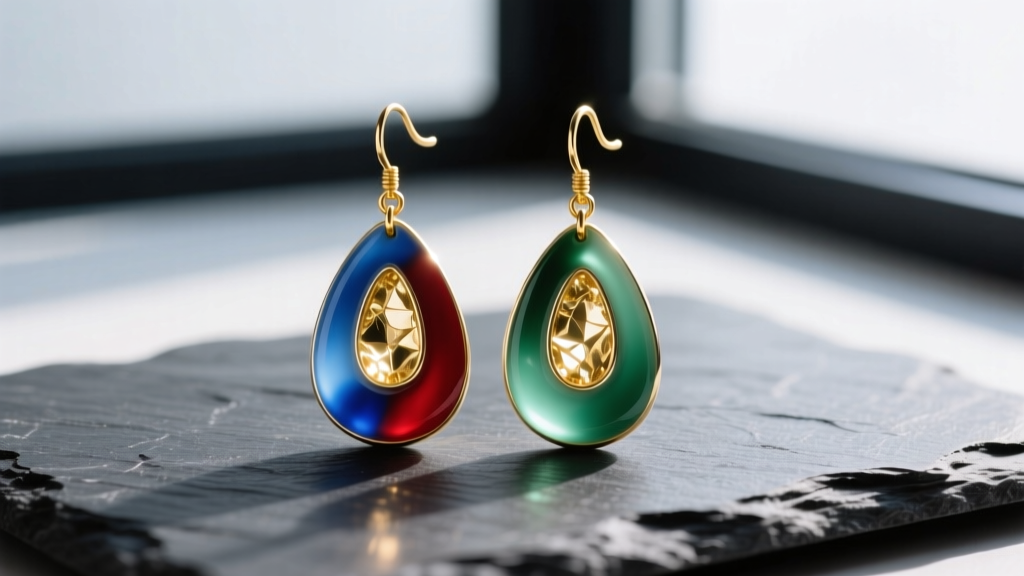
The jewelry landscape of 2026 has decisively pivoted away from the ultra-minimalist, mass-produced aesthetics that dominated the previous decade. Today, collectors and style enthusiasts are seeking narrative, texture, and human imperfection. This shift has propelled art and craft earrings into the mainstream spotlight, redefining what it means to wear handmade jewelry. No longer confined to amateur beadwork or simple wire-wrapping, the modern studio craft movement encompasses high-end metallurgy, kiln-fired enameling, and avant-garde material manipulation.
The 2026 Renaissance of Studio Craft Earrings
According to recent forecasting by Vogue, the 'New Artisan' movement is characterized by a return to tactile, labor-intensive techniques that machines cannot replicate. We are seeing a massive resurgence in repoussé (metal hammering from the reverse side), plique-à-jour (stained-glass style enameling), and anodized titanium colorwork. Consumers are actively rejecting the uniformity of CAD-designed fine jewelry in favor of art and craft earrings that bear the literal fingerprints of their makers. This trend aligns with a broader cultural desire for sustainability and slow fashion, where the provenance and physical creation of an object hold as much value as the raw materials themselves.
However, the democratization of the term 'handmade' has also flooded the market with factory-produced knockoffs masquerading as artisan craft. Understanding the technical hallmarks of true studio jewelry is essential for both collectors and stylists navigating this space.
Material Deep-Dive: What Separates Artisan from Amateur
True art and craft earrings rely on material integrity. The difference between a heirloom-quality artisan piece and a mass-market 'craft-style' earring often lies in the chemical and structural properties of the materials used. Below is a technical breakdown of the dominant materials in the 2026 studio craft scene.
| Material | Artisan Technique | Durability & Failure Modes | Average Price Range (USD) |
|---|---|---|---|
| Vitreous Enamel | Kiln-fired at 1400°F+ over sterling silver or copper. | Highly scratch-resistant; shatters on hard impact. Beware of cheap 'cold enamel' (resin) which yellows and peels. | $120 - $450 |
| Niobium | Anodized via electrical voltage to create vibrant, dye-free colors. | Hypoallergenic, highly malleable, cannot be soldered. Colors can scratch if dragged against hard surfaces. | $85 - $250 |
| Argentium Silver | 93.5% silver, 6.5% copper/germanium alloy. Highly tarnish-resistant. | Superior to standard 925 sterling for ear wires. Fuses beautifully without firescale. Rare failure modes. | $150 - $600 |
| Polymer Clay | Conditioned, sculpted, and baked. Often sealed with polyurethane. | Lightweight but brittle. Cheap brands snap at the post hole. UV exposure can fade poorly pigmented clays. | $35 - $120 |
As highlighted by the Gemological Institute of America (GIA), vitreous enamel is experiencing a massive revival, but buyers must be educated on the difference between true fused glass and epoxy resins. True art and craft earrings utilizing vitreous enamel will have a distinct glass-like resonance when tapped and will not emit a chemical odor when warmed by body heat.

Structural Integrity & Gauge Standards in Handcrafted Earrings
The most common point of failure in artisan jewelry is the ear wire. Because art and craft earrings often feature heavy, asymmetrical, or structurally complex drops, the gauge and work-hardening of the hook are critical.
Understanding Wire Gauges
- 18-Gauge (1.02mm): The gold standard for heavy artisan drops and hammered brass or bronze pieces. It provides the structural rigidity needed to support weight without bending out of shape when pulled through the earlobe.
- 20-Gauge (0.81mm): The most common size for standard handcrafted hooks. Ideal for lightweight enamel, niobium, or polymer clay earrings. It fits comfortably through standard 20g or 18g lobe piercings without causing stretching.
- 22-Gauge (0.64mm) and thinner: Generally avoided by master artisans for hooks, as it lacks the tensile strength to hold its shape and can easily slice through a healed earlobe if the earring is snagged.
Work-Hardening and Metallurgy
Dead-soft sterling silver wire will easily pull open, causing the earring to fall out and be lost. Master metalsmiths employ work-hardening—either by tumbling the finished hooks in steel shot or by carefully hammering and bending the wire—to align the metal's crystalline structure, increasing its stiffness. Furthermore, the Society of North American Goldsmiths (SNAG) emphasizes the importance of proper soldering at the loop closure. A poorly flushed solder joint will catch on hair and clothing, ultimately tearing the ear wire open.
Styling Art and Craft Earrings for Face Shapes & Piercings
Because studio craft pieces are inherently bold and textured, styling them requires an understanding of visual weight and facial geometry. Unlike symmetrical, machine-stamped fine jewelry, art and craft earrings command attention and alter the perceived proportions of the face.
Pairing Shapes with Facial Geometry
Round Faces: Opt for elongated, angular repoussé drops or geometric niobium dangles. The sharp lines and verticality create an illusion of length, balancing the soft curves of the jawline. Avoid large, circular hammered hoops, which will exaggerate facial roundness.
Square Faces: Embrace organic, flowing shapes. Kiln-fired enamel drops with curved, asymmetrical edges or soft, wire-wrapped raw turquoise clusters help soften a strong, angular jaw. The organic nature of craft materials perfectly counterbalances sharp bone structure.
Heart-Shaped Faces: Look for artisan pieces that are wider at the bottom than the top, such as inverted triangular brass drops or teardrop-shaped cloisonné studs. This draws the eye downward, adding visual weight to a narrower chin.
Cartilage vs. Lobe Considerations
When adapting art and craft earrings for cartilage piercings (helix, tragus, or conch), weight distribution is paramount. Cartilage tissue is less forgiving than the fleshy earlobe. Heavy hammered metal drops should be reserved for the lobe. For cartilage, seek out artisan studs with secure, threaded labret backs (typically 16g or 18g) or lightweight huggies crafted from anodized titanium, which offers high strength at a fraction of the weight of brass or silver.
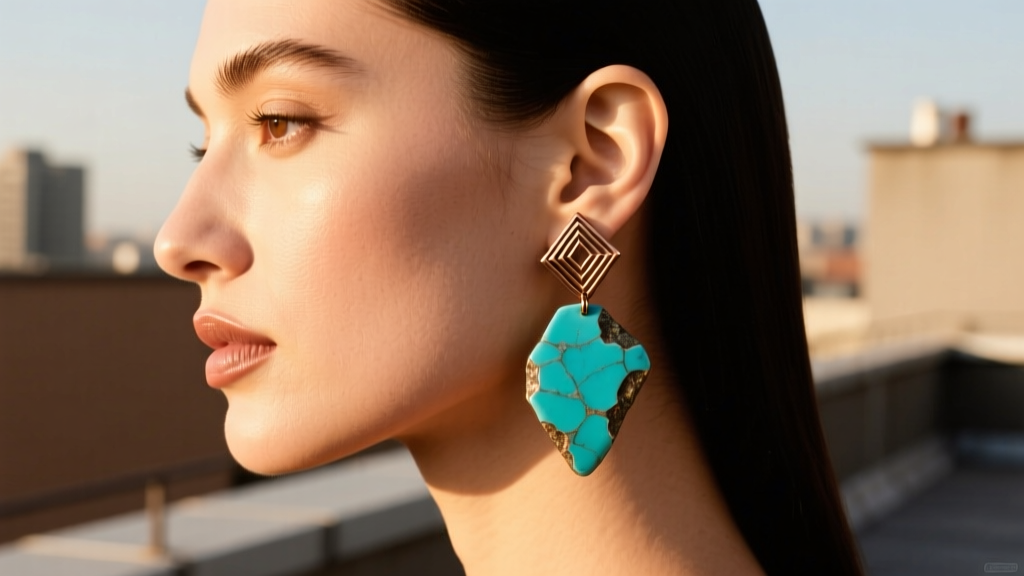
Sourcing Authentic Artisan Earrings in 2026
With the rise of AI-generated product images and drop-shipped 'handmade-style' jewelry, verifying the authenticity of art and craft earrings requires a discerning eye. Here is a practical framework for sourcing genuine studio pieces:
- Look for the Maker's Mark: Authentic metalsmiths almost always stamp their work with a registered maker's mark and a quality stamp (e.g., '925', 'Argentium', or 'Nb'). Mass-produced items rarely bear individualized stamps.
- Examine the Soldering: Zoom in on product photos. Hand-soldered joints in craft jewelry may show minute, organic variations or slight discoloration (firescale) that machines polish away perfectly. Perfect, uniform seams often indicate cast factory production.
- Embrace Asymmetry: True art and craft earrings often feature slight, intentional asymmetries. If a pair of hammered brass drops looks mathematically identical in every reflection and shadow, it was likely stamped by a hydraulic press, not shaped by a human hand.
- Verify the Provenance: Purchase directly from studio platforms, guild directories (like SNAG or the Enamelist Society), or verified artisan markets. Be highly skeptical of 'handcrafted' claims on mega-retail sites where thousands of identical 'unique' items are in stock.
'The true value of studio craft jewelry in 2026 isn't just in the materials, but in the archive of human decisions captured in the metal. Every hammer strike and enamel firing is a permanent record of the artist's hand.' — Contemporary Metalsmithing Journal
As we move deeper into 2026, the appreciation for art and craft earrings will only continue to grow, driven by a collective fatigue with the synthetic and the mass-produced. By understanding the metallurgy, structural requirements, and styling nuances of these pieces, you can build a collection that is not only visually stunning but structurally enduring and deeply meaningful.


