2026 Gift Guide: Gifting Orange Rhinestone Earrings
Discover the ultimate 2026 gift guide for orange rhinestone earrings. Learn how to match styles to occasions, face shapes, and metal sensitivities.

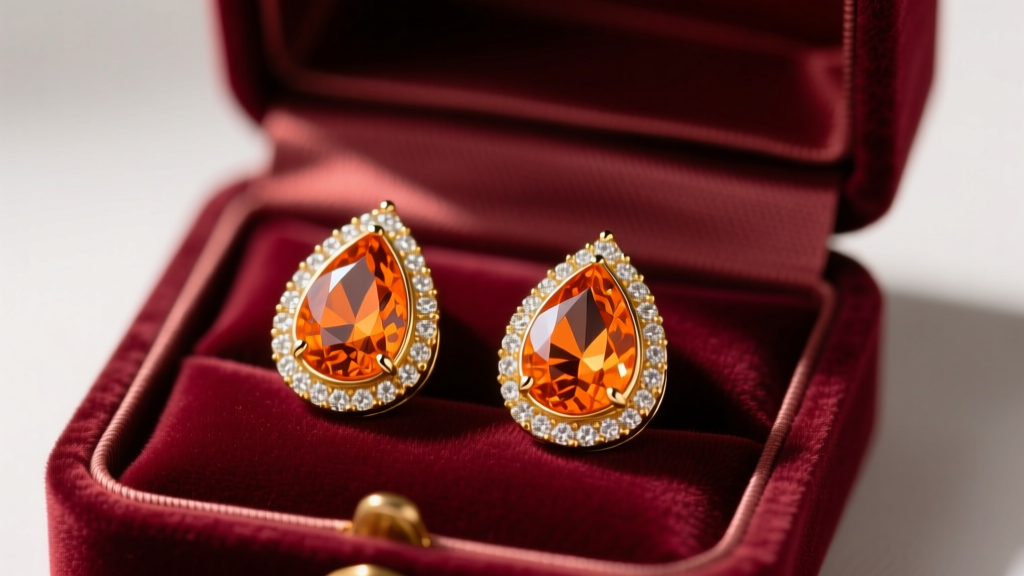
The 2026 Shift: Why Orange Rhinestone Earrings Are the Ultimate Gift
Gifting jewelry is an exercise in intimate observation, and as we navigate the fashion landscape of 2026, the shift toward dopamine-driven, expressive accessories has firmly taken center stage. Orange rhinestone earrings have emerged as a standout gifting category, bridging the gap between high-impact glamour and everyday wearability. Unlike traditional clear crystals that can sometimes read as overly formal or bridal, orange hues—ranging from burnt amber and vibrant tangerine to deep rust—offer a warm, energetic pop of color that flatters a vast spectrum of skin tones. Whether you are shopping for a maximalist fashion lover or a minimalist looking for a subtle statement piece, understanding the nuances of cut, setting, and base metal is critical to selecting a gift that will be cherished rather than relegated to the back of a jewelry box.
Decoding the Recipient: Face Shape & Style Matching
The most common mistake gifting buyers make is ignoring the recipient's facial geometry. Earrings frame the face, and the right silhouette can create stunning visual balance.
Round and Square Faces
For recipients with round faces, the goal is to create the illusion of length and sharpness. Avoid large, circular hoops or clustered stud earrings, which will only emphasize facial width. Instead, opt for elongated orange rhinestone drop earrings or angular geometric dangles. A linear bar setting featuring vertically aligned baguette-cut orange rhinestones draws the eye downward, beautifully elongating the neck and jawline. For square jawlines, the objective is softening. Teardrop-shaped orange rhinestone chandeliers or curved huggie hoops introduce organic, fluid lines that contrast beautifully with strong, angular bone structure.
Heart and Oval Faces
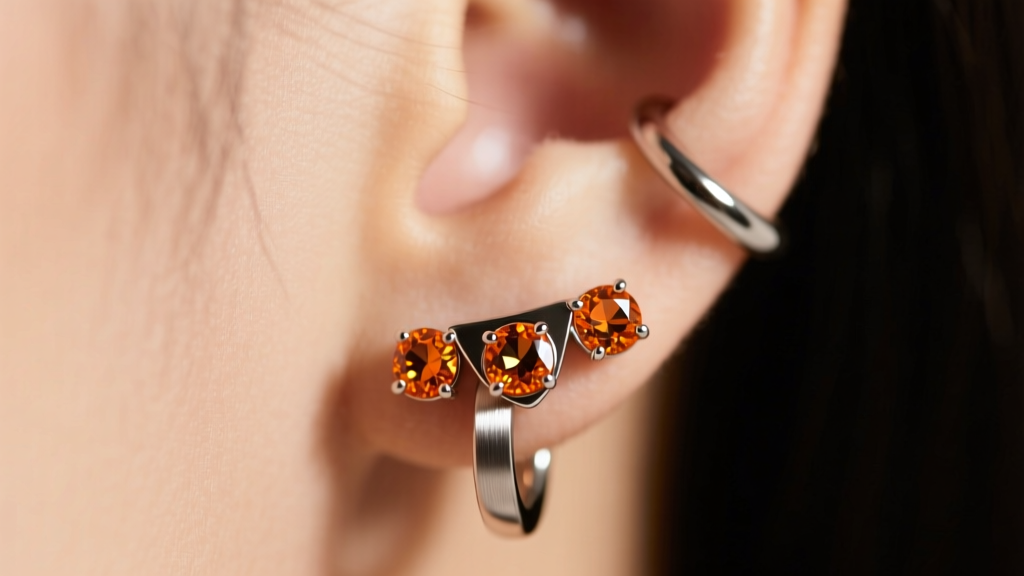
Heart-shaped faces, characterized by a broader forehead and a narrow, pointed chin, benefit immensely from earrings that add volume at the bottom. Chandelier earrings or wide, bottom-heavy teardrops featuring cascading orange rhinestones balance the lower half of the face perfectly. Oval faces are the universal donors of the jewelry world; almost any style works. However, to truly highlight their balanced proportions, consider gifting bold, oversized orange rhinestone studs or structured ear cuffs that sit snugly against the cartilage without overwhelming their natural symmetry.
Occasion Matrix: Matching Style to the Event
Context is everything. A gift meant for daily office wear requires vastly different specifications than one intended for gala season. Use this matrix to align your purchase with the recipient's lifestyle.
| Occasion | Ideal Style | Metal Base Recommendation | Estimated Budget |
|---|---|---|---|
| Daily Office / Casual | Small Huggies or 4mm Studs | 316L Stainless Steel or 14k Solid Gold | $45 - $120 |
| Cocktail Parties / Dates | Teardrop Dangles or Ear Climbers | 14k Gold Vermeil (2.5+ microns) | $85 - $200 |
| Black-Tie / Galas | Chandeliers or Statement Drops | Platinum-Plated Brass or Solid Gold | $150 - $450+ |
| Festivals / Edgy Events | Cartilage Cuffs & Chain Links | ASTM F136 Implant-Grade Titanium | $60 - $150 |
Material Deep Dive: Avoiding the "Green Ear" Effect
Nothing ruins a thoughtful gift faster than a recipient developing contact dermatitis or the dreaded "green ear" stain. This reaction is almost always caused by copper or brass base metals reacting with the skin's natural acids and lotions. When gifting orange rhinestone earrings, you must scrutinize the base metal and the plating thickness.
For sensitive ears, the gold standard is ASTM F136 implant-grade titanium or 316L surgical stainless steel. These metals are highly biocompatible and virtually nickel-free. If the recipient prefers the look of gold, avoid cheap "gold-plated" items, which often feature a microscopic flash of gold (less than 0.5 microns) over a brass core. Instead, seek out "Gold Vermeil" (pronounced ver-may), which legally requires a base of sterling silver coated with a minimum of 2.5 microns of 14k or 18k gold. This thickness ensures the jewelry can withstand daily friction without exposing the underlying metal.
The Rhinestone Quality Spectrum: Glass vs. Acrylic vs. Crystal
Not all rhinestones are created equal, and the material dictates the earring's brilliance, weight, and longevity. In 2026, the market is primarily divided into three tiers:
- Acrylic Rhinestones: Lightweight and inexpensive, but prone to scratching and a cloudy appearance over time. They lack true light refraction and are best reserved for trendy, seasonal festival wear.
- Glass Rhinestones (e.g., Preciosa): The sweet spot for gifting. Machine-cut glass offers exceptional clarity, superior weight (which gives the earring a premium feel), and high refractive indices. When backed with silver foil, they mimic the fire of genuine gemstones.
- Lead-Free Crystal: The highest tier, offering laser-precision faceting and unmatched brilliance. However, they come at a premium price point.
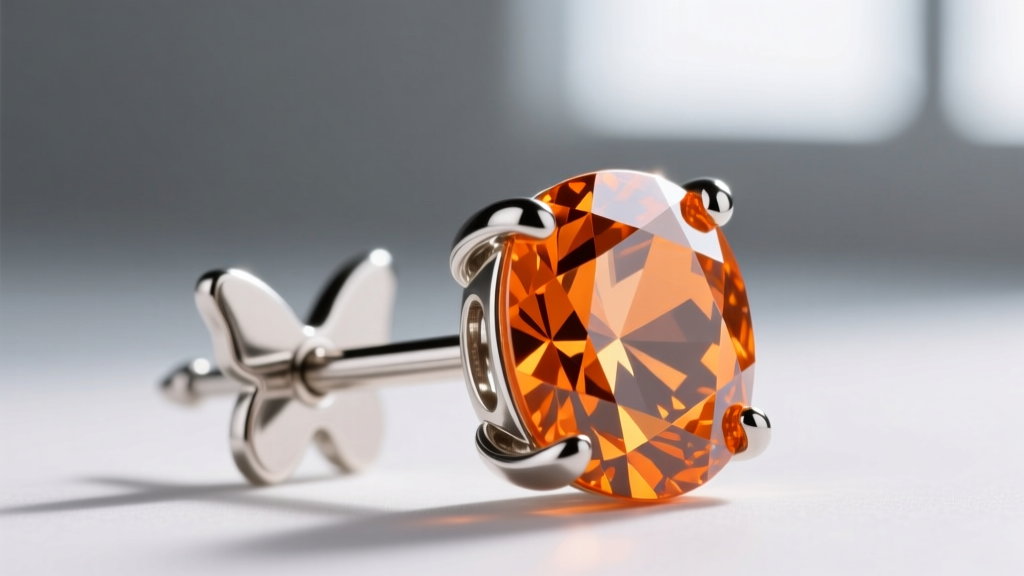
Equally important is the setting mechanics. According to gemological care guidelines outlined by the Gemological Institute of America (GIA), simulants and rhinestones require secure settings to maintain their optical properties. Always choose prong-set or bezel-set rhinestones over glue-set stones. Adhesives degrade rapidly when exposed to the alcohol in perfumes and hairsprays, leading to lost stones and cloudy, trapped debris beneath the rhinestone.
Sizing, Gauges, and Post Lengths: The Technical Details
A beautiful earring is useless if it doesn't fit the recipient's piercing. Standard lobe piercings are typically done at 20-gauge (0.8mm) or 18-gauge (1.0mm). If you are gifting standard stud earrings, a 20G post with a 6mm to 8mm length will comfortably accommodate most earlobes without the backing poking the neck.
However, if you are gifting huggies, hoops, or cartilage pieces (like helix or tragus studs), you must pay attention to the inner diameter and gauge. Cartilage piercings are usually 16-gauge (1.2mm) or 18-gauge. Forcing a 20G post into a 16G hole can cause irritation, while a 16G post won't fit a standard lobe piercing without stretching it. Furthermore, huggie hoops designed for the upper cartilage require a smaller inner diameter (typically 8mm) compared to those meant for the lower lobe (10mm to 12mm). When in doubt, purchase adjustable clicker rings or include a gift receipt with specific sizing notes.
Troubleshooting and Care: The Gifter's Guide to Longevity
To ensure your gift lasts, include a small care card. Orange rhinestones, particularly those with foil backings, are highly susceptible to moisture and chemical damage. Advise the recipient to follow the "Last On, First Off" rule: earrings should be the last thing put on after applying makeup, perfume, and hairspray, and the first thing removed at night.
Warn them against using ultrasonic jewelry cleaners or harsh chemical dips, which can strip the foil backing and permanently cloud the orange stones. Instead, a gentle wipe with a dry, lint-free microfiber cloth is all that is needed to remove skin oils and restore the rhinestones' fiery brilliance. By paying attention to these granular details—from base metal biocompatibility to precise gauge sizing—you elevate your gift from a simple accessory to a masterclass in thoughtful, personalized styling.


