Evaluating Vintage Mabe Pearl Earrings: Technical Deep Dive
Discover the technical nuances of vintage mabe pearl earrings. Learn to authenticate nacre thickness, detect delamination, and evaluate vintage settings.

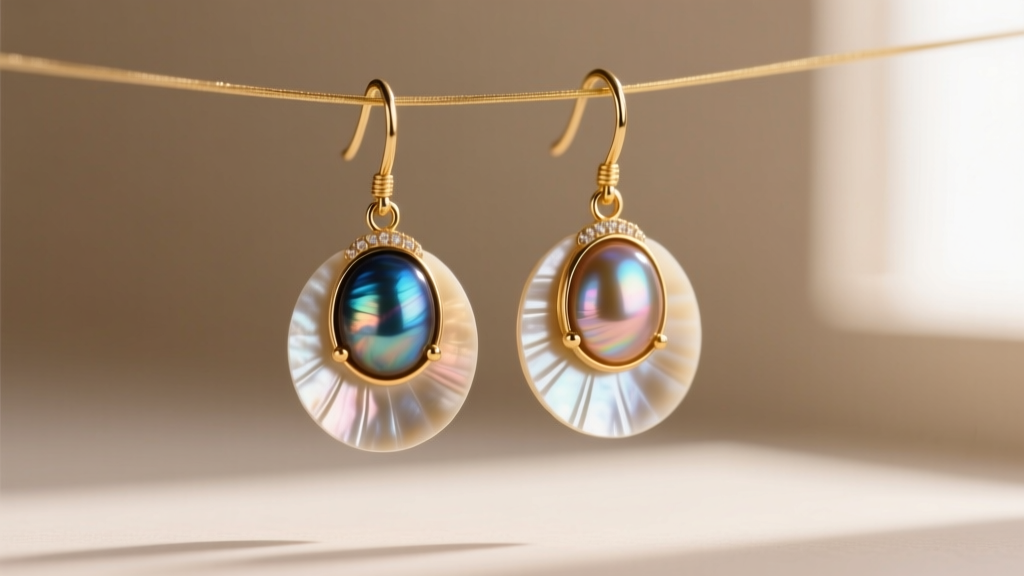
The Anatomy of a Blister Pearl: What Makes a Mabe?
To properly evaluate vintage mabe pearl earrings, one must first understand that a mabe pearl is not a solid, spherical gemstone. Technically classified as an assembled blister pearl, the mabe is the result of a highly specific culturing and manufacturing process. The term "mabe" originates from the Japanese company that pioneered the commercial production of these pearls, though today it serves as a universal trade term for hemispherical, assembled blister pearls.
The culturing process begins with the Pteria penguin (penguin wing oyster) or Pteria sterna. A half-dome nucleus, typically made of plastic or carved mother-of-pearl (MOP), is glued directly to the inner shell wall of the oyster. Over a period of two to four years, the mollusk secretes nacre over the dome. Once harvested, the blister is cut from the shell using a diamond-tipped saw. The nucleus is then carefully removed, leaving a hollow, fragile dome of nacre.
To create the final gemstone used in vintage mabe pearl earrings, the hollow interior is filled with a specialized epoxy resin or wax, and the flat back is sealed with a disc of mother-of-pearl. This assembled structure creates the iconic large, domed silhouette that made mabe pearls the centerpiece of 1970s and 1980s cocktail jewelry. However, this multi-part anatomy introduces specific structural vulnerabilities that every serious collector and appraiser must scrutinize.
Identifying Authentic Vintage Mabe Pearl Earrings
When examining estate jewelry, distinguishing a genuine vintage mabe from a solid pearl or a modern synthetic imitation requires a methodical approach. The primary identifiers lie in the nacre quality, the assembly seam, and the optical properties of the Pteria oyster's nacre.
Nacre Thickness and Luster Grading
Unlike Akoya or South Sea pearls, which are valued for thick, deep nacre, mabe pearls naturally possess a relatively thin nacre layer, typically ranging from 0.3mm to 0.8mm. Vintage specimens from the 1970s often feature thicker, more durable nacre compared to the ultra-thin, mass-produced blisters of the late 1990s. When evaluating luster, look for the signature Pteria iridescence: a brilliant, mirror-like surface with strong overtones of pink, green, and blue. If the dome appears chalky, dull, or lacks this distinct orient, the nacre may be severely degraded or the piece may be a glass imitation coated with pearl essence.
Detecting Delamination and Assembly Flaws
The most critical failure mode in vintage mabe pearl earrings is the degradation of the internal epoxy core and the backing seal. Over 40 to 50 years, early two-part epoxies can suffer from UV-induced yellowing, shrinkage, and micro-fracturing. This degradation allows moisture to infiltrate the hollow dome, leading to internal clouding or the catastrophic detachment of the MOP backing disc.
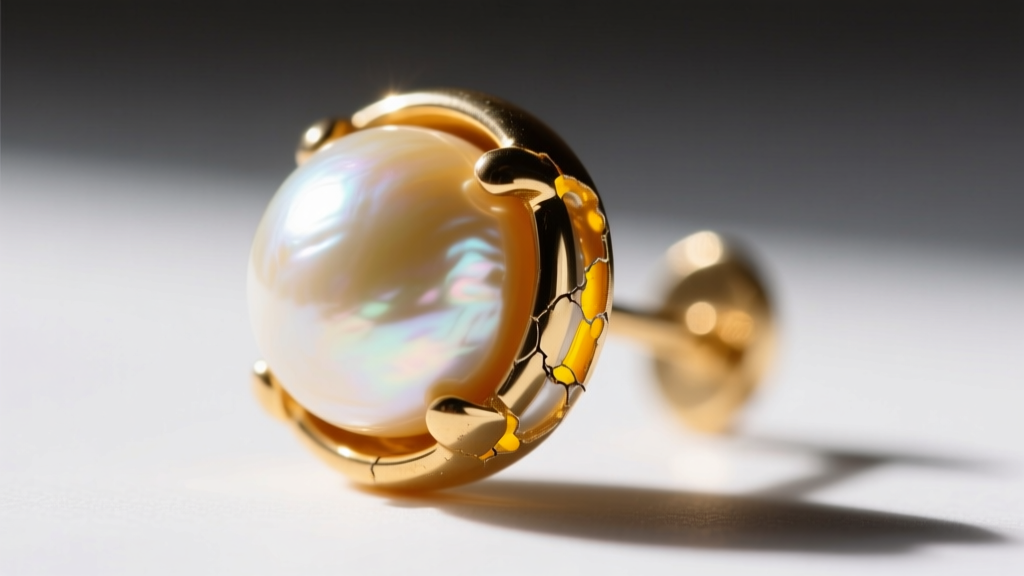
To check for delamination, gently tap the pearl dome against your tooth or a hard surface. A solid, well-preserved mabe will produce a dense, muted click. Conversely, a compromised mabe with a shrunken epoxy core or detached backing will emit a hollow, distinct "rattle." Additionally, examine the seam where the domed nacre meets the flat MOP backing. In high-quality vintage pieces, this seam is microscopic and often concealed by the jewelry mounting. If the seam is visibly jagged, weeping a yellowish residue, or shows a gap wide enough to catch a fingernail, the structural integrity of the pearl is compromised.
Evaluating the Vintage Metalwork and Mountings
The physical dimensions of mabe pearls dictate the engineering of their settings. A standard 15mm vintage mabe pearl carries significant weight and a high center of gravity. Consequently, the metalwork in authentic vintage mabe pearl earrings must be robust enough to prevent the earring from drooping or the post from snapping under everyday stress.
Post Gauges and Structural Support
Modern standard earring posts are typically 20-gauge (0.81mm) or 22-gauge (0.64mm). However, a 20-gauge post will easily bend under the leverage exerted by a heavy 16mm mabe pearl drop. Expert vintage jewelers mitigated this by utilizing thicker 18-gauge (1.02mm) or even 16-gauge (1.29mm) posts. For non-pierced ears, vintage mabe earrings were frequently mounted on heavy-duty omega clips or reinforced screw-backs, which distribute the weight across a wider surface area of the earlobe.
Setting Types and Seam Concealment
The mounting style not only secures the pearl but also protects its most vulnerable area: the equator seam. Below is a technical comparison of common vintage settings used for mabe earrings.
| Setting Type | Structural Integrity | Seam Protection | Common Vintage Eras |
|---|---|---|---|
| Full Bezel | Excellent; fully supports the dome base. | Maximum; entirely hides and seals the seam. | 1960s - 1970s Cocktail |
| Prong (4 or 6) | Moderate; relies on precise prong tension. | Low; leaves the seam exposed to impact and moisture. | 1980s Minimalist / Studs |
| Diamond Halo | High; wide metal base prevents drooping. | High; inner bezel usually secures the pearl edge. | 1970s - 1980s High Jewelry |
| Adhesive Cup | Poor; relies solely on glue bond to metal. | Moderate; cup hides the back but traps moisture. | 1980s Mass-Market Estate |
Market Valuation and Pricing Tiers
The secondary market for vintage mabe pearl earrings is highly stratified, driven by the quality of the nacre, the karat of the gold, and the presence of designer hallmarks. As of current estate valuation standards, pricing generally falls into the following tiers:
- Tier 1: Mass-Market Estate (Sterling Silver or Gold-Plated) - Typically featuring 10mm to 12mm mabe pearls with thin nacre and adhesive cup settings. Value Range: $40 - $120.
- Tier 2: Mid-Century Cocktail (14k Gold, Unbranded) - Featuring 14mm to 18mm pearls with excellent luster, set in heavy 14k yellow gold with diamond accents and full bezels. Value Range: $450 - $1,200.
- Tier 3: Signed Designer Pieces (18k Gold, Mikimoto/Tasaki) - Authentic vintage pieces bearing the 5-digit Mikimoto mabe codes or Tasaki hallmarks, featuring flawless, thick-nacre domes and premium 18k gold craftsmanship. Value Range: $1,800 - $4,500+.
Restoration and Care Protocols
Caring for vintage mabe pearl earrings requires a strict departure from standard gemstone cleaning protocols. Because of the assembled nature of the pearl and the presence of an internal epoxy core, traditional cleaning methods can cause irreversible damage.
Expert Warning: Never place vintage mabe pearl earrings in an ultrasonic cleaner. The high-frequency vibrations will shatter the fragile nacre dome and instantly break the adhesive bond of the MOP backing. Similarly, steam cleaners will melt the internal epoxy resin, causing the pearl to collapse from the inside out.
For routine maintenance, use a slightly damp, lint-free microfiber cloth to gently wipe the surface after wearing. Avoid any contact with acetone, alcohol, or commercial jewelry dips, as these solvents will dissolve the sealant around the equator seam. When storing vintage mabe drops, always lay them flat in a soft pouch. Hanging them or storing them in a way that places lateral pressure on the post will inevitably lead to metal fatigue and post breakage, especially if the original solder joints have weakened over decades of wear.
Authoritative References
For further technical reading on pearl identification and the specific characteristics of blister pearls, consult the following gemological resources:


