How to Style Ghost Earrings: The Floating Jewelry Guide
Learn how to wear, clean, and style ghost earrings. Our step-by-step guide covers illusion settings, clear acrylic care, and floating gem trends.

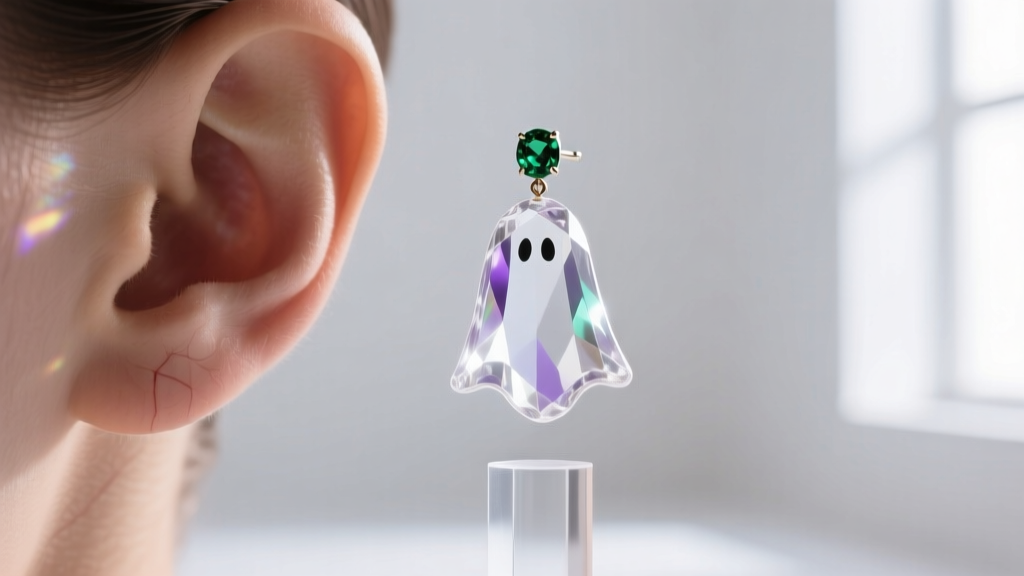
What Exactly Are Ghost Earrings?
In the contemporary jewelry landscape, the term ghost earrings refers to two distinct but related design philosophies: illusion settings and invisible structural jewelry. Illusion ghost earrings utilize cleverly cut metal halos and optical refraction to make a small center gemstone appear significantly larger, creating a 'ghost' of a larger diamond. Conversely, invisible structural ghost earrings utilize clear acrylic (PMMA), borosilicate glass, or ultra-fine nylon wires to create the illusion that a gemstone or decorative element is floating directly on the skin without any visible metal backing.
Mastering the art of wearing ghost earrings requires an understanding of material science, precise insertion techniques, and specialized cleaning protocols. Because these designs rely on transparency and optical clarity, even minor micro-scratches or skin oil buildup can ruin the floating effect. This comprehensive guide will walk you through the exact steps to wear, maintain, and style ghost earrings in 2026.
Step-by-Step: How to Safely Insert and Secure Ghost Earrings
Unlike standard 14k gold or surgical steel posts, the materials used to create the 'ghost' effect are often more fragile or require specific handling. Forcing a clear post through a tight fistula can result in immediate structural failure.
Handling Clear Acrylic and Glass Posts
Most high-quality ghost studs use either implant-grade PMMA acrylic or borosilicate glass. Acrylic posts are typically manufactured in 18-gauge (1.0mm) or 16-gauge (1.2mm) thicknesses to prevent snapping, while glass can be safely drawn down to 20-gauge (0.8mm).
- Lubricate the Post: Never insert a dry acrylic or glass post. Apply a microscopic drop of sterile saline or water-based lubricant to the tip of the post. Avoid petroleum-based ointments, which can degrade acrylic over time.
- The Taper Method: If your piercing has tightened, use a 20-gauge steel insertion taper to gently stretch the fistula first. Follow the taper immediately with the ghost earring post.
- Secure the Backing: Ghost earrings rarely use standard butterfly backs, which ruin the invisible aesthetic. Instead, they use clear O-rings or flat acrylic discs. Stretch the O-ring over the post groove using your thumb and index finger, ensuring it sits flush against the earlobe to prevent the 'floating' gem from drooping.
Applying Invisible Nylon Wire Cuffs
For cartilage placements, ghost ear cuffs made from 0.3mm to 0.5mm transparent nylon wire are incredibly popular. These rely on tension rather than piercings.
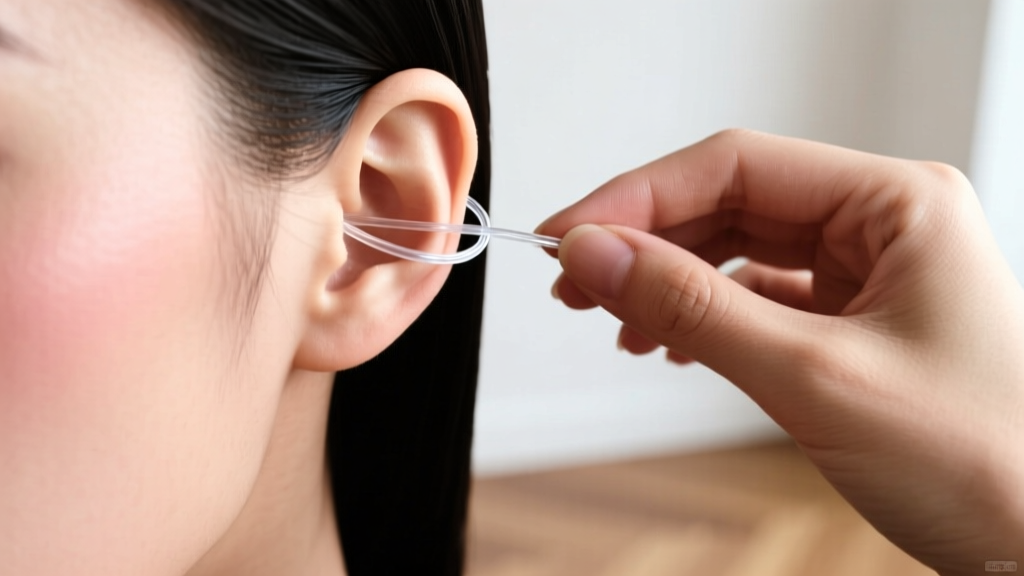
- Map the Helix: Identify the thinnest part of your upper ear cartilage. The wire must wrap around a distinct ridge to prevent sliding.
- Warm the Wire: Hold the nylon cuff between your fingers for 30 seconds. Body heat makes the nylon slightly more pliable.
- Slide and Snap: Slide the cuff over the outer edge of the helix and gently squeeze the tension gap closed until it rests securely on the inner ridge. Do not bend the wire past a 45-degree angle, or it will develop a permanent white stress mark (crazing).
Material Breakdown: The Science of the 'Float'
Choosing the right ghost earring material is critical for both aesthetics and biocompatibility. According to the Association of Professional Piercers (APP), not all clear plastics are safe for long-term wear in unhealed or sensitive piercings.
| Material | Typical Gauge | Optical Clarity | Biocompatibility | Average Price Range |
|---|---|---|---|---|
| Implant-Grade PMMA | 16G - 18G | High (Glass-like) | Excellent (Safe for healed lobes) | $12 - $35 |
| Borosilicate Glass | 14G - 20G | Flawless | Superior (Safe for fresh piercings) | $20 - $60 |
| Nylon Monofilament | N/A (Wire) | High (Slight reflection) | N/A (External wear only) | $15 - $45 |
| Illusion Metal Halo | 18G - 20G | N/A (Relies on reflection) | Excellent (14k/18k Gold) | $250 - $1,500+ |
How to Clean Ghost Earrings Without Ruining the Illusion
The most common mistake jewelry enthusiasts make is cleaning ghost earrings with harsh chemicals. The optical clarity that makes these pieces 'invisible' is highly susceptible to chemical etching and micro-abrasions.
The Fatal Flaw of Isopropyl Alcohol
Never use rubbing alcohol, hand sanitizer, or alcohol-based jewelry dips on acrylic ghost earrings. Alcohol causes a chemical reaction in PMMA acrylic known as crazing—the formation of microscopic internal fractures that turn the clear post cloudy and brittle. Once an acrylic post clouds, it cannot be polished back to clarity and must be replaced.
The Step-by-Step Cleaning Protocol
- Prepare a Surfactant Bath: Mix warm distilled water with a few drops of pH-neutral, fragrance-free liquid soap (like unscented Castile soap).
- Soak Briefly: Submerge the ghost earrings for 3 to 5 minutes to break down sebum and dead skin cells that accumulate around the O-ring grooves.
- Agitate Gently: Use an ultra-soft, baby-hair toothbrush to lightly sweep the grooves and the base of the gemstone setting. Do not scrub the flat surfaces of the acrylic or glass.
- Rinse and Dry: Rinse thoroughly under distilled water. Pat dry with a lint-free microfiber cloth. Air-drying can leave hard water spots that catch the light and ruin the invisible effect.
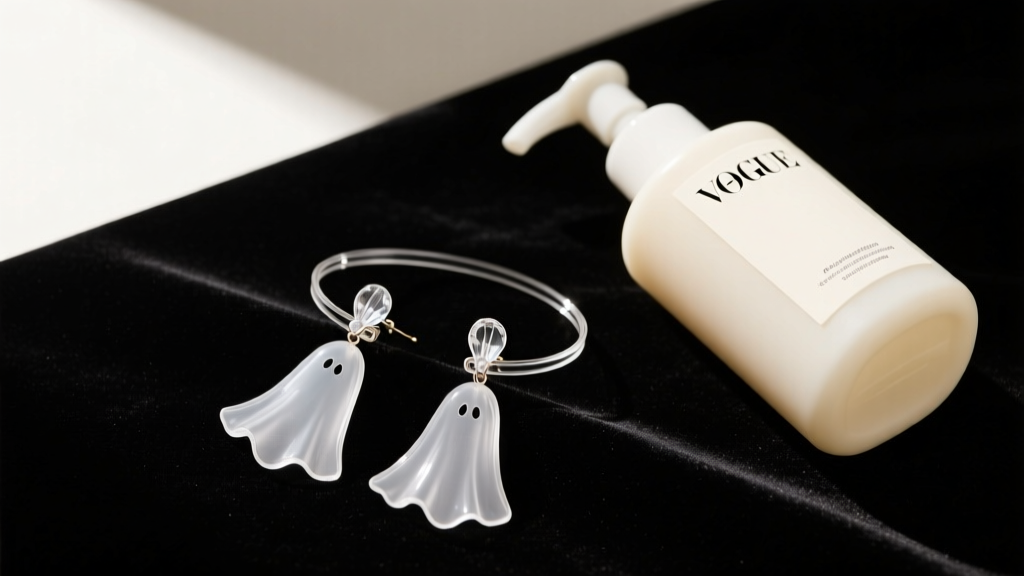
Styling Frameworks: Maximizing the Floating Effect
Ghost earrings are designed to draw the eye directly to the gemstone or decorative element. To maximize this effect, you must consider how light interacts with the piece and how your hair frames the ear.
- The Updo Imperative: Floating studs and illusion cuffs require an unobstructed light path. Sleek low buns, French twists, or tightly tucked behind-the-ear styles allow ambient light to hit the gemstone and refract through the clear post, enhancing the 'ghost' illusion.
- Makeup Contrast: Because the hardware is invisible, the gemstone must provide the contrast. If wearing a clear diamond or white sapphire ghost earring, use a slightly deeper contour or bronzer behind the earlobe to create a shadow backdrop that makes the floating gem pop.
- Stacking with Minimalism: If you have multiple ear piercings, use a ghost earring in the primary lobe piercing and ultra-thin, flush-fitting titanium bezels in the secondary and tertiary piercings. This creates a gradient of visibility that emphasizes the floating primary stone.
Troubleshooting Common Ghost Earring Issues
Even with meticulous care, invisible jewelry presents unique mechanical challenges. Here is how to solve the most frequent issues encountered with ghost earrings.
Issue: The Floating Gem Keeps Drooping Forward
Cause: The clear O-ring or backing disc is not seated deeply enough in the post groove, or the post is too long for your earlobe thickness, creating a fulcrum effect.
Solution: Switch to a shorter post length. If you are using an 8mm post, step down to a 6mm post. Ensure the O-ring is stretched completely into the deepest part of the retention groove.
Issue: The Nylon Ear Cuff Keeps Sliding Off
Cause: Natural skin oils and lotions reduce the friction coefficient of the nylon wire, allowing it to slide off the helix ridge.
Solution: Wipe the cartilage with a mild astringent (like witch hazel) before applying the cuff to remove oils. Additionally, you can gently squeeze the tension gap of the wire to increase the clamping force, but do so in millimeter increments to avoid snapping the wire.
Issue: The Illusion Setting Looks Dull and Gray
Cause: According to gemological principles outlined by the Gemological Institute of America (GIA), illusion settings rely on the precise reflection of light off the metal halo back into the pavilion of the stone. If skin oils or lotion get trapped between the metal halo and the skin, light absorption increases, killing the sparkle.
Solution: Use a specialized jewelry steam cleaner or a soft brush with warm soapy water to clean the underside (pavilion) of the illusion setting. The back of the earring must be as clean as the front to maintain the optical ghost effect.


