Little Debbie Christmas Tree Earrings: 2026 Buyer Guide
Discover how to shop for Little Debbie Christmas Tree earrings in 2026. Compare materials, post gauges, and weights for comfortable, safe novelty wear.

The Snack-Core Phenomenon: Beyond the Nostalgia
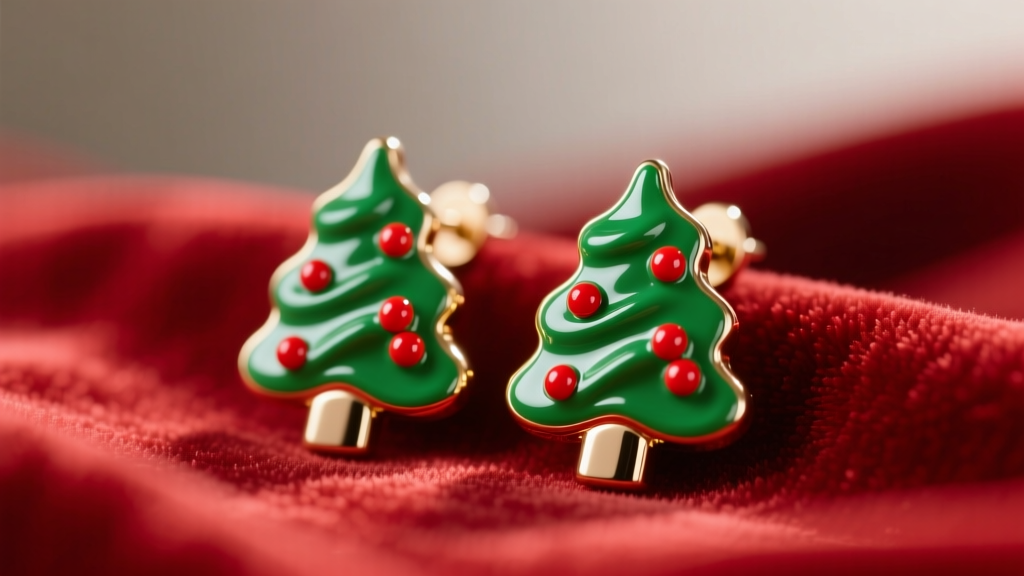
When navigating the vibrant world of novelty jewelry, few items capture the nostalgic, festive spirit quite like Little Debbie Christmas Tree earrings. As we move through the 2026 holiday season, the 'snack-core' aesthetic has evolved from a fleeting social media trend into a staple of alternative and festive fashion. However, buying novelty food earrings requires more than just an appreciation for iconic green frosting and red sprinkles. Because these pieces are often crafted by independent artisans or mass-produced novelty factories, the structural integrity, material safety, and ergonomic design can vary wildly. This comprehensive buying guide will dissect exactly what to look for, ensuring your festive lobes remain comfortable, safe, and stylish throughout the holiday parties.
Material Breakdown: Enamel, Acrylic, and Polymer Clay
The visual appeal of a Christmas tree cake earring relies heavily on its base material. In 2026, the market is dominated by three distinct manufacturing methods, each with unique wearability profiles. Understanding these differences is critical for avoiding allergic reactions and premature breakage.
Laser-Cut Acrylic: Acrylic is the most common material for budget-friendly novelty earrings. It is lightweight and allows for hyper-detailed, full-color UV printing. However, the edges of laser-cut acrylic can retain micro-burrs or 'kerf' marks if not properly tumbled and flame-polished. These rough edges can snag on hair and winter scarves.
Soft Enamel on Brass: For a premium, jewelry-like feel, enamel is the superior choice. The design is stamped into a brass or copper base, and enamel paint is injected into the recessed areas. While highly durable and scratch-resistant, enamel earrings are significantly heavier. Furthermore, if the base metal is not properly sealed or plated with gold/rhodium, the exposed brass can oxidize and cause skin discoloration.
Polymer Clay: Hand-sculpted polymer clay offers a charming, artisanal matte finish. The primary failure mode for clay is brittleness; thin protrusions (like the red sprinkle details or the tree's top star) are prone to snapping if dropped on a hard surface.
| Material | Average Weight (Pair) | Durability | Price Range (2026) | Best For |
|---|---|---|---|---|
| Acrylic (Printed) | 4g - 8g | High (Shatterproof) | $8 - $18 | All-day wear, sensitive lobes |
| Enamel (Brass Base) | 14g - 22g | Medium (Can chip) | $22 - $45 | Heirloom quality, premium gifts |
| Polymer Clay | 6g - 12g | Low (Brittle) | $15 - $30 | Indoor events, artisan supporters |
Post Metallurgy & Gauge Sizes: Protecting Your Earlobes
The most overlooked aspect of novelty earrings is the post that actually penetrates your skin. Many mass-produced acrylic earrings utilize cheap 'pot metal' or mystery alloy posts that are high in nickel. According to dermatological data published by the National Center for Biotechnology Information (NCBI), nickel allergy is the most common cause of allergic contact dermatitis, affecting up to 20% of the population. Wearing a mystery metal post for an eight-hour holiday shift is a guaranteed way to trigger weeping, itchy fistulas.
Why Titanium (ASTM F-136) Beats Surgical Steel
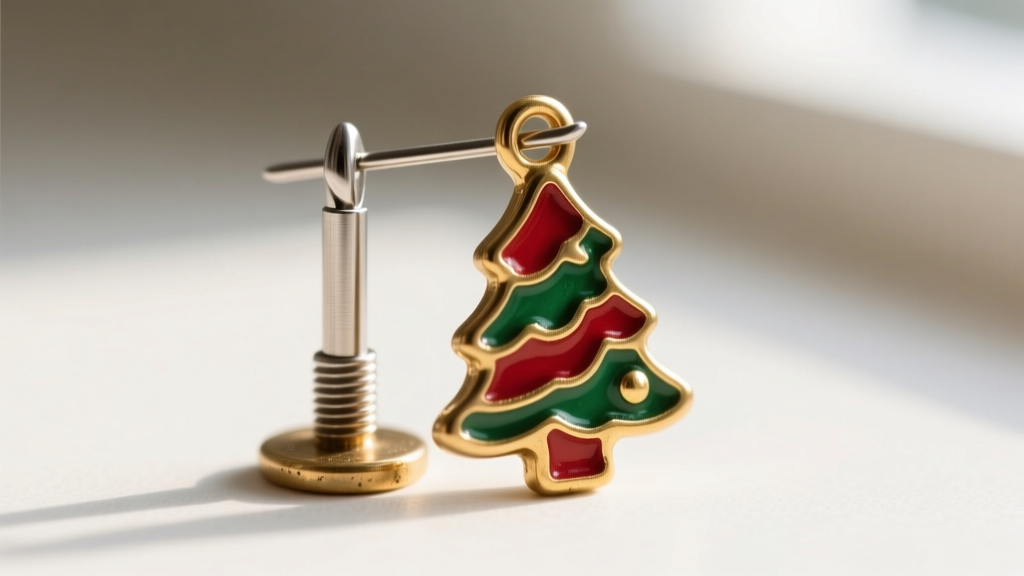
When shopping on indie marketplaces like Etsy, always filter for sellers who offer implant-grade titanium posts. The Association of Professional Piercers (APP) strictly recommends ASTM F-136 titanium for initial piercings and sensitive ears because it is entirely nickel-free and biocompatible. While 316L surgical steel is often marketed as 'hypoallergenic,' it still contains trace amounts of nickel that can leach into the skin when exposed to the body's natural acidity and winter sweat.
Gauge Thickness and Torque
Standard fashion earrings use a 20-gauge (0.81mm) post. However, for heavier enamel Christmas tree cake charms, a 20G post is susceptible to bending under the torque of a swinging earring. Look for 18-gauge (1.02mm) posts. The slightly thicker wire provides the structural rigidity needed to support a top-heavy novelty charm without warping or irritating the piercing channel.
Adhesive Failure Modes: Why Your Charm Might Fall Off
If you are buying acrylic or polymer clay earrings, the charm is almost certainly glued to the metal post pad. The type of adhesive used dictates the lifespan of the earring. Many amateur makers use UV resin or standard hot glue, which becomes brittle in cold winter temperatures and degrades under prolonged UV exposure. The industry standard for secure jewelry assembly is a two-part jeweler's epoxy or E6000 industrial adhesive. When inspecting a piece, look for a clean, minimal glue line. If you see thick, cloudy blobs of resin seeping out from behind the post pad, it is a red flag that the maker lacks precision, and the bond is likely to fail when the earring is snagged on a winter turtleneck.
Weight & Proportions: Avoiding the 'Droop' Effect
Novelty earrings are notoriously top-heavy. A beautifully detailed enamel Little Debbie tree might look perfect in the product photo, but if the center of gravity sits too far below the piercing hole, the earring will constantly droop forward, hiding the design and stretching the earlobe. This phenomenon, often called the 'cheese cutter effect,' occurs when heavy, thin-gauge jewelry slowly migrates through the tissue. To combat this, seek out designs that feature a 'stud-to-dangle' jump ring connection rather than a fixed post. A jump ring allows the earring to swing freely and distribute the kinetic energy, reducing the static downward pull on your earlobe. For extremely heavy pieces, consider purchasing silicone earring support patches to wear behind the lobe, which distribute the weight across a wider surface area.
Official Merch vs. Indie Fan Art: What You Are Actually Buying
It is vital for consumers to understand the licensing landscape of snack-inspired jewelry in 2026. While McKee Foods (the parent company of Little Debbie) does license official merchandise, the vast majority of Christmas tree cake earrings on the market are unauthorized indie fan art. This is not inherently a negative; in fact, indie artisans often provide vastly superior customization options, such as swapping to titanium posts, offering clip-on conversions for non-pierced ears, and hand-painting bespoke details. However, you must be wary of drop-shippers masquerading as handmade artisans.
Red Flags for Drop-Shipped Knockoffs
- Stock Photo Watermarks: If the listing uses heavily filtered, identical photos across dozens of unrelated storefronts, it is likely mass-produced acrylic shipped directly from overseas factories with zero quality control regarding post metals.
- No Material Disclosures: A reputable indie maker will explicitly state the exact type of metal used for the post, the jump rings, and the butterfly backs. Vague descriptions like 'alloy' or 'silver-colored metal' should be avoided.
- Uniform Perfection: Handmade polymer clay or hand-poured enamel will have microscopic variations. If every single pair in the reviews looks mathematically identical, you are likely buying factory-stamped novelty goods.
Final Verdict: Styling Your Festive Lobes
Little Debbie Christmas Tree earrings are a brilliant, conversation-starting addition to any holiday wardrobe, provided you prioritize structural integrity over impulse buying. For the ultimate balance of comfort, safety, and visual impact, we recommend seeking out independent metalsmiths who craft soft enamel designs on brass bases, fitted with 18-gauge ASTM F-136 titanium posts and secure jump-ring bails. By paying attention to the metallurgy, adhesive quality, and weight distribution, you can ensure your nostalgic snack jewelry survives the holiday season intact, keeping your piercings healthy and your style undeniably festive.


