White Gold Yellow Gold Earrings: The 2026 Two-Tone Trend Guide
Discover how to style white gold yellow gold earrings in 2026. Expert tips on two-tone metal mixing, karat grades, and curating your ear stack.

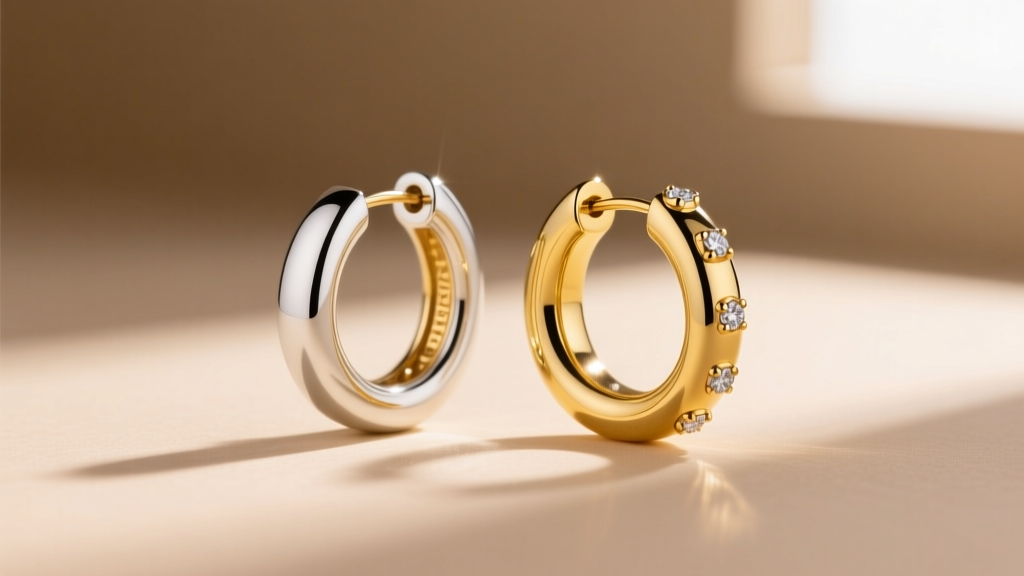
The jewelry landscape of 2026 has decisively moved past the strict monochromatic minimalism of the previous decade. Today, the most sophisticated ear curation relies on deliberate contrast, and white gold yellow gold earrings are at the absolute forefront of this movement. Two-tone jewelry is no longer relegated to vintage heirlooms or dated 1980s designs; it has been reimagined through modern architectural silhouettes, sleek huggies, and asymmetrical drop earrings. As a senior style analyst for Jewel Style Radar, I have tracked this shift from the runway to everyday street style. This comprehensive guide breaks down the metallurgy, styling frameworks, and maintenance realities of mixed-metal earrings so you can invest in pieces that are both structurally sound and aesthetically timeless.
The Resurgence of Two-Tone: Why Mixed Metals Dominate 2026
For years, the prevailing style rule dictated that you must match your metals. If you wore a yellow gold watch, your earrings had to follow suit. The 2026 trend cycle has completely dismantled this restriction. The modern approach to styling white gold yellow gold earrings is rooted in "curated eclecticism"—the idea that a jewelry collection should look organically collected over time rather than purchased as a uniform set. Mixed metals provide built-in depth and shadow, catching the light in varied ways that a single metal simply cannot achieve. According to trend forecasts from National Jeweler, consumer demand for two-tone fine jewelry has surged by over 35% in the last eighteen months, driven largely by a desire for versatile pieces that bridge the gap between warm and cool undertones in personal wardrobes.
The Metallurgy of Mixed Metals: What You Are Actually Buying
To truly appreciate high-quality two-tone earrings, you must understand the metallurgy beneath the polish. When jewelers craft white gold yellow gold earrings, they are essentially marrying two distinct alloys. The Gemological Institute of America (GIA) notes that 14k yellow gold consists of 58.5% pure gold, alloyed primarily with copper and zinc to achieve its signature warm hue. White gold, conversely, is alloyed with white metals like nickel, palladium, or silver to strip away the yellow.
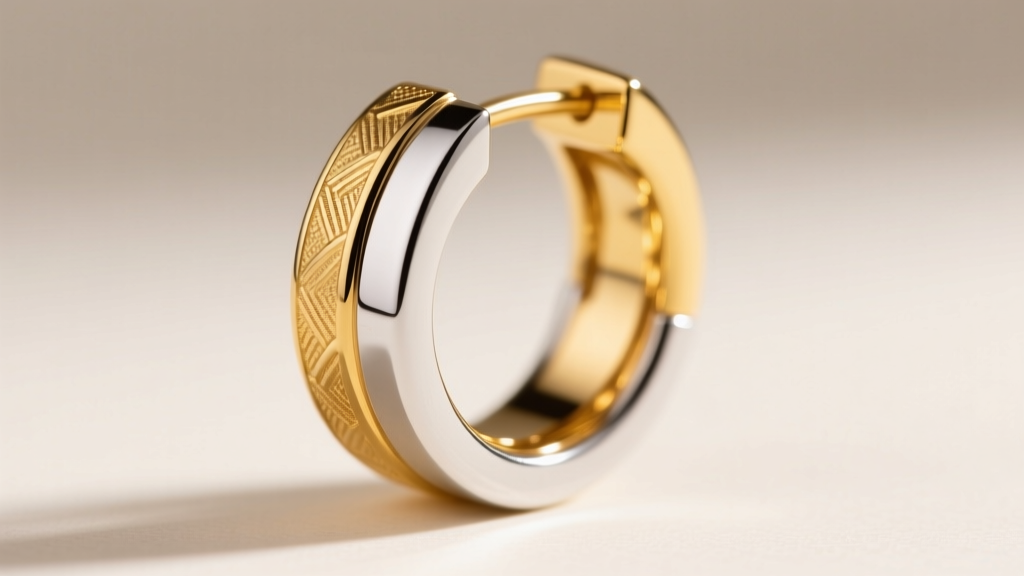
The critical differentiator in white gold is the rhodium plating. Pure white gold alloys still retain a faint yellowish-gray tint. To achieve the brilliant, mirror-like chrome finish we associate with white gold, manufacturers electroplate the metal with rhodium, a rare and highly reflective platinum-group metal. In two-tone earrings, this creates a fascinating manufacturing challenge: the jeweler must mask the yellow gold sections perfectly during the plating process, or utilize advanced laser-welding techniques to join pre-plated white gold components with raw yellow gold components. When shopping, always inspect the solder joints or laser welds where the two metals meet. A high-quality piece will have a crisp, seamless transition with no bleeding of the rhodium onto the yellow gold.
Curating the Perfect Two-Tone Ear Stack
Styling white gold yellow gold earrings requires an understanding of visual weight and proportion. You want to avoid a 50/50 split, which can look visually chaotic. Instead, adopt an 80/20 or 70/30 ratio, allowing one metal to act as the dominant anchor and the other as an accent. Below is a strategic blueprint for building a balanced two-tone ear stack, accommodating standard lobe piercings (typically 20g or 18g) and upper cartilage placements (usually 16g).
| Piercing Placement | Earring Style | Metal Ratio Strategy | Visual Function |
|---|---|---|---|
| Standard Lobe (20g/18g) | Two-Tone Huggie Hoops | 70% Yellow / 30% White | Acts as the foundational anchor, drawing the eye upward toward the face. |
| Upper Lobe (18g) | Asymmetrical Drop Earring | White Gold Chain / Yellow Gold Charm | Provides kinetic movement and introduces the secondary metal subtly. |
| Helix Cartilage (16g) | Two-Tone Flat-Back Labret | Yellow Gold Post / White Gold Bezel | Adds a distant sparkle that ties the stack together without overwhelming. |
| Conch (14g/16g) | Single Mixed-Metal Cuff | 50/50 Intertwined Wires | Serves as the statement piece where equal metal distribution works best. |
Face Shape Considerations for Two-Tone Drops
The interplay of light and dark metals can actually be used to flatter specific face shapes. If you have a round face, opt for elongated two-tone drop earrings where the darker or warmer metal (yellow gold) is at the bottom, drawing the eye downward and creating an illusion of length. For angular or square face shapes, choose two-tone hoop earrings or curved huggies where the bright, reflective white gold is positioned on the outer edges to soften the jawline with high-contrast light reflection.
Durability, Maintenance, and the Rhodium Fade
The most common point of failure for white gold yellow gold earrings is the inevitable wearing away of the rhodium plating. Because earrings experience less friction than rings or bracelets, the plating on earrings generally lasts longer—typically 2 to 4 years depending on your skin's pH and how often you wear them. However, when the rhodium begins to wear thin on a two-tone piece, the contrast between the bright yellow gold and the underlying grayish-white gold alloy becomes starkly apparent.
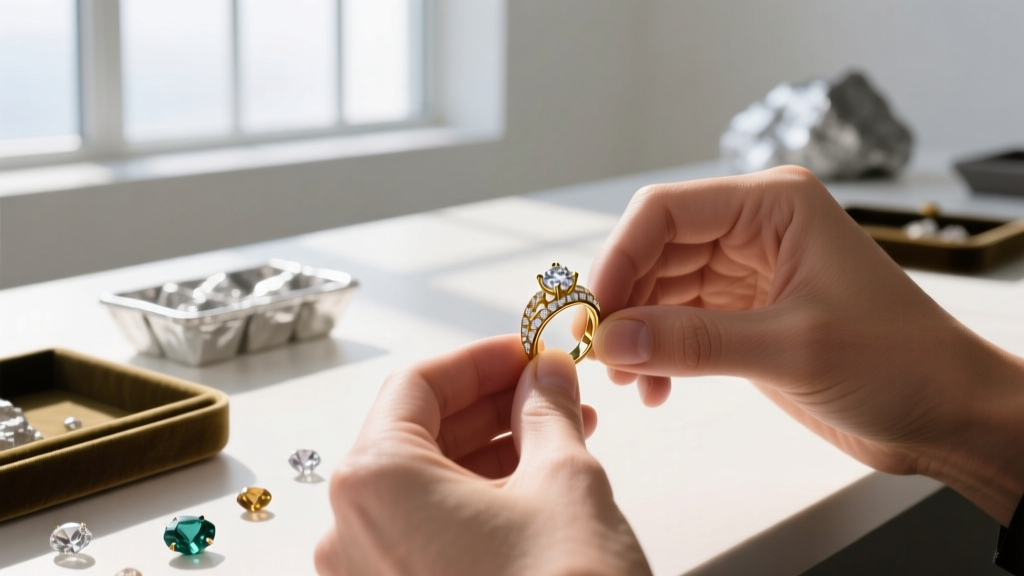
Pro-Tip for Longevity: Never clean two-tone earrings with harsh ultrasonic solutions or abrasive polishing cloths. The chemicals and friction will strip the rhodium plating prematurely. Stick to a mild dish soap, warm water, and a soft-bristled baby toothbrush to maintain the crisp boundary between the two metals.
When it is time to re-plate, the process is more labor-intensive (and slightly more expensive) than a standard white gold ring. A skilled bench jeweler must meticulously apply a resist lacquer or specialized tape to the yellow gold sections before submerging the piece in the rhodium bath. Expect to pay between $45 and $85 for this service, depending on the complexity of the earring's design.
Pricing Tiers and Investment Value
When investing in white gold yellow gold earrings, pricing is dictated by the karat weight, the complexity of the manufacturing, and the brand's positioning. Here is a realistic breakdown of what you should expect to pay in the current market:
- Entry-Level (10k - 14k Gold Filled or Vermeil): $40 – $120. These are not solid gold but offer the two-tone look for trend-focused buyers. Expect the plating to wear off within 12 to 18 months.
- Mid-Tier Fine Jewelry (Solid 14k): $250 – $650. This is the sweet spot for everyday wear. Brands like Mejuri or local independent jewelers offer excellent 14k two-tone huggies and studs in this range. 14k offers superior durability for earring posts, resisting bending better than higher karats.
- High-End & Luxury (Solid 18k & Designer): $800 – $2,500+. At this tier, you are paying for the richer, deeper butter-yellow hue of 18k yellow gold contrasted against premium palladium-alloyed white gold (which is naturally whiter and requires less rhodium). Brands like Cartier or boutique designers like Anita Ko dominate this space.
Final Verdict: A Timeless Addition to Your Rotation
The resurgence of white gold yellow gold earrings is not a fleeting micro-trend; it is a fundamental correction in how we approach personal style. By embracing mixed metals, you unlock a level of versatility that allows your earrings to seamlessly transition from a casual daytime wardrobe to formal evening wear. Focus on solid 14k or 18k construction, pay attention to the crispness of the metal joints, and curate your ear stack with intentional ratios. When executed correctly, two-tone earrings become the ultimate sartorial bridge, proving that you never truly have to choose between the warmth of yellow gold and the icy brilliance of white.


