How to Clean & Care for Ulta Earrings: Expert Guide
Discover expert cleaning, storage, and maintenance tips for your favorite Ulta earrings. Learn how to prevent tarnish, cloudy stones, and green skin.

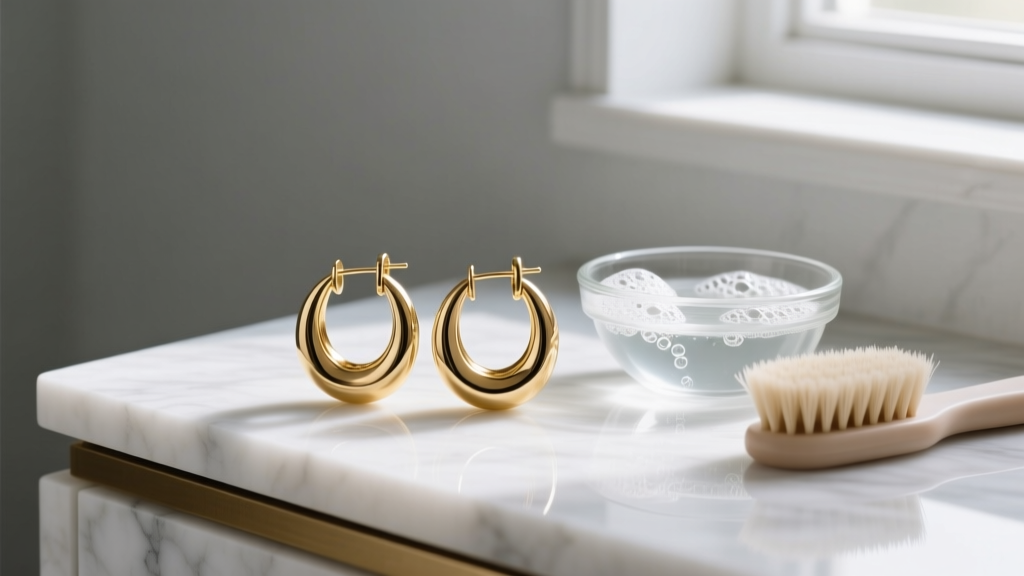
As we navigate the jewelry landscape in 2026, beauty retailers have become unexpected powerhouses for trendy, accessible accessories. If you have shopped for ulta earrings, you already know that stores like Ulta Beauty carry an impressive rotation of fashion and demi-fine jewelry from brands like BaubleBar, Kendra Scott, Gorjana, and Ettika. However, the materials used in these pieces—ranging from gold-plated brass to sterling silver and cubic zirconia—require highly specific care protocols to maintain their luster and structural integrity.
Many wearers treat fashion jewelry exactly like solid 14k gold, leading to premature plating loss, cloudy gemstones, and the dreaded green skin reaction. This comprehensive guide breaks down the exact metallurgy of your favorite beauty store earrings and provides actionable, expert-level maintenance frameworks to extend their lifespan by years.
Decoding the Metals: What Are Ulta Earrings Actually Made Of?
Before applying any cleaning solution, you must identify the base metal and the plating thickness. The cleaning method that restores sterling silver will instantly ruin gold-plated brass. Here is the material breakdown you will typically find in beauty retail jewelry:
- Gold-Plated Brass (Fashion Jewelry): The most common material for earrings in the $20 to $45 price range. A thin layer of gold (usually less than 0.5 microns) is electroplated over a brass or copper alloy base. It is highly susceptible to friction wear and chemical tarnishing.
- Gold Vermeil (Demi-Fine): Often found in the $50 to $90 range. By legal definition, vermeil must have a sterling silver base and a gold plating of at least 2.5 microns. It is far more durable than standard plating but still requires gentle, non-abrasive care.
- Sterling Silver (925): An alloy containing 92.5% pure silver and 7.5% copper. It is solid throughout, meaning it can be polished aggressively without fear of rubbing off a surface layer, but it is highly prone to sulfur-induced tarnish.
The Ultimate Cleaning Matrix for Fashion & Demi-Fine Earrings
Never use ultrasonic cleaners, commercial silver dips, or alcohol-based solutions on gold-plated fashion earrings. The high-frequency vibrations of ultrasonic machines will shatter glued-in crystals, while harsh chemicals will strip the microscopic gold layer, exposing the raw brass underneath.
| Material | Recommended Cleaner | Application Tool | Critical Warning / Failure Mode |
|---|---|---|---|
| Gold-Plated Brass | Lukewarm water + 1 drop mild dish soap (e.g., Dawn) | Microfiber cloth or baby toothbrush | Never soak for more than 60 seconds; water can seep into stone settings and loosen adhesive. |
| Gold Vermeil | Warm water + mild dish soap | Extra-soft baby toothbrush | Avoid silver polishing cloths, as the mild abrasives will strip the 2.5-micron gold layer. |
| Sterling Silver | Specialized silver cream or the aluminum foil/baking soda method | Flannel silver polishing cloth | Do not use on oxidized (blackened) silver details, as it will remove the intentional contrast. |
The Aluminum Foil Silver Restoration Hack
If your sterling silver hoops have turned black due to silver sulfide buildup, skip the abrasive pastes. Line a glass bowl with aluminum foil (shiny side up). Add one tablespoon of baking soda and a pinch of salt. Pour boiling water over the mixture, then submerge your silver earrings for exactly 3 to 5 minutes. The electrochemical reaction transfers the sulfur from the silver to the aluminum foil, restoring the metal without removing any physical silver mass.
Restoring Cloudy Cubic Zirconia and Crystal Accents
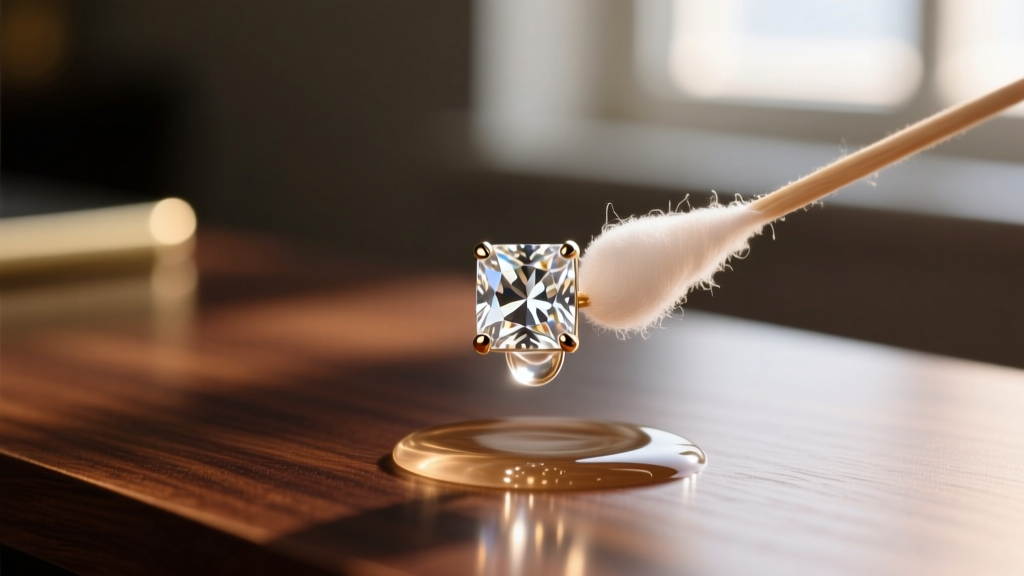
A common complaint with beauty store earrings is that the cubic zirconia (CZ) or crystal pavé quickly becomes cloudy and dull. This is rarely a defect in the stone itself. Instead, it is caused by a buildup of sebum, dead skin cells, lotion, and hairspray on the pavilion (the pointed back underside) of the stone, which blocks light refraction.
Pro Tip: To restore the fiery brilliance of CZ stones, dip a cotton swab in a mixture of warm water and a degreasing dish soap. Gently trace the back facets of the stone. Rinse with a quick splash of distilled water to prevent hard water spots, and dry immediately with a lint-free cloth.
According to the Gemological Institute of America (GIA), while CZ is relatively hard (8 to 8.5 on the Mohs scale), the adhesives used in fashion jewelry settings are not. Never use a toothpick or metal needle to scrape gunk out of a pavé setting, as you will easily pop the stones out of their shallow prongs.
Preventing Contact Dermatitis and the 'Green Ear' Effect
Waking up with itchy earlobes or a green stain on your skin is a hallmark of wearing gold-plated brass earrings. The green color is not an indicator of fake gold; it is a chemical reaction between the copper in the brass base metal and the acids and salts in your sweat, creating copper chloride.
Furthermore, many fashion earring posts contain trace amounts of nickel to increase hardness. The American Academy of Dermatology notes that nickel allergy is one of the most common causes of allergic contact dermatitis. If your Ulta earrings trigger itching or redness, you have two actionable solutions:
- The Barrier Method: Coat the earring post and butterfly back with a thin layer of clear, hypoallergenic nail polish or a specialized jewelry barrier cream. Reapply every 4 to 6 wears, as friction will wear the coating down.
- The Post Swap: Take your favorite fashion earrings to a local bench jeweler and ask them to snip off the brass posts and laser-weld or solder on 14k gold or implant-grade titanium posts. This usually costs between $25 and $40 per pair but permanently eliminates allergic reactions.
Gauge Thickness and Structural Maintenance
One of the most overlooked aspects of earring care is structural maintenance, specifically regarding the wire gauge. Most fashion earrings utilize 20-gauge (0.8mm) or even 22-gauge (0.6mm) posts to save on manufacturing costs. By comparison, standard fine jewelry uses thicker 18-gauge (1.0mm) or 19-gauge posts.
Because 20-gauge and 22-gauge wires are highly malleable, they bend easily when you sleep in them or pull a sweater over your head. Never use standard metal jewelry pliers to bend a post back into shape. The steel teeth will crush the soft brass and scrape off the gold plating, creating a rough burr that will tear your earlobe piercing.
Instead, invest in a pair of nylon jaw pliers. The soft plastic grips allow you to gently apply pressure to straighten a bent post without marring the metal finish or compromising the plating integrity.
Proper Storage to Maximize Plating Lifespan
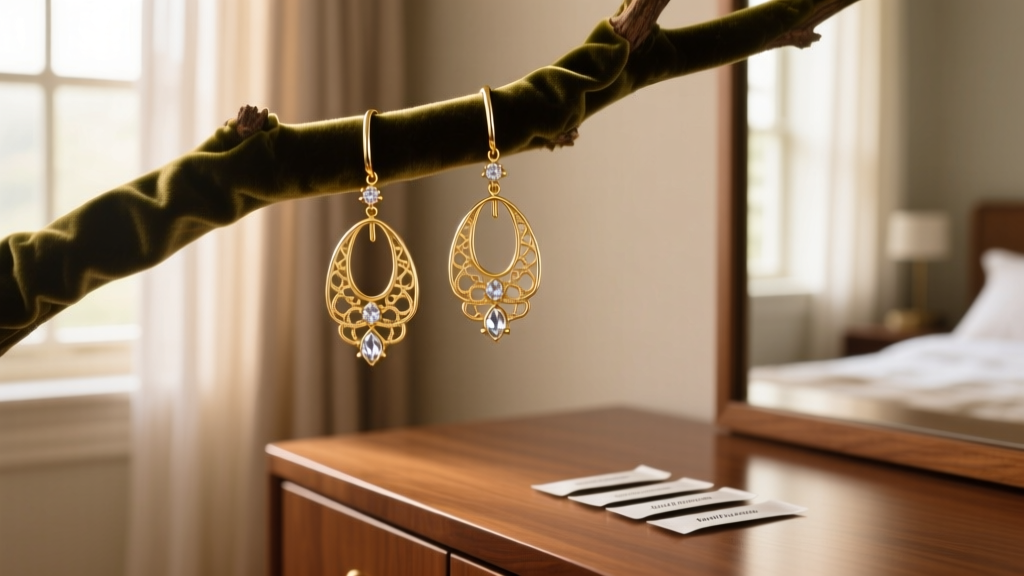
How you store your earrings when they are not on your body dictates how long the plating will survive. Tossing gold-plated and sterling silver earrings into a communal jewelry box guarantees micro-scratches and accelerated tarnishing due to trapped humidity and ambient sulfur.
Implement this three-step storage protocol for your beauty store jewelry:
- Wipe Before Storing: Always wipe the posts and backings with a dry microfiber cloth to remove acidic skin oils and sweat before putting them away.
- Individual Polybags: Store each pair in its own small, airtight polyethylene ziplock bag. This prevents the pieces from scratching one another and limits exposure to oxygen.
- Anti-Tarnish Strips: Drop a 3M anti-tarnish strip into each bag or jewelry box drawer. These strips contain chemically treated particles that absorb airborne sulfur compounds and hydrogen sulfide, neutralizing the environment and preventing silver and copper alloys from oxidizing.
When to Retire Your Fashion Earrings
Despite meticulous care, fashion jewelry has a finite lifecycle. Recognizing the failure modes of your accessories ensures you maintain a polished, elevated aesthetic. It is time to retire or repurpose your earrings if you notice the following:
- Base Metal Bleed-Through: If the gold plating has worn off the high-friction areas (like the clasp or the post) and reveals the pinkish or yellowish brass underneath, the piece can no longer be polished. Re-plating fashion jewelry is generally cost-prohibitive.
- Post Fatigue: If a 20-gauge post has been bent back and forth multiple times, the metal undergoes work hardening and becomes brittle. If it snaps off while in your ear, it can lead to a severe lobe tear.
- Irreversible Stone Clouding: If moisture has breached the adhesive barrier and caused the foil backing of a crystal to oxidize or peel, no amount of surface cleaning will restore the sparkle.
By understanding the specific material science behind your favorite accessories and adopting these targeted maintenance routines, you can keep your curated collection looking pristine, vibrant, and comfortable for every wear.


