Cake Earrings: Material Guide to Enamel, Resin & Clay
Discover the material science behind cake earrings. We compare vitreous enamel, UV resin, and polymer clay for durability, weight, and style.

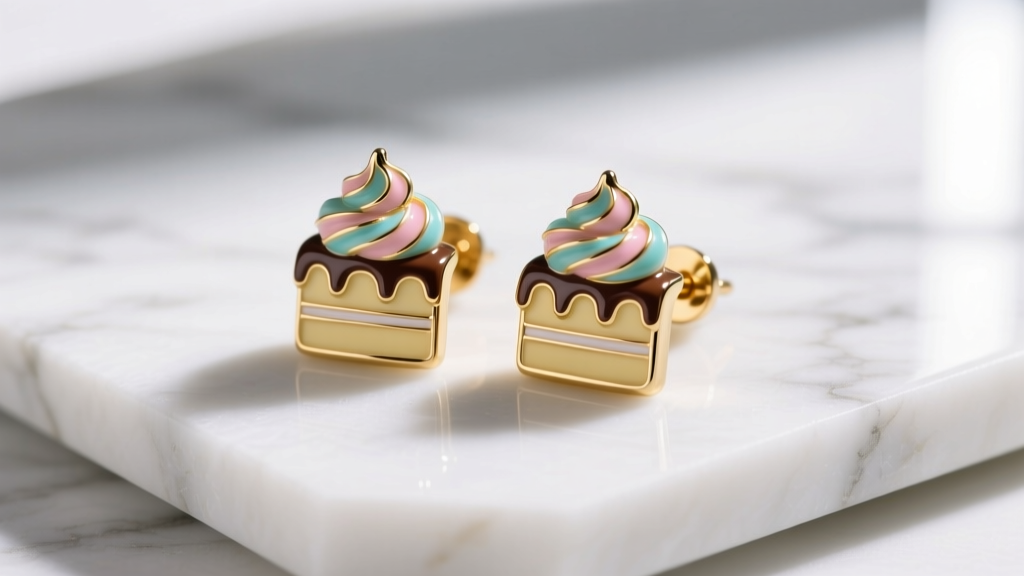
The Anatomy of Whimsy: Why Material Choice Dictates Longevity
When it comes to novelty and whimsical jewelry, cake earrings have transcended their status as mere party favors to become highly collectible statement pieces. However, the structural integrity, weight distribution, and long-term wearability of these miniature desserts depend entirely on the materials used to craft them. A hyper-realistic 3D cake slice earring requires vastly different engineering than a flat, cloisonné-enamel cupcake stud. In 2026, jewelry artisans are pushing the boundaries of material science to balance aesthetic realism with biocompatibility and earlobe health. Understanding the physical properties of vitreous enamel, UV-cured resins, and polymer clays is essential for both collectors and creators looking to invest in pieces that survive daily wear without stretching the piercing or degrading in color.
The Material Matrix: Comparing Core Mediums
Before diving into the chemical nuances of each medium, it is crucial to understand how they compare across key performance indicators. The table below outlines the baseline properties of the three most common materials used in premium cake earrings.
| Material | Average Weight (per earring) | Impact Resistance | UV Degradation Risk | Best Earring Style |
|---|---|---|---|---|
| Vitreous Enamel | 3.5g - 5.0g | Low (Chipping/Crazing) | None (Colorfast) | Flat Studs, Huggies |
| Epoxy / UV Resin | 6.0g - 12.0g | Medium (Scratching) | High (Yellowing) | 3D Dangles, Drops |
| Polymer Clay | 1.5g - 4.0g | Low (Shattering) | Medium (Fading) | Tiered Dangles, Clips |
As the data illustrates, weight and impact resistance are inversely correlated in novelty jewelry. The heaviest materials often offer the most realistic optical clarity, while the lightest materials sacrifice structural density for intricate, hand-carved detailing.
Vitreous vs. Cold Enamel: The Frosting Factor
The most common failure mode in enameled cake earrings is the separation of the glass powder from the metal base, a phenomenon known as crazing. True vitreous enamel requires firing in a kiln at temperatures exceeding 1400°F (760°C). At this heat, the silica-based glass fuses directly into the cellular structure of the copper or sterling silver base. According to the jewelry fabrication experts at Ganoksin, matching the coefficient of expansion (COE) between the metal and the enamel is critical. If the metal expands and contracts at a different rate than the glass during temperature fluctuations, the 'frosting' on your miniature cake will develop micro-fractures and eventually pop off.
The Rise of Cold Enamel Alternatives
To circumvent the high costs and technical limitations of kiln-firing, many contemporary jewelers use cold enamel (a two-part epoxy resin) to achieve the glossy, opaque finish of buttercream frosting. While cold enamel allows for a broader spectrum of neon and pastel pigments that would burn in a kiln, it lacks the scratch resistance of fired glass. Cold enamel cake earrings should be stored in individual microfiber pouches to prevent the 'icing' from dulling against harder gemstones or metal hardware.
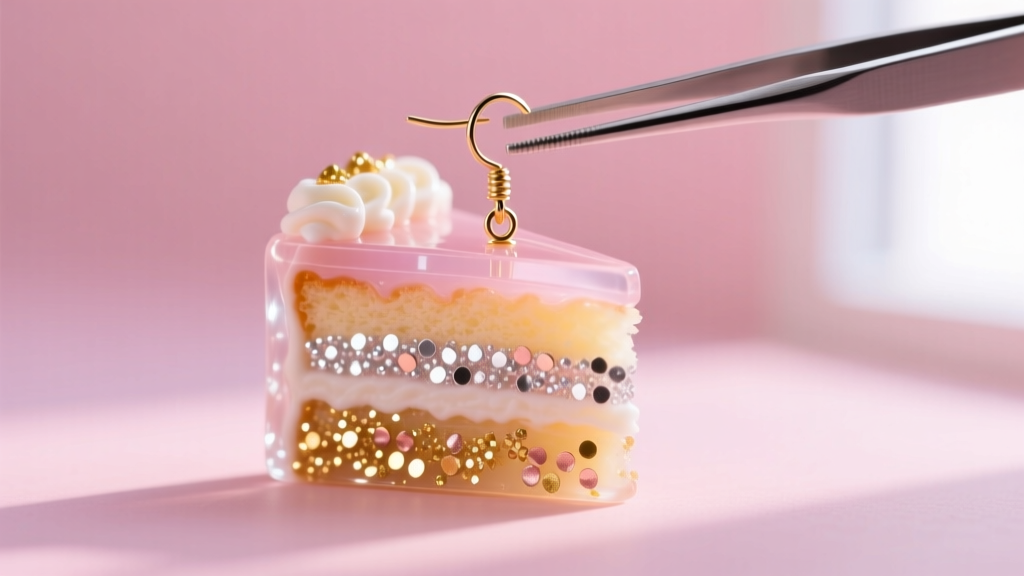
Epoxy and UV Resins: Achieving 3D Realism Without the Weight
For hyper-realistic cake slice earrings featuring translucent layers, embedded 'sprinkles,' and dripping glazes, UV and epoxy resins are the undisputed champions. However, working with resin introduces two significant challenges: exothermic curing and long-term UV degradation. When thick layers of resin are poured into silicone molds to create a 3D tiered cake, the chemical reaction generates intense heat. If not poured in sequential 5mm layers, the resin can boil, trapping micro-bubbles that ruin the optical clarity of the 'sponge' layer.
Combating the Yellowing Effect
The most pervasive complaint regarding resin cake earrings is the inevitable yellowing of the 'vanilla' layers over time. This is caused by the breakdown of the polymer chains when exposed to ultraviolet light. In 2026, top-tier resin artists mitigate this by incorporating HALS (Hindered Amine Light Stabilizers) and UV absorbers directly into the resin mixture before casting. When shopping for resin novelty earrings, always inquire if the artist uses a non-yellowing, museum-grade polyurethane resin rather than standard craft-store UV resin, which can begin to amber in as little as six months of daily sun exposure.
Weight Distribution and Lobe Health
A solid resin cake wedge measuring 30mm x 25mm can easily weigh upwards of 10 grams. Wearing this weight on a standard earlobe piercing for more than a few hours will cause the tissue to stretch, leading to a condition known as 'cheese-cutter effect,' where the earring wire slowly migrates downward through the flesh. To counteract this, artisans are now utilizing hollow-casting techniques or incorporating lightweight glass microballoons into the opaque resin layers to reduce the overall mass by up to 40% without sacrificing the external visual volume.
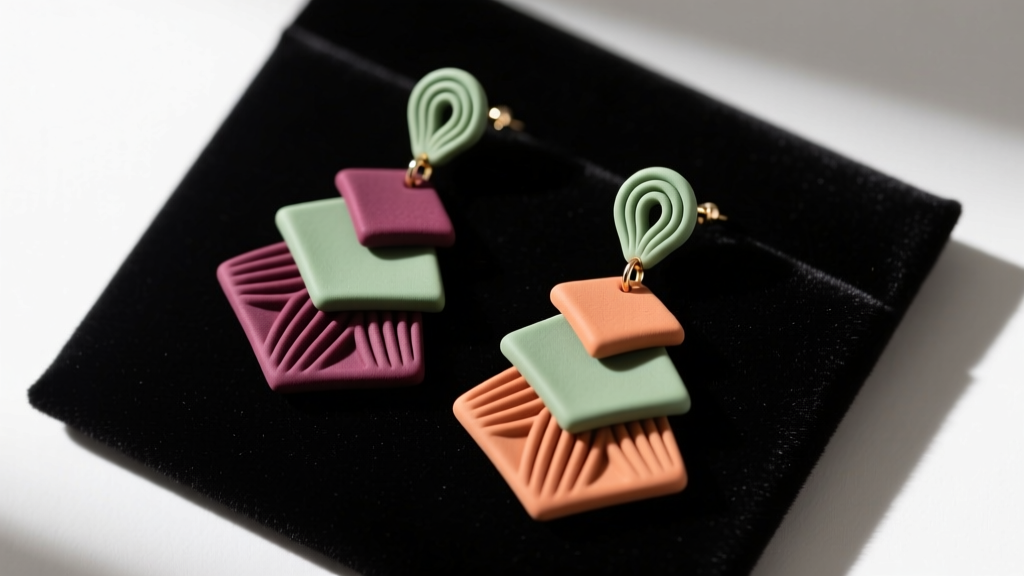
Polymer Clay: The Handcrafted Matte Aesthetic
Polymer clay offers a distinctly different aesthetic: a soft, matte, handcrafted finish that mimics the look of fondant and marzipan. Unlike water-based ceramic clays, polymer clay is a PVC-based modeling material that cures through heat-activated cross-linking of its plasticizers. The critical failure point for polymer clay cake earrings is under-baking. If the clay is not cured at the precise manufacturer-recommended temperature (usually around 275°F or 135°C) for the correct duration, the plasticizers will not fully fuse, leaving the 'cake tiers' brittle and prone to shattering if dropped on a hard surface.
Sealing and Surface Protection
Because polymer clay is slightly porous and can attract lint and makeup, it must be sealed. However, using the wrong sealant can result in a sticky, degraded surface. Aerosol sprays containing harsh solvents will melt the PVC surface. Professional clay artists exclusively use water-based polyurethane varnishes or specialized UV-resin topcoats applied in ultra-thin layers to protect the intricate, hand-carved piping details without obscuring the matte fondant aesthetic.
Hardware, Gauges, and Biocompatibility
The most exquisite cake earring design is rendered useless if the hardware triggers contact dermatitis or fails to support the novelty weight. Because novelty earrings are often mass-produced using cheap nickel-plated brass, consumers with sensitive ears face severe allergic reactions. The gold standard for earring posts, as outlined by the Association of Professional Piercers, is implant-grade titanium (ASTM F136). This specific alloy is entirely nickel-free and highly resistant to corrosion from skin oils and environmental moisture.
- 18-Gauge (1.0mm) Posts: Recommended for heavier resin and enamel cake studs. The thicker wire prevents the post from bending under the leverage of a heavy, off-center 3D design.
- 20-Gauge (0.8mm) Posts: Suitable for lightweight polymer clay dangles and flat enamel huggies, offering a more comfortable fit for standard, fully healed lobe piercings.
- Silicone O-Rings and Backers: Essential for securing heavy novelty drops. Wide, flat silicone friction backs distribute the pressure across a larger surface area of the earlobe, preventing the earring from drooping forward and stretching the piercing hole.
Care, Maintenance, and Storage Protocols
Preserving the vibrant colors and structural integrity of cake earrings requires a departure from standard jewelry care routines. Ultrasonic cleaners, which are excellent for diamond and gold jewelry, will violently vibrate the delicate glass particles in vitreous enamel, causing immediate micro-fractures. Similarly, submerging polymer clay or cold enamel pieces in chemical silver dips will strip the protective sealants and permanently cloud the resin layers.
The golden rule of whimsical jewelry maintenance is dry, gentle cleaning. Use a soft, dry microfiber cloth to buff away skin oils, and a clean, dry makeup brush to sweep dust out of the intricate crevices of resin sprinkles and clay piping.
Ultimately, whether you prefer the heirloom quality of vitreous enamel, the hyper-realism of stabilized UV resin, or the lightweight charm of hand-sculpted polymer clay, understanding the material science behind your cake earrings ensures they remain a delightful staple in your collection for years to come.


