Donald Duck Earrings: A Technical Guide to Vintage & Modern Pairs
Explore the material evolution, authentication markers, and hypoallergenic conversion techniques for vintage and modern Donald Duck earrings.

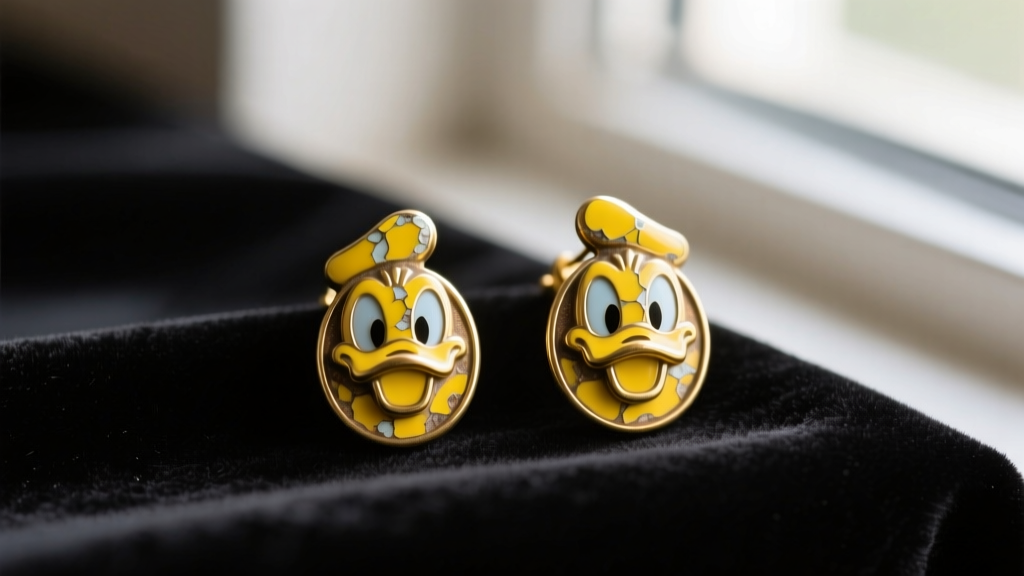
The Metallurgy and Material Evolution of Disney Character Jewelry
When collectors and jewelry enthusiasts discuss Donald Duck earrings, the conversation often leans toward nostalgia rather than technical craftsmanship. However, from a bench jeweler’s perspective, these novelty pieces serve as a fascinating timeline of 20th-century costume jewelry manufacturing. The materials used to craft these iconic waterfowl accessories have evolved drastically from the 1930s to the modern 2026 market, presenting unique challenges for wearability, conservation, and hypoallergenic conversion.
In the 1930s and early 1940s, early licensed Disney merchandise was frequently crafted from celluloid. Celluloid is an early thermoplastic created by nitrating cellulose and adding camphor as a plasticizer. While it allowed for intricate, hand-painted details on Donald’s sailor hat and bill, celluloid is notoriously unstable. It off-gasses nitric acid as it degrades, which can cause severe pitting and corrosion on the adjacent brass or base-metal earring posts. By the 1950s, manufacturers shifted toward Bakelite and other phenolic resins, which offered superior structural integrity but required heavier, thicker earring backs to support the material's density.
Today, modern Donald Duck earrings are typically cast from zinc alloys (often marketed as pewter or white metal) and finished with either epoxy cold enamel or vitreous (kiln-fired) enamel. Vitreous enamel, found on higher-end sterling silver pairs from boutique Disney jewelers, is essentially fused glass, offering a Mohs hardness of 5-6. In contrast, the epoxy enamel used on mass-market pairs is a hardened resin that scores much lower and is highly susceptible to UV yellowing and chemical degradation.
Authentication Markers: Spotting Genuine Vintage Pieces
The secondary market for vintage Disney jewelry is flooded with reproductions. Authenticating vintage Donald Duck earrings requires a close examination of maker's marks, copyright stamps, and hardware styles. According to the Walt Disney Family Museum archives, early merchandise licensing was decentralized, leading to a wide variety of third-party maker marks.
The Copyright Stamp Timeline
- 1934–1955: Look for the '© W.D.P.' (Walt Disney Productions) stamp. These early pieces often lack a date and feature rudimentary, hand-painted details.
- 1956–1980s: The stamp transitioned to '© Walt Disney Productions'. Pieces from the 1970s often feature the 'Sorcery' maker mark, a highly sought-after licensee known for heavy, detailed brass castings.
- 1986–Present: The stamp reads '© Disney'. Modern pieces from the 1990s onward often include laser-etched hallmarks and standardized 20-gauge posts.
Another critical authentication marker is the hardware. Genuine pre-1960s pieces almost exclusively feature screw-backs or early paddle clip-ons. If a piece claiming to be from the 1940s features a modern friction post and butterfly clutch, it is either a reproduction or a heavily modified vintage piece that has lost a significant portion of its collector value.
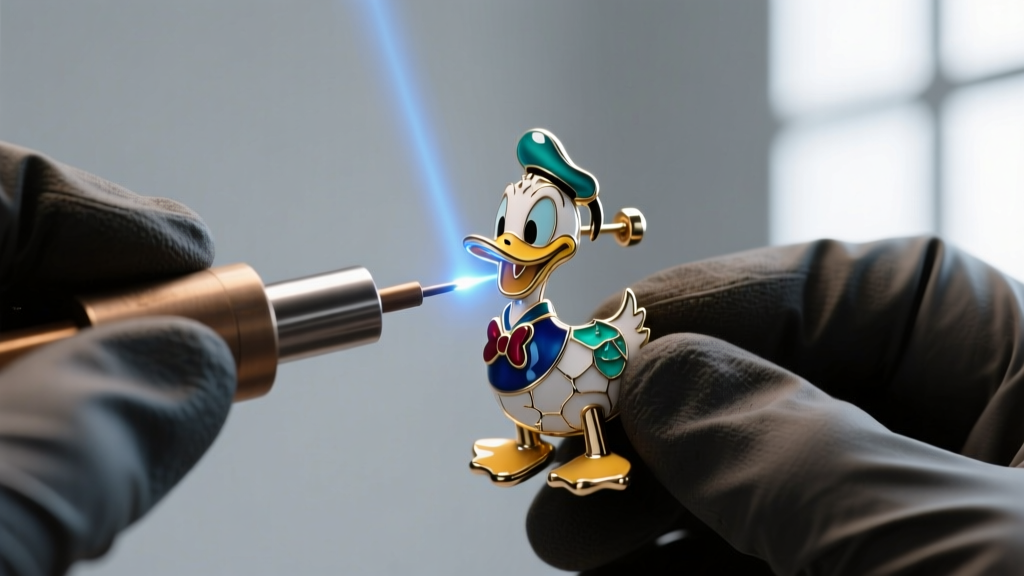
Technical Conversion: Upgrading Vintage Pieces for Modern Piercings
One of the most common issues bench jewelers face with vintage Donald Duck earrings is the incompatibility of antique hardware with modern ear piercings. Vintage screw-back posts were typically machined from thick brass or steel, ranging from 14-gauge (1.6mm) to 12-gauge (2.0mm). Standard modern lobe piercings are done at 20-gauge (0.8mm) or 18-gauge (1.0mm).
Forcing a 14-gauge vintage screw-back into a modern 20-gauge piercing will cause immediate tissue trauma, micro-tearing, and potential blowouts. Furthermore, vintage base metals are notorious for containing high levels of nickel, a primary contact allergen. The Gemological Institute of America (GIA) notes that nickel allergies affect up to 20% of the population, making the direct wear of unsealed vintage costume jewelry a significant risk for contact dermatitis.
Conversion Methods and Cost Analysis (2026 Market Rates)
| Conversion Method | Technical Process | Pros & Cons | Avg. Cost (Per Pair) |
|---|---|---|---|
| Laser Welding Post Swap | Jeweler cuts off the screw-back and laser-welds a 20g or 18g titanium/gold post. | Pros: Permanent, hypoallergenic. Cons: Heat can melt adjacent epoxy enamel if not properly heat-sinked. |
$85 - $150 |
| Urethane Coating (Barrier) | Applying a medical-grade urethane dip to the existing vintage post. | Pros: Cheap, preserves original hardware. Cons: Wears off in 2-3 weeks; doesn't solve the 14g thickness issue. |
$15 - $25 |
| Clip-On Converter Pads | Adding silicone cushions to existing paddle clip-ons for non-pierced ears. | Pros: Zero modification to the antique piece. Cons: High clamping pressure; uncomfortable for long wear. |
$10 - $20 |
For high-value Sorcery or Bakelite pieces, laser welding is the gold standard. A skilled jeweler will apply a thermal heat-sink paste to the enameled face of the Donald Duck motif before welding the new titanium post, preventing the epoxy resin from bubbling or discoloring.
Structural Integrity and the 'Duck Bill Lever Effect'
Novelty earrings present unique biomechanical challenges, and Donald Duck earrings are a prime example of poor center-of-gravity design. The defining feature of the character—his elongated, protruding bill—creates a structural vulnerability known in jewelry design as the lever effect.
When the earring's center of mass extends significantly past the post axis, gravity pulls the bottom of the earring forward. This creates continuous torque on the earring post and the earlobe tissue. Over time, this torque leads to three primary failure modes:
- Post Shear: The metal fatigues at the solder joint where the post meets the earring base, eventually snapping.
- Lobe Elongation: The constant forward pull stretches the piercing fistula, causing the lobe to droop or tear.
- Enamel Delamination: The stress on the base metal causes microscopic flexing, which pops the rigid enamel or glass detailing off the front face.
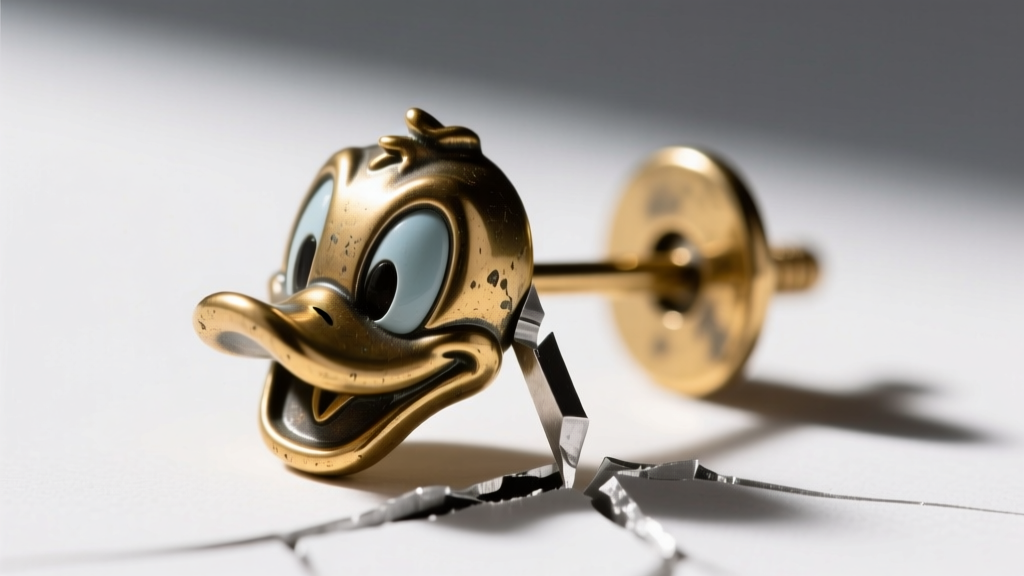
Engineering Solutions for Heavy Novelty Earrings
To counteract the lever effect without altering the aesthetic of the Donald Duck earrings, experts recommend abandoning standard friction posts and butterfly clutches. Instead, convert the piece to accept a 16-gauge or 14-gauge flat-back labret post. The flat disc of the labret post sits flush against the back of the earlobe, distributing the torque across a wider surface area (typically 5mm to 8mm in diameter) rather than concentrating it on a single 1mm point. Pairing this with a silicone O-ring backing provides the necessary friction to keep the heavy enameled face sitting upright against the ear.
Conservation and Care Protocols
Proper maintenance of Donald Duck earrings depends entirely on the era of their manufacture. A common and catastrophic mistake made by amateur collectors is placing vintage enameled jewelry into an ultrasonic cleaner. The high-frequency cavitation bubbles generated by ultrasonic cleaners will instantly shatter vitreous enamel and strip cold-painted details from 1980s Disney Store pieces.
For routine cleaning, use a mild, phosphate-free dish soap diluted in distilled water. Agitate gently with a soft-bristled makeup brush, which can reach the intricate crevices of Donald’s sailor hat and feather textures without scratching the base metal. For unsealed brass or copper pieces that have developed heavy verdigris (green corrosion), a localized application of a specialized jewelry polishing cloth is preferred over liquid dips, which can seep under the enamel borders and cause hidden subsurface corrosion.
Sourcing and Valuation in the Modern Market
As of 2026, the market for vintage Disney jewelry remains robust, driven by cross-generational collectors and the broader resurgence of Y2K and 90s nostalgia fashion. However, value is strictly dictated by condition and provenance. A pair of 1940s celluloid Donald Duck clip-ons with intact paint and original hardware can command upwards of $300 to $450 at specialized auction houses. Conversely, 1990s mass-produced enameled studs generally hold a nostalgic value of $15 to $30.
When sourcing, always request high-resolution macro photos of the earring backs and copyright stamps. Verify that the posts have not been haphazardly glued or epoxied by previous owners attempting DIY conversions. By understanding the metallurgy, structural physics, and historical markers of these pieces, collectors can safely integrate Donald Duck earrings into their daily rotation while preserving a tangible piece of animation and jewelry history.


