How to Authenticate & Buy Vintage Silver Clip On Earrings
Discover how to authenticate, value, and buy vintage silver clip on earrings. Learn to identify hallmarks, mechanisms, and avoid costly fakes.

The Resurgence of Non-Pierced Elegance
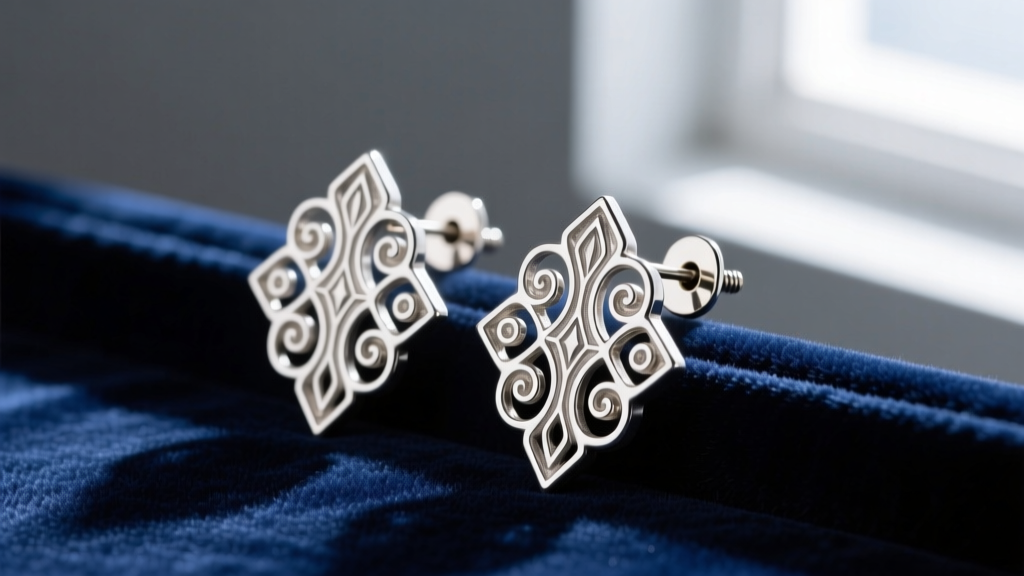
In the current 2026 jewelry market, the demand for vintage silver clip on earrings has surged, driven by a growing preference for sustainable, non-pierced adornment and the unmistakable glamour of mid-century design. Unlike modern cast jewelry, vintage pieces offer superior metallurgical weight, intricate hand-finished filigree, and mechanical ingenuity. However, navigating the secondary market requires a trained eye. Counterfeits, "Frankenstein" pieces (cobbled together from different eras), and misidentified silverplate abound. This comprehensive buying guide will equip you with the horological and gemological frameworks needed to authenticate, value, and restore vintage non-pierced silver earrings.
Decoding the Mechanisms: Screw-Back vs. Paddle-Back
Before assessing the silver content, a true collector evaluates the earring's mechanical hardware. The mechanism dictates the era of the piece and its wearability on the modern earlobe.
The Screw-Back (Circa 1909–1950s)
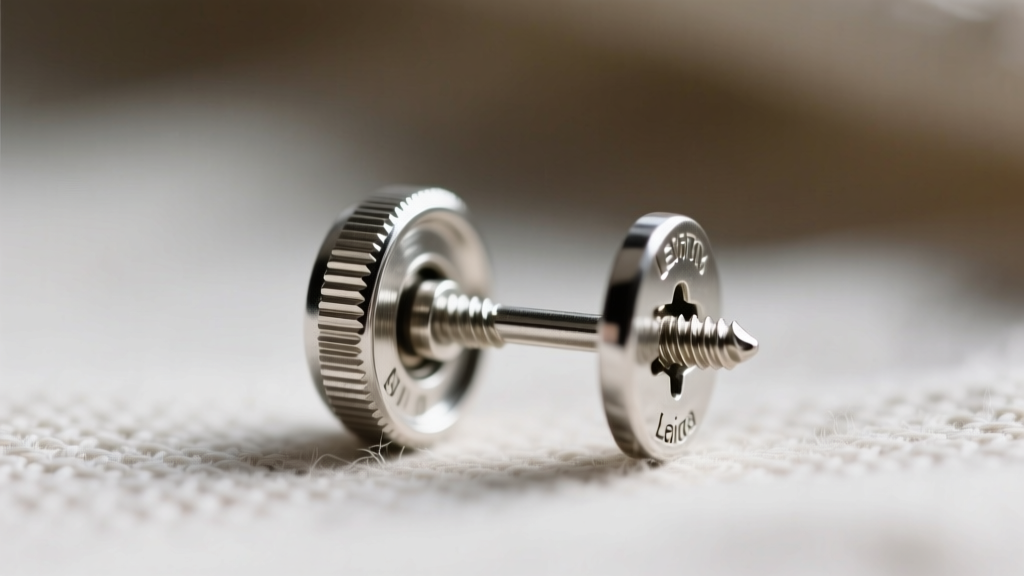
Patented in 1909 by Horace Grant, the screw-back mechanism revolutionized non-pierced jewelry. It features a threaded post that passes through a hinged, U-shaped wire. A small, often padded, tension pad screws onto the post to clamp the earlobe. Buying Tip: Many vintage screw-backs suffer from stripped threads. When inspecting, gently turn the pad. If it spins freely without catching the threads, the tension is compromised, requiring a replacement pad or a careful re-tapping of the post.
The Paddle-Back or Comfort Clip (Circa 1930s–Present)
Introduced in the 1930s, the paddle-back (often branded as a "comfort clip") utilizes a hinged, wide metal paddle that snaps into a tension groove on the backing wire. This design distributed pressure more evenly across the earlobe. When evaluating vintage paddle-backs, check the "snap" tension. Over decades, the metal fatigues, causing the hinge to become loose. A gentle squeeze with nylon-jaw pliers can restore the grip, but severe metal fatigue at the hinge fulcrum is a fatal flaw.
Metallurgy and Marks: Identifying True Vintage Silver
According to the Gemological Institute of America (GIA), silver is a precious metal that is highly malleable, meaning it must be alloyed for structural durability. When hunting for vintage silver clip on earrings, you will encounter several distinct metallurgical grades, each carrying different valuation metrics.
| Silver Grade | Hallmarks & Stamps | Era / Origin | Market Value Impact |
|---|---|---|---|
| Sterling Silver | .925, Sterling, Lion Passant (UK) | Global, 19th-20th C. | Highest intrinsic and collector value. |
| Coin Silver | .900, Coin, Pure Coin | Early American (Pre-1870) | Rare; highly prized by antique purists. |
| 800 Silver | 800, Boar's Head (France) | Continental Europe, Italy | Excellent durability; strong mid-century market. |
| Silverplate (EPNS) | EPNS, A1, Silver on Copper | Global, Mass-produced | Low intrinsic value; valued only for design. |
The Silverplate Trap: Many pieces marketed as "vintage silver" are actually Electroplated Nickel Silver (EPNS) or silver-plated brass. Over time, the high points of the earring (the edges of the filigree, the hinge) wear down, exposing the base metal. If you see a reddish or yellowish hue bleeding through the silver tone, the piece is plated. While plated pieces can still be beautiful, they should be priced at a fraction of solid sterling.
The Authentication Checklist: Avoiding Fakes
To confidently buy vintage silver clip on earrings, adopt a systematic inspection protocol using a 10x jeweler's loupe and a rare-earth magnet.
- The Magnet Test: Silver is diamagnetic (non-magnetic). If the earring body or the clip mechanism jumps to a neodymium magnet, it contains a ferrous base metal (like steel or iron) and is not solid silver. Note: Some vintage screw-back posts were made of steel for tensile strength, so test the main decorative body of the earring.
- Hallmark Verification: Consult the Lang Antiques University database to cross-reference maker's marks. A stamped "925" on a piece with heavy, sloppy casting seams and modern laser-cut stones is a red flag for a contemporary counterfeit artificially aged with liver of sulfur.
- Patina vs. Dirt: Authentic vintage silver develops a soft, velvety oxidation (patina) in the recesses of the metalwork. Fakes often have painted-on "antiquing" that looks uniformly black and sits on top of the metal rather than nesting in the crevices.
Valuation and Pricing Tiers in the Current Market
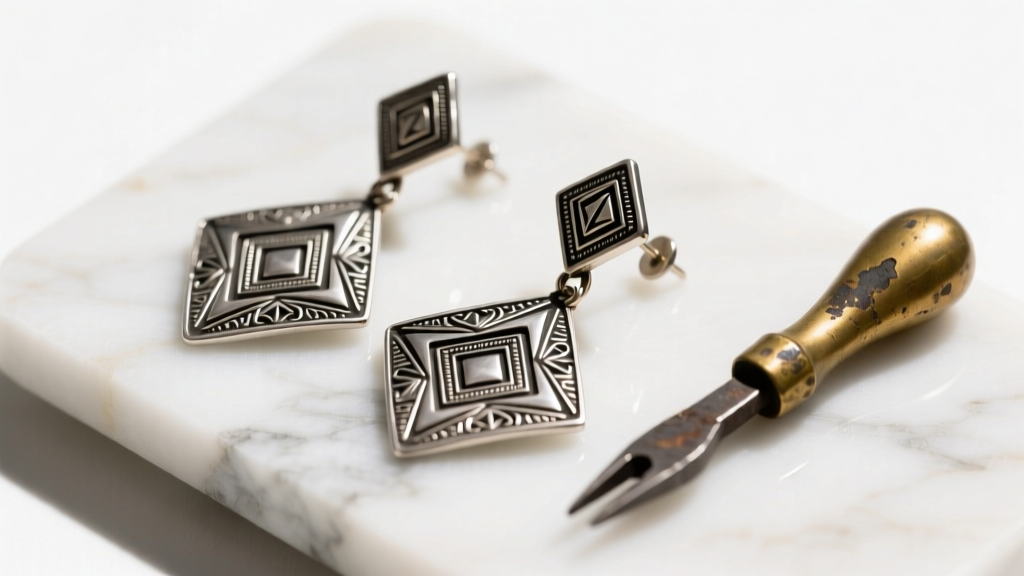
Pricing for vintage silver clip on earrings varies wildly based on provenance, mechanism condition, and designer attribution. Here is a realistic pricing framework for the 2026 collector's market:
- Tier 1: Unbranded Silverplate ($15 – $45) - Mass-produced mid-century pieces. Great for everyday wear and theatrical costuming, but hold no long-term investment value.
- Tier 2: Signed European 800 Silver ($80 – $250) - Often featuring intricate repoussé work or marcasite inlays. Italian and German pieces from the 1950s dominate this tier.
- Tier 3: American Sterling Art Deco/Retro ($150 – $400) - Highly sought after for their geometric boldness and superior weight. Look for makers like Trifari (their sterling lines) or Coro.
- Tier 4: Signed Taxco Mexican Sterling ($200 – $800+) - Mid-century maestros like Hector Aguilar, Margot de Taxco, and Antonio Pineda created sculptural, heavy-gauge silver clip-ons that are currently experiencing a massive surge in museum and collector demand.
Restoration and Maintenance for Longevity
"Never dip vintage silver in harsh chemical baths. You will strip decades of irreplaceable, microscopic surface history and leave the metal looking sterile and modern."
To maintain your vintage silver clip on earrings, use a mild phosphate-free dish soap and a soft horsehair brush to gently lift debris from the filigree. Dry immediately with a microfiber cloth. For the mechanical hardware, a microscopic drop of synthetic watch oil applied to the hinge pin with a needle will keep the paddle-back snapping crisply without attracting dust. Store your pieces in anti-tarnish Pacific cloth pouches, ensuring the screw-back pads are loosened slightly to prevent the tension springs from permanently deforming during long-term storage.
By understanding the mechanical evolution, metallurgical hallmarks, and structural failure modes of these mid-century treasures, you can confidently curate a collection of vintage silver clip on earrings that is both historically significant and impeccably wearable.


