Peruvian Earrings Guide: Fixing 950 Silver Filigree & Tarnish Issues
Learn how to troubleshoot common Peruvian earrings issues, from repairing delicate 950 silver filigree to removing heavy tarnish and fixing clasps.

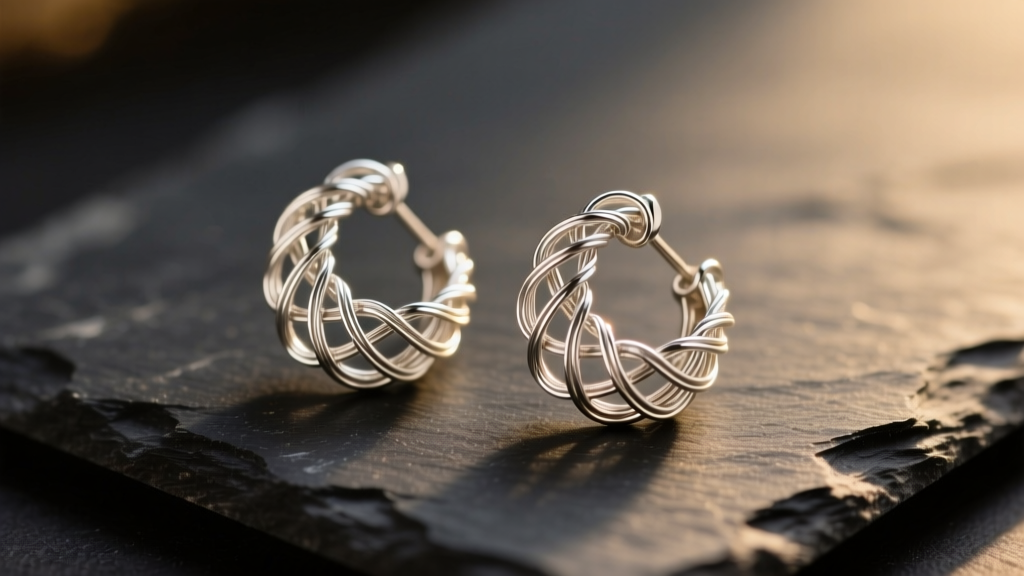
Peruvian earrings are globally celebrated for their rich cultural heritage, intricate filigrana (filigree) wirework, and vibrant Amazonian seed bead designs. However, owning these masterpieces comes with unique metallurgical and structural challenges. Unlike standard commercial jewelry, authentic Peruvian silver jewelry is frequently crafted in 950 purity rather than the global 925 sterling standard. This distinction fundamentally changes how the metal behaves, wears, and ages.
Whether you are dealing with a bent filigree wire, aggressive copper tarnish, or earlobe strain from heavy Andean dangles, this comprehensive troubleshooting guide provides expert-level solutions to restore and protect your investment.
The Metallurgy of Peruvian 950 Silver: Why It Bends and Breaks
To troubleshoot damage, you must first understand the alloy. Standard sterling silver is 92.5% silver and 7.5% copper. In contrast, traditional Peruvian silver is often minted at 950 purity (95% silver, 5% copper). According to the Gemological Institute of America (GIA), altering the copper ratio drastically shifts the metal's physical properties.
- Vickers Hardness (HV): Annealed 925 silver sits around 65 HV. Peruvian 950 silver is noticeably softer and more ductile due to the reduced copper matrix.
- Tarnish Rate: With less copper, 950 silver actually resists black copper-oxide tarnish slightly better than 925, but it is more prone to yellowing from sulfur exposure.
- Malleability: The higher purity makes it ideal for pulling the microscopic wires required for Catacaos-style filigree, but it means the final piece is highly susceptible to crushing and bending.
Troubleshooting Tip: Never store 950 silver Peruvian earrings loose in a jewelry box. The weight of other items will permanently warp the softer alloy. Always store them in rigid, velvet-lined compartments.
Troubleshooting Delicate Filigrana (Filigree) Damage
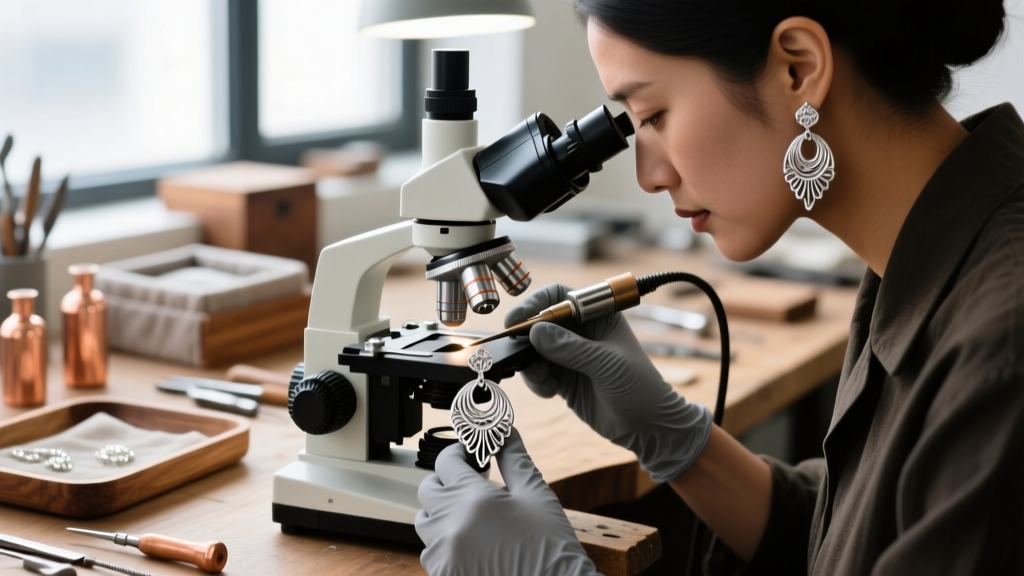
Filigree involves twisting and soldering wires as thin as 0.2mm. When a Peruvian filigree earring is dropped or snagged, the damage usually manifests as a warped frame or a snapped internal scroll.
What to Do When the Wire Bends
Do not use metal tweezers or jewelry pliers to bend the wire back into place. Because 950 silver is soft, metal tools will leave deep gouges that act as stress concentrators, leading to future snaps. Furthermore, repeatedly bending silver causes metal fatigue. Instead, use a polished wooden agate burnisher or a smooth bamboo skewer to gently coax the wire back into its original tension curve.
What to Do When the Wire Snaps
If a filigree wire breaks, superglue or epoxy is entirely useless; the bond will fail under the microscopic weight of the earring. Traditional torch soldering is also highly dangerous for filigree. The high thermal conductivity of 950 silver will pull the heat from the torch, melting adjacent 0.2mm wires before the solder flows. As of 2026, the only acceptable repair method is pulse-arc laser welding. A jeweler must use a microscope and a laser welder to fuse a microscopic drop of 950 silver filler wire exactly at the break point without transferring heat to the surrounding lattice.
Reversing Severe Tarnish Without Destroying Patina
Many artisan Peruvian earrings feature intentional oxidation (blackening) in the recessed areas to make the raised silver motifs pop. Aggressive cleaning will strip this contrast, leaving the earring looking flat and chalky. Below is a decision matrix for safely removing tarnish based on the earring's construction.
| Cleaning Method | Best Used For | Risk Level | Expert Warning |
|---|---|---|---|
| Microfiber Polishing Cloth | High-polish 950 silver hoops and studs | Low | Will not reach into deep filigree crevices. |
| Aluminum Foil & Baking Soda Bath | Solid cast pieces with no gemstones | Medium | Electrochemical reaction will strip intentional antique patina instantly. |
| Ultrasonic Cleaner | Solid, heavy cast Andean motif earrings | High | High-frequency vibrations will shatter filigree solder joints. |
| Diluted Silver Dip (Thiourea) | Heavily sulfided solid pieces | Very High | Leaves microscopic chemical residue that accelerates future tarnishing. |
For intricate filigree with intentional patina, the safest method is using a specialized silver cleaning foam applied with a soft-bristled makeup brush, carefully avoiding the recessed oxidized areas. For more general care guidelines, Jewelers Mutual recommends avoiding harsh chemical dips entirely on antique or artisan-crafted silver.
Solving Weight & Earlobe Stretching Issues
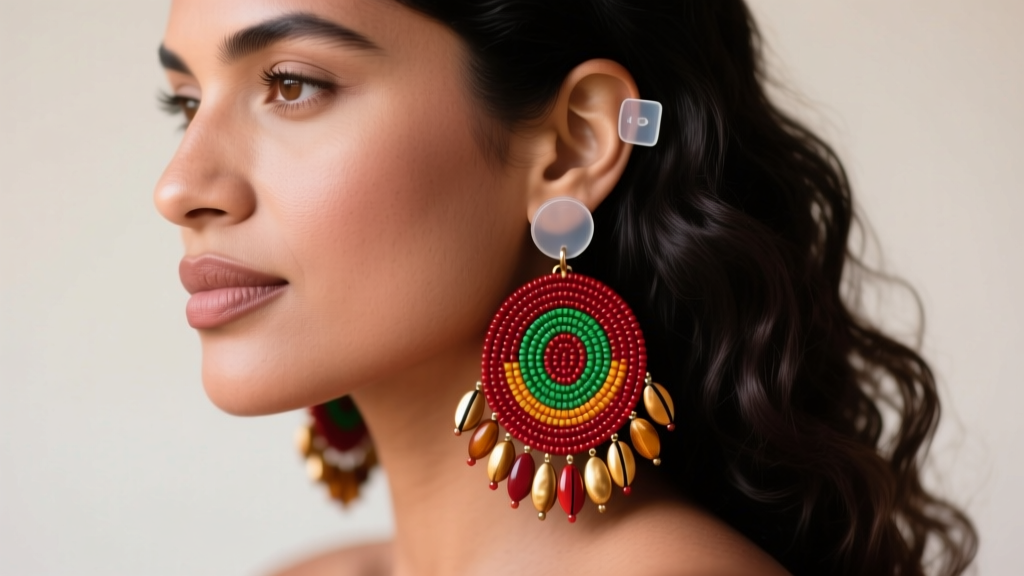
Traditional earrings from the Peruvian Amazon, often crafted from vibrant achira seeds, huairuro beans, or woven textile drops, can easily weigh between 15 to 30 grams per ear. A standard earlobe piercing is only structurally comfortable supporting about 5 to 7 grams over long periods. Wearing heavy dangles leads to micro-tears in the fistula (the piercing hole), resulting in permanent earlobe stretching and the dreaded 'cheese-cutter' effect.
Practical Support Solutions
- Silicone Earlobe Support Patches: Adhesive, medical-grade silicone patches (like Lobe Wonder) distribute the weight of the earring across a 1-inch surface area on the back of the earlobe, preventing the wire from slicing through the tissue.
- French Wire to Stud Conversion: Have a jeweler remove the heavy fishhook wire and laser-weld a flat, 6mm disc stud post to the top of the design. This shifts the center of gravity closer to the ear, reducing the pendulum torque that damages the piercing.
- Hollow-Forming: If commissioning custom seed bead earrings, ask the artisan to use hollow clay or lightweight balsa wood cores beneath the seed bead wrapping to reduce overall gram weight by up to 60%.
Authenticating Hallmarks and Purity
Because Peruvian 950 silver commands a premium, the market is flooded with counterfeit pieces stamped '950' but made of base metals. Here is how to verify your earrings:
- The Hallmark Check: Authentic pieces usually feature '950', 'PERU', and a maker's mark. Be aware that some modern exporters intentionally stamp 925 on 950 silver to avoid customs confusion in the US and EU markets.
- The Ice Test (Thermal Conductivity): Silver has the highest thermal conductivity of any common metal. Place an ice cube on the silver earring. If it is genuine 950 silver, the ice will begin melting almost instantly, far faster than on stainless steel or copper alloys.
- The Magnet Test: Silver is paramagnetic (non-magnetic). If a neodymium magnet pulls the earring, it contains a ferrous core and is a counterfeit.
Expert Insight: Standard liquid silver acid tests (Schwerter's solution) turn dark red for both 925 and 950 silver, making them useless for distinguishing Peruvian purity. To truly verify 950 purity non-destructively, a jeweler must use an XRF (X-ray Fluorescence) spectrometer.
Preventative Maintenance Checklist
Keep your Peruvian earrings in pristine condition by following this quick maintenance protocol:
- Post-Wear Wipe: Always wipe 950 silver with a dry microfiber cloth after wearing to remove skin oils and sulfur.
- Moisture Control: Store Amazonian seed bead and textile earrings with silica gel packets; organic materials will grow mold in high humidity.
- Clasp Lubrication: If your earrings feature mechanical omega-backs or screw-backs, apply a microscopic drop of synthetic watch oil to the hinge every 12 months to prevent friction wear on the softer 950 silver threads.
By respecting the unique metallurgy and cultural craftsmanship of Peruvian jewelry, you can troubleshoot common issues effectively and ensure these wearable works of art last for generations.


