How to Style and Curate Double Ear Piercing Earrings Perfectly
Master the art of double ear piercing earrings with our step-by-step guide on spacing, hypoallergenic metals, healing protocols, and expert styling.

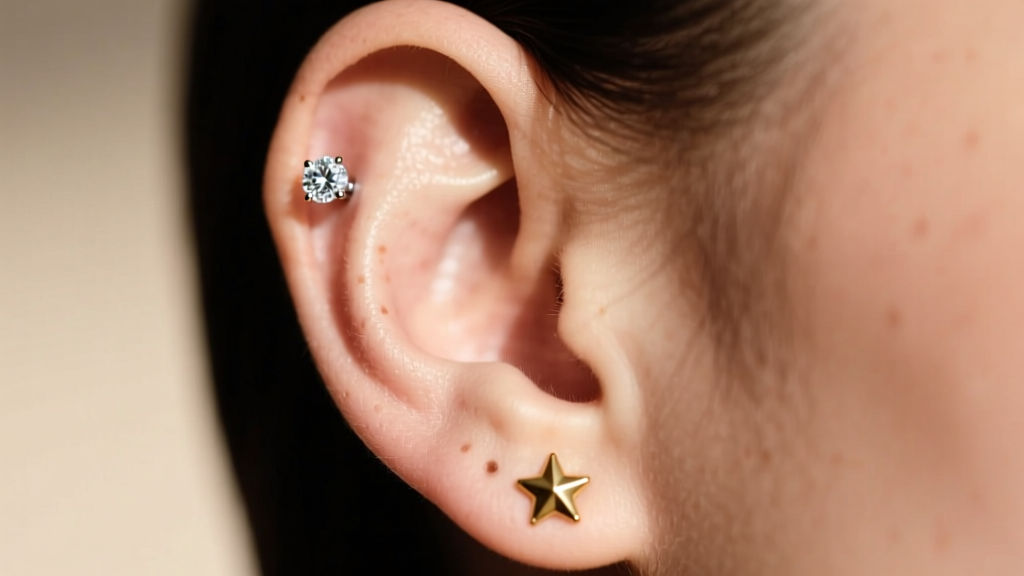
The Anatomy of a Double Lobe Setup
Curating the perfect arrangement of double ear piercing earrings requires more than just picking two pretty studs. It demands a precise understanding of your ear's geometry, specifically the spacing, angle, and gauge of your piercings. The standard first lobe piercing is typically placed centrally on the earlobe. When adding a second hole, professional piercers adhere to a strict spacing rule to ensure jewelry doesn't overlap or crowd the tissue.
Spacing and Gauge Specifications
The ideal distance between the center of the first hole and the center of the second hole is between 5mm and 8mm. If the spacing is less than 5mm, standard earring backs (like butterfly clasps or 4mm flat-back discs) will physically collide, causing friction and potential irritation bumps. Furthermore, while the first lobe is almost universally pierced at 20-gauge (0.81mm) or 18-gauge (1.02mm), the second hole can sometimes be stretched to 16-gauge (1.29mm) over time if you prefer thicker, more structural jewelry.
| Specification | First Lobe (Standard) | Second Lobe (Standard) | Minimum Clearance |
|---|---|---|---|
| Gauge Size | 20G (0.81mm) or 18G (1.02mm) | 18G (1.02mm) or 16G (1.29mm) | N/A |
| Center-to-Center Spacing | N/A | 5mm to 8mm from 1st hole | 5mm |
| Angle | Perpendicular to earlobe plane | Matched to 1st hole plane | Parallel alignment |
| Best Post Length (Healing) | 8mm to 10mm | 8mm to 10mm | Allows for 2mm swelling |
Step 1: Selecting Hypoallergenic Metals for Fresh Piercings
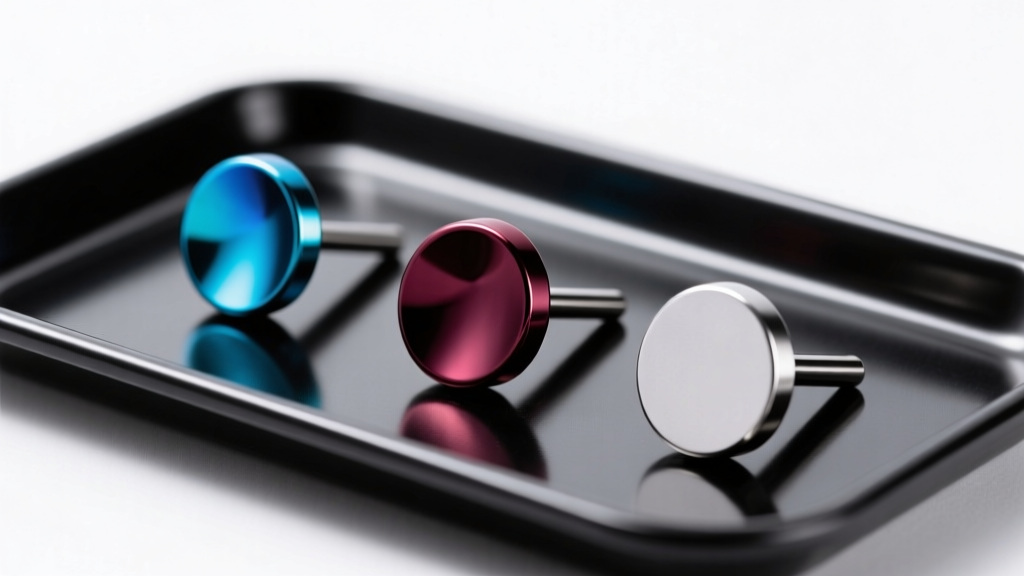
Before you can style your double ear piercing earrings, you must ensure the foundational jewelry is biocompatible. In 2026, the jewelry industry has largely moved away from the vague term 'surgical steel,' which often contains nickel and causes contact dermatitis. According to the Mayo Clinic's guidelines on nickel allergies, even trace amounts of nickel in low-grade stainless steel can trigger severe localized eczema, delaying the healing of your second piercing by months.
The Only Two Metals You Should Trust
- Implant-Grade Titanium (ASTM F-136): This is the gold standard for initial piercings. It is entirely nickel-free, lightweight, and can be anodized to create vibrant colors without using toxic paints or dyes. Expect to pay $25 to $60 for high-quality titanium flat-back labrets from brands like NeoMetal or BVLA.
- Solid 14k or 18k Gold (Nickel-Free Alloyed): Ensure the gold is alloyed with silver or copper, not nickel. Yellow and rose gold are generally safer than white gold, which sometimes relies on nickel for its silvery hue. High-end threadless gold ends range from $60 to $250.
Always verify that your piercer uses single-use, sterilized needles rather than piercing guns. The Association of Professional Piercers (APP) strictly advises against guns, as they cause blunt-force trauma to the tissue and cannot be properly sterilized in an autoclave.
Step 2: The 12-Week Healing Protocol
The first lobe piercing typically heals in 6 to 8 weeks. However, the second lobe piercing—especially if placed slightly higher toward the cartilage boundary—can take 8 to 12 weeks to fully mature. Treating both holes with a rigorous, step-by-step aftercare routine is non-negotiable.
Daily Cleaning Routine
- Prep the Solution: Use a sterile, preservative-free 0.9% sodium chloride wound wash. Do not mix your own salt water unless you have a precise digital scale; an overly saline mixture will dehydrate the fistula (the piercing channel) and cause crusting.
- Apply Gently: Spray the saline directly onto the front and back of both earrings twice a day. Let it sit for 30 seconds to soften any lymphatic fluid (crusties).
- Wipe and Dry: Gently wipe away softened debris with a non-woven gauze pad. Never use cotton swabs, as the micro-fibers can wrap around the post and embed in the healing wound.
- Dry the Area: Use a hair dryer on the 'cool' setting to completely dry the earlobes. Moisture trapped behind flat-back earrings breeds bacteria and yeast.
Never twist or rotate your double ear piercing earrings during the healing phase. The old advice of 'turning the earring so it doesn't stick to the skin' is a myth that actually tears the delicate new tissue forming inside the fistula.
Step 3: Styling Frameworks for Double Ear Piercing Earrings
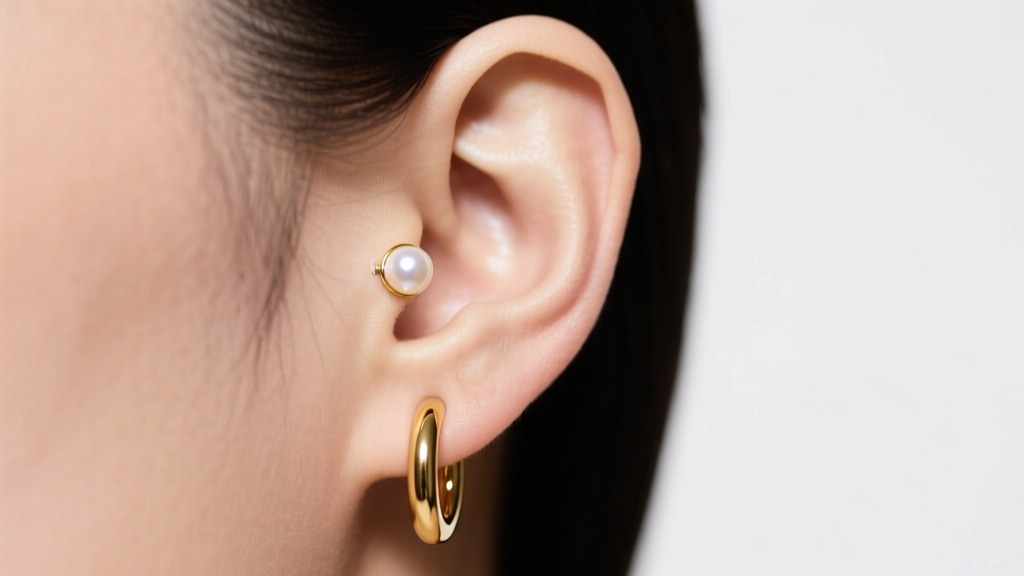
Once your piercings are fully healed (confirmed by a professional piercer, not by your own guess), you can begin curating your aesthetic. The double lobe offers a unique canvas for visual storytelling. Here are the three dominant styling frameworks used by high-end curators.
Framework 1: The Rule of Graduation
This is the most universally flattering approach. The jewelry in the first hole (closest to the face) is always larger or more visually dominant than the jewelry in the second hole. For example, pair a 5mm bezel-set diamond or moissanite stud in the first hole with a delicate 2.5mm gold ball or tiny star in the second. This draws the eye forward and creates a sense of depth.
Framework 2: The Huggie and Stud Combo
Hoops in the first hole and studs in the second create a balanced, textured look. Choose a 10mm to 12mm huggie hoop with a hinged clicker closure for the first lobe. Ensure the hoop's inner diameter is large enough not to press against the second hole. In the second hole, place a threadless flat-back stud with a subtle gemstone. This combination is highly practical for active lifestyles, as huggies rarely snag on hair or clothing.
Framework 3: The Ear Chain Connection
For a more editorial or avant-garde look, utilize a double-piercing ear chain. These delicate chains feature a stud on one end and a small hoop or hook on the other, physically connecting the first and second holes. When purchasing chains, measure the exact distance between your piercings. A standard chain is 8mm to 10mm long; if your piercings are spaced further apart, a standard chain will pull uncomfortably on the fistulas.
Step 4: Troubleshooting Common Double Piercing Issues
Even with meticulous care, double lobes can present unique mechanical challenges. Here is how to diagnose and fix the most common failures.
Embedding and 'Cheese-Cutter' Effect
If you wear heavy solid gold hoops or oversized gemstone studs in the second hole, the weight can cause the jewelry to slowly migrate downward, thinning the tissue between the hole and the edge of the earlobe. This is known as the cheese-cutter effect. The Fix: Immediately remove heavy dangles and switch to ultra-lightweight titanium flat-backs to allow the tissue to plump back up. Never sleep in hoops, as the pressure against the pillow accelerates migration.
Angle Misalignment
If your second hole was pierced at a slightly different angle than the first, certain jewelry (especially rigid flat-backs) might sit crookedly or poke the side of your neck. The Fix: Visit a professional piercer to swap the rigid post for a flexible bioplast retainer or a custom-bent post. In severe cases, retiring the piercing and having it re-pierced at the correct angle by a needle professional is the only permanent solution.
Irritation Bumps from Friction
If your piercings are spaced too closely (under 5mm), the decorative ends of the earrings will constantly rub against each other, causing localized trauma and hypertrophic scarring (irritation bumps). The Fix: Adopt a 'one in, one out' policy. Wear a larger statement piece in the first hole and leave the second hole empty or fitted with a microscopic 1.5mm micro-gem. Alternatively, downsize both holes to 2mm or 3mm flat studs to eliminate physical contact between the two pieces of jewelry.


