Engineering Large Statement Earrings: Weight, Gauges, and Comfort
Discover the technical engineering behind large statement earrings. Learn about weight distribution, gauge limits, and hypoallergenic material grades.

The Biomechanics of Earlobe Elongation
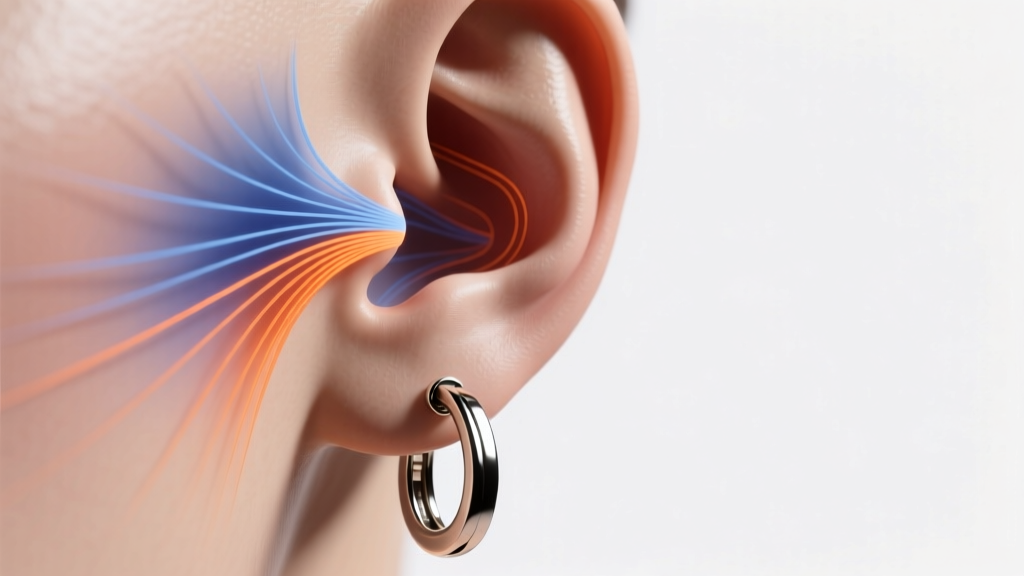
Designing and wearing large statement earrings is not merely an exercise in aesthetic proportions; it is a complex challenge in biomechanical engineering. The human earlobe is primarily composed of areolar connective tissue and adipose (fat) deposits, entirely lacking the rigid cartilage found in the upper auricle. Because of this soft-tissue composition, the earlobe has a remarkably low tensile strength. When heavy jewelry is suspended from a standard piercing, the gravitational force creates localized pressure that can easily exceed the tissue's structural limits.
The primary failure mode for heavy jewelry is the 'cheese-cutter effect.' This occurs when a thin wire or post bears a heavy load, concentrating the force into a microscopic surface area. Over time, this continuous pressure causes chronic collagen degradation and micro-tearing, eventually leading to complete earlobe splitting. According to dermatological research published in the National Institutes of Health (NIH), chronic traction from heavy earrings is a leading cause of acquired auricular deformities. To prevent this, the jewelry industry must adhere to strict weight-to-gauge ratios and utilize advanced load-distribution mechanisms when crafting oversized pieces.
Material Science: Density vs. Volume
The most significant hurdle in creating large statement earrings is the cubic density of traditional precious metals. A solid 18-karat gold earring with a volume of just 5 cubic centimeters will weigh approximately 77.5 grams. Suspended from a single earlobe, this weight guarantees immediate tissue trauma and acute pain within minutes. Therefore, metallurgists and jewelry CAD designers must manipulate material density without sacrificing the visual volume required for a 'statement' piece.
| Material | Alloy / Grade | Density (g/cm³) | Biocompatibility | Best Use Case |
|---|---|---|---|---|
| 24K Gold | Pure | 19.32 | Excellent | Small accents only |
| 18K Yellow Gold | 75% Au, 25% Cu/Ag | 15.50 | Very Good | Electroformed hollows |
| Titanium | Grade 5 (Ti-6Al-4V) | 4.43 | Superior | Structural posts & large drops |
| Aluminum | Anodized 6061 | 2.70 | Moderate | Avant-garde lightweight drops |
| Polyamide | 3D Printed Nylon | 1.10 | High | Massive structural cores |
As the table illustrates, transitioning from solid gold to aerospace-grade titanium or 3D-printed polyamides drastically reduces the gravitational load. For high-end luxury pieces where the look of gold is non-negotiable, master jewelers utilize electroforming. This process involves electrodepositing a thin layer of 14K or 18K gold over a wax or resin mandrel, which is subsequently melted out. The result is a visually massive, hollow gold shell that retains the luster of precious metal but weighs up to 75% less than its solid counterpart.
Structural Engineering: Wire Gauges and Stress Points
The structural integrity of large statement earrings relies heavily on the thickness of the post or wire, measured in the American Wire Gauge (AWG) system. Standard fashion earrings typically use 20-gauge (0.81mm) or 18-gauge (1.02mm) posts. However, these gauges are entirely insufficient for statement pieces exceeding 15 grams. Under heavy loads, an 18-gauge post will bend, warp, and eventually snap at the solder joint due to metal fatigue.
Upgrading the Post Architecture
For heavy drops, engineering standards dictate a minimum of 16-gauge (1.29mm) or 14-gauge (1.63mm) posts. Furthermore, the method of attaching the post to the earring body is a critical failure point. Traditional torch soldering introduces heat that can anneal (soften) the surrounding metal, creating a weak point. In modern fine jewelry manufacturing, laser welding is the preferred technique. Laser welding concentrates intense heat into a microscopic focal point, fusing the 14-gauge titanium or gold post to the earring body without altering the temper or structural hardness of the surrounding metal.
The Fallacy of the Butterfly Back
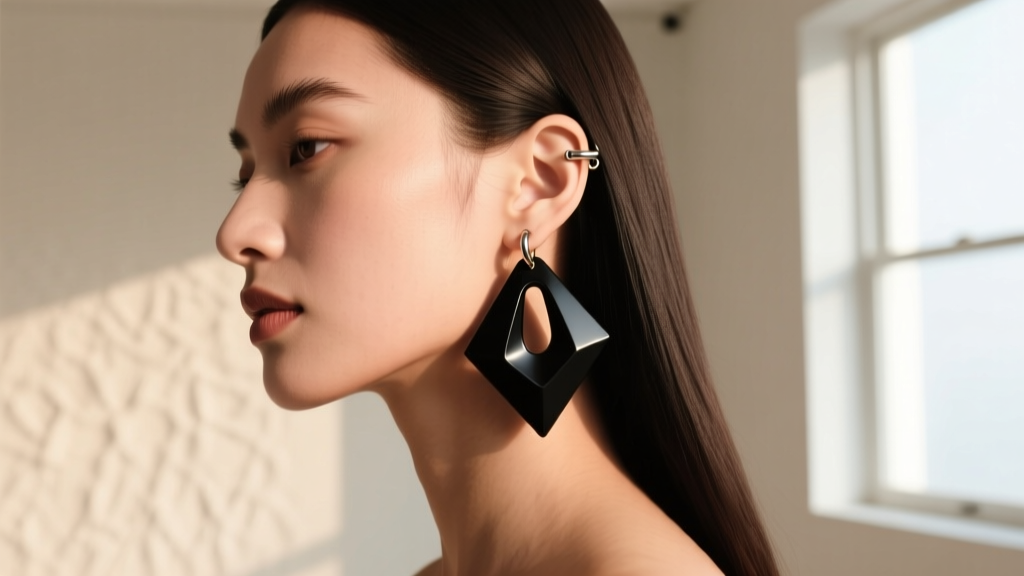
Standard friction-backed 'butterfly' clasps are engineered for lightweight studs. When subjected to the pendulum motion of a heavy statement earring, the friction grip fails, leading to lost jewelry. Heavy pieces require mechanical locking mechanisms. Threaded screw-backs provide a secure physical barrier, while locking lever-backs utilize a spring-loaded latch that snaps over a reinforced catch. For pieces exceeding 25 grams, the load must be transferred off the lobe entirely using an integrated ear cuff that grips the helix or conch cartilage, distributing the weight across the more robust upper ear structure.
2026 Innovations in Lightweight Alloys and Lattices
The landscape of jewelry manufacturing has shifted dramatically by 2026, driven by generative design algorithms and advanced metallurgy. One of the most exciting developments for large statement earrings is the use of internal lattice structures created via lost-wax casting with castable photopolymer resins. Instead of a hollow void, CAD software generates an internal honeycomb or gyroid lattice that provides immense structural rigidity while using a fraction of the metal.
Additionally, the adoption of Titanium Aluminide (TiAl) alloys—originally developed for jet engine turbine blades—has trickled down into high-end avant-garde jewelry. TiAl offers the hypoallergenic properties of pure titanium but with an even lower density and higher stiffness, allowing designers to create impossibly long, sweeping geometric drops that weigh less than a standard pair of denim jeans buttons. According to the Gemological Institute of America (GIA), the integration of these aerospace materials is redefining the boundaries of wearable scale in contemporary jewelry design.
Practical Fitting Framework for Heavy Drops
When selecting or designing large statement earrings, professionals utilize a specific decision framework to ensure wearability and tissue safety. This framework balances the visual impact of the piece with the physiological limits of the wearer.
- The 15-Gram Threshold: Any earring exceeding 15 grams must transition from a standard 18-gauge post to a 14-gauge post, and should ideally feature a wide, flat-backed disc to distribute pressure across a broader area of the earlobe.
- The Pendulum Factor: Long, linear drops generate kinetic energy as the wearer moves. A 20-gram earring that hangs close to the earlobe exerts less dynamic force than a 15-gram earring suspended on a three-inch chain. Articulated joints must be reinforced with steel or titanium jump rings to prevent shearing.
- Cartilage Load-Bearing: For ultra-heavy editorial or runway pieces (40+ grams), the design must incorporate an 'over-the-ear' wire or a tension-fitted cartilage cuff. The auricular cartilage can safely support significantly more weight than the adipose-rich lobe, provided the cuff is lined with medical-grade silicone to prevent friction abrasions.
'True luxury in statement jewelry is not just visual volume; it is the invisible engineering that allows a massive piece to feel entirely weightless on the body.' — Master Jeweler & CAD Architect
Ultimately, the successful execution of large statement earrings requires a symbiotic relationship between artistic vision and mechanical reality. By respecting the biomechanical limits of human tissue, upgrading wire gauges, and embracing advanced lightweight materials, designers can create breathtaking, oversized masterpieces that can be worn comfortably from the red carpet to the after-party.


