Troubleshooting Green Beaded Earrings: Fixes & Care
Learn how to troubleshoot common issues with green beaded earrings, from restringing broken wire to fixing heavy stones and preventing dye transfer.

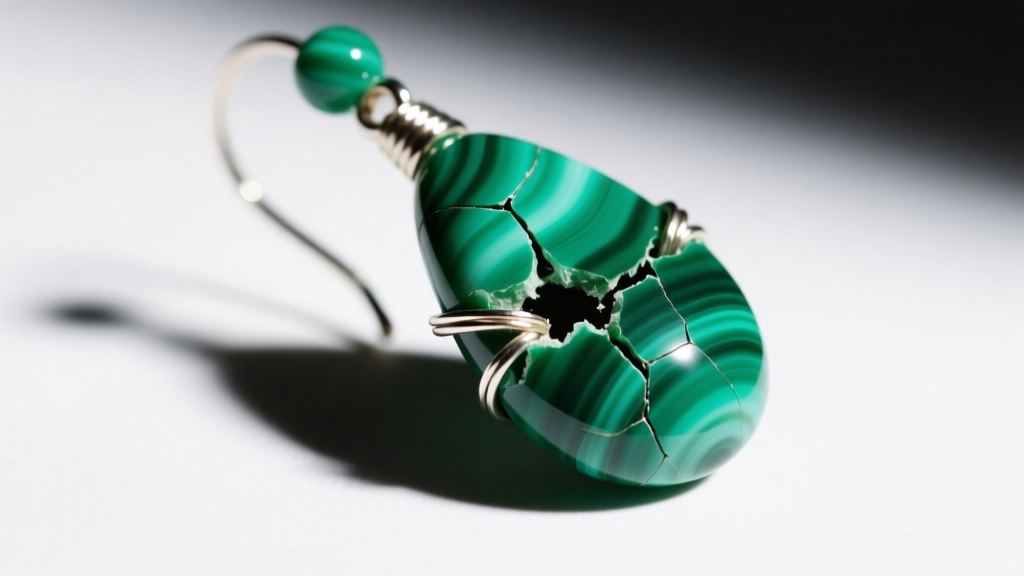
Green beaded earrings are a staple in any jewelry collection, offering a vibrant pop of color that ranges from the deep, mysterious bands of malachite to the bright, apple-green hues of chrysoprase. However, because natural green gemstones and dyed alternatives possess unique physical properties, they frequently present specific structural and maintenance challenges. Whether your favorite pair is stretching your earlobes, snapping its stringing wire, or leaving a mysterious green tint on your skin, diagnosing the root cause is essential for preserving your jewelry.
In this comprehensive troubleshooting guide, we will break down the most common structural and material failures associated with green beaded earrings. By understanding the specific gravity, Mohs hardness, and chemical sensitivities of popular green stones, you can implement professional-grade fixes and extend the lifespan of your favorite pieces.
The Weight Problem: Preventing Lobe Strain and Tearing
One of the most frequent complaints regarding green beaded earrings—particularly those featuring malachite, jade, or aventurine—is excessive weight. Unlike glass or resin beads, natural gemstones have a high specific gravity. For context, malachite has a specific gravity of 3.6 to 4.0, meaning it is significantly denser than quartz or turquoise. When this weight is suspended from a thin 22-gauge French wire, it creates a pendulum effect that can quickly stretch the earlobe piercing or cause the earring to droop unflatteringly.
Diagnosing and Fixing Lobe Strain
If your green beaded earrings are pulling your piercing downward, the issue is a lack of surface area support on the back of the earlobe. To troubleshoot this without redesigning the earring, you must upgrade your earring backers.
- Silicone Support Discs: Products like BlingDots or generic silicone earring support patches distribute the weight across a 10mm surface area on the back of the lobe, preventing the wire from slicing through the tissue.
- Oversized Push-Backs: Swap standard 4mm metal butterfly backs for 8mm or 10mm silicone stoppers. The increased friction and surface area stabilize heavy drops.
- Wire Gauge Upgrades: If the earring wire itself is bending under the weight of the beads, the jeweler likely used 22-gauge (0.025-inch) wire. For heavy green stones, the finding should be upgraded to a 20-gauge (0.032-inch) leverback or a reinforced kidney wire to resist warping.
Stringing Failures: Why Your Beading Wire Snaps
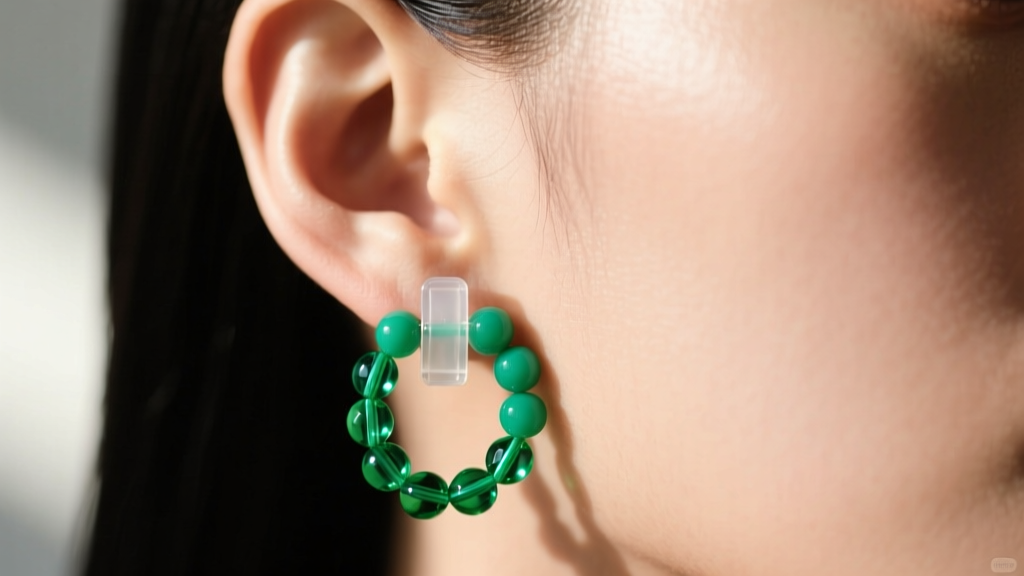
There is nothing more frustrating than dropping a green beaded earring and watching dozens of tiny jade beads scatter across the floor. Bead loss is almost always a stringing failure, but the culprit varies depending on the stone.
The Drill Hole Abrasion Factor
According to the Gemological Institute of America (GIA), stones like aventurine and malachite are often tumbled and drilled in bulk. This mass-production process can leave microscopic, razor-sharp edges inside the bead's drill hole. Over time, the natural movement of the earring causes these sharp edges to saw through standard nylon-coated beading wire.
The Fix: If you are restringing green beaded earrings, never use standard 7-strand or 19-strand beading wire. Upgrade to a 49-strand micro-wire, such as Rio Grande's Accu-Flex in a 0.015-inch or 0.018-inch diameter. The 49-strand wire is highly flexible and resists abrasion far better than stiffer alternatives. Additionally, always use a sterling silver or gold-filled wire protector (also known as a French wire guard) at the clasp loop to prevent the metal finding from cutting into the nylon coating.
Color Bleed and Discoloration: Dyed vs. Natural Stones
A common troubleshooting scenario involves the wearer noticing a green stain on their neck or earlobe, or the beads themselves fading from a vibrant emerald to a dull, mottled gray. This is almost exclusively an issue with dyed stones rather than natural, untreated gemstones.
The Acetone Test
Many commercial "green jade" or "green turquoise" beads on the market are actually dyed howlite, white marble, or pale serpentine. The dyes used are often unstable and react to the acidic pH of human sweat, cosmetics, or perfumes. To determine if your green beaded earrings are bleeding dye:
- Dip a cotton swab in pure acetone (nail polish remover) or rubbing alcohol.
- Rub the swab firmly against an inconspicuous bead near the clasp.
- If the swab turns green, the stone is dyed and the color is leaching.
Expert Insight: If your dyed green beads are bleeding onto your skin, you cannot reverse the dye process. However, you can seal the beads using a micro-thin coat of clear, jewelry-safe epoxy resin or a specialized bead sealer. Alternatively, restring the earrings using metallic spacer beads between the dyed stones to prevent them from rubbing directly against the skin.
Hardware and Finding Allergies: The Hidden Culprits
Sometimes, the green beaded earrings themselves are perfectly fine, but the wearer experiences itching, redness, or flaking around the piercing site. This is rarely an allergy to the green stone; it is almost always a contact dermatitis reaction to the base metal findings used to construct the earring.
Identifying the Allergen
Mass-produced beaded earrings frequently use nickel-plated brass or copper-alloy French wires to keep costs down. When copper oxidizes against the moisture of the skin, it can also leave a harmless but unsightly green stain that is often mistaken for an allergic reaction. To troubleshoot this, you must replace the ear wire.
| Stone Type | Specific Gravity | Recommended Wire Gauge | Best Finding Style |
|---|---|---|---|
| Malachite | 3.6 - 4.0 | 0.018" - 0.024" (49-strand) | Leverback (20g) |
| Green Jade | 2.9 - 3.3 | 0.015" - 0.018" | French Wire (20g) |
| Aventurine | 2.6 - 2.7 | 0.012" - 0.015" | Kidney Wire (22g) |
| Dyed Howlite | 2.5 - 2.6 | 0.010" - 0.012" | Stud Post (22g) |
For sensitive ears, swap the original findings for Niobium or 14k Gold-Filled ear wires. Niobium is highly biocompatible, hypoallergenic, and can even be anodized to match the green hues of your beads for a seamless aesthetic.
Step-by-Step Restringing Guide for Drop Styles
If your green beaded earrings have suffered a catastrophic stringing failure, you can rebuild them at home with professional results. Follow this precise workflow to ensure structural integrity.
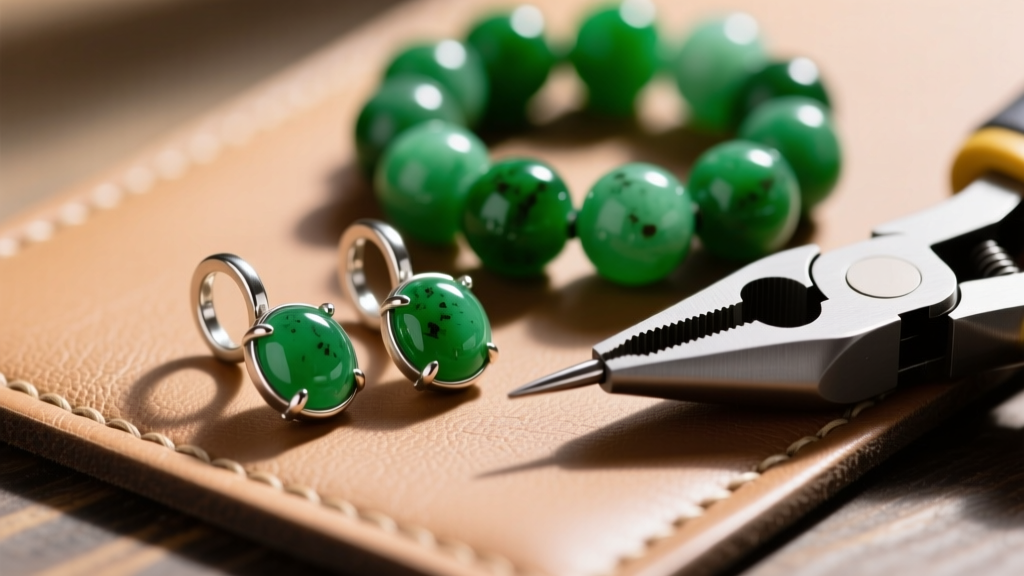
Tools and Materials Required
- 49-strand Accu-Flex beading wire (0.015" diameter)
- Sterling silver 2x2mm crimp tubes (avoid base metal crimps which crush unevenly)
- Micro-crimping pliers
- Wire guards (French wire protectors)
- Flush cutters
The Restringing Process
Step 1: Cut an 8-inch length of beading wire. Thread one end through a wire guard, then through a crimp tube, and back through the wire guard to form a loop. Pass the tail back through the crimp tube and the first two beads.
Step 2: Using the micro-crimping pliers, compress the crimp tube in the second notch to create a divot, then fold it in half using the first notch. This ensures a rounded, secure finish that won't scratch the wearer's neck.
Step 3: String your green beads, ensuring you leave a 2mm gap at the top of the design. This gap is crucial; without it, the wire will be too rigid, and the earring will not drape naturally.
Step 4: Secure the top loop using the same crimping method, attaching it to a hypoallergenic 20-gauge leverback finding. Trim the excess wire flush with the bead hole using precision flush cutters.
By understanding the unique material properties of green gemstones and utilizing professional jewelry-making techniques, you can troubleshoot virtually any issue your green beaded earrings present. Whether it is reinforcing a heavy malachite drop or sealing dyed jade, these targeted solutions will keep your favorite accessories looking vibrant and structurally sound for years to come.


