Men Earring Right or Left: How to Choose Your Piercing Side
Discover the ultimate guide to men earring right or left placement. Learn styling frameworks, gauge sizes, and modern piercing rules.

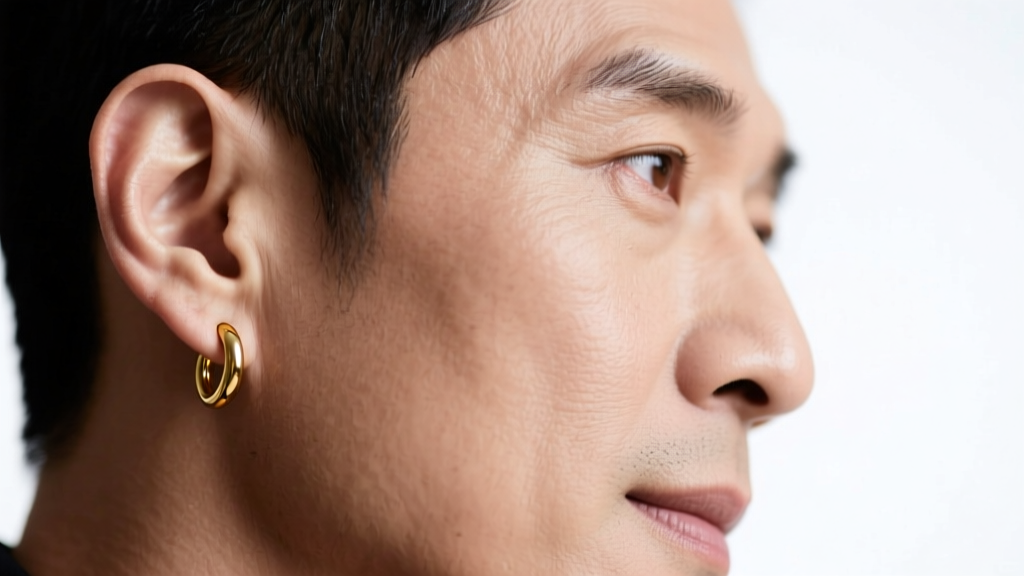
The landscape of men's jewelry has undergone a massive renaissance over the last decade. What was once confined to subcultures or restricted by rigid societal codes is now a cornerstone of mainstream men's fashion. Yet, when getting a first or second piercing, many still find themselves Googling the age-old question: men earring right or left? Does the side still matter? The short answer for 2026 is no—the outdated "codes" are dead. However, choosing which ear to pierce (or whether to pierce both) requires a strategic approach based on facial asymmetry, lifestyle, and long-term curation goals.
This comprehensive guide breaks down the history, debunks the myths, and provides a step-by-step framework for choosing your piercing placement, selecting the correct jewelry gauge, and ensuring a flawless healing process.
The Historical Baggage: Decoding the "Right Ear" Myth
To understand the hesitation some men still feel, we have to look at the cultural baggage of the 1970s through the 1990s. During this era, a covert signaling system emerged in Western cultures where a left-ear piercing was considered the "standard" for heterosexual men, while a right-ear piercing was adopted as a subtle identifier within the LGBTQ+ community. This gave rise to the deeply ingrained, albeit problematic, rhyme: "Left is right, and right is wrong."
Today, this binary is entirely obsolete. Icons like Harry Styles, Bad Bunny, and A$AP Rocky have completely dismantled these archaic rules, frequently sporting single right-ear studs, asymmetrical double lobes, or fully curated cartilage stacks on both sides. In modern menswear, the placement of your earring is no longer a statement of sexual orientation; it is purely an exercise in personal aesthetics and facial balancing.
How to Choose Your Side: A Step-by-Step Styling Framework
Rather than relying on outdated cultural codes, modern ear curation relies on visual balance and practical lifestyle considerations. Follow this two-step framework to determine your ideal placement.
Step 1: Analyze Facial Asymmetry and Hair Parting
Human faces are naturally asymmetrical. One side of your jawline may be slightly sharper, or one eyebrow may sit higher. Furthermore, your hair part plays a massive role in visual weight. If you part your hair on the left, sweeping the bulk of your hair to the right, your left ear is likely more exposed. Placing a statement piece—like a 14k solid gold huggie or a diamond-accented threadless stud—on the more exposed side creates a striking, intentional focal point. Conversely, if you want to balance a heavy hairstyle that covers one ear, piercing the hidden side can create an intriguing element of surprise when the hair moves.
Step 2: Consider Your Dominant Hand and Sleeping Habits
Piercings require meticulous aftercare, and your daily habits will impact healing. If you are a strict side-sleeper, you must factor in the friction and pressure placed on the ear against the pillow. Piercing the ear opposite to your dominant sleeping side will drastically reduce the risk of irritation bumps (hypertrophic scarring) and accidental snagging during the initial 6-to-8-week lobe healing window.
Single vs. Double: Navigating Modern Men's Ear Curation
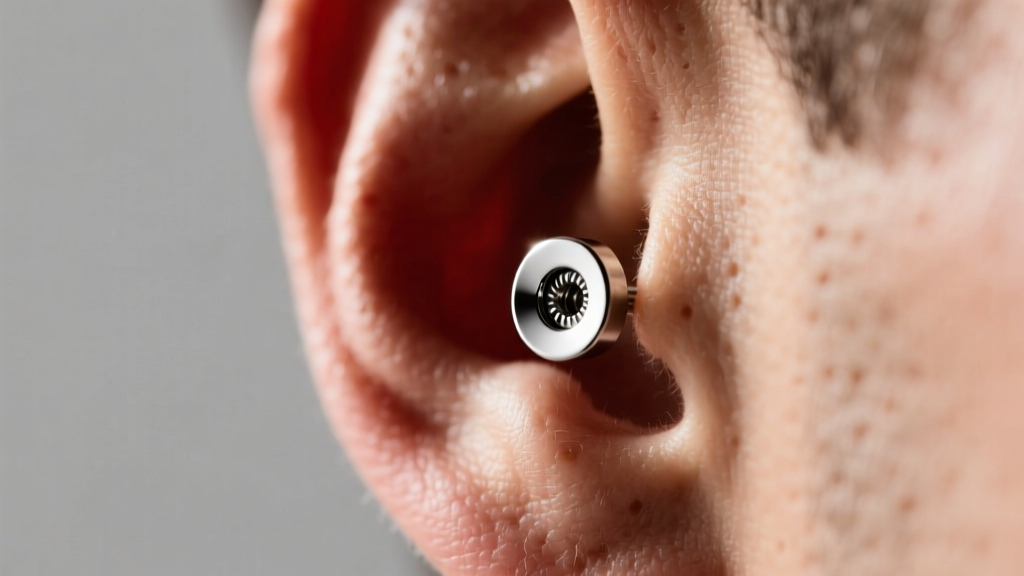
Once you have decided on the initial side, the next decision is whether to stop at one or commit to a double. The single earring remains a powerful, minimalist statement, often anchoring a rugged or classic aesthetic. However, the double lobe allows for versatility—pairing a subtle 2mm bezel-set diamond on the upper lobe with a textured hoop on the lower lobe.
| Placement Strategy | Standard Gauge | Healing Time | Best Jewelry Type | Style Impact |
|---|---|---|---|---|
| Single Standard Lobe | 18g (1.0mm) or 16g (1.2mm) | 6 - 8 Weeks | Flat back labret or seamless hoop | Minimalist, classic, versatile |
| Double Lobe (Stacked) | 18g (1.0mm) for both | 6 - 8 Weeks per piercing | Stud (top) + Huggie (bottom) | Curated, modern, edgy |
| Upper Lobe / Helix | 16g (1.2mm) | 6 - 12 Months | Threadless titanium push-pin | Alternative, high-fashion |
Pro Styling Tip: If you opt for a double lobe, ensure the jewelry scales correctly. The bottom earring should generally be slightly larger or heavier in visual weight than the top earring to maintain a grounded, balanced look.
Step-by-Step Guide to Getting Your First (or Next) Piercing
The execution of the piercing is just as critical as the placement. A poorly executed piercing will result in migration, rejection, or chronic irritation. Follow these strict guidelines when visiting a studio.
1. Demand a Hollow Needle, Never a Gun
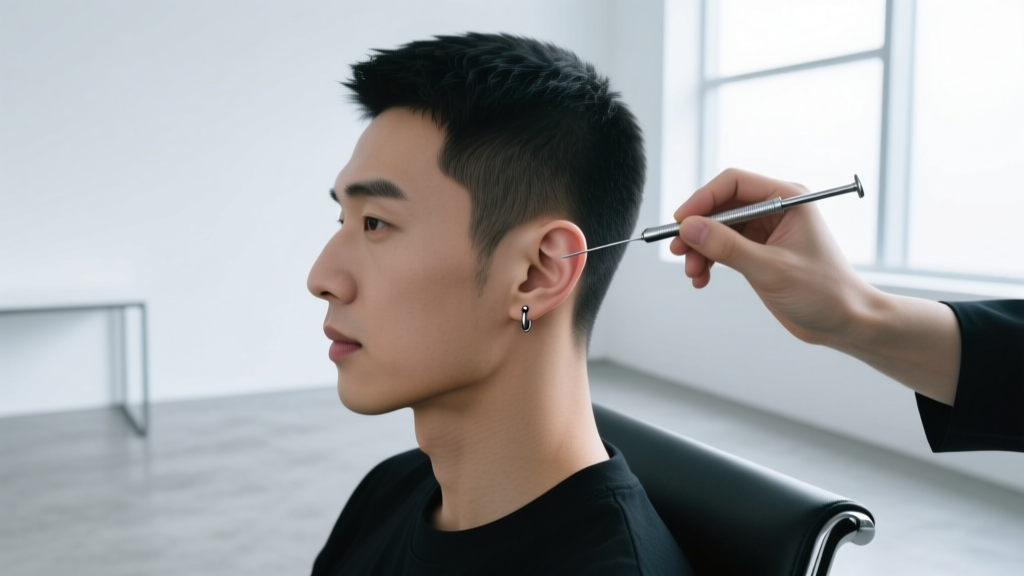
Piercing guns use blunt force to shove a sharpened earring post through tissue, causing massive blunt-force trauma and micro-tears. This leads to excessive scar tissue and prolonged healing. A professional piercer will use a single-use, sterilized hollow bevel needle that cleanly removes a tiny crescent of tissue, allowing for a smoother fistula (the tube of skin that forms the piercing channel) to develop.
2. Verify the Jewelry Material and Threading
Do not accept "surgical steel" for a fresh piercing. Surgical steel (often 316L) contains nickel, which can trigger contact dermatitis and delay healing. According to the Association of Professional Piercers (APP), the only acceptable metals for fresh piercings are implant-grade titanium (ASTM F-136), niobium, or solid 14k/18k gold. Furthermore, insist on internally threaded or threadless (push-pin) jewelry. Externally threaded jewelry has grooves on the post that tear the delicate healing tissue upon insertion.
Aftercare Protocol for Men's Ear Piercings
Men often neglect aftercare, assuming earlobes heal effortlessly. While lobes are forgiving, cartilage is notoriously stubborn. The American Academy of Dermatology emphasizes keeping the area clean and avoiding unnecessary trauma. Implement this daily protocol:
- Cleanse Twice Daily: Spray the front and back of the piercing with sterile saline wound wash (0.9% sodium chloride with no additives). Let it air dry or gently pat with a non-woven gauze.
- Avoid the "Twist": Never twist or rotate the jewelry. This breaks the fragile new cellular bonds forming inside the fistula and introduces surface bacteria into the wound.
- Shower Smart: Avoid letting shampoo, conditioner, or body wash pool in the ear. Rinse the piercing thoroughly with warm water at the very end of your shower.
- Ditch the Ointments: Never apply Neosporin, tea tree oil, or rubbing alcohol. These suffocate the wound, trap bacteria, and cause chemical burns on healing tissue.
Final Verdict: Which Side Should You Pick?
The debate over men earring right or left side dominance is a relic of a bygone era. In 2026, your choice should be dictated by your unique facial structure, your hair styling habits, and your long-term jewelry goals. If you are right-handed, sleep on your left side, and part your hair to the right, starting with a single 16-gauge titanium flat-back stud on your right earlobe is a masterclass in both aesthetic balance and practical healing. Ultimately, confidence is the best accessory—choose the side that makes you feel the most authentic, and let the jewelry do the talking.


