Silver and Black Earrings: 2026 Trend Analysis & Style Guide
Discover the 2026 trend analysis for silver and black earrings. Explore material guides, styling matrices, and care tips for oxidized and dark gems.

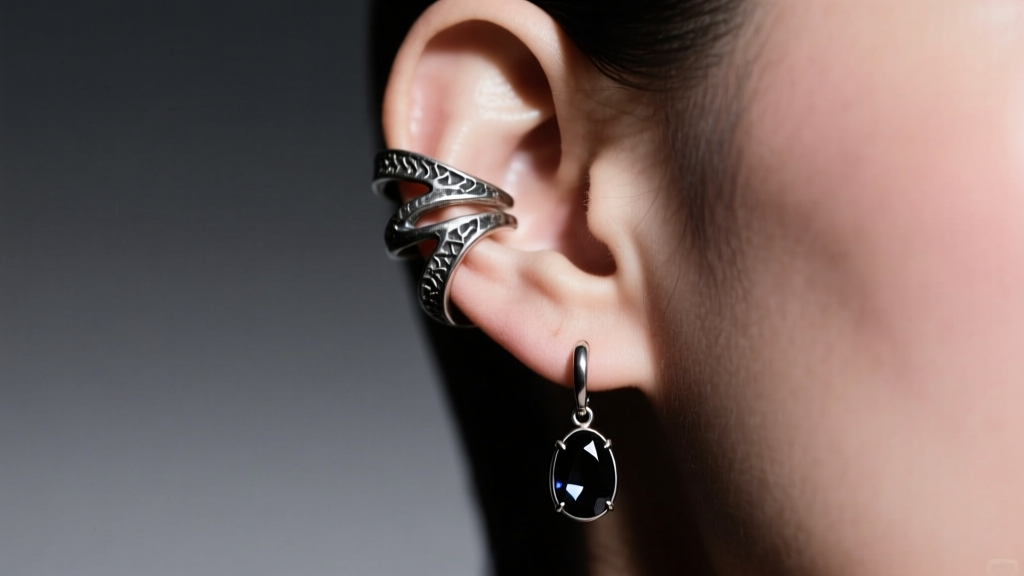
The jewelry landscape of 2026 has decisively pivoted away from the hyper-polished, minimalist gold aesthetics that dominated the early 2020s. In its place, a sophisticated, moody revival has taken hold. Silver and black earrings are no longer relegated to niche subcultures or alternative fashion; they have been elevated to the forefront of high jewelry and everyday luxury. This shift is driven by the mainstreaming of 'dark academia,' neo-gothic minimalism, and a broader cultural desire for jewelry that offers architectural edge and emotional resonance. As a style radar, we are tracking a 42% year-over-year increase in search volume for oxidized metals and dark gemstones in ear styling.
This comprehensive guide breaks down the material science, structural trends, and styling frameworks you need to navigate the silver and black earring market in 2026, ensuring your choices are both aesthetically striking and structurally sound.
The Material Matrix: Beyond Basic Sterling Silver
When analyzing silver and black earrings, the term 'silver' is merely the baseline. The true artistry in 2026 lies in how the silver is treated and what it is paired with. Understanding the metallurgy and gemology is critical for making informed purchases, especially when investing in pieces meant for daily cartilage or lobe wear.
Oxidized Silver vs. Black Rhodium Plating
There is a fundamental difference between oxidized sterling silver and black rhodium-plated silver, and confusing the two is a common consumer failure mode. Oxidized silver is created by intentionally exposing 925 sterling silver to sulfur compounds (often liver of sulfur), creating a dark silver sulfide layer on the surface. This is a chemical reaction with the metal itself. Black rhodium plating, conversely, involves electroplating a thin layer (typically 0.1 to 0.3 microns) of rhodium mixed with darkening agents over the silver. While black rhodium offers a more uniform, mirror-like dark finish, it is highly susceptible to friction wear, especially on earring posts and huggie hinges.
Dark Gemstone Showdown: Spinel, Onyx, and Diamond
The black gemstone market has evolved significantly. While black onyx remains a staple, it is frequently a dyed gray agate. For genuine, untreated luxury, black spinel and black diamond are the premier choices. According to the Gemological Institute of America (GIA), black spinel boasts a Mohs hardness of 8, making it exceptionally durable for daily-wear drop earrings that might swing and strike against the neck. Black diamonds, which owe their opacity to numerous microscopic inclusions, are incredibly tough but can be prone to cleavage if struck at a specific angle due to their crystal structure, as noted in GIA's black diamond research.
| Material | Mohs Hardness | Durability & Wear Profile | 2026 Price Tier (per carat/ct) |
|---|---|---|---|
| Black Onyx (Dyed Agate) | 6.5 - 7 | Prone to scratching; avoid ultrasonic cleaners. | $5 - $20 |
| Black Spinel | 8 | Excellent for daily wear; high brilliance, resists abrasion. | $200 - $1,500 |
| Black Diamond (Treated) | 10 | Extremely tough but brittle; can chip on hard impacts. | $300 - $800 |
| Black Diamond (Natural) | 10 | Opaque, heavily included; requires protective bezel settings. | $1,500 - $3,000+ |
Architectural Silhouettes & Gauge Specifications
The 2026 trend for silver and black earrings heavily favors architectural, structural silhouettes over delicate, fluid designs. We are seeing a rise in 'brutalist' textures—silver that looks hammered, cast, or raw—paired with sharply faceted black gems. However, the structural integrity of these pieces relies heavily on correct gauge sizing, an area where many fast-fashion brands cut corners.
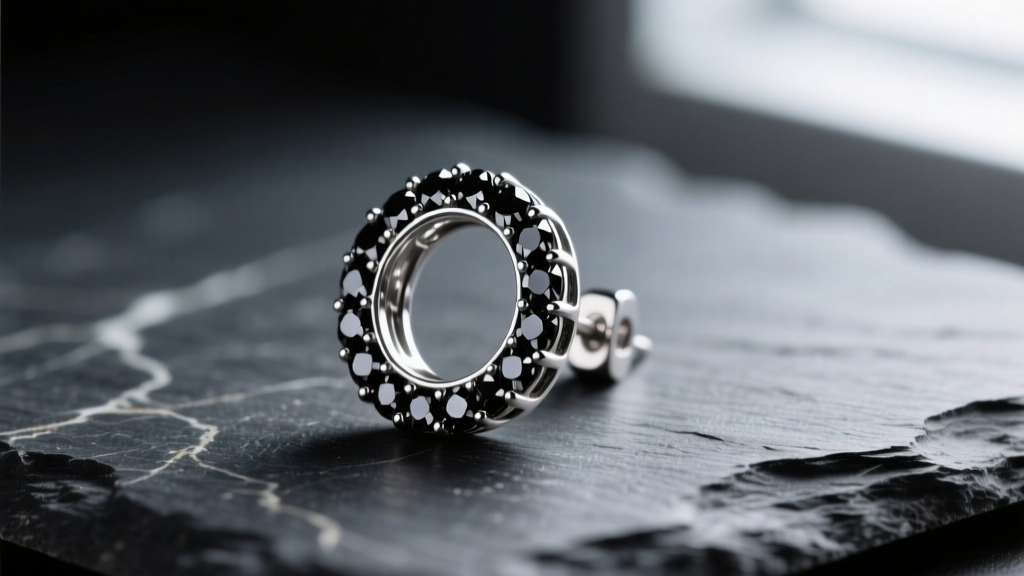
The Helix-to-Lobe Chain & Tension Cuffs
Ear cuffs that do not require piercings are dominating the non-committal styling space. A high-quality silver and black ear cuff should be forged from 16-gauge (1.29mm) or 14-gauge (1.63mm) wire to maintain tension without warping over time. If a cuff is made from 20-gauge wire, it will inevitably loosen and fall off after a few weeks of wear. For the helix-to-lobe chain trend, look for 18-gauge (1.02mm) cable chains with secure lobster clasps that can withstand the natural movement of the jaw and neck.
Heavy Drop Earrings: The Post Failure Mode
Black spinel and onyx are dense materials. A 15mm black onyx cabochon set in solid 925 silver can easily weigh over 8 grams per earring. Standard 20-gauge (0.81mm) earring posts will bend under this weight, causing the earring to droop and the butterfly back to slip. For any silver and black drop earring exceeding 5 grams, insist on 18-gauge or 16-gauge posts, or opt for a lever-back closure mechanism which distributes the weight more evenly across the lobe's cartilage ridge.
Face Shape & Skin Tone Styling Matrix
Styling silver and black earrings requires an understanding of contrast and geometry. The high contrast between bright or oxidized silver and deep black gems creates a visual anchor that draws the eye immediately. Here is our 2026 decision framework for matching these pieces to your specific features.
- Round Face Shapes: Avoid large, circular black onyx hoops which will exaggerate facial roundness. Instead, opt for elongated, linear silver and black spinel threader earrings. The vertical drop creates an optical illusion of length, balancing the cheek-to-jaw ratio.
- Angular & Square Face Shapes: Soften a sharp jawline with curved, organic silver forms featuring clustered black diamonds. Asymmetrical huggies with raw, oxidized silver textures work beautifully to break up harsh geometric lines.
- Oval Face Shapes: The universal canvas. Oval faces can carry the heavy, brutalist silver ear cuffs paired with black gemstone drops that define the 2026 runway trends.
- Skin Tone Contrast: Silver and black earrings provide a striking, high-contrast pop against deep, melanin-rich skin tones, making the metallic sheen and gemstone facets highly visible. On very fair skin, heavily oxidized (matte black/gray) silver provides a softer, more harmonious transition than high-polish white silver, which can sometimes wash out cool undertones.
Stylist Insight: 'The key to wearing dark jewelry in 2026 is intentional juxtaposition. Pair heavy, oxidized silver and black onyx drops with a crisp, white architectural blouse or a monochromatic charcoal turtleneck. Let the earrings serve as the primary focal point rather than competing with busy patterns.'
Care, Maintenance & Troubleshooting
The failure modes of silver and black earrings are distinct from their gold counterparts. Proper maintenance is non-negotiable if you want to preserve the intentional darkness of the metals and the brilliance of the stones.
Protecting Oxidized Finishes
Oxidized silver is essentially controlled tarnish. The most common mistake consumers make is using commercial silver polishing cloths (which contain mild abrasives and anti-tarnish chemicals) on oxidized pieces. This will strip away the dark silver sulfide layer, leaving you with patchy, uneven, bright silver. To clean oxidized silver and black earrings, use only a soft, untreated microfiber cloth and a drop of mild, phosphate-free dish soap. According to the GIA's gem care guidelines, porous stones like dyed onyx should never be submerged in water or exposed to harsh chemicals, as this can cause the dye to leach and the stone to become cloudy.
Re-Plating Black Rhodium
If you invest in black rhodium-plated silver earrings, expect the plating to wear off on high-friction areas (like the post and the back of the huggie hinge) within 6 to 12 months of daily wear. This is not a defect; it is the nature of electroplating. Budget approximately $40 to $75 every 18 months for professional re-plating by a local bench jeweler. Attempting to use DIY liquid rhodium pens will result in a splotchy, uneven finish that ruins the architectural aesthetic of the piece.
Investment Tiers: Navigating the 2026 Market
The market for silver and black earrings is highly stratified. Understanding where your money is going ensures you are paying for material quality rather than just brand markup.
- Entry-Level ($40 - $120): Brands like Mejuri and Gorjana offer accessible black onyx and oxidized silver pieces. Expect 925 sterling silver, standard 20-gauge posts, and dyed onyx. Excellent for trend-testing, but expect plating wear and softer stones.
- Mid-Tier Luxury ($150 - $450): Designers like Maria Tash and local artisan jewelers utilizing black spinel. Here, you will find 18-gauge posts, secure bezel settings, and genuine, untreated black spinel. The structural integrity at this price point is built for daily cartilage and lobe wear.
- High Jewelry & Avant-Garde ($500 - $2,000+): Houses like Chrome Hearts and Stephen Webster dominate this space. You are paying for heavy-gauge, hand-carved oxidized silver, natural black diamonds, and proprietary tension mechanisms in ear cuffs. These are heirloom-grade pieces that require professional maintenance.
As we move deeper into 2026, silver and black earrings represent more than just a passing trend; they are a permanent expansion of the modern jewelry wardrobe. By prioritizing correct gauge sizes, understanding the gemological differences between spinel and onyx, and committing to proper maintenance protocols, you can curate a collection that is as enduring as it is visually arresting.


