Dangling Bow Earrings Buying Guide: What To Look For
Discover how to choose the perfect dangling bow earrings. Our expert buying guide covers materials, weight, gauge sizes, and structural tips for lasting wear.

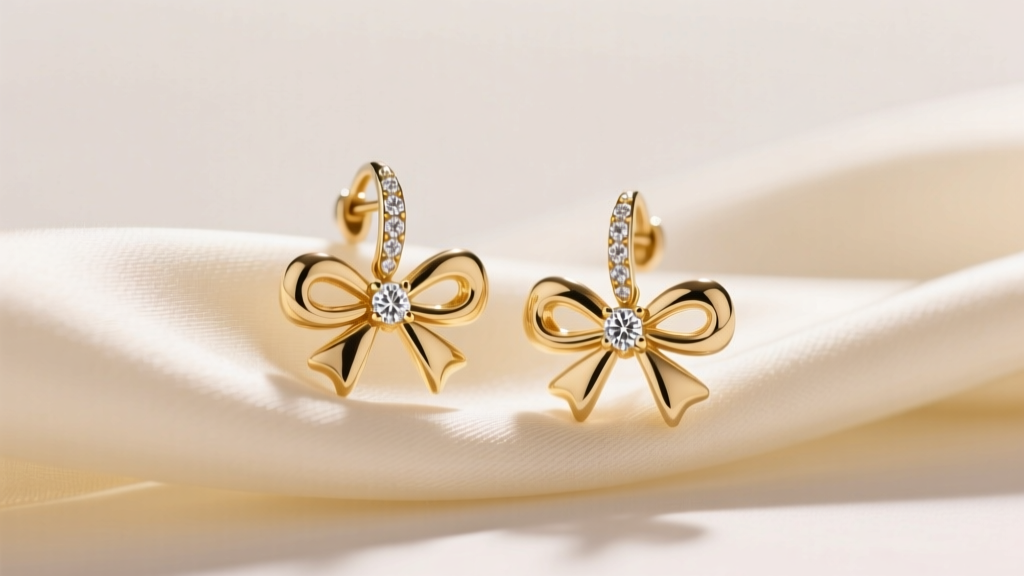
The resurgence of the coquette aesthetic has firmly established dangling bow earrings as a staple in modern jewelry boxes. While the whimsical, romantic design of a bow translates beautifully to fine jewelry, it also presents unique structural and ergonomic challenges. Unlike a simple stud, a bow features protruding loops, trailing tails, and a central knot that can catch on hair, bend under pressure, or pull on the earlobe. As we move through 2026, the market is flooded with options ranging from fragile fashion alloys to heirloom-quality solid gold. This comprehensive buying guide will teach you how to evaluate the mechanics, materials, and proportions of dangling bow earrings to ensure you invest in a piece that is as durable as it is beautiful.
The Anatomy of a Dangling Bow Earring
Before evaluating quality, you must understand the structural components that make up these specific dangles. A well-crafted pair consists of five distinct elements:
- The Post or Hook: The primary anchor that passes through the ear piercing.
- The Connector: Usually a jump ring or a delicate link chain that allows the bow to swing freely.
- The Bow Body (Loops): The flared left and right sides that create the ribbon effect.
- The Knot: The central binding point, which is often a separate cast piece or a wrapped wire.
- The Tails: The trailing ends of the ribbon that dictate the overall drop length.
The primary failure point in poorly manufactured dangles is the connection between the post and the bow body. If the connector is a thin, unsoldered jump ring, the pendulum motion of the bow will eventually pry the metal apart, leading to loss.
Material Matters: Enamel, Vermeil, and Solid Gold
The material you choose dictates not only the price but the structural integrity of the bow's delicate tails and loops.
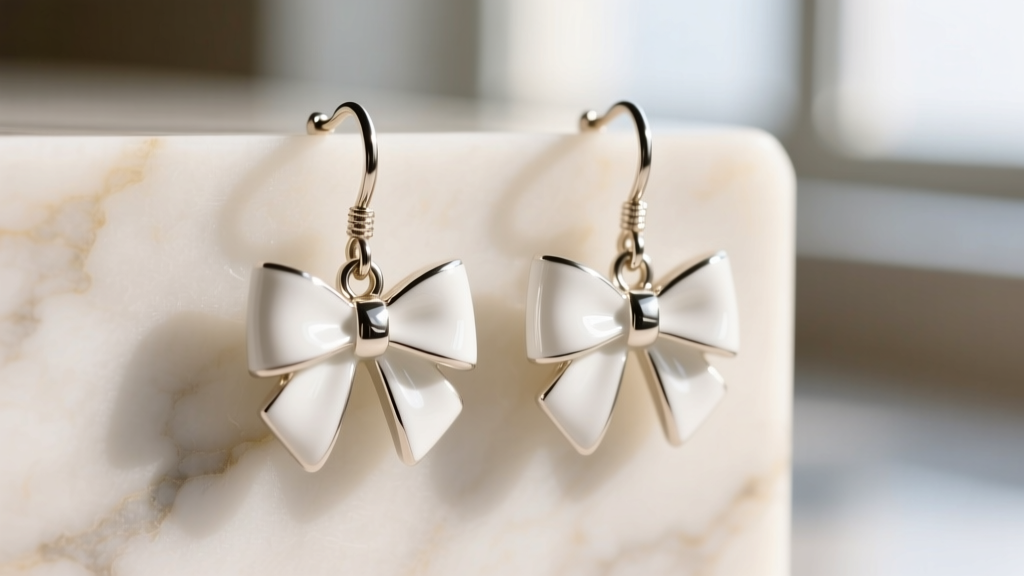
Enamel and Cold Resin
Many dangling bows utilize enamel to achieve a high-gloss, colorful finish. However, the "tails" of the earring are highly susceptible to impact. If dropped on a hard surface, traditional vitreous enamel can shatter. For everyday wear, look for cold enamel (epoxy resin) or guilloché enamel over a textured metal base, which offers better shock absorption. Avoid flat, unpainted metal edges on enamel bows, as these will chip away over time.
Gold Vermeil vs. Solid Gold
According to the Federal Trade Commission (FTC) Jewelry Guides, gold vermeil must feature a sterling silver base with a gold plating of at least 2.5 microns. However, because dangling earrings swing and frequently brush against the neck and hair, friction is high. For vermeil bows, seek out brands that advertise 3 to 4 microns of plating to prevent the "knot" and "tails" from wearing down to the silver base within a year.
If you are investing in solid gold, the Gemological Institute of America (GIA) notes that higher karat gold is softer. While 18k gold offers a richer yellow hue, 14k gold is vastly superior for dangling bow earrings. The higher alloy content in 14k gold provides the necessary structural rigidity to prevent the thin ribbon tails from bending out of shape when caught on a sweater.
Weight Distribution and Gauge Specifications
The most common complaint with dangle earrings is "lobe droop"—when the weight of the ornament pulls the earlobe forward, causing the post to angle downward and the backing to dig into the neck. Bows, due to their wide surface area, can be surprisingly heavy.
| Bow Weight | Minimum Post Gauge | Recommended Backing Type | Lobe Support Needed? |
|---|---|---|---|
| Under 2.5g (Petite Bows) | 20G (0.81mm) | Standard Friction Back | No |
| 2.5g - 5g (Medium Bows) | 18G (1.02mm) | La Pousette / Butterfly Ridge | Optional (Ear patches) |
| Over 5g (Statement Bows) | 16G (1.29mm) or 14G (1.6mm) | Screw-Back or Leverback | Yes (Silicone supports) |
Expert Tip: If you are buying medium-to-heavy dangling bow earrings with a standard post, ensure the backing is a La Pousette style. These feature a ridged, spring-loaded mechanism that grips the post tightly without requiring you to push a metal disk flush against the back of the earlobe, which can cause irritation and restrict blood flow when supporting heavy dangles.
Structural Integrity: Inspecting the Knot and Connectors
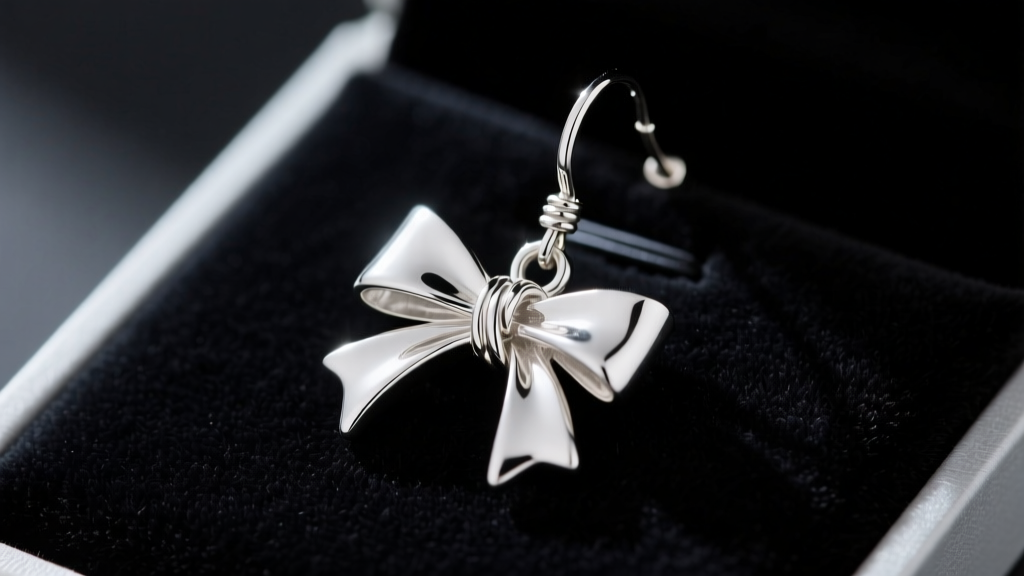
When shopping in person or reviewing high-resolution macro photos online, pay close attention to the "knot" and the "tails." These are the highest-stress areas.
The Knot: Cast vs. Glued
In mass-produced fashion jewelry, the center knot is often a separate piece of metal that is simply glued onto the bow body. Over time, body heat, humidity, and the swinging motion will degrade the adhesive, causing the knot to slide off. Always look for one-piece castings or laser-welded knots. If the knot is a wrapped wire, ensure the ends are tucked and soldered flush; otherwise, they will act like tiny hooks, snagging your hair every time you turn your head.
The Tails: Edge Finishing
The bottom edges of the bow tails should be slightly rounded or beveled. Sharp, laser-cut edges that haven't been tumbled or polished will catch on silk blouses, knitwear, and loose hair. Run your fingernail along the edge of the tail; if it feels like a knife edge, pass on the pair.
Pricing Tiers and Brand Benchmarks
Understanding what you should expect to pay helps you identify corner-cutting and overpriced fashion pieces.
- Fashion Tier ($30 - $75): Typically made from brass or alloy with flash plating (under 0.5 microns). Expect tarnish within 3-6 months of regular wear. The connectors are usually unsoldered jump rings. Buy only for occasional, trend-driven wear.
- Demi-Fine Tier ($90 - $280): Features sterling silver bases with heavy vermeil plating, or solid 10k/14k gold with cubic zirconia accents. Brands in this space usually utilize soldered connectors and cast knots. This is the sweet spot for high-quality everyday dangles.
- Fine Jewelry Tier ($450 - $1,500+): Solid 14k or 18k gold, often featuring pavé diamonds on the knot or loops. These pieces are cast as single units or feature meticulous laser welding. They are designed to be heirloom pieces and will not tarnish or bend under normal conditions.
Styling for Face Shapes and Necklines
Dangling bow earrings are not one-size-fits-all. The proportions of the bow should be used to balance your facial structure and complement your wardrobe.
- Round Face Shapes: Opt for elongated, narrow "ribbon" drops where the tails extend significantly past the knot. This creates a vertical line that visually elongates the face and draws the eye downward.
- Square or Angular Jawlines: Choose wider, flared bows with shorter tails. The horizontal volume of the loops softens the angles of the jaw, while the rounded edges of the bow contrast with sharp facial features.
- Neckline Pairing: Dangling bows require visual breathing room. They pair beautifully with V-necks, scoop necks, and strapless tops. Avoid wearing them with ruffled collars, high turtlenecks, or garments with heavy shoulder embellishments, as the bows will compete with the fabric and become physically tangled.
Final Pre-Purchase Checklist
Before adding a pair of dangling bow earrings to your cart, run through this quick expert checklist:
- Are the jump rings connecting the bow to the post fully soldered shut?
- Is the metal gauge appropriate for the weight of the bow (18G or thicker for medium/large bows)?
- Is the center knot cast as part of the body or securely laser-welded, rather than glued?
- Are the edges of the bow tails smoothly polished and free of sharp burrs?
- If buying vermeil, does the brand specify a plating thickness of at least 2.5 to 3 microns?
By prioritizing structural mechanics and material quality over fleeting trend aesthetics, you can secure a pair of dangling bow earrings that will swing elegantly and remain intact for years to come.


