Reopen Earring Hole Safely: 2026 Taper & Care Guide
Safely reopen a closed earring hole using proven taper techniques & sterile materials. Expert ear care guide for healthy fistulas—try it today!


The Biology of an Earring Closed Hole
Discovering an earring closed hole can be a frustrating and painful experience, especially if you have spent years curating a specific ear aesthetic or stretching your lobes. When you remove jewelry, the body immediately recognizes the empty fistula (the epithelial tube of skin lining the piercing channel) as a wound. The body's natural response is to initiate apoptosis (programmed cell death) and collagen contraction to close the gap. For standard 20-gauge (0.81mm) or 18-gauge (1.0mm) lobe piercings, this shrinkage can happen in a matter of hours. For larger gauges or older, well-seasoned fistulas, the hole may shrink to a pinpoint but remain open internally for months or even years.
Troubleshooting a closed earring hole requires a deep understanding of tissue elasticity, proper tool geometry, and sterile technique. Forcing a blunt earring post through a shrunk fistula is the leading cause of micro-tears, blowouts, and hypertrophic scarring. In this comprehensive 2026 troubleshooting guide, we will break down the exact clinical steps to safely assess, dilate, and stabilize a shrinking piercing channel without causing irreversible tissue damage.
Diagnostic Checklist: Assessing the Fistula
Before attempting to insert any jewelry, you must determine the current state of the tissue. Attempting to force jewelry through a fully healed-over hole will result in a traumatic repiercing, not a reopening. Use this diagnostic checklist to evaluate your piercing:
- The Pinpoint Test: Gently squeeze the sides of the earlobe. Do you see a tiny, distinct dimple or white dot on both the front and back of the lobe? If yes, the fistula is likely intact but shrunk.
- Tactile Resistance: Using a sterilized, blunt-end insertion taper, apply zero-pressure contact to the front dimple. Does the tool naturally find a divot, or does it slide off smooth skin?
- The Light Test: Shine a small LED flashlight against the back of the earlobe in a dark room. A partially open fistula will often transmit a faint halo of light through the thin layer of dead skin cells blocking the exit.
- Scar Tissue Check: Feel for hard, raised nodules. If you suspect a keloid or severe hypertrophic scar, stop immediately. According to the Mayo Clinic, keloids require medical intervention and will easily tear if forced.
Step-by-Step Protocol for Reopening a Shrunk Lobe
If your diagnostic confirms the fistula is partially open but too tight for your standard jewelry, follow this clinical dilation protocol. Never use standard butterfly-back earrings for this process; their blunt posts and high-friction clasps are entirely unsuited for delicate tissue manipulation.
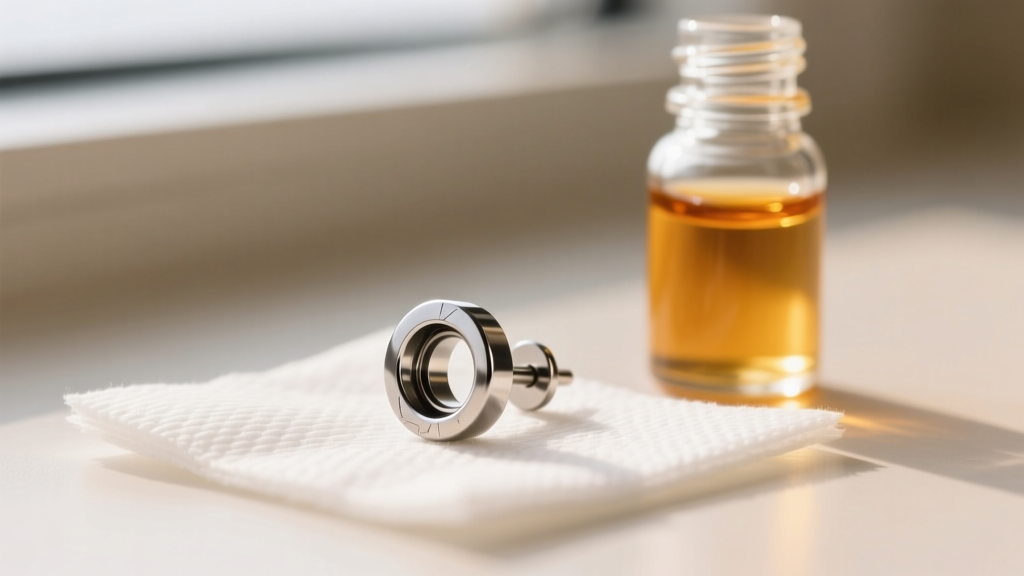
Step 1: Vasodilation and Tissue Softening
Apply a sterile warm saline compress to the earlobe for 5 to 10 minutes. The heat increases localized blood flow (vasodilation) and softens the collagen matrix surrounding the fistula, making the tissue significantly more pliable. Use a sterile 0.9% sodium chloride wound wash; avoid homemade sea salt soaks which often have incorrect salinity ratios that cause cellular dehydration.
Step 2: Proper Lubrication
Apply one drop of 100% pure, cold-pressed jojoba oil to the entrance of the hole. Jojoba oil closely mimics human sebum, providing exceptional slip without trapping anaerobic bacteria. Never use petroleum jelly (Vaseline) or heavy antibacterial ointments, as these suffocate the epithelial lining and create a breeding ground for infection.
Step 3: The Taper Insertion Method
Use a surgical steel or titanium insertion taper. A taper features a gradual, continuous slope that gently stretches the tissue rather than tearing it. For a standard lobe that has shrunk to roughly 20G, use a taper that begins at 22G and graduates to 18G. Push the taper through with slow, steady, and gentle pressure. If you feel sharp, stinging pain, stop immediately—this indicates you are tearing the epithelial tube rather than stretching it. Once the taper is through, immediately follow it with a smooth, internally threaded, or threadless flat-back labret post.
Material Selection for Freshly Reopened Tissue
A freshly reopened earring closed hole is essentially an open wound. The jewelry you insert must be biocompatible to prevent contact dermatitis and heavy metal poisoning. The Association of Professional Piercers (APP) strictly outlines acceptable materials for healing tissue in their official jewelry materials guide.
| Material Grade | Biocompatibility | Best Use Case | Average Cost Range |
|---|---|---|---|
| ASTM F-136 Implant-Grade Titanium | Exceptional (Nickel-Free) | Standard lobes, fresh re-openings, sensitive skin | $25 - $60 |
| Niobium (99.9% Pure) | Excellent (Highly inert) | Stretched lobes, custom bent rings | $30 - $75 |
| Borosilicate Glass | Flawless (Non-porous) | Large gauge stretches (8G and larger) | $15 - $40 |
| 316L Surgical Steel | Poor (Contains Nickel) | Never use in healing or reopened tissue | $5 - $15 |
Cartilage vs. Lobe: The Danger of DIY Reopening
While an earring closed hole in the earlobe can often be safely managed at home using the taper method, cartilage piercings (such as the helix, tragus, or conch) operate under entirely different biological rules. Cartilage lacks its own direct blood supply (it is avascular) and relies on the perichondrium for nutrients. When a cartilage piercing shrinks, the channel often fills with dense, unyielding fibrous tissue rather than simply contracting.
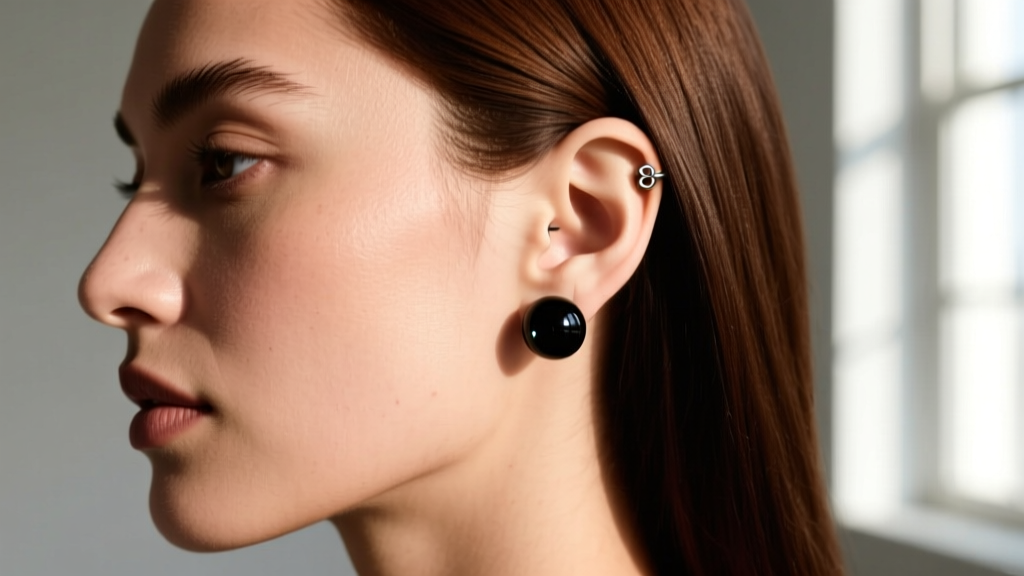
Attempting to force a taper through a closed cartilage hole carries a massive risk of perichondritis (a severe infection of the cartilage tissue) and permanent structural deformation of the ear. Furthermore, the rigid nature of cartilage means it cannot stretch; it will only shatter or tear under pressure. If your helix or tragus hole has closed, even partially, do not attempt to reopen it yourself. The only safe solution is to visit a professional piercer for a sterile repiercing using a hollow bevel needle.
When to Stop: Recognizing Blowouts and Trauma
Troubleshooting requires knowing when to abort the mission. If you are attempting to reopen a stretched lobe (e.g., dropping back down from a 4-gauge to a 6-gauge) and you notice the skin on the back of the lobe bulging outward or turning a deep purple, you are experiencing a blowout. A blowout occurs when the fistula is forced to invert due to excessive pressure, pushing the inner lining out through the back of the ear.
Expert Troubleshooting Rule: If you encounter a blowout, immediately remove all jewelry, downsize to a piece that is 2 to 3 sizes smaller than your current goal, and begin a strict regimen of jojoba oil massage twice daily. Give the tissue a minimum of 4 to 6 weeks to remodel before attempting any further stretching or reopening.
Professional Piercer vs. DIY: Cost and Risk Analysis
While the DIY taper method is effective for minor lobe shrinkage, there is a distinct line where professional intervention becomes the most cost-effective and safe choice. A professional piercer utilizes specialized tools, such as dermal punches, hollow needles, and receiving tubes, which eliminate the blunt-force trauma associated with tapers.
- DIY Taper Kit: $15 to $30. Best for standard 18G/16G lobes that have only been empty for a few days or weeks. High risk of user error and micro-tearing.
- Professional Piercer Consultation & Tapering: $20 to $40. Many reputable studios will safely taper a stubborn lobe for a small bench fee using sterile, single-use equipment.
- Professional Repiercing (Scar Tissue Removal): $50 to $95. If the earring closed hole is completely sealed, a piercer can use a hollow needle to cleanly excise the scar tissue plug, creating a perfectly round, healthy channel that heals much faster than a torn fistula.
Ultimately, treating your piercings with clinical respect ensures their longevity. By understanding the biology of the fistula, utilizing proper tapers, and selecting ASTM-certified titanium, you can successfully rescue a shrinking piercing and maintain your curated ear aesthetic for decades to come. For ongoing aftercare protocols and healing timelines, always refer to the APP official aftercare guidelines.


