Top Earring Cases 2026: Smart Storage & Style Trends
Discover the top earring cases of 2026. We analyze smart anti-tarnish tech, luxury travel organizers, and modular displays for fine jewelry collectors.

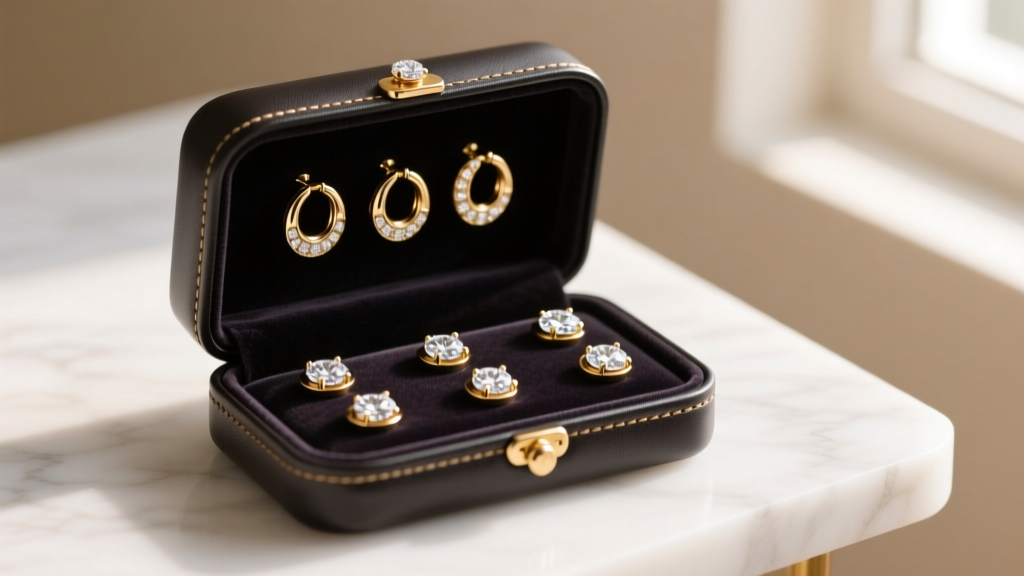
The Evolution of the Modern Jewelry Wardrobe
The way we collect and curate ear jewelry has fundamentally shifted over the last decade. What was once a matter of owning a simple pair of diamond studs and a few gold hoops has evolved into complex, multi-piercing constellation stacks. With the average fine jewelry collector now owning upwards of twenty distinct pieces—ranging from 14k gold threadless flatbacks to ASTM F136 titanium clickers and delicate pavé huggies—the need for specialized storage is no longer a luxury; it is a necessity. In 2026, earring cases have transcended basic plastic utility boxes to become sophisticated, tech-integrated, and material-science-driven vaults designed to protect high-value investments.
As a senior style analyst at Jewel Style Radar, I have tracked the intersection of jewelry care and interior design. Today’s premium earring cases are judged not just on their aesthetic footprint on a vanity, but on their ability to mitigate environmental damage, secure micro-components, and integrate with digital inventory systems. Let us break down the definitive trends, materials, and engineering feats defining the earring cases market this year.
Material Science: Anti-Tarnish Technology in 2026
The greatest enemy of any curated ear stack is atmospheric hydrogen sulfide, the primary culprit behind silver and alloy tarnish. While pure 24k gold and platinum resist oxidation, the 14k and 18k gold alloys favored for body jewelry contain copper and silver, making them susceptible to dulling over time. The Smithsonian Institution notes that controlling the micro-climate around precious metals is the most effective preservation strategy.
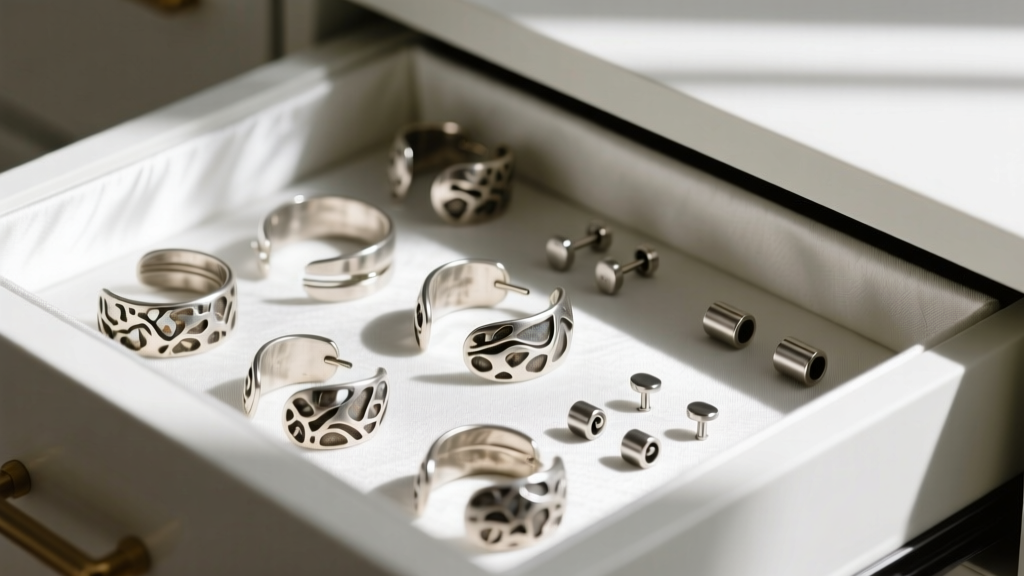
Leading luxury earring cases in 2026 are abandoning standard felt and synthetic suede in favor of advanced reactive textiles. The gold standard is Pacific Silvercloth, a fabric embedded with microscopic silver particles that act as a sacrificial shield, trapping sulfide gases before they reach your jewelry. For collectors of oxidized silver ear cuffs or mixed-metal ear scents, cases lined with copper-based reactive resins—similar to the technology used in Hagerty anti-tarnish strips—are becoming the baseline expectation for mid-tier to high-end organizers.
"A truly premium earring case does not just separate your jewelry; it actively neutralizes the ambient sulfur compounds that cause micro-corrosion on 14k gold and sterling silver posts."
Modular Architecture and Smart Integration
The structural anatomy of an earring case has been entirely reimagined to accommodate modern body jewelry mechanics. Standard stud holes (typically 1.5mm) are entirely inadequate for 14g or 12g body jewelry posts, often causing friction that can damage delicate threading or bend threadless pins. The 2026 archetype features reinforced, variable-width grommets ranging from 1.5mm to 3.0mm.
Securing the Huggie and Clicker
Hinged segment rings and huggies present a unique storage challenge. If compressed in a standard ring roll, the tension on the hinge pin can warp, leading to a misaligned clicker mechanism. Modern cases now feature shallow, wide 'drop zones' lined with memory foam that support the structural integrity of the hinge without applying lateral pressure.
The Rise of RFID and App-Linked Vaults
For high-net-worth collectors, the integration of Near Field Communication (NFC) and RFID technology is the defining smart trend of 2026. Premium earring cases now feature discrete NFC chips embedded beneath the velvet lining of individual compartments. When scanned with a smartphone, these chips pull up the item’s provenance, carat weight, metal purity, and digital insurance appraisal PDFs. This bridges the gap between physical storage and digital asset management, a crucial feature for those investing in $4,000+ diamond threadless ends.
2026 Premium Earring Cases: Comparison Matrix
To help you navigate the market, we have analyzed the top-performing earring cases across four distinct categories. This matrix highlights the specific engineering and material choices that justify their price points.
| Case Archetype | Primary Material & Lining | Capacity & Slot Specs | Best For | Est. Price Range |
|---|---|---|---|---|
| The Constellation Vault | Saffiano Leather / Pacific Silvercloth | 40 pairs; 2.5mm reinforced grommets | Heavy 14k/18k gold stackers & threadless ends | $280 - $350 |
| Nomad EVA Pro Travel | Hard-shell EVA / Silicone grip pads | 15 pairs; Snap-in post anchors | Frequent flyers with cartilage & lobe combinations | $85 - $120 |
| Heritage Silvercloth Roll | Waxed Canvas / Reactive Copper Resin | 12 pairs; Deep drop pockets for dangles | Oxidized silver, ear cuffs, and French wires | $140 - $180 |
| SmartDresser RFID Box | Alcantara / NFC-embedded velvet | 25 pairs; App-linked inventory slots | High-value diamond pieces & insurance tracking | $450 - $600 |
Travel-Ready Organizers: Solving the Transit Pain Points
Traveling with a curated ear stack is notoriously stressful. The primary failure points during transit are lost threadless backing pins, snapped butterfly clasps, and tangled drop earrings. The 2026 generation of travel earring cases addresses these specific mechanical vulnerabilities through high-friction material engineering.
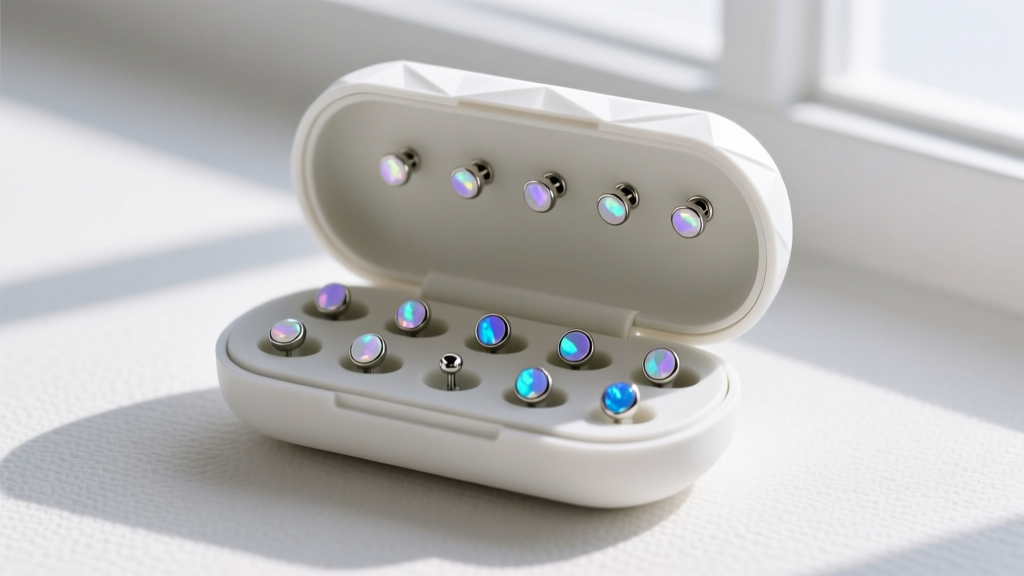
Instead of relying on flimsy plastic tabs, premium travel cases utilize medical-grade silicone grip pads. When a threadless earring end or a labret post is pressed into the silicone, the material creates a vacuum-like seal that prevents the piece from vibrating loose during turbulence or transit. Furthermore, the exterior shells have moved away from soft, crushable faux-leather to injection-molded EVA (Ethylene Vinyl Acetate) composites. This ensures that even if a heavy toiletry bag is placed on top of your luggage, the internal architecture protecting your $2,000 sapphire drops remains completely uncompromised.
Decision Framework: Choosing Your Ideal Storage
Selecting the right earring case requires an honest audit of your collection's composition and your lifestyle. Use this practical framework to guide your purchase:
- The Silver & Oxidized Collector: Prioritize reactive linings. If your collection is heavy on sterling silver ear cuffs and oxidized finishes, you must invest in a case lined with Pacific Silvercloth or equipped with replaceable anti-tarnish strip cartridges. Standard velvet will trap moisture and accelerate oxidation.
- The Cartilage & Threadless Enthusiast: Focus on slot depth and friction. You need a case with deep, unpartitioned zones for long curved barbells, and high-friction silicone inserts to hold tiny threadless pins securely. Avoid traditional ring rolls entirely.
- The Dangle & Drop Aficionado: Look for vertical clearance. French wires and leverbacks bend easily. Your case must offer at least 3.5 inches of vertical drop space per compartment, ideally with a soft fabric flap to prevent the chains from swinging and tangling against one another.
- The High-Value Investor: Opt for smart integration and physical security. If your collection includes investment-grade diamonds or rare gemstones, an RFID-enabled case with a micro-suede interior and a biometric or combination lock exterior is essential for both insurance documentation and physical theft deterrence.
Final Verdict on the 2026 Landscape
The era of tossing fine jewelry into a generic, multi-compartment plastic box is definitively over. The 2026 landscape of earring cases reflects a mature market that respects the engineering, material value, and mechanical fragility of modern ear curation. Whether you are investing in a smart-tracked vault for your diamond threadless ends or a rugged EVA travel case to protect your titanium clickers on the road, the right storage solution is an extension of your jewelry collection itself. Protecting the structural integrity and finish of your pieces ensures that your curated ear stack remains as brilliant as the day it was pierced.


