What Do Gold Earrings Cost? 2026 Value & Pricing Guide
Discover what gold earrings cost in 2026. We break down solid, filled, and vermeil pricing, karat values, and how to spot true investment pieces.

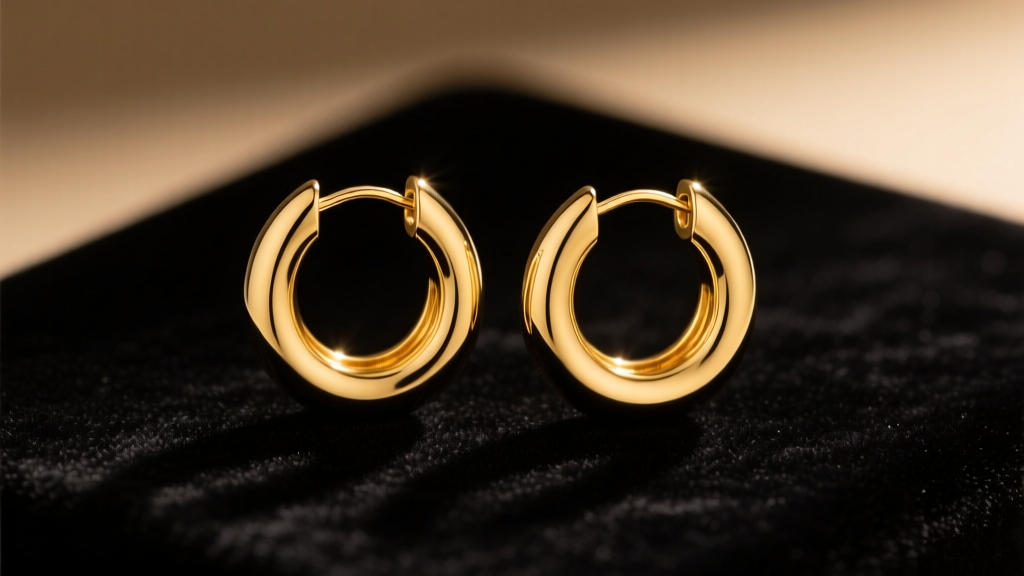
The True Gold Earrings Cost: Beyond the Sticker Price
When shopping for fine jewelry, the phrase "gold earrings cost" often yields confusingly vast search results. You might find a pair of small gold hoops for $35 and another seemingly identical pair for $450. As we navigate the 2026 precious metals market—with gold spot prices experiencing significant fluctuations—understanding the mechanics behind jewelry pricing is no longer optional for the savvy buyer; it is essential.
The true cost of gold earrings is not merely a reflection of brand prestige. It is a calculated matrix of raw material weight, karat purity, manufacturing techniques, and structural longevity. This comprehensive value assessment will strip away the marketing fluff and provide you with a precise, data-driven framework to evaluate what you are actually paying for.
The Anatomy of Gold Pricing: Melt Value vs. Craftsmanship
To assess value, you must first understand how jewelers price solid gold. The baseline is the "melt value," which is dictated by the daily spot price of gold. However, no one sells jewelry at melt value. The retail price is determined by a specific formula:
The Pricing Formula:
(Weight in Grams × Purity Percentage × Current Spot Price per Gram) + Craftsmanship Premium + Retail Markup
For context, one troy ounce of gold equals 31.1 grams. If the 2026 spot price hovers around $2,250 per ounce, the base cost of pure 24k gold is approximately $72.34 per gram. A 14k gold earring is only 58.3% pure gold, meaning the raw gold value drops to roughly $42.17 per gram. If a pair of 14k hoops weighs 4 grams, the intrinsic gold value is about $168. The final retail price will layer on the craftsmanship premium (casting, polishing, stone-setting) and the brand's operational markup.
Material Matrix: Solid, Filled, Vermeil, and Plated
Not all gold jewelry is created equal. The most significant factor influencing the gold earrings cost is the material composition. Below is a comparative breakdown of the four primary gold categories you will encounter in the market.
| Material Type | Gold Content & Construction | Avg. Cost (Small Hoops/Studs) | Lifespan & Durability | Resale Value |
|---|---|---|---|---|
| Solid Gold (14k/18k) | Homogeneous alloy of pure gold and strengthening metals. | $150 - $400+ | Lifetime. Tarnish-resistant, waterproof. | High (based on melt value). |
| Gold-Filled | Thick outer layer of solid gold (min 5% of total weight) mechanically bonded to a brass core. | $60 - $120 | 10-30 years. Highly durable, rarely flakes. | Negligible. |
| Gold Vermeil | Sterling silver base plated with a minimum of 2.5 microns of gold (per FTC guidelines). | $45 - $95 | 2-5 years. Will eventually wear down to silver. | Negligible. |
| Gold-Plated | Brass or copper base with a microscopic flash of gold (under 0.5 microns). | $15 - $40 | Months. Prone to rapid tarnishing and flaking. | None. |
How Karat Weight Dictates Your Budget
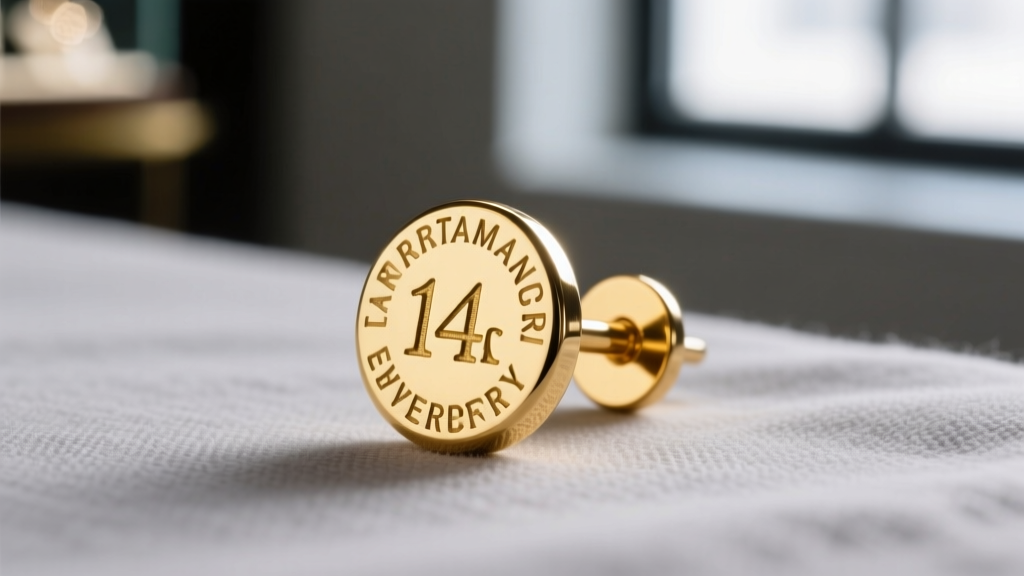
Karat (k) denotes the proportion of pure gold in the alloy. Pure gold is 24k, but it is far too soft for daily-wear earrings; a 24k ear cuff or heavy dangle would bend under its own weight. Therefore, gold is alloyed with metals like copper, silver, zinc, and sometimes nickel.
10k Gold (41.7% Pure)
The most budget-friendly solid gold option. It has a paler yellow hue and is highly resistant to scratching due to the high volume of alloy metals. However, it carries a higher risk of causing contact dermatitis if nickel or excessive copper is used in the mix.
14k Gold (58.3% Pure)
The undisputed king of everyday jewelry. It offers the perfect equilibrium between rich color, structural integrity, and cost. Most high-quality huggies, clickers, and threaded labret studs are crafted in 14k to ensure the threading does not strip and the posts do not bend.
18k Gold (75% Pure)
Prized for its deep, buttery yellow color and hypoallergenic properties (as it contains less room for reactive alloy metals). It commands a 30% to 50% premium over 14k. It is slightly softer, making it ideal for bezel-set diamond studs but less ideal for tension-set cartilage rings.
22k & 24k Gold (91.6% - 99.9% Pure)
Rarely used in Western commercial jewelry outside of specific cultural traditions or high-end luxury investment pieces. It is exceptionally soft, expensive, and prone to deep scratching.
Hidden Costs: Allergies and Tarnish Failures
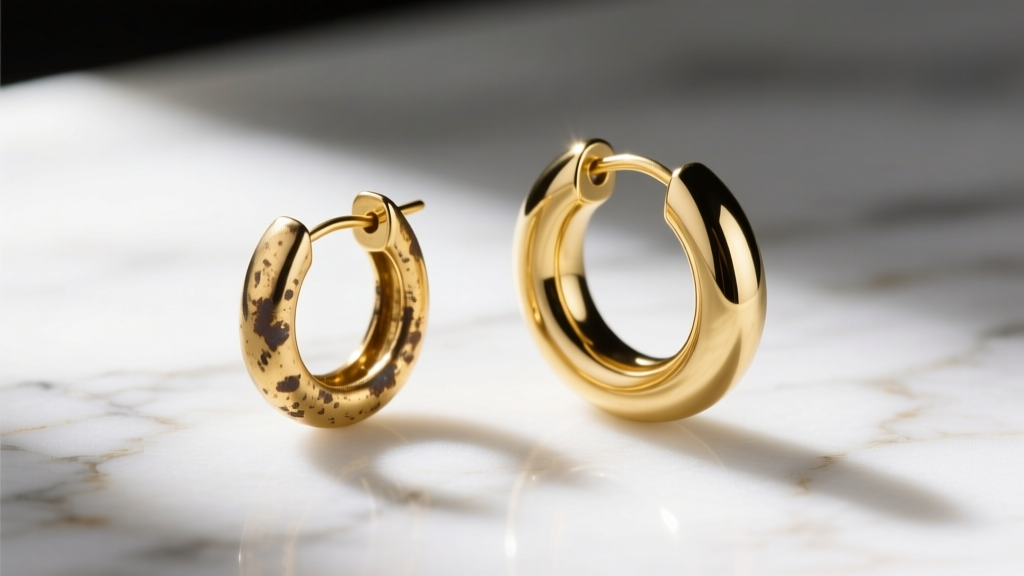
When evaluating the gold earrings cost, buyers often ignore the "hidden costs" of cheap alloys. According to the Federal Trade Commission's Jewelry Guides, there are strict regulations on how gold content is advertised, but lesser-known is the prevalence of nickel in lower-karat white and yellow gold.
If you purchase a cheap pair of 10k or unverified "gold" dangle earrings, the copper and nickel content can oxidize when exposed to the natural pH of your skin and environmental moisture. This leads to the dreaded "green ear" effect and severe allergic contact dermatitis. The cost of replacing a ruined piercing channel or buying medical-grade titanium alternatives far outweighs the initial savings of buying poorly alloyed gold. Always seek out nickel-free 14k or 18k gold, or opt for ASTM F-138 compliant implant-grade titanium with gold PVD coating if your budget is strictly under $50.
2026 Buyer’s Framework: Assessing Value by Earring Style
Different earring styles require vastly different amounts of raw material. Use this weight-to-price guide to determine if a retailer's markup is justified.
- Flat-Back Studs & Threadless Ends (0.3g - 0.8g): Because these require very little gold, the craftsmanship and gemstone quality (e.g., AAA vs. commercial grade diamonds or sapphires) make up 80% of the cost. Expect to pay $80 - $250 for high-end 14k solid gold ends.
- Small Huggies & Cartilage Clickers (2.0g - 4.0g): These are solid, continuous pieces. A fair retail price for 14k solid gold huggies in this weight range is $140 to $280. If you see them for $40, they are undoubtedly plated or hollow-core.
- Classic Medium Hoops (3.5g - 7.0g): Hoops require structural tubing. Solid 14k gold hoops weighing 5 grams should cost between $220 and $350. Beware of "lightweight" hoops; manufacturers often use ultra-thin walls that dent easily upon impact.
- Statement Drop & Chandelier Earrings (8.0g+): The gold earrings cost for heavy dangles scales linearly with weight. For an 8-gram pair of 18k gold drops, expect a baseline of $600+ before any gemstone premiums are added.
How to Verify Authenticity and Avoid Overpaying
Protecting your investment requires due diligence. Before finalizing any purchase, run the piece through this rapid verification checklist:
- Check the Hallmark: Legitimate solid gold earrings will bear a stamp (e.g., 14k, 585, 18k, 750) alongside a maker's mark. Note that a "925" stamp indicates sterling silver, meaning the piece is vermeil or plated, not solid gold.
- Scrutinize the Terminology: Retailers are legally required to be precise. Terms like "gold tone," "gold washed," or "gold finished" mean the item contains virtually zero intrinsic gold value.
- Request the Gram Weight: Any reputable fine jeweler should be able to provide the exact gram weight of the earrings. If they cannot or will not, walk away.
- Examine the Clasp and Posts: For solid gold studs, the post and butterfly backing should also be gold. If a magnet sticks to the backing or the post, it is steel-plated, which is a common cost-cutting measure in mid-tier jewelry.
Conclusion
Ultimately, the gold earrings cost is a reflection of material reality. While gold-filled and vermeil options serve a valid purpose in trend-driven, seasonal fashion, they are liabilities, not assets. By understanding the intersection of spot prices, karat purity, and structural weight, you can confidently navigate the 2026 jewelry market, ensuring that every dollar you spend translates into lasting quality, wearability, and enduring style.


