Tulip Earrings 2026: Sculptural Botanical Trend Guide
Discover the 2026 tulip earrings trend. Explore sculptural botanical designs, enamel techniques, metal grades, and styling tips for floral ear styling.

The Evolution of the Tulip Motif in 2026
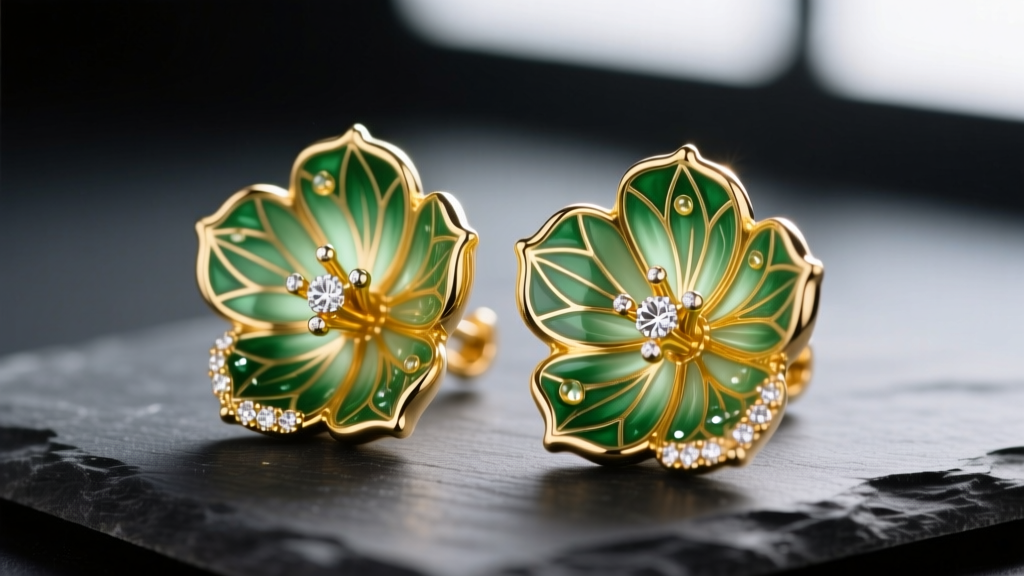
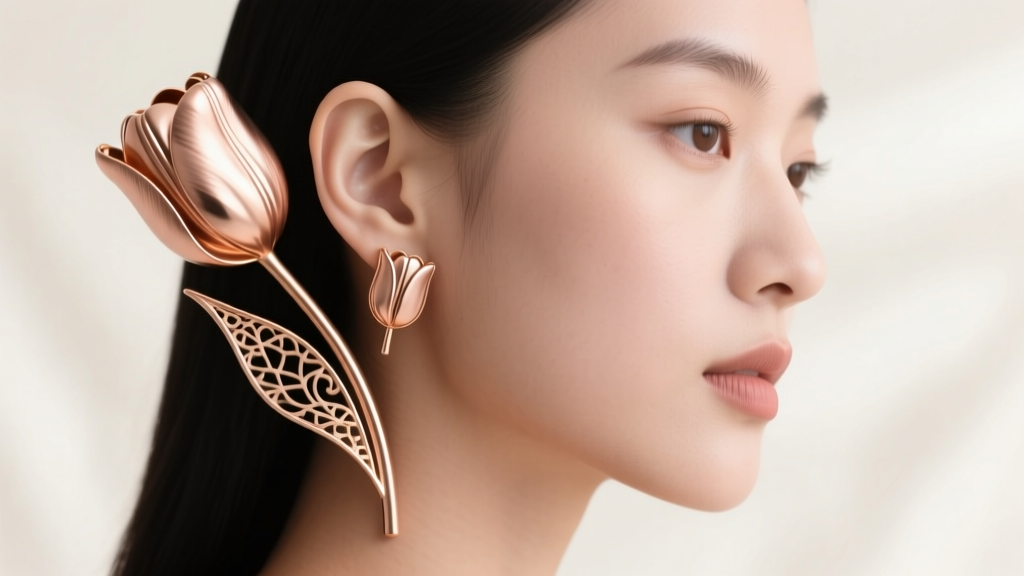
The botanical jewelry movement has undergone a radical transformation as we navigate 2026. Gone are the days of hyper-realistic, delicate floral replicas that dominated the early 2020s. Today, the 'new botany' trend, as highlighted by Vogue's Fine Jewelry Trend Report, favors architectural abstraction. Tulip earrings are no longer just literal translations of the flower; they are sculptural, brutalist, and kinetic. Designers are capturing the unfurling energy of a blooming tulip through sharp geometric lines, asymmetric silhouettes, and advanced metallurgical techniques.
For the modern collector and style enthusiast, tulip earrings represent a unique intersection of organic inspiration and industrial precision. Whether rendered as a minimalist ear cuff or a dramatic, shoulder-grazing drop, the 2026 tulip motif demands a deeper understanding of materials, weight distribution, and artisanal craftsmanship.
Material & Technique Breakdown: What to Look For
When investing in sculptural floral jewelry, the structural integrity of the piece is paramount. The thin, sweeping edges of a tulip petal require specific metal alloys and advanced enameling techniques to survive daily wear without warping or chipping.
Metallurgy: 14k vs. 18k Gold for Sculptural Petals
While 18k gold (75% pure gold) offers a richer, warmer yellow hue, it is inherently softer, registering lower on the Vickers hardness scale. For a large, sculptural tulip drop earring with razor-thin petal edges, 18k gold risks bending if caught on a sweater or hair. In 2026, master jewelers increasingly favor 14k gold (58.5% pure gold) for the structural framework of botanical earrings. The higher copper and zinc content in 14k alloys provides superior tensile strength, allowing artisans to cast impossibly thin, gravity-defying tulip petals that maintain their shape over decades of wear.
Enamel Work: Guilloché vs. Cold Enamel
Color is where the tulip motif truly comes alive, but not all color is created equal. According to the Gemological Institute of America (GIA), traditional vitreous enamel remains the gold standard for fine jewelry.
- Guilloché Enamel: This involves engine-turning the gold base to create microscopic geometric grooves, then fusing translucent glass enamel over it at 1,500°F. The result is a mesmerizing, light-catching depth that mimics the natural translucency of tulip petals. Expect to pay a premium for this centuries-old technique.
- Plique-à-jour: Often described as 'stained glass without a backing,' this technique suspends translucent enamel within the gold wire framework of the tulip. It is highly fragile but visually unmatched for high-end statement pieces.
- Cold Enamel (Epoxy Resin): Common in fashion and bridge-tier jewelry, cold enamel is a pigmented resin cured at room temperature. While it offers vibrant, opaque colors (like the trending 2026 'Matcha Green' and 'Digital Lavender'), it lacks the refractive depth of fired glass and is prone to scratching and yellowing over time.
Tulip Earrings Pricing & Value Matrix
Navigating the market requires an understanding of how manufacturing techniques dictate price. Below is a comprehensive matrix detailing what to expect across different market tiers in 2026.
| Market Tier | Price Range | Primary Material | Color Technique | Ideal Use Case |
|---|---|---|---|---|
| Fast Fashion | $30 - $90 | Brass / Silver Vermeil | Cold Epoxy / Paint | Seasonal trends, costume styling |
| Bridge / Artisan | $250 - $650 | Solid 14k Gold | Champlevé / Opaque Fired | Everyday luxury, office-to-evening |
| Fine Jewelry | $1,200 - $4,500 | 18k Gold / Platinum | Guilloché / Plique-à-jour | Heirloom investment, galas, weddings |
| High Jewelry | $15,000+ | 18k Gold + Pavé Diamonds | Custom Vitreous + Carved Gems | Red carpet, private collections |
Biomechanics: Gauge, Weight, and Lobe Health
One of the most frequently overlooked aspects of buying statement botanical earrings is the biomechanics of the earlobe. A solid-cast 14k gold sculptural tulip drop can easily weigh between 7 and 12 grams. Supporting this weight requires specific hardware to prevent the dreaded 'cheese-cutter' effect, where a thin post slowly migrates downward through the piercing tissue.
Upgrading Your Post Gauge
Standard commercial earrings utilize a 20-gauge post (0.81mm thick). For a heavy tulip drop, a 20g post will cause immediate lobe fatigue and long-term stretching. When shopping for sculptural botanical earrings, actively seek out brands that engineer their pieces with thicker posts:
- 18-Gauge (1.02mm): The minimum acceptable thickness for drops weighing 5 to 8 grams. It provides a noticeable increase in shear strength without requiring the piercing to be stretched.
- 16-Gauge (1.29mm): Ideal for oversized, shoulder-dusting tulip chandeliers weighing 10+ grams. Note that standard lobe piercings may need to be gently tapered to accommodate a 16g post comfortably.
The Necessity of Secure Backings
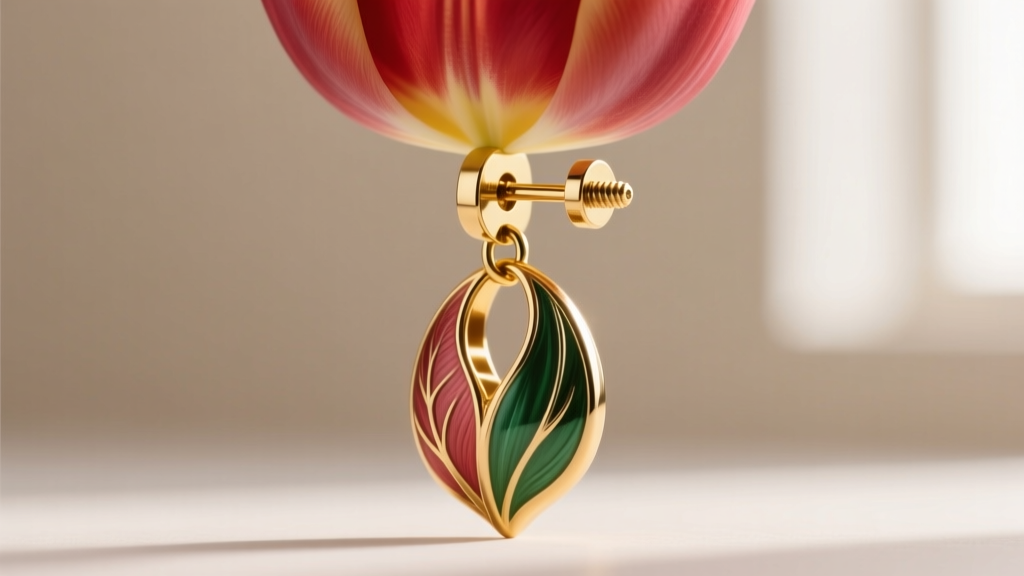
Friction backs (butterfly clasps) are insufficient for heavy sculptural earrings; the kinetic energy of walking will slowly work them loose. For valuable tulip drops, insist on screw-back mechanisms or jumbo silicone disc backs (minimum 10mm diameter) that distribute the gravitational torque across a wider surface area of the earlobe, keeping the tulip facing perfectly forward rather than drooping downward.
Styling Framework: Face Shapes & Asymmetry
The 2026 approach to styling floral jewelry is rooted in deliberate contrast and facial geometry. Use this decision framework to select the ideal tulip silhouette for your features:
Mapping Silhouettes to Face Shapes
- Angular / Square Faces: Opt for tulip designs with soft, bulbous curves and rounded petal edges. The organic volume of a 'closed bud' tulip stud in hammered gold softens sharp jawlines and adds necessary visual warmth.
- Round / Heart Faces: Choose elongated, geometric tulip drops. Abstract, brutalist interpretations of the tulip—featuring sharp, V-shaped petals and linear diamond baguettes—create a lengthening effect that balances wider cheekbones.
- Oval Faces: You have the versatility to pull off the season's most avant-garde trend: the oversized, asymmetrical ear cuff that wraps around the helix cartilage, mimicking a tulip stem winding up the ear.
'The 2026 botanical movement isn't about literal replication; it's about capturing the kinetic energy of a blooming tulip through brutalist geometry and light-catching enamel. We are seeing clients mix a single, heavy architectural tulip drop on the left lobe with a constellation of micro-tulip studs on the right cartilage.'
— Contemporary Jewelry Design Institute, 2026 Trend Forecast
The Asymmetry Rule
Symmetry in fine jewelry is giving way to curated imbalance. If you are investing in a high-value sculptural tulip drop, pair it with a minimalist, contrasting element on the opposite ear. A single, bezel-set diamond stud or a plain gold huggie hoop allows the complex enamel work and architectural gold of the tulip to command absolute attention without overwhelming the face.
Conclusion: Investing in the New Botany
Tulip earrings in 2026 are a testament to the jewelry industry's pivot toward wearable art. By prioritizing structural metallurgy, demanding high-temperature vitreous enamel, and respecting the biomechanics of the earlobe, you can acquire botanical pieces that are not only visually arresting but engineered for generational longevity. Whether you are drawn to the translucent magic of guilloché or the bold, unyielding lines of brutalist 14k gold, the modern tulip earring is a masterclass in natural form meeting human ingenuity.


