The Ultimate Care Guide for Rainbow Hoop Earrings
Learn how to safely clean, store, and maintain rainbow hoop earrings. Discover expert tips for anodized titanium, enamel, and resin finishes.

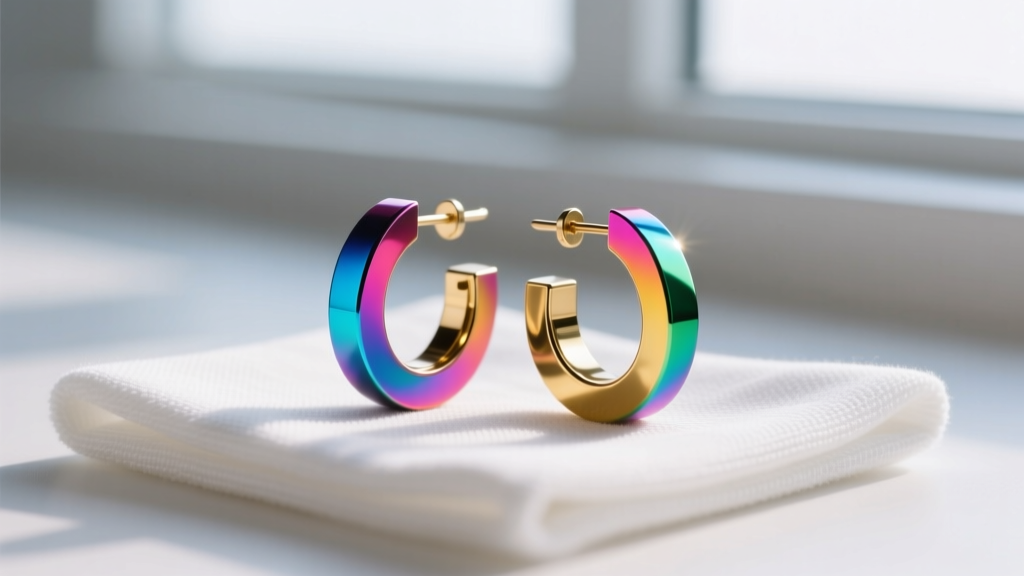
Rainbow hoop earrings are a vibrant staple in modern jewelry, offering a prismatic pop of color that catches the light with every movement. However, the very techniques used to create these mesmerizing spectrum effects—whether through anodized titanium, vitreous enamel, or dyed resin—require highly specific maintenance protocols. Using the wrong cleaning method can instantly strip the color from anodized metals or cloud delicate resin finishes. In this comprehensive 2026 guide, we break down the exact science of rainbow finishes and provide actionable, professional-grade care routines to keep your hoops looking flawless.
The Science of the Spectrum: Identifying Your Rainbow Finish
Before applying any cleaning solution, you must identify how the rainbow effect was achieved. The maintenance requirements vary drastically across the three primary manufacturing methods:
1. Anodized Titanium and Niobium
The most common method for high-quality, body-safe rainbow hoops is anodization. This process uses electrical voltage (typically between 15V and 110V) to grow a transparent oxide layer on the surface of the titanium. The rainbow colors are not dyes or paints; they are the result of light interference refracting through this oxide layer at specific thicknesses. Because the color is structural, it is highly sensitive to friction and abrasive chemicals.
2. Vitreous vs. Cold Enamel
Enamel hoops achieve their rainbow stripes through pigmented glass powder. Vitreous enamel is kiln-fired at over 1,400°F, fusing the glass to the metal base (usually gold or silver). It is durable but can shatter upon impact. Cold enamel (epoxy resin) is air-dried and painted on. While 2026 advancements have improved cold enamel's UV resistance, it remains highly susceptible to heat, alcohol, and harsh solvents.
3. Dyed Resin and Acrylic
Lightweight, chunky rainbow hoops are often cast from dyed acrylic or epoxy resin. These are prone to micro-scratches and can easily become cloudy if exposed to ammonia or alcohol-based cleaners.
The 'Never Do This' List for Anodized Titanium
If your rainbow hoops are made of anodized titanium or niobium, you must completely abandon traditional jewelry cleaning habits. According to metallurgical guidelines highlighted by the Association of Professional Piercers, the oxide layer is incredibly delicate.
- Never use silver polishing cloths: These cloths are embedded with mild abrasives and chemical tarnish removers. Rubbing an anodized hoop with a polishing cloth will physically strip the oxide layer, instantly reverting the metal to its dull, natural grey.
- Never use ultrasonic cleaners: The high-frequency cavitation bubbles generated by ultrasonic machines can cause microscopic pitting in the oxide layer, leading to patchy, uneven color loss.
- Never expose to chlorine or bleach: Swimming pools and household bleach will chemically react with the titanium oxide, permanently dulling the iridescence.
Step-by-Step Cleaning Routine for Enamel and Resin Hoops
For enamel and resin rainbow hoops, the goal is to remove sebum, dead skin cells, and environmental dirt without degrading the pigments or the binding agents.
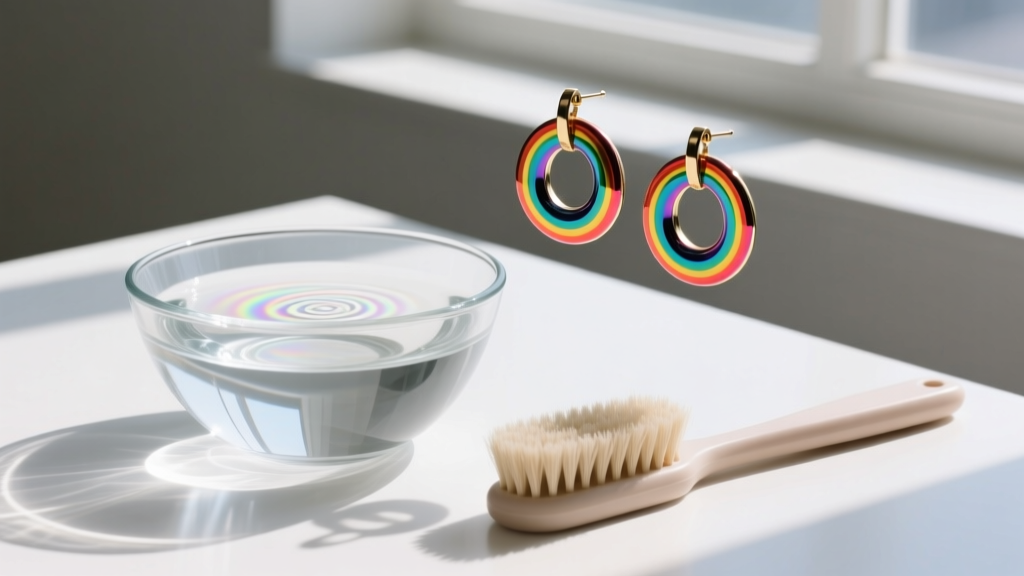
Step 1: Prepare a pH-Neutral Bath
Fill a small glass bowl with distilled water (never tap water, as mineral deposits can leave a cloudy film on resin). Add a single drop of pH-neutral dish soap, such as original Dawn. Avoid any soaps containing citrus extracts, moisturizers, or antibacterial agents, as these leave residues.
Step 2: Gentle Agitation
Submerge the hoops for no more than 3 to 5 minutes. Use a soft-bristled baby toothbrush to gently sweep the crevices, particularly around the hinge and post areas where skin oils accumulate. For cold enamel, brush lightly to avoid micro-abrasions.
Step 3: The Microfiber Pat-Dry
Rinse the hoops under a gentle stream of distilled water. Do not air dry. Immediately pat them completely dry with a clean, lint-free microfiber cloth. Air drying allows water spots to form, which can etch into cold enamel over time.
Comparative Care Matrix: Material vs. Maintenance
Use this quick-reference table to ensure you are using the correct tools for your specific pair of rainbow hoops.
| Material | Ideal Cleaning Agent | Best Tool | Ultrasonic Safe? | Polish Cloth Safe? |
|---|---|---|---|---|
| Anodized Titanium | Distilled Water + Mild Soap | Microfiber Cloth | No | No |
| Vitreous Enamel | Warm Water + Mild Soap | Soft Baby Toothbrush | Yes (Low Power) | Yes (Metal parts only) |
| Cold Enamel (Epoxy) | Damp Microfiber | Cotton Swab | No | No |
| Dyed Resin/Acrylic | Distilled Water | Microfiber Cloth | No | No |
Storage Protocols to Prevent Friction Damage
Friction is the silent killer of rainbow jewelry. When anodized titanium hoops are tossed into a communal jewelry box, the constant rubbing against harder metals (like stainless steel or silver) will slowly sand away the oxide layer, resulting in faded, patchy colors.
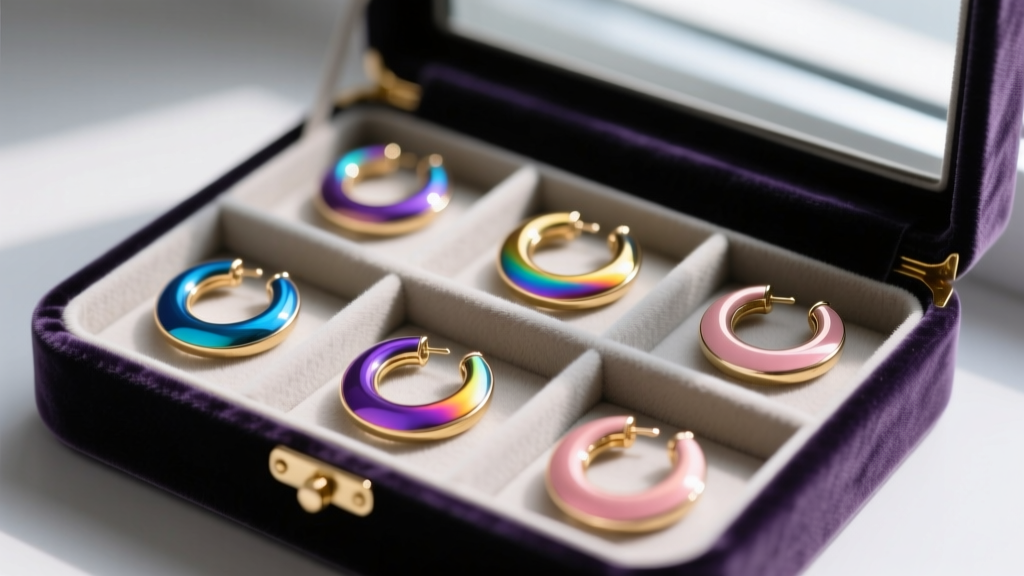
The Gemological Institute of America (GIA) recommends storing jewelry in individual, soft-lined compartments. For rainbow hoops, invest in anti-tarnish flannel pouches or a velvet roll with dedicated slots. If you must travel with them, wrap each hoop individually in a soft, unbuffered tissue paper before placing them in a hard-shell travel case to prevent the hoops from knocking against each other.
Troubleshooting Faded or Cloudy Finishes
Despite your best efforts, accidents happen. Here is how to troubleshoot common issues:
- Anodized Titanium Fading: If your titanium hoops have lost their color due to friction or chemical exposure, the damage is permanent at home. However, a professional jeweler can strip the remaining oxide layer and re-anodize the metal using a voltage rectifier, restoring the rainbow effect perfectly.
- Cloudy Resin or Acrylic: If your resin hoops have developed a cloudy haze from exposure to alcohol or hand sanitizer, you can sometimes restore clarity by gently buffing the surface with a specialized plastic polish (like Novus 2) using a clean microfiber cloth. Test on a small, hidden area first.
- Chipped Vitreous Enamel: Unlike resin, vitreous enamel cannot be buffed out. If a rainbow stripe chips, the hoop must be sent back to the original artisan or a specialized enamelist to be re-fired in a kiln.
By understanding the unique material science behind your rainbow hoop earrings and adhering to these strict, non-abrasive cleaning protocols, you can ensure their prismatic brilliance remains intact for years to come.


