Antique Emerald Earrings: Vintage Trends & Styling Guide
Discover the market for antique emerald earrings. Learn to identify Victorian, Edwardian, and Art Deco styles, verify treatments, and style them today.

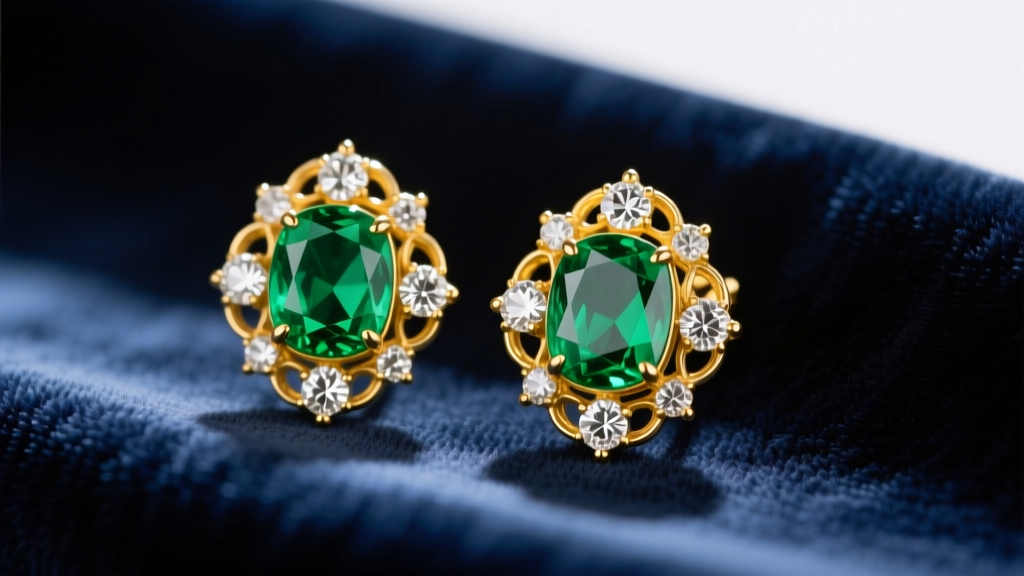
The Resurgence of Antique Emerald Earrings in Modern Luxury
The jewelry market in 2026 has seen a definitive pivot toward sustainable and historical luxury, placing antique emerald earrings at the absolute apex of collector demand. Unlike newly mined gemstones, which carry complex environmental footprints, antique pieces offer a tangible connection to history while maintaining exceptional intrinsic value. But navigating the estate jewelry market requires more than an appreciation for vintage aesthetics; it demands a rigorous understanding of gemological treatments, historical metallurgy, and structural wearability. Whether you are bidding at auction or sourcing from a specialized estate dealer, this comprehensive guide dissects the nuances of collecting, authenticating, and styling antique emerald earrings for the modern wardrobe.
Decoding the Eras: A Historical Framework
To accurately value and style antique emerald earrings, one must first identify their era of origin. The construction techniques, metal purity, and lapidary styles shifted dramatically between the mid-19th and early 20th centuries.
Victorian Era (1837–1901)
Victorian emerald earrings are predominantly set in 15k or 18k yellow gold, as platinum was not yet widely utilized in jewelry manufacturing. A defining characteristic of early Victorian pieces is the use of closed-back, foil-backed settings designed to enhance the color and brilliance of the emeralds in candlelight. Crucial Warning: Foil-backed antique earrings must never be submerged in water or exposed to ultrasonic cleaners, as moisture will ruin the foil and cloud the stone. Later Victorian pieces (the Grand Period) often feature somber, heavy gold work paired with cabochon emeralds and old mine-cut diamonds.
Edwardian Era (1901–1915)
The introduction of 950 platinum revolutionized jewelry design, allowing for the delicate, lace-like filigree and intricate millegrain detailing that defines the Edwardian era. Emeralds from this period are often lighter in tone, accented by old European cut diamonds. The earrings are typically lightweight drop styles or elegant chandeliers, designed to complement the sweeping updos and high lace collars of the era.
Art Deco Era (1920–1935)
Art Deco antique emerald earrings are the most highly sought-after in today’s market. Characterized by bold geometric lines, high-contrast color blocking, and architectural symmetry, these pieces frequently pair vibrant step-cut or calibre-cut emeralds with onyx, coral, and rock crystal. According to archival data from Christie’s Jewelry Department, pristine Art Deco emerald and diamond ear pendants consistently command premium valuations due to their striking visual impact and superior wearability.
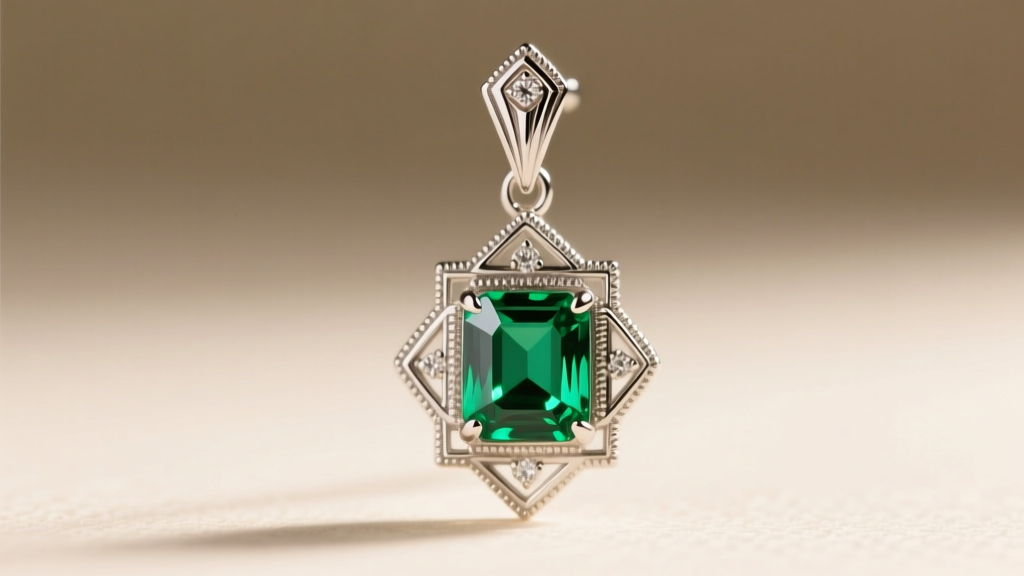
Gemological Realities: Treatments, Origins, and Valuation
Emeralds belong to the beryl family and rank 7.5 to 8 on the Mohs hardness scale. Because they naturally form with significant internal inclusions—poetically referred to as the "jardin" (garden)—virtually all antique emeralds have been treated to improve clarity. Understanding these treatments is non-negotiable for serious collectors.
The traditional and most widely accepted treatment is cedar oiling, a practice dating back centuries. However, modern gemological laboratories categorize the extent of this treatment. When reviewing a report from the Gemological Institute of America (GIA) or the Swiss Gemmological Institute (SSEF), you will see clarity enhancement graded as Minor (F1), Moderate (F2), or Significant (F3). For investment-grade antique emerald earrings, buyers should strictly target stones with "Minor" or "None" enhancement. Earrings with "Significant" resin or epoxy fillings (like Opticon) suffer from severe market penalties and long-term stability issues.
Origin also dictates price. Colombian emeralds, known for their warm, intensely saturated green hue, command a 30% to 50% premium over Zambian or Brazilian stones of similar size and clarity, provided the origin is certified by a top-tier laboratory.
Market Valuation and Pricing Tiers
Pricing for antique emerald earrings fluctuates based on era, condition, and gemological pedigree. Below is a structured breakdown of current market expectations for a standard pair featuring approximately 2.00 carats total weight (CTW) of emeralds.
| Era | Typical Metal | Emerald Cut & Style | Estimated Price Range (2ct TW) |
|---|---|---|---|
| Victorian | 15k/18k Yellow Gold | Cabochon / Rose Cut Accents | $4,500 - $12,000 |
| Edwardian | Platinum over Gold | Oval / Old European Diamonds | $8,000 - $18,000 |
| Art Deco | 950 Platinum | Step-Cut / Calibre-Cut | $15,000 - $45,000+ |
Note: Pieces featuring untreated, certified Colombian emeralds with Art Deco provenance frequently exceed the upper limits of these ranges at major auction houses.
Structural Wearability: Posts, Clasps, and Conversions
One of the most overlooked aspects of buying antique earrings is structural wearability. Historical earrings were not designed for the modern, active lifestyle, nor were they built to accommodate contemporary piercing standards.
The Post Gauge Dilemma
Modern standard ear piercings are typically done at 20-gauge (0.81mm) or 18-gauge (1.02mm). Conversely, many late 19th-century Victorian and Edwardian earrings feature thick, hand-forged shear posts or screw-backs that measure 1.2mm to 1.4mm (roughly 16-gauge or 15-gauge). Forcing a thick antique post through a modern piercing can cause micro-tearing and lobe irritation. The Solution: Consult a master jeweler to laser-weld a modern 18-gauge titanium or platinum post to the original earring face, or have the original post carefully filed down and re-threaded for modern friction or screw-backs.
Weight Distribution and Lobe Strain
Art Deco drop earrings and Victorian chandeliers can be exceptionally heavy, often exceeding 8 grams per ear. Over time, this weight will stretch the earlobe, causing the earring to droop forward and the post to press uncomfortably against the cartilage. To mitigate this, utilize silicone earring lifters (such as Lobe Wonder pads) which distribute the weight across a wider surface area behind the lobe. For heavy antique clips or omega-backs, ensure the tension spring is serviced annually to prevent the earring from slipping off the lobe.
Contemporary Styling Frameworks
Styling antique emerald earrings in 2026 is all about juxtaposition. The goal is to prevent the jewelry from looking like a museum replica or a theatrical costume piece. Here are three actionable styling frameworks based on face shape and wardrobe:
- The Minimalist Contrast (Best for Art Deco Drops): Pair geometric, platinum Art Deco emerald drops with a structured, monochromatic silk slip dress or a sharp, oversized wool blazer. The clean lines of the modern clothing allow the intricate millegrain and calibre-cut stones to serve as the sole focal point. This elongates the neck and is highly flattering for round or square face shapes.
- The Romantic Bohemian (Best for Victorian Studs or Hoops): Victorian cabochon emerald studs set in warm 15k yellow gold pair beautifully with soft, textured fabrics like cashmere, linen, or sheer chiffon. The warm gold tones complement olive and warm skin undertones, while the organic shape of the cabochons softens angular jawlines.
- The Evening Statement (Best for Edwardian Chandeliers): Edwardian filigree drops are inherently delicate and intricate. Wear them with an off-the-shoulder or sweetheart neckline to expose the collarbone and provide a clear visual canvas for the earrings. Avoid high-necked or heavily embellished collars, which will compete with the lace-like platinum work and cause the emeralds to catch on threads.
Sourcing and Authentication Red Flags
When sourcing antique emerald earrings, vigilance is your best defense against reproductions and synthetics. The 1960s and 1970s saw a massive boom in "Victorian-style" reproduction jewelry. These pieces often feature synthetic flux-grown emeralds (like Chatham or Linde) which possess a flawless clarity that is virtually nonexistent in genuine 19th-century stones. If an "antique" emerald is completely free of visible inclusions and exhibits a uniform, neon-green color under UV light, it is almost certainly a mid-century synthetic.
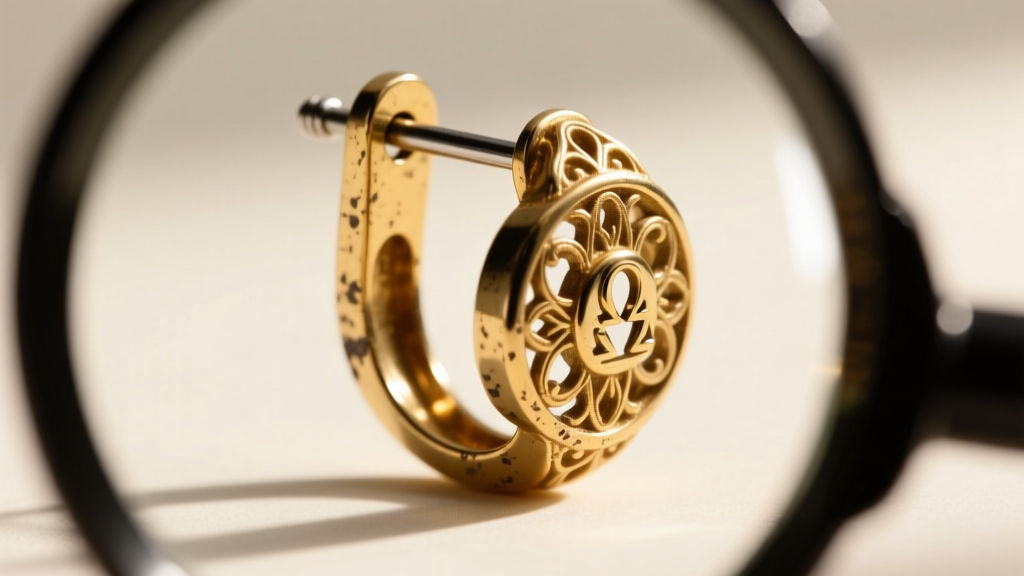
Furthermore, always demand a gemological report from a reputable, independent laboratory (GIA, SSEF, Gübelin, or AGL) for any piece priced over $5,000. The report will not only confirm the natural origin and treatment level of the emerald but can also provide clues regarding the era of cutting. Finally, inspect the earring findings under a 10x loupe; genuine antique pieces will show hand-engraving, slight asymmetries in millegrain, and wear patterns on the clasps that cannot be easily replicated by modern CAD/CAM casting techniques.


