Cat Pearl Earrings: A Beginner's Guide to Feline Elegance
Discover how to choose, style, and care for cat pearl earrings. Our beginner's guide covers pearl types, hypoallergenic metals, and face-shape tips.

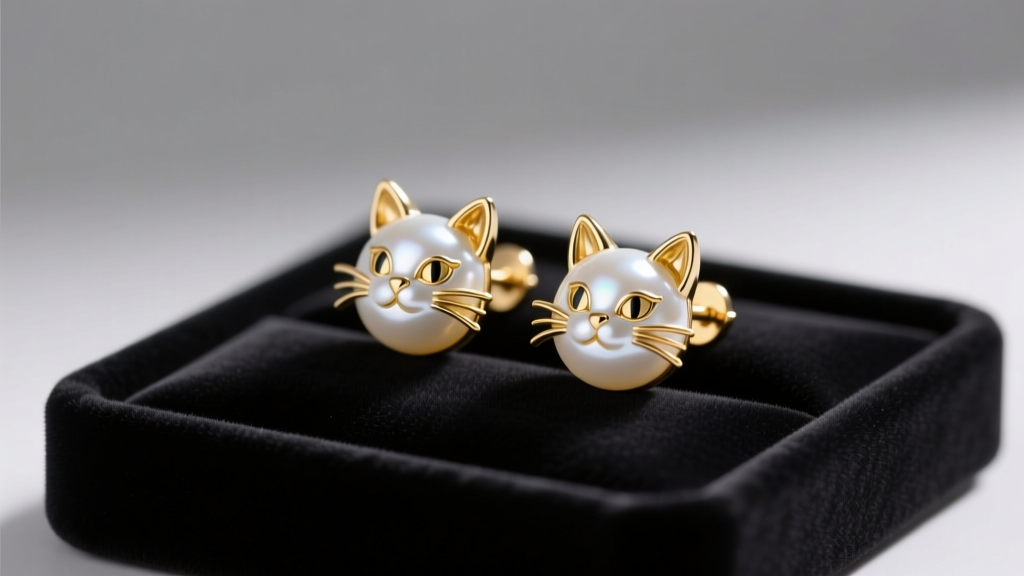
Welcome to the World of Whiskered Elegance
When it comes to blending playful motifs with timeless sophistication, few jewelry pieces strike the balance quite like cat pearl earrings. For beginners stepping into the realm of novelty-meets-luxury jewelry, the combination of feline silhouettes and the organic luster of pearls offers a unique way to express personality without sacrificing elegance. However, navigating the market can be tricky. Not all pearls are created equal, and the metal choices for animal-shaped jewelry can make or break your experience, especially if you have sensitive earlobes.
This comprehensive beginner's guide will walk you through the essential details of selecting, styling, and maintaining cat pearl earrings. From understanding gauge sizes and metal grades to matching specific feline profiles to your face shape, we are diving deep into the specifics so you can make an informed, confident purchase.
Decoding the Pearl: Freshwater vs. Saltwater in Feline Designs
The 'pearl' component of your earrings dictates both the aesthetic and the price point. In cat-themed jewelry, designers typically utilize pearls in two ways: as the main body of the cat (often using irregular shapes) or as an accent, such as a pearl representing a ball of yarn or a collar bell.
Freshwater Pearls: The Designer's Favorite
Freshwater pearls are the most common choice for cat pearl earrings. Because they are nucleated with tissue rather than a round bead, they naturally form in a variety of baroque, button, and oval shapes. A skilled jeweler can use a button-shaped freshwater pearl to mimic the rounded back of a sitting cat, or a teardrop shape for a stretching feline. They offer excellent durability and a soft, satiny luster, making them ideal for everyday wear.
Akoya Saltwater Pearls: The Luxury Accent
If you see a perfectly round, highly reflective pearl accompanying a gold cat silhouette, it is likely an Akoya saltwater pearl. These are bead-nucleated, resulting in perfect spheres with a mirror-like luster. They are rarely carved into shapes but are frequently used as high-end accents in fine jewelry cat designs.
| Pearl Type | Typical Shape | Luster Profile | Average Price Range (Studs) |
|---|---|---|---|
| Freshwater | Baroque, Button, Oval | Satin, Soft Glow | $30 - $85 |
| Akoya | Perfectly Round | Mirror-like, Sharp | $120 - $300+ |
| Shell Pearl (Imitation) | Perfectly Round | Glassy, Uniform | $15 - $40 |
Metal Matters: Hypoallergenic Choices and Gauge Sizes
The structural integrity and biocompatibility of your earrings are just as important as their appearance. Cat earrings, particularly dangles or drop styles, can be front-heavy. If the post or wire is too thin, you risk the dreaded 'cheese-cutter effect,' where the metal slowly slices through your earlobe tissue due to the weight of the design.
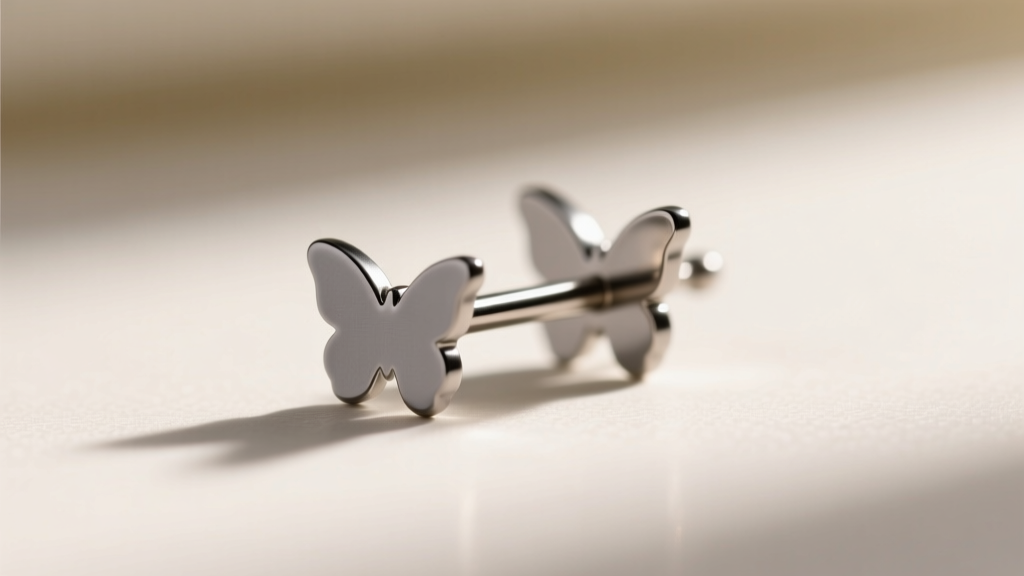
Understanding Earring Gauges
The 'gauge' refers to the thickness of the metal post that passes through your piercing. Standard lobe piercings are usually done at 20G (0.8mm) or 18G (1.0mm). For lightweight cat stud earrings, a 20G post is perfectly adequate. However, if you are purchasing cat pearl dangle earrings, you must look for an 18G (1.0mm) or even 16G (1.2mm) wire or post. The added thickness distributes the weight of the pearl and metal silhouette, protecting your earlobe from stretching over time.
Choosing the Right Metal for Sensitive Ears
Novelty jewelry is notorious for using cheap brass or nickel-heavy alloys that cause contact dermatitis. According to the American Academy of Dermatology, nickel allergy is one of the most common causes of allergic contact dermatitis. To avoid itchy, swollen lobes, stick to these proven hypoallergenic metals:
- ASTM F136 Implant-Grade Titanium: The gold standard for sensitive ears. It is entirely nickel-free, lightweight, and will not react with your skin chemistry.
- 14k or 18k Solid Gold: Excellent for luxury cat pearl earrings. Ensure it is solid gold, not gold-plated, as plating can wear off and expose base metals.
- Niobium: A highly reactive metal that is anodized to create vibrant colors (perfect for enamel-style cat earrings) without using allergenic paints or alloys.
Matching Cat Silhouettes to Your Face Shape
Styling cat pearl earrings isn't just about picking your favorite feline pose; it is about balancing your facial proportions. Here is a practical framework for matching the earring silhouette to your face shape:
Round Faces
The Goal: Elongate the face and add vertical lines.
The Best Style: Avoid wide, circular cat face studs. Instead, opt for elongated drop earrings featuring a vertical cat silhouette, such as a cat stretching downward or a long, dangling chain ending in a pearl 'mouse.' The vertical movement draws the eye down, creating a slimming effect.
Square Faces
The Goal: Soften strong jawlines and angular features.
The Best Style: Look for curved, fluid designs. A curled-up sleeping cat silhouette paired with a soft, round freshwater pearl provides organic curves that contrast beautifully with a structured jawline. Avoid sharp, geometric art-deco cat designs.
Heart-Shaped Faces
The Goal: Balance a wider forehead with a narrower chin.
The Best Style: Medium-sized cat stud earrings or small huggies with a tiny cat charm work best. You want to add a subtle width at the earlobe without overwhelming the delicate chin. A sideways sitting cat profile in 14k gold with a small pearl accent is ideal.
Oval Faces
The Goal: Maintain natural balance.
The Best Style: Oval faces can pull off almost any feline design. You can experiment with oversized, dramatic cat ear cuffs featuring pearl drops, or asymmetrical designs where one ear sports a detailed cat silhouette and the other features a solitary pearl.
Caring for Your Whiskered Jewels: A Maintenance Routine
Pearls are organic gemstones made primarily of calcium carbonate. They rank a mere 2.5 to 3.0 on the Mohs hardness scale, making them incredibly susceptible to scratching and chemical damage. Proper maintenance is non-negotiable if you want your cat pearl earrings to last.
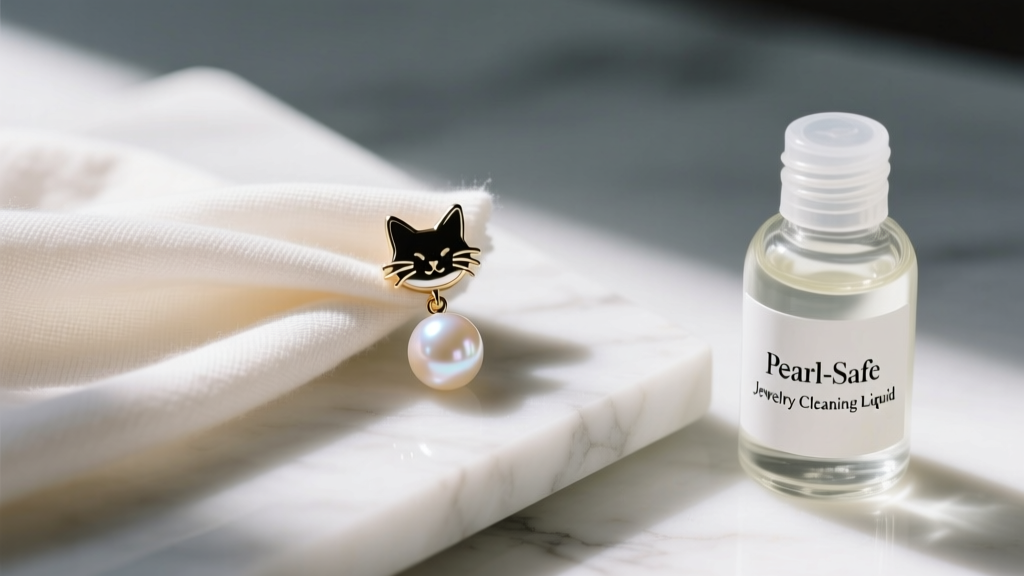
What to Avoid at All Costs
Never place pearl earrings in an ultrasonic jewelry cleaner. The high-frequency vibrations can fracture the nacre or cause the pearl to detach from its glued setting. Furthermore, avoid exposing your pearls to ammonia, bleach, or harsh commercial jewelry dips, which will strip the pearl of its natural luster and leave it looking chalky. The Gemological Institute of America (GIA) strongly recommends keeping pearls away from everyday cosmetics, perfumes, and hairsprays.
The Ideal Cleaning Routine
- Wipe After Wear: Always wipe your cat pearl earrings with a clean, damp microfiber cloth immediately after taking them off. This removes skin oils and acidic sweat that can degrade the nacre over time.
- Deep Cleaning: Once a month, use a drop of mild, phosphate-free liquid soap on a damp cloth to gently clean the metal components. Avoid rubbing the pearl directly with soap.
- Storage: Store your earrings in a soft pouch or a lined jewelry box. Never toss them into a shared compartment with diamond or sapphire jewelry, as harder gems will easily scratch the pearl's surface.
Where to Buy: Navigating Price Tiers
Understanding what you should pay prevents you from overpaying for costume jewelry disguised as fine jewelry. Here is a quick pricing framework for cat pearl earrings in the current market:
- Budget Tier ($15 - $45): Expect sterling silver with rhodium plating or gold vermeil. The 'pearls' in this tier are almost always shell pearls (glass beads coated in pearlescent paint) or very low-grade, blemished freshwater pearls. Great for occasional wear, but the plating may eventually wear off.
- Mid-Range Tier ($50 - $150): The sweet spot for quality. You will find solid 14k gold or high-quality sterling silver paired with genuine, lustrous freshwater pearls. The craftsmanship on the cat silhouettes will be detailed, with secure prong or bezel settings for the pearls.
- Fine Jewelry Tier ($200 - $800+): Reserved for designer pieces featuring 18k solid gold, diamond accents (like tiny diamond 'eyes' on the cat), and premium Akoya or South Sea pearls. These are heirloom-quality pieces meant for lifelong wear.
Final Thoughts
Cat pearl earrings are a delightful way to infuse your jewelry collection with character and charm. By paying close attention to the type of pearl, ensuring the metal gauge is appropriate for the earring's weight, and committing to a gentle cleaning routine, you can enjoy your feline-inspired accessories for years to come. Whether you prefer a minimalist gold cat silhouette hugging a lustrous freshwater pearl or a whimsical dangle design, you now have the foundational knowledge to shop with absolute confidence.


