Authentic Native American Indian Feather Earrings: A Buyer's Guide
Discover how to identify authentic Native American Indian feather earrings, understand material grades, and support indigenous artisans with our expert guide.

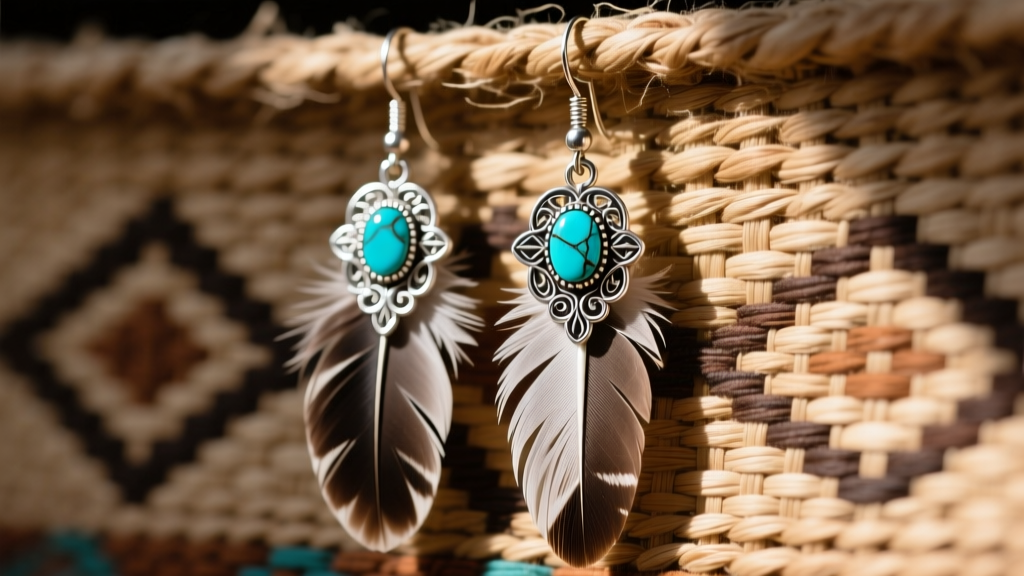
The allure of Native American Indian feather earrings lies in their intricate craftsmanship, deep cultural symbolism, and striking visual movement. Whether you are drawn to the delicate sway of a pheasant drop or the meticulous geometry of porcupine quillwork, these pieces are more than mere accessories; they are wearable art. However, as the demand for bohemian and Southwestern jewelry has surged, the market has been flooded with mass-produced imitations that appropriate Indigenous designs without supporting the communities that created them.
As a buyer in 2026, navigating this landscape requires a keen eye for material authenticity, an understanding of federal trade laws, and a commitment to ethical purchasing. This comprehensive guide will teach you exactly what to look for when investing in genuine Native American Indian feather earrings, ensuring your purchase honors the tradition and supports the artisan.
The Cultural and Legal Weight of Authenticity
Before examining the physical materials, it is crucial to understand the legal framework protecting Indigenous jewelry. The Indian Arts and Crafts Act (IACA) of 1990 is a truth-in-advertising law that prohibits misrepresentation in the marketing of Indian arts and crafts within the United States. Under this federal law, it is illegal to offer or sell any art or craft product in a manner that falsely suggests it is Indian-produced, an Indian product, or the product of a particular Indian or Indian Tribe.
Expert Insight: If a retailer is not explicitly stating the name of the enrolled tribal artisan or the specific tribe they belong to, you are likely looking at a mass-produced imitation. Genuine artisans and reputable galleries proudly display the maker's name and tribal affiliation.
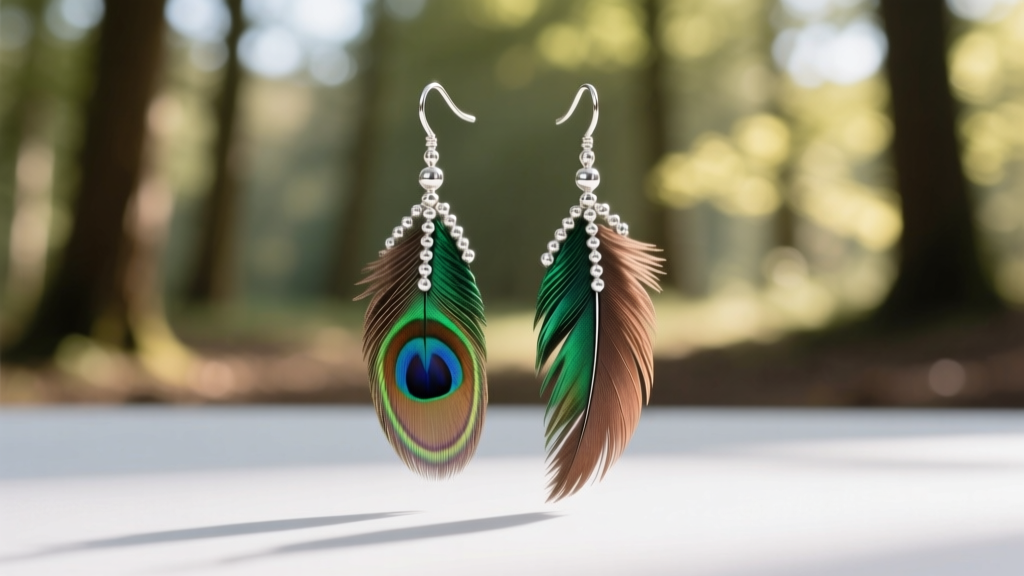
Furthermore, the use of certain feathers is strictly regulated by the Bald and Golden Eagle Protection Act. Under federal law, only enrolled members of federally recognized Native American tribes may legally possess eagle feathers for religious and cultural use. Therefore, if a commercial vendor is selling 'eagle feather' earrings to the general public, they are either violating federal law or, far more likely, selling dyed turkey or synthetic feathers mislabeled as eagle. Ethical buyers should look for earrings crafted from legally sourced, non-protected feathers such as wild turkey, ring-necked pheasant, guinea fowl, or macaw.
Decoding Materials: Feathers, Metals, and Stones
Authentic Native American jewelry is defined by the quality and origin of its raw materials. Mass-produced knock-offs cut corners with toxic alloys and dyed plastics, whereas Indigenous artisans utilize time-honored, high-grade materials.
Feather Types and Traditional Alternatives
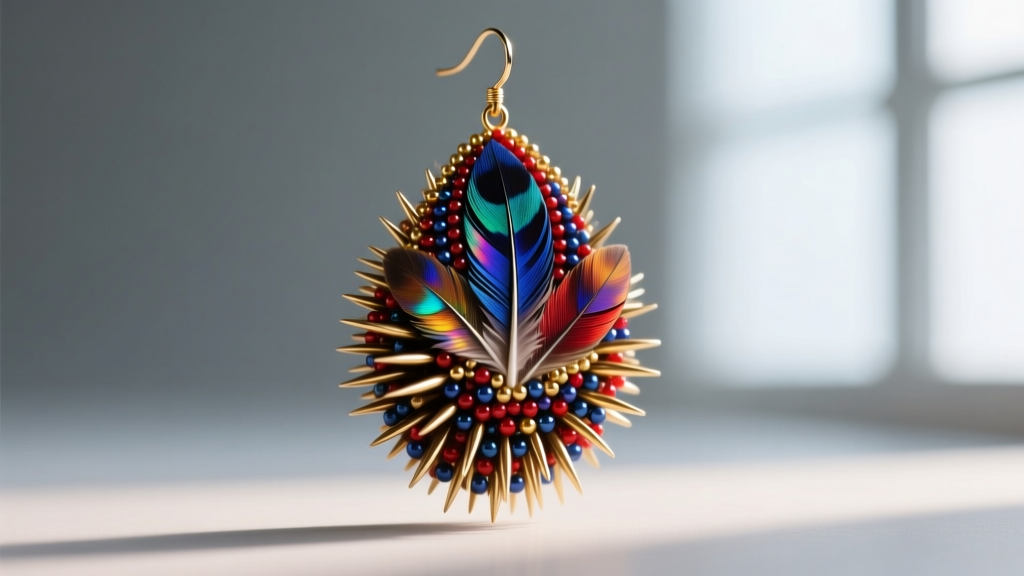
While feathers are a focal point, many traditional artisans also incorporate porcupine quillwork, a pre-contact art form that predates glass beadwork. Quills are softened, dyed using natural botanical pigments or vibrant aniline dyes, and tightly wrapped or woven into geometric patterns on hide or sinew bases. When buying feather earrings, examine the shaft and barbs. Genuine feathers have a natural asymmetry and a smooth, continuous rachis (central shaft). Synthetic feathers often look overly uniform, lack the microscopic interlocking barbs, and feel plasticky to the touch.
Metalwork and Gemstone Grades
The metalwork in authentic pieces is almost exclusively .925 Sterling Silver. Navajo, Zuni, and Hopi silversmiths are renowned for their heavy-gauge silver work, often using 18-gauge or 16-gauge sheet silver for conchos and backing plates. Avoid pieces labeled 'Tibetan Silver,' 'Alpaca,' or 'Nickel Silver'—these are copper-nickel-zinc alloys that contain no actual silver and frequently cause severe contact dermatitis.
When stones are integrated into the feather design, look for genuine turquoise, red coral, or spiny oyster shell. Authentic turquoise is often stabilized to prevent cracking, but it should never be confused with dyed howlite or magnesite, which are common in fake Southwestern jewelry. Genuine turquoise will feature natural matrix variations (the brown or black host rock veining), whereas dyed imitations often show concentrated dye pooling in the cracks.
Sizing, Gauge, and Weight Considerations
Feather earrings, particularly those featuring silver conchos, heavy glass seed beads, or brass casings, can be surprisingly heavy. Understanding ear lobe anatomy and jewelry gauges is essential to prevent tearing and discomfort.
- Standard Lobe Piercings (20g to 18g): Most standard ear piercings are done at 20-gauge (0.8mm) or 18-gauge (1.0mm). If the earring weighs less than 10 grams, a standard 20g or 18g sterling silver fishhook wire is perfectly safe.
- Heavy Dangles (14g to 12g): If the earring features heavy silverwork or extensive beadwork exceeding 15 grams, the artisan should use a thicker 14-gauge (1.6mm) or 12-gauge (2.0mm) ear wire. Wearing heavy earrings on thin wires will cause the 'cheese-cutter effect,' slowly migrating the piercing downward and eventually tearing the lobe.
- Length and Proportion: For round face shapes, opt for long, linear feather drops (3 inches or more) to create a lengthening illusion. For elongated face shapes, choose shorter, wider feather clusters or huggie-style hoops with small feather charms to add horizontal balance.
Price Guide: Mass-Produced vs. Handcrafted
Price is one of the most immediate indicators of authenticity. Hand-harvesting feathers, cutting and polishing stones, and hand-stamping silver is a labor-intensive process. If the price seems too good to be true, it is almost certainly an imported factory reproduction.
| Feature | Mass-Produced / Imitation | Authentic Handcrafted |
|---|---|---|
| Price Range | $12 - $45 | $85 - $350+ |
| Feather Source | Dyed chicken, printed synthetic | Pheasant, turkey, legal quillwork |
| Metal Base | Zinc alloy, 'Tibetan' silver | .925 Sterling Silver |
| Stones | Dyed howlite, plastic resin | Genuine Turquoise, Coral, Shell |
| Construction | Weak industrial glue, cheap clutch | Secure wire wrap, leather tie, sinew |
| Maker Info | Anonymous, 'Native Style' | Artisan Name, Tribal Affiliation |
When purchasing authentic pieces, you are paying for the artisan's time, the ethical sourcing of materials, and the continuation of a cultural lineage. Always request a certificate of authenticity or a receipt that includes the artist's name and tribe.
Styling and Care for Indigenous Jewelry
Proper maintenance ensures that your feather earrings remain pristine for decades. The organic nature of the materials requires specific care protocols that differ from standard commercial jewelry.
Cleaning Protocols
Never use ultrasonic cleaners or chemical silver dips. These harsh processes will strip the natural oils from the feathers, causing them to become brittle and snap. Furthermore, chemical dips can ruin the finish of natural turquoise and degrade the sinew or thread used in the wrapping.
- For the Silver: Use a dry, untreated silver polishing cloth to gently buff the metal components. Avoid rubbing the cloth directly over any set stones or quillwork.
- For the Feathers: If the feathers become ruffled or misshapen, you can gently steam them using a garment steamer or the steam from a boiling kettle. Hold the feather a few inches from the steam and gently stroke the barbs back into alignment with your fingers. Allow them to air dry completely before storing.
- For the Stones: Wipe turquoise and coral gently with a barely damp microfiber cloth. Never submerge porous stones in water, as they can absorb liquids and alter their color.
Storage Best Practices
Store your earrings flat in a breathable cotton pouch or a dedicated jewelry box lined with acid-free tissue paper. Avoid airtight plastic bags, which can trap moisture and cause the silver to tarnish rapidly or promote mold growth on the organic feather and hide elements. Keep them away from direct, prolonged sunlight, which will fade both the natural feathers and the dyed quillwork over time.
Where to Buy: Trusted Markets and Co-ops
To guarantee you are purchasing authentic Native American Indian feather earrings, buy directly from the source or from vetted, reputable organizations. Look for Indigenous-owned galleries, tribal co-operatives, and established markets such as the Santa Fe Indian Market or the Heard Museum Guild Indian Fair & Market. Online, prioritize websites that are transparent about their artists, providing detailed biographies and tribal affiliations for every piece listed. By prioritizing ethical sourcing and material authenticity, you ensure your jewelry collection is both beautiful and deeply respectful of the cultures that inspire it.


