The Engineering of 1 Inch Earring Hoops: Gauge, Metals & Closures
Discover the metallurgy, gauge physics, and closure engineering behind 1 inch earring hoops. An expert guide to materials, weight, and fit.

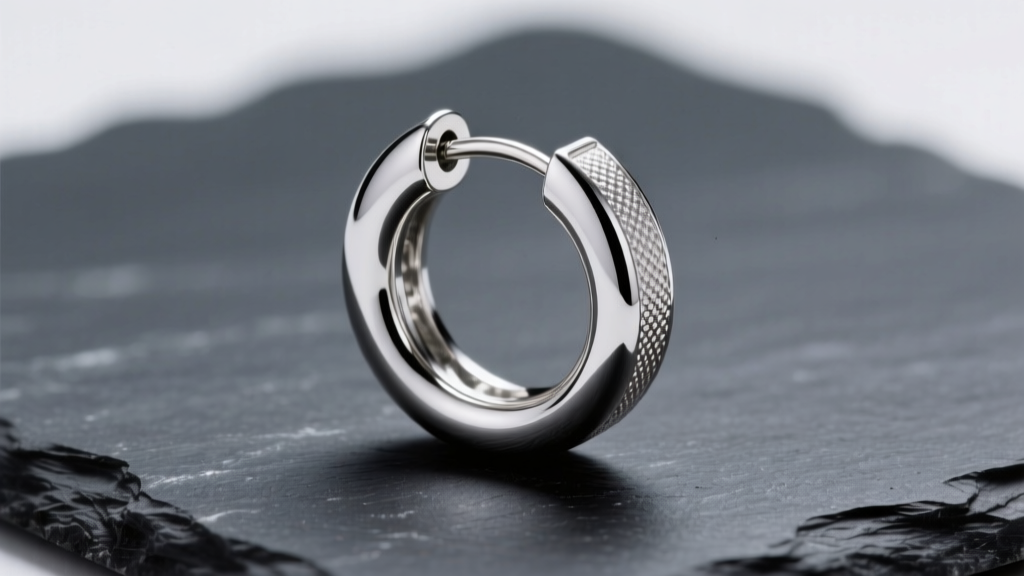
When evaluating fine jewelry, consumers often focus exclusively on aesthetics, overlooking the rigorous structural engineering required to make a piece both durable and comfortable. This is especially true for 1 inch earring hoops (exactly 25.4mm in diameter). At this specific dimension, a hoop sits at the critical intersection of visual prominence and biomechanical stress on the earlobe. Too heavy, and it causes tissue migration; too thin, and it warps under minor tensile stress.
As a domain expert in jewelry metallurgy and ergonomic design, I am breaking down the precise technical specifications, material grades, and mechanical failure modes you must consider when sourcing or designing 25mm hoop earrings. Whether you are buying for fresh cartilage piercings or healed lobes, understanding the physics of the 1-inch hoop is non-negotiable.
Material Metallurgy and Alloy Grades
The structural integrity of a 1 inch earring hoop is entirely dependent on its base alloy. The jewelry market is flooded with misleading terms like 'surgical steel,' but true bio-compatibility and tensile strength require precise metallurgical standards.
ASTM F136 Titanium vs. 316L Steel
For sensitive ears or healing piercings, ASTM F136 implant-grade titanium is the undisputed benchmark. Unlike 316L stainless steel, which contains up to 14% nickel and relies on a passive chromium oxide layer to prevent leaching, F136 titanium contains zero nickel. Furthermore, F136 boasts a tensile yield strength of approximately 860 MPa, meaning a 16-gauge titanium hoop will resist bending far better than a steel counterpart of the same thickness.
Gold Alloys: 14k vs. 18k Vickers Hardness
Pure 24k gold is far too malleable for hoop earrings; it will deform under the weight of its own closure mechanism. According to the Gemological Institute of America (GIA), alloying gold is necessary for structural durability. 18k gold (75% gold) has a Vickers hardness of roughly 125 HV, making it suitable for thick, rigid hoops. However, 14k gold (58.5% gold) achieves a hardness of 150-160 HV due to higher copper and zinc content, making it the superior choice for thin, continuous 1-inch hoops that rely on metal memory to stay closed.
Wire Gauge Physics and Tensile Stress
The wire gauge dictates both the weight of the hoop and its resistance to shear stress. In the context of 1 inch earring hoops, the margin for error is razor-thin.
- 20 Gauge (0.81mm): Generally unsuitable for 25mm hoops. The thin wire acts as a lever, concentrating the weight of the hoop onto a microscopic point of the earlobe, leading to the dreaded 'cheese-cutter effect' (tissue migration).
- 18 Gauge (1.02mm): The industry standard for healed lobe piercings. It provides adequate rigidity while keeping the overall weight of a 25mm hoop under 1.5 grams in gold.
- 16 Gauge (1.29mm): Mandatory for cartilage applications (helix, tragus, conch). The increased cross-sectional area prevents the hoop from twisting inside the fistula, which can introduce bacteria and cause hypertrophic scarring.
According to the Association of Professional Piercers (APP), jewelry intended for initial piercings must have a mirror finish to prevent bacterial harboring, and the internal diameter must accommodate initial swelling. A standard 1-inch hoop is often too tight for fresh cartilage; a 3/8 inch (10mm) or larger is usually required until fully healed.
Closure Mechanisms and Mechanical Failure Modes
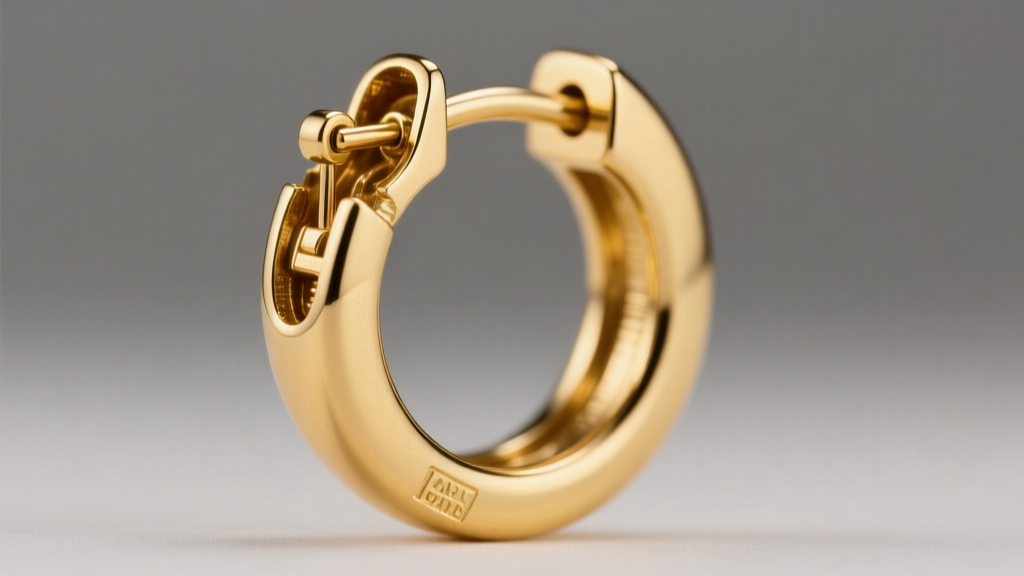
The closure is the most vulnerable point of any hoop earring. At a 25.4mm diameter, the leverage applied when putting the earring on or taking it off puts immense shear stress on the hinge or tension point.
Continuous (Endless) Hoops
Continuous hoops rely on the metal's fatigue limit. The hollow or solid wire bends slightly to allow the pin to enter the receiving tube. Over time, repeated bending causes work hardening, eventually leading to metal fatigue and a clean snap. To mitigate this, high-end manufacturers anneal the wire post-production to restore ductility.
Hinged Snap Closures
Hinged hoops utilize a micro-pin (often 0.4mm thick) connecting the front and back halves. The failure mode here is rarely the pin snapping; rather, it is the deformation of the receiving catch. If the catch is stamped from thin sheet metal rather than milled from a solid block, the 'snap' will loosen within six months of daily wear.
Clicker (Segment) Rings
Clickers feature a machined segment that locks into place via a precision tension fit. The engineering challenge here is maintaining the exact tolerance (usually within 0.05mm) so the clicker stays secure without requiring pliers to open. High-quality clickers are CNC-machined from solid bar stock, ensuring the hinge pin and catch are perfectly aligned.
Ergonomics: Weight Distribution and Lobe Biomechanics
A 1 inch earring hoop must be balanced. The center of gravity shifts depending on the thickness of the wire and the density of the metal. Below is a technical breakdown of estimated weights for a standard 25.4mm diameter hoop across different materials and gauges.
| Material Grade | 18g (1.0mm) Weight | 16g (1.2mm) Weight | Tensile Yield Strength |
|---|---|---|---|
| ASTM F136 Titanium | ~0.85g | ~1.22g | 860 MPa |
| 14k Yellow Gold | ~1.45g | ~2.10g | ~350 MPa |
| 316L Surgical Steel | ~1.10g | ~1.58g | ~290 MPa |
| 950 Platinum | ~1.85g | ~2.65g | ~120 MPa |
As demonstrated in the data, platinum is exceptionally dense. A 16g platinum hoop at 1 inch will weigh over 2.5 grams per ear. While platinum is highly durable and hypoallergenic, this weight can cause lobe fatigue over a 12-hour wear period, making 14k gold or titanium the superior ergonomic choices for daily wear.
Sourcing and 2026 Pricing Benchmarks
Understanding the technical specifications protects you from inflated pricing and counterfeit alloys. When sourcing genuine 1 inch earring hoops, use these baseline manufacturing and retail benchmarks to evaluate quality.
What You Should Pay
- Implant-Grade Titanium (CNC Machined Clickers): $35 - $65 per pair. Anything cheaper likely uses commercial-grade titanium or poorly cast hinges.
- Solid 14k Gold (Seamless Continuous): $120 - $180 per pair. Pricing scales strictly with the spot price of gold and the precision of the seamless joint.
- Solid 18k Gold (Hinged with Diamond Accents): $400 - $800+. The premium covers the higher gold content, the complex micro-hinge engineering, and the melee stone setting.
Always demand a mill certificate or explicit confirmation of the alloy grade (e.g., ASTM F136 or F67 for titanium, and exact karatage for gold). 'Hypoallergenic' is an unregulated marketing term; precise metallurgical data is the only true indicator of quality and safety in fine jewelry engineering.


