Bead Hoop Earrings Buying Guide: What to Look For
Discover what to look for when buying bead hoop earrings. Learn about gauge sizes, bead materials, clasp types, and how to prevent bead loss.


The Anatomy and Appeal of Bead Hoop Earrings
Bead hoop earrings represent a perfect synthesis of classic geometry and textured embellishment. By integrating beads—whether they are luminous freshwater pearls, vibrant gemstones, or hand-blown glass—onto a continuous metal loop, jewelers create a dynamic piece of ear art that moves and catches the light with every turn of the head. However, as we navigate the jewelry market in 2026, the surge in demand for these pieces has led to a flooded market of varying quality. Buying bead hoops requires a discerning eye for metallurgical integrity, structural engineering, and gemstone grading.
Unlike a standard plain wire hoop, the addition of beads fundamentally changes the physics of the earring. The extra weight alters the center of gravity, putting immense stress on the closure mechanism and the piercing fistula itself. This comprehensive buying guide will equip you with the exact specifications, material grades, and troubleshooting frameworks needed to invest in bead hoop earrings that are as durable as they are beautiful.
Decoding Gauge Thickness and Structural Integrity
The most common point of failure in beaded hoops is a bent wire post or a stretched hoop circle. This occurs when buyers ignore the gauge thickness of the metal wire. Gauge refers to the diameter of the wire itself, not the inner diameter of the hoop. Because beads add rotational weight, you must select a thicker gauge than you would for a plain, lightweight hoop.
| Gauge Size | Millimeter (mm) | Best Application | Bead Weight Tolerance |
|---|---|---|---|
| 22G | 0.64mm | Lightweight micro-hoops (healed lobes only) | Very Low (Tiny seed beads only) |
| 20G | 0.81mm | Standard lobe hoops with moderate beading | Low to Medium |
| 18G | 1.02mm | Durable everyday hoops, cartilage/helix | Medium to High |
| 16G | 1.29mm | Heavy statement beads, daith, and rook piercings | High (Large gemstones/pearls) |
For any bead hoop exceeding 15mm in outer diameter, an 18G or 16G wire is highly recommended. Furthermore, pay attention to the metal's temper. High-end body jewelry brands utilize work-hardened wire, meaning the metal has been mechanically stressed during manufacturing to increase its rigidity and resistance to bending.
Evaluating Bead Materials and Quality Grades
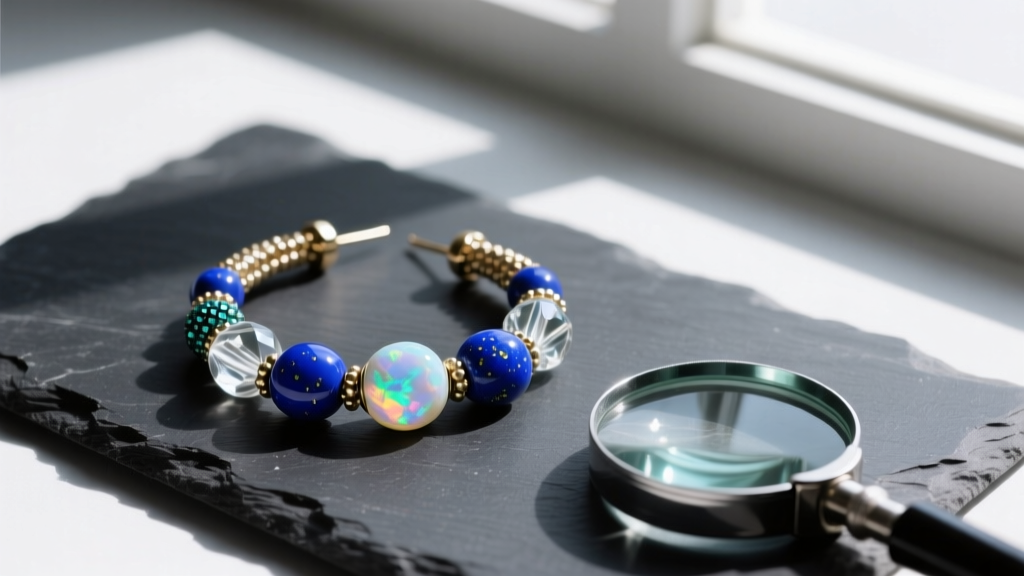
The beads themselves are the focal point of the earring, and their material dictates both the aesthetic and the longevity of the piece. When evaluating gemstone beads, refer to the Mohs scale of hardness. According to the Gemological Institute of America (GIA), stones like opal (Mohs 5.5-6.5) and pearl (Mohs 2.5-4.5) are highly susceptible to scratching and degradation from everyday cosmetics and friction. If you opt for softer beads, ensure they are bezel-set or protected by metal caps rather than freely spinning on the wire where they can chip against each other.
Glass and Acrylic Beads
For vibrant, lightweight options, glass and acrylic are popular. Murano glass beads offer unparalleled color depth and artisanal value, but they are fragile. Acrylic beads are virtually shatterproof and incredibly lightweight, making them ideal for oversized 16G hoop statements that won't weigh down your earlobe. However, acrylic is porous and can harbor bacteria, making it unsuitable for unhealed or sensitive cartilage piercings.
Hypoallergenic Considerations
While the beads themselves rarely cause allergic reactions, the metal wire threading through them does. The American Academy of Dermatology warns that nickel contact dermatitis is one of the most common allergic reactions worldwide. Always verify that the hoop wire is crafted from ASTM F136 implant-grade titanium, niobium, or solid 14k/18k nickel-free gold. Avoid 'gold-plated' brass or copper alloys, as the friction from spinning beads will quickly wear away the microscopic gold layer, exposing reactive base metals to your piercing.
Closure Mechanisms: The Secret to Preventing Loss
The closure is the most critical engineering component of a bead hoop. The kinetic energy generated by swinging beads can easily compromise weak clasps, leading to lost earrings. Here is how the primary closures stack up for beaded designs:
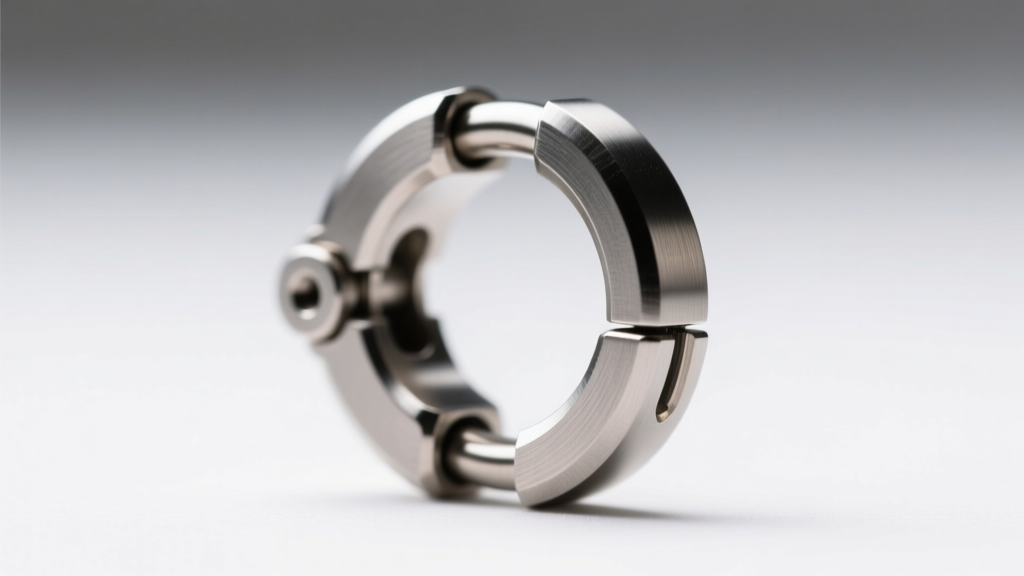
- Hinged Clicker / Segment Ring: The gold standard for bead hoops in 2026. A precision-machined hinge snaps shut with an audible 'click', creating a seamless, secure loop that can easily support the weight of heavy gemstone beads.
- Threaded End Hoops: The wire inserts into a hollow bead that screws on. Look for internally threaded designs where the screw mechanism is on the wire, and the bead has smooth internal threads. Externally threaded beads (where the wire has sharp ridges) can damage the piercing channel during insertion.
- Endless / Wire Hoops: A thin wire tucks into a hollow tube bead. While elegant, these are highly prone to bending and accidental unseating if the beads are heavy. Only buy endless hoops if the wire is at least 18G and the beads are lightweight pearls or seed beads.
- Friction / Butterfly Backs: Avoid these for bead hoops entirely. The constant swinging momentum of the beads will gradually loosen the friction post, inevitably resulting in the earring falling out.
Pro Tip: If you own threaded bead hoops and find the beads slowly unscrewing throughout the day, apply a microscopic drop of jewelry-safe, clear cyanoacrylate adhesive to the threads before screwing the bead on. This creates a temporary, reversible lock that prevents loss without damaging the metal.
Troubleshooting Common Bead Hoop Failures
Even high-quality bead hoops can present unique wearing challenges. Understanding these failure modes will help you maintain your collection and know what to look for when making future purchases.
Problem: The Beads Spin and Cluster Together
When beads are strung freely on a smooth wire hoop, they tend to slide and cluster at the bottom, ruining the intended evenly-spaced aesthetic. The Solution: Look for hoops that feature microscopic crimp beads or silicone o-rings soldered or placed between the decorative beads to lock them in place. If your current hoops lack this, you can purchase tiny clear silicone ear-nut stoppers and thread them onto the wire between the beads to act as invisible spacers.
Problem: The Hoop Warps into an Oval Shape
This happens when the tensile strength of the wire is overpowered by the leverage of the beads, or when the wearer accidentally pulls the hoop while taking off a sweater. The Solution: You cannot permanently fix warped work-hardened wire without risking a snap. Prevention is key: always store bead hoops in a rigid, compartmentalized jewelry box rather than tossing them into a soft pouch where they can be crushed. When purchasing, opt for brands that use platinum, palladium, or heavily alloyed 14k gold, which offer superior shape retention compared to pure 24k gold or soft sterling silver.
Face Shape and Styling Framework
The distribution of beads on a hoop can be strategically used to complement your face shape. For round faces, choose elongated, oval-shaped bead hoops or hoops where the beads are concentrated at the very bottom to create a vertical, face-lengthening illusion. For square or angular jawlines, opt for perfectly circular hoops with evenly distributed, round pearls or glass beads; the continuous curves will soften sharp facial features. Heart-shaped faces benefit from teardrop-shaped bead hoops or styles where the beading is heavier near the top (close to the earlobe) to add visual width to the upper half of the face.
Final Verdict: Building Your Collection
Bead hoop earrings are an investment in kinetic art. By prioritizing 18G or 16G work-hardened wires, demanding ASTM F136 titanium or solid gold alloys, and insisting on secure hinged clicker or internally threaded closures, you eliminate the frustration of lost beads and warped metal. As the jewelry industry continues to innovate in 2026, the best brands are those that marry traditional gemstone-setting techniques with modern, precision body-jewelry engineering. Use this framework to curate a collection of bead hoops that will remain secure, hypoallergenic, and visually stunning for decades to come.


