Avoid Earring Piercing Infection: 2026 Safe Metals & Styles
Discover how to avoid earring piercing infection while maintaining a trendy curated ear. Explore 2026 bio-compatible metals, gauge sizing, and style swaps.

The Dark Side of the Curated Ear Trend
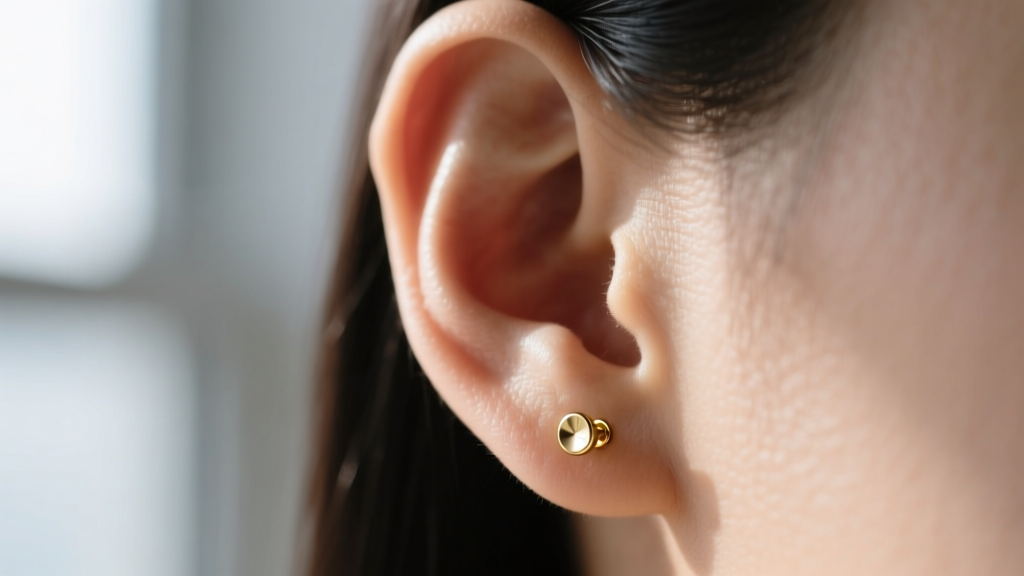
The 'curated ear' movement has entirely transformed how we approach jewelry, shifting the focus from a single lobe stud to an intricate, architectural map of cartilage and lobe placements. While the aesthetic results are undeniably stunning, this rapid expansion of multi-piercing stacks has introduced a significant clinical challenge: a sharp rise in earring piercing infection cases reported by dermatologists and professional piercers alike. As we navigate the 2026 style landscape, the intersection of high fashion and biological safety has never been more critical.
Many consumers mistakenly believe that an earring piercing infection is solely the result of poor aftercare or unwashed hands. While hygiene plays a role, the root cause of chronic inflammation, contact dermatitis, and subsequent bacterial infections often lies in the metallurgical composition and structural engineering of the jewelry itself. When fashion trends outpace material science, the delicate fistula (the healed skin tunnel of the piercing) pays the price. Understanding the hidden mechanics of your jewelry is the first step toward maintaining a flawless, healthy ear stack.
Metallurgy Matters: Decoding 'Hypoallergenic' Marketing
The term 'hypoallergenic' is largely a marketing construct with no strict regulatory backing in the fashion jewelry industry. To truly protect your piercings from the micro-abrasions that invite staphylococcus bacteria, you must look for specific metallurgical standards. The most common culprit behind a persistent earring piercing infection is nickel exposure. Even trace amounts of nickel can trigger allergic contact dermatitis, which compromises the skin barrier and creates a breeding ground for infection.
Many mainstream brands utilize 316L stainless steel, often deceptively labeled as 'surgical steel.' While 316L is perfectly safe for surgical instruments that are used once and sterilized, it contains between 8% and 10.5% nickel. When worn continuously in a warm, moist piercing channel, the nickel leaches into the tissue. In contrast, the gold standard for 2026 bio-compatible luxury is ASTM F136 implant-grade titanium (Ti-6Al-4V ELI). This specific alloy contains zero nickel and is the exact same material used in orthopedic joint replacements and pacemakers.
| Material | Industry Standard | Nickel Content | Infection Risk Profile |
|---|---|---|---|
| 316L 'Surgical' Steel | ASTM F138 (Commercial) | 8% - 10.5% | High (Leaches nickel, causes dermatitis) |
| Implant-Grade Titanium | ASTM F136 (ELI) | 0% (Trace only) | Extremely Low (Highly biocompatible) |
| Niobium | Unalloyed Elemental | 0% | Very Low (Excellent for hypersensitive skin) |
| Solid 14k/18k Gold | Nickel-Free Alloy | 0% (If properly alloyed) | Low (Must avoid cadmium/nickel alloys) |
| Sterling Silver (925) | Commercial Standard | Varies (Often contains copper/nickel) | High (Tarnishes, causes argyria and irritation) |
According to the Association of Professional Piercers (APP), only mirror-finished, implant-grade materials should be worn in fresh or easily irritated piercings to prevent the tissue trauma that leads to an earring piercing infection.
The Mechanics of Micro-Tears: Gauge Sizing Failures
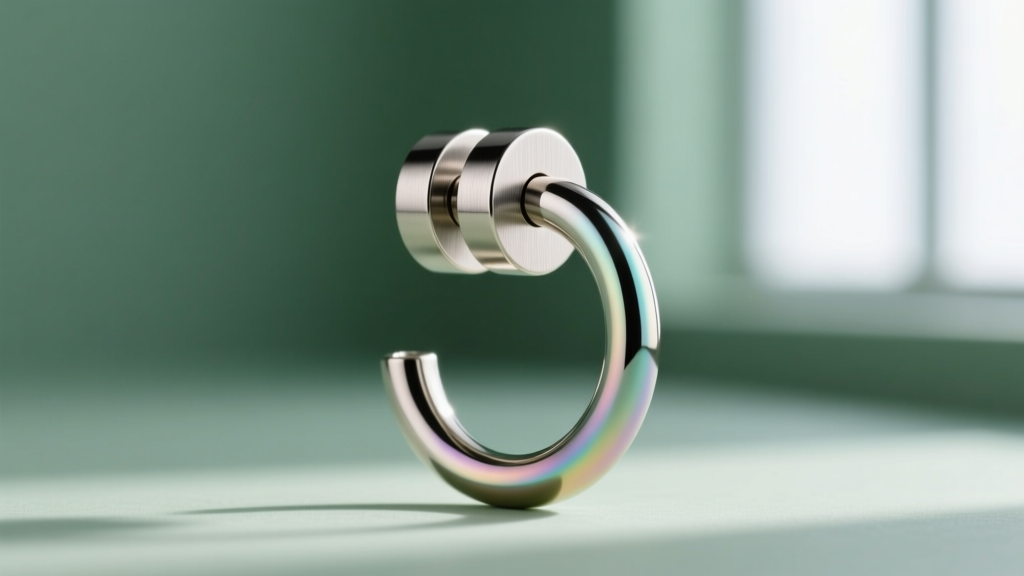
Beyond metal composition, the physical dimensions of your earrings play a massive, often overlooked role in piercing health. Standard fashion earrings—those typically found in mall kiosks and fast-fashion retailers—are manufactured at 20-gauge (0.81mm) or 18-gauge (1.02mm) thicknesses. However, professional piercers almost universally perform cartilage piercings at 16-gauge (1.2mm) or 14-gauge (1.6mm) to ensure structural stability and minimize the 'cheese cutter effect.'
The 'Cheese Cutter' Effect Explained
When you insert a flimsy 20-gauge fashion wire into a 16-gauge cartilage piercing, two detrimental things occur. First, the 0.4mm gap between the jewelry and the fistula wall creates a microscopic trench where dead skin cells, sebum, and shower runoff accumulate. This biofilm buildup rapidly decomposes, leading to the telltale 'earring cheese' odor and inviting bacterial overgrowth. Second, the thin wire acts like a cheese wire cutting through a block of cheddar. The downward pressure of a heavy fashion dangle on a thin wire slices through the delicate interior of the fistula, creating internal micro-tears. These open wounds inside the piercing channel are the primary entry point for the bacteria that cause a severe earring piercing infection.
To maintain a healthy stack, always verify the gauge of your jewelry. If your cartilage was pierced at 16g, you must wear 16g jewelry. For heavy statement pieces, opt for brands that engineer their decorative tops to fit onto thick, 14g or 12g structural posts.
Threadless vs. Externally Threaded: The Hidden Agitator
Examine the post of your current earrings. If the screw threads are located on the outside of the post (externally threaded), you are actively damaging your piercing channel every time you insert or remove the jewelry. Those sharp, microscopic metal ridges scrape the interior of the fistula, causing chronic inflammation that mimics—and often precedes—an earring piercing infection.
The 2026 standard for luxury ear styling relies on two superior engineering methods:
- Internally Threaded: The screw mechanism is hidden inside the decorative top, while the post that passes through the ear is perfectly smooth and tapered.
- Threadless (Push-Pin): The decorative top features a slightly bent titanium or gold pin that inserts into a hollow, smooth post. The tension of the bent pin against the inside of the post holds the jewelry securely in place. This is currently the gold standard for seamless insertion and zero tissue trauma.
2026 Style Forecast: Bio-Compatible Luxury Brands
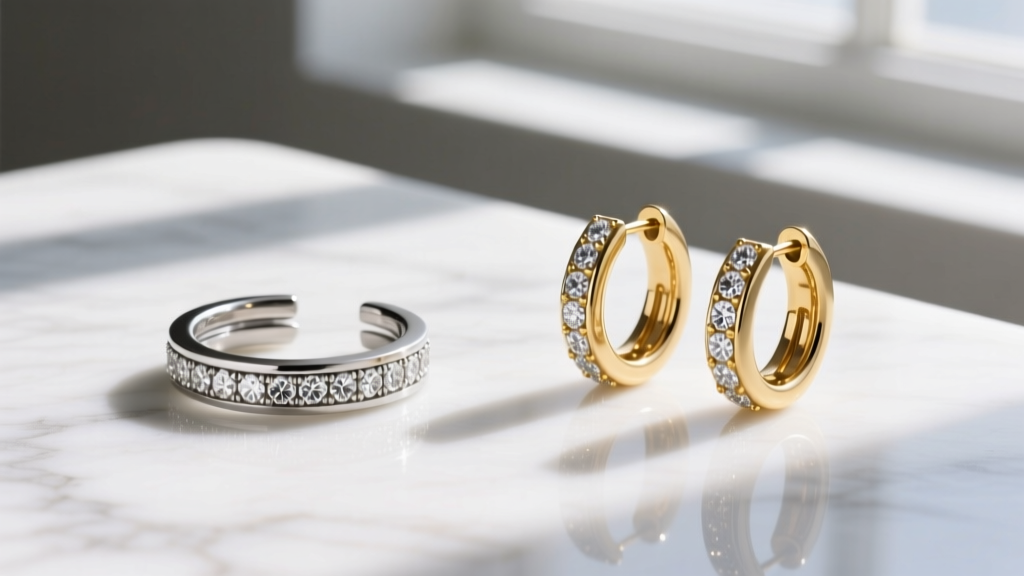
Fortunately, you no longer have to sacrifice high-fashion aesthetics for biological safety. The 2026 jewelry market has seen a massive pivot toward 'bio-luxury'—brands that merge haute couture designs with strict medical-grade material standards. Designers are increasingly utilizing CNC-machined ASTM F136 titanium as a base, plating it with PVD (Physical Vapor Deposition) gold coatings that will never flake or leach, or casting solid 14k and 18k nickel-free gold.
Industry leaders like BVLA (Body Vision Los Angeles) and Maria Tash have set the benchmark, offering intricate, diamond-encrusted threadless studs and floating clicker hoops that are entirely safe for 24/7 wear. For those seeking avant-garde ear cuffs and huggies that do not require a piercing but still interact with the skin, brands like LeRoi are utilizing high-polish niobium, which is entirely inert and will not trigger contact dermatitis even on the most reactive skin types.
Damage Control: Style Swaps for an Active Flare-Up
If you are currently battling an earring piercing infection, your immediate priority is clinical triage, not styling. According to DermNet, removing the jewelry from an infected, swollen piercing is a critical error. The surface of the fistula will heal and close over within hours, trapping the abscess inside the tissue and potentially requiring surgical lancing.
Instead, execute the following protocol to save both your health and your curated ear:
- Upsize the Post Length: Swelling requires physical space. Have a professional piercer swap your current stud for a longer, 16g or 14g implant-grade titanium flat-back labret to accommodate the edema without the decorative top embedding into the skin.
- Switch to Threadless Titanium: Eliminate all friction and metal allergies by wearing a simple, mirror-polished titanium ball-top. Avoid any crevices, gems, or intricate designs where bacteria can hide during the healing phase.
- Sterile Saline Only: Abandon tea tree oil, rubbing alcohol, and DIY salt soaks. These harsh astringents destroy the delicate, newly forming epithelial cells. Use only a sterile, 0.9% isotonic saline wound wash twice daily.
- Apply Cold Compresses: For cartilage flare-ups, a clean ice pack wrapped in a paper towel applied for 5 minutes can drastically reduce localized inflammation and throbbing.
By treating your piercings as permanent body modifications rather than temporary fashion accessories, you can embrace the most intricate, heavy, and beautiful ear stacks of 2026 without ever fearing the dreaded earring piercing infection. Invest in the metal, respect the gauge, and let your curated ear thrive.


