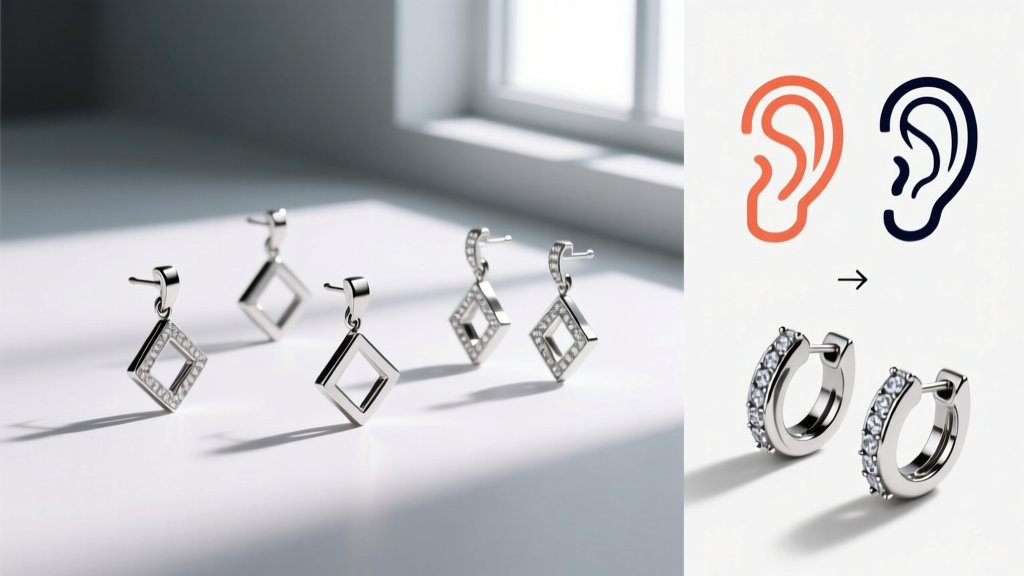
Finding the Perfect Earring for Man: A Beginner's Guide
Discover how to choose the best earring for man, covering gauge sizes, hypoallergenic metals, and starter styles for lobe and cartilage piercings.


The landscape of men's jewelry has evolved dramatically. Gone are the days when the only option was a flimsy, low-quality hoop from a mall kiosk. Today, selecting an earring for man involves navigating a sophisticated world of anatomical sizing, biocompatible metals, and precision-engineered threading. Whether you are stepping into a professional studio for your first lobe piercing or looking to upgrade a healed cartilage piercing, understanding the mechanics of body jewelry is non-negotiable.
As we move through 2026, the trend in men's jewelry heavily favors minimalist, high-quality pieces that prioritize both aesthetics and tissue health. Choosing the right earring for man requires looking past the surface design and understanding what sits beneath the skin. This beginner-friendly explainer will decode gauge sizes, material grades, and aftercare protocols to ensure your piercing journey is seamless, safe, and stylish.
Decoding Gauge Sizes and Post Lengths
The most common mistake beginners make is buying jewelry based solely on visual appeal without checking the dimensions. Body jewelry is measured by gauge (the thickness of the post) and length/diameter. Men's ear anatomy and aesthetic proportions often dictate slightly thicker, more robust jewelry compared to traditional women's fine jewelry.
Standard Sizing for Men's Piercings
Most professional piercers will use a 16-gauge or 14-gauge needle for men's lobes to accommodate heavier jewelry and reduce the "cheese-cutter effect" (where thin jewelry slowly migrates through the tissue). For cartilage piercings like the helix or tragus, 16-gauge is the industry standard.
| Gauge Size | Millimeter (mm) | Best Application for Men | Notes |
|---|---|---|---|
| 18G | 1.0mm | Standard thin lobes | Often too fragile for men's active lifestyles; prone to bending. |
| 16G | 1.2mm | Standard lobes, Helix, Tragus | The sweet spot for most men's ear piercings; offers great stability. |
| 14G | 1.6mm | Thick lobes, Conch, Industrial | Highly durable; provides a bold, masculine aesthetic. |
| 12G | 2.0mm | Stretched lobes, Scaffold | Usually reserved for intentional stretching or heavy industrial bars. |
Post length is equally critical. A fresh piercing requires extra space for swelling. For a standard lobe, a 1/4" (6mm) or 5/16" (8mm) post is typical. For cartilage, piercers often start with a 5/16" (8mm) or 3/8" (10mm) post to accommodate the initial inflammatory phase. Once healed, you must downsize to a snugger fit to prevent the jewelry from catching on clothing or headphones.
The Material Hierarchy: What to Wear and Avoid
When searching for an earring for man, the metal composition is the single most important factor for long-term tissue health. The skin inside a piercing fistula (the healed tunnel of skin) is highly reactive to porous metals and nickel alloys.
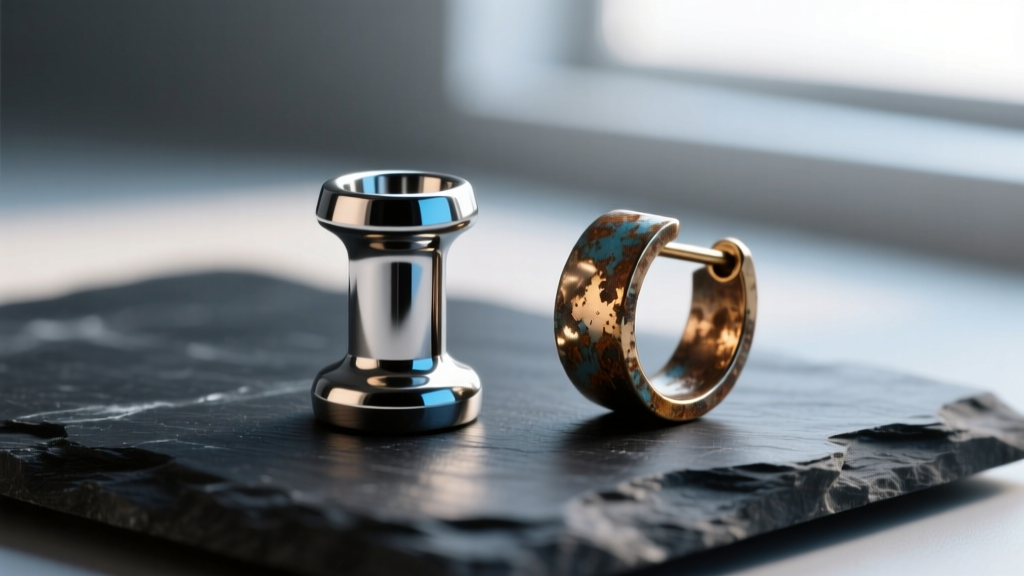
The Gold Standard: Implant-Grade Titanium
According to the Association of Professional Piercers (APP), the absolute best material for initial piercings and sensitive ears is ASTM F-136 Implant-Grade Titanium. This is the exact same metal used in medical joint replacements. It contains zero nickel, is highly polished to a mirror finish (preventing bacterial harboring), and is lightweight.
The "Surgical Steel" Trap
Many commercial brands market "surgical steel" or "stainless steel" (often 316L) as hypoallergenic. This is a marketing myth. 316L steel contains between 8% and 12% nickel. While the nickel is bound in the alloy, the saline environment of a healing piercing can cause nickel ions to leach out, leading to contact dermatitis, itching, and hypertrophic scarring. If you are buying an earring for man as a gift, avoid anything labeled simply as "surgical steel."
Solid Gold vs. Gold Plated
If you prefer the look of gold, opt for solid 14k or 18k gold that is nickel-free and palladium-based (for white gold). Never wear gold-plated or gold-filled jewelry in a piercing. The plating will inevitably wear off from friction and exposure to skin oils, exposing the reactive base metal underneath and causing severe irritation.
Starter Styles: Moving Beyond the Mall Kiosk
The modern man's earring collection is defined by clean lines, secure fittings, and subtle geometry. Here are the top styles recommended by professional piercers for beginners.
1. Threadless (Press-Fit) Labret Studs
Pioneered by brands like NeoMetal and Industrial Strength, threadless jewelry uses the tension of a slightly bent pin to hold the decorative end onto the post. This eliminates the micro-tears caused by screwing threaded jewelry through a delicate fistula. A simple 3mm or 4mm black PVD-coated titanium end is a staple for the modern masculine aesthetic.
2. Internally Threaded Flat-Backs
If you prefer threaded jewelry, ensure it is internally threaded (the screw is on the decorative end, and the post is smooth). Flat-back labrets sit flush against the back of the ear, making them incredibly comfortable for sleeping and wearing over-ear headphones—a massive functional benefit for men.
3. Seamless Segment Rings (For Healed Piercings Only)
While hoops are a classic look, they should never be worn in a fresh piercing. The circular shape moves constantly, introducing bacteria into the healing canal and causing irritation bumps. Once your piercing is fully healed (6-12 months for cartilage), a 14-gauge or 16-gauge seamless segment ring offers a sleek, industrial look.
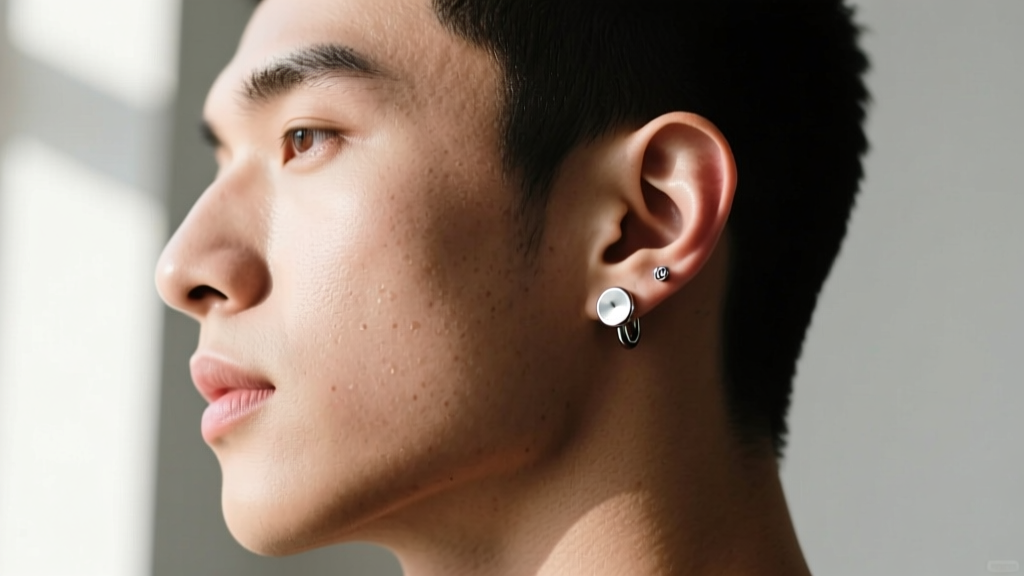
The Upgrade Timeline: When to Swap Your Jewelry
Patience is a virtue in body modification. A common pitfall for beginners is swapping out the starter jewelry too early. Here is a realistic timeline for upgrading your earring for man:
- Weeks 1-4: Do not touch the jewelry. Let the initial swelling subside. If the post feels excessively long and is catching on things, visit your piercer for a professional "downsize" using sterile tools.
- Months 2-6: The fistula is forming but remains fragile. Stick to flat-back labrets. Avoid hoops, heavy dangles, or anything that creates rotational movement.
- Months 6-12: Cartilage piercings take up to a year to fully mature. Lobe piercings usually heal in 3-4 months. Once cleared by a professional, you can experiment with huggies, clickers, and heavier statement pieces.
The LITHA Aftercare Protocol
The success of your piercing relies 20% on the piercer's technique and 80% on your aftercare. The industry standard is the LITHA method: Leave It The Hell Alone.
"Over-cleaning is just as detrimental as under-cleaning. The body needs a stable, undisturbed environment to build the collagen matrix that forms the piercing fistula." — Association of Professional Piercers Aftercare Guidelines.
Your Daily Routine
- Spray: Use a sterile 0.9% sodium chloride wound wash (like NeilMed Piercing Aftercare) twice a day. Spray it directly onto the front and back of the piercing.
- Soften: In the shower, let warm water gently run over the ear to soften any dried lymph fluid (crusties).
- Dry: Gently pat the area dry with a disposable paper product or use a hairdryer on the "cool" setting. Avoid cloth towels, which harbor bacteria and can snag on the jewelry.
Avoid all home remedies. Tea tree oil, rubbing alcohol, hydrogen peroxide, and antibiotic ointments will destroy the delicate new cells forming inside your piercing, leading to chemical burns and prolonged healing times. For authoritative medical advice on skin care and wound healing, resources like the APP Aftercare Page provide evidence-based protocols that align with modern dermatological standards.
Final Thoughts on Men's Ear Jewelry
Investing in high-quality, anatomically correct jewelry transforms a piercing from a temporary trend into a permanent, sophisticated accessory. By prioritizing implant-grade titanium, respecting gauge dimensions, and adhering to a strict LITHA aftercare routine, you ensure your ear jewelry looks sharp and heals flawlessly. Whether you opt for a stealthy black PVD stud or a sleek titanium huggie, the right earring for man is one that respects both his style and his anatomy.