Budget Guide: Using A Gauges Earrings Size Chart For Better Value
Learn how to use a gauges earrings size chart to maximize your jewelry budget, avoid costly sizing mistakes, and choose the right metal thickness.

The Hidden Financial Costs of Ignoring Earring Gauge Sizes
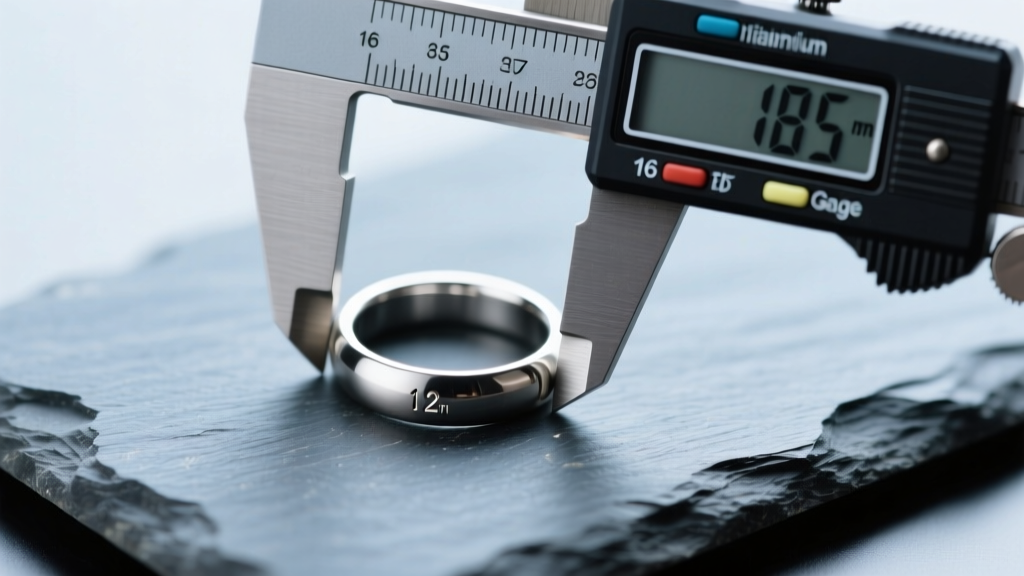
When building a curated ear stack or venturing into cartilage piercings, most buyers focus entirely on the aesthetic design of the jewelry. However, overlooking the structural dimensions of your pieces is one of the fastest ways to drain your jewelry budget. When consulting a comprehensive gauges earrings size chart, most shoppers only look at the millimeter conversion to ensure the post will fit through their piercing. What they fail to realize is that gauge size directly dictates volumetric metal pricing, structural longevity, and long-term tissue health.
Purchasing the wrong gauge doesn't just result in the hassle of returns; it can lead to the 'cheese cutter effect,' where a heavy, thin-gauge earring slowly migrates through the earlobe, forcing you to pay for corrective procedures or abandon the piercing entirely. Conversely, buying solid 14k gold in a 14-gauge thickness when an 18-gauge would suffice can inflate your costs by over 40% due to the sheer volume of precious metal required. Understanding the intersection of anatomy, metallurgy, and pricing is the key to maximizing your jewelry investments.
The Definitive Gauges Earrings Size Chart & Price Tiers
To assess value accurately, you must first understand the standardized measurements that govern body jewelry. Unlike standard fashion earrings which hover around 20-gauge or 18-gauge, professional body jewelry spans a much wider spectrum. Below is a structural breakdown of standard sizes, their typical applications, and how they impact your wallet.
| Gauge Size | Millimeter (mm) | Inch (Fraction) | Primary Application | Budget Impact & Value Tier |
|---|---|---|---|---|
| 20g | 0.81mm | ~1/32' | Standard mall-kiosk lobe piercings, lightweight fashion studs | Lowest Cost. Minimal metal used, but high risk of tearing if heavy gems are attached. |
| 18g | 1.02mm | ~3/64' | Nose, upper lobe, helix, and standard cartilage | High Value. The sweet spot for solid gold cartilage jewelry; balances durability with metal weight. |
| 16g | 1.29mm | ~3/64' | Tragus, conch, daith, rook, and professional lobe piercings | Medium Cost. Standard for high-end body jewelry; requires more gold/titanium, raising base prices. |
| 14g | 1.60mm | ~1/16' | Industrial, snug, anti-tragus, and stretched lobes | Premium Cost. Volumetric pricing jumps significantly here, especially for 14k and 18k gold. |
| 12g to 8g | 2.0mm - 3.2mm | ~5/64' to 1/8' | Early stage ear stretching and heavy-duty cartilage | Material Dependent. Gold becomes prohibitively expensive; implant-grade titanium offers the best ROI. |
| 6g to 00g | 4.0mm - 10.0mm | ~5/32' to 3/8' | Advanced stretched lobes | Alternative Materials. Value shifts toward glass, stone, and wood to avoid massive metal weight and cost. |
Standard Lobe vs. Cartilage: Where Your Budget Goes Furthest
If you are working with a strict budget but demand high-quality, hypoallergenic materials, targeting 18-gauge jewelry for your cartilage and upper lobes is your most strategic move. At 1.02mm, an 18-gauge post is thick enough to prevent the cheese cutter effect in the upper ear, yet thin enough that the gold weight remains manageable for manufacturers. A solid 14k gold 18-gauge threadless end and post setup typically retails between $85 and $130. If you were to size up to a 16-gauge (1.29mm) in the exact same design, the price often leaps to $160+ simply due to the 25% increase in metal volume.
Material Multipliers: How Gauge Thickness Inflates Metal Costs
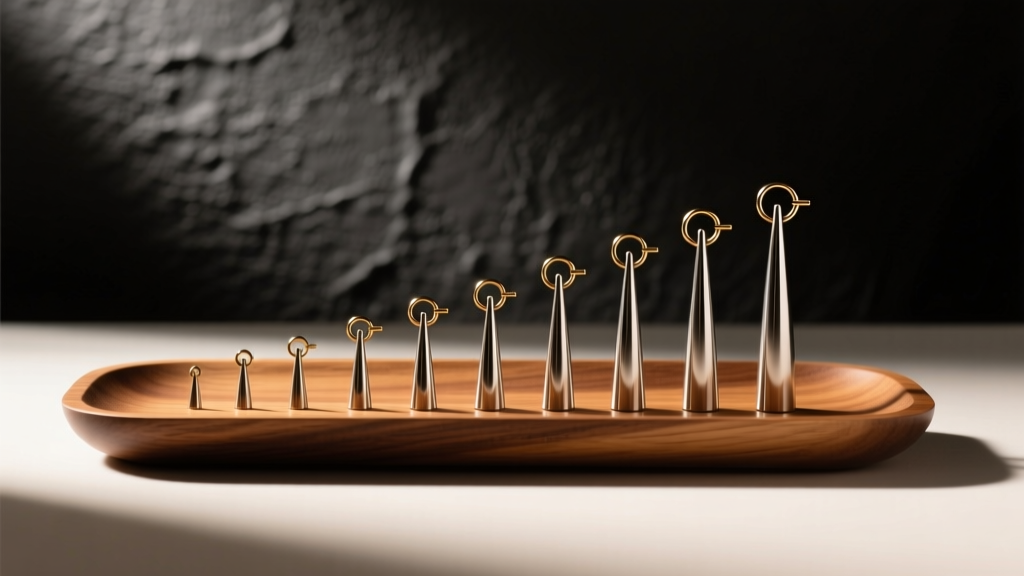
When evaluating a gauges earrings size chart, you must cross-reference the gauge with the material grade. The jewelry industry prices precious metals by weight, and as the gauge number decreases (meaning the jewelry gets thicker), the volumetric mass increases exponentially.
The Volumetric Pricing Rule: Moving from an 18-gauge (1.0mm) to a 14-gauge (1.6mm) post doesn't just add 0.6mm of thickness; it more than doubles the cross-sectional area of the metal. Consequently, a 14-gauge solid gold barbell will contain roughly 2.5 times more gold by volume than an 18-gauge barbell of the same length, resulting in a massive price premium that has nothing to do with design complexity.
For sizes 14-gauge and thicker, budget-conscious buyers should pivot away from gold and invest in ASTM F-136 implant-grade titanium. Titanium is incredibly lightweight, completely nickel-free, and costs a fraction of gold per gram. A 14-gauge titanium internally threaded labret might cost $35, whereas the 14k gold equivalent could easily exceed $250. According to the Association of Professional Piercers, implant-grade titanium remains the gold standard for initial piercings and long-term wear, proving that a lower price tag in this specific material actually correlates with superior biological value.
Troubleshooting Sizing Mistakes on a Budget
Even seasoned collectors make gauge mistakes. Perhaps you bought a stunning 16-gauge daith clicker, only to realize your piercing was done at 18-gauge. Forcing thicker jewelry through a smaller hole causes micro-tears, leading to irritation bumps and scar tissue. Here is how to troubleshoot these errors without throwing your expensive jewelry in the trash.
- The Taper Method (Stretching Up): If your jewelry is one size too thick (e.g., trying to fit 16g into an 18g hole), do not force it. Purchase a sterilized, single-use insertion taper (usually $3 to $5). Lubricate the taper with sterile saline or jojoba oil, gently guide it through the fistula to stretch the tissue to 1.29mm, and immediately follow with your 16-gauge jewelry.
- Professional Downsizing: If you bought a 14-gauge piece for a 16-gauge piercing, you cannot shrink the metal. However, many high-end body jewelry brands offer 'trade-up' or resizing programs where you can send the piece back to the manufacturer to have the post swapped for a thinner gauge for a small machining fee (typically $15-$25), saving you from buying a whole new piece.
- Threadless Pin Bending: For threadless jewelry systems, the gauge of the post dictates the thickness of the pin. If you buy an 18-gauge threadless end, it will only fit securely into an 18-gauge or 16-gauge post. Attempting to jam an 18-gauge pin into a 14-gauge post will result in a loose fit and lost jewelry. Always match your decorative ends to your post gauge.
Smart Shopping Framework for Stretched and Custom Gauges
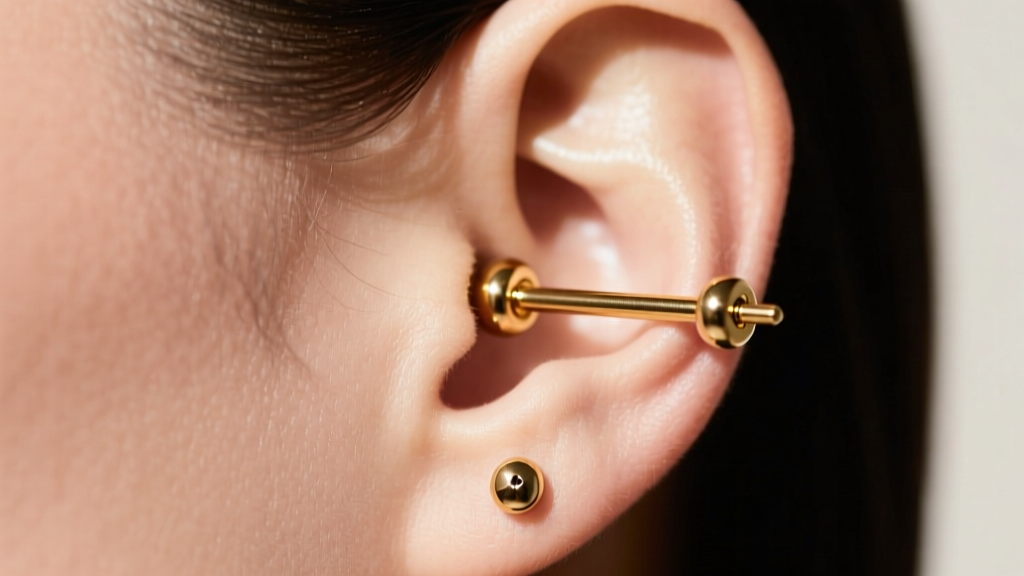
Once you move past the standard 14-gauge and 12-gauge territory into stretched earlobes (10g, 8g, 6g, and beyond), the traditional rules of jewelry valuation change entirely. The cost of solid metal at these dimensions becomes exorbitant, and the weight can cause irreversible tissue thinning. To maintain a high-value collection at larger gauges, adopt this framework:
- Prioritize Hollow Metals and Wire Wrapping: For sizes 6g and larger, look for hollow-forged gold or silver hoops. These provide the luxurious aesthetic of precious metals without the punishing weight or the massive material cost.
- Invest in Glass and Stone: Borosilicate glass and polished obsidian are incredibly cost-effective at large gauges. A beautifully crafted 0g (8mm) glass plug with intricate internal dichroic detailing might cost $40, offering immense visual value compared to a plain steel plug of the same size.
- Check the Wearable Length: At larger gauges, earlobe thickness varies wildly. A standard 8mm wearable length might be too tight, causing the O-rings to dig into your skin and restrict blood flow. Always measure your lobe thickness with calipers before ordering large-gauge plugs to avoid paying restocking fees for ill-fitting pieces.
Ultimately, mastering the nuances of a gauges earrings size chart transforms you from a passive consumer into an informed collector. By aligning your anatomical needs with the volumetric realities of metal pricing, you can build a stunning, comfortable, and highly valuable ear curation that respects both your tissue and your bank account.


