Earring Piercing Bleeding: 5 Causes and Fast Troubleshooting
Is your earring piercing bleeding? Discover the top 5 causes, from gauge mismatches to metal allergies, and learn expert first aid.

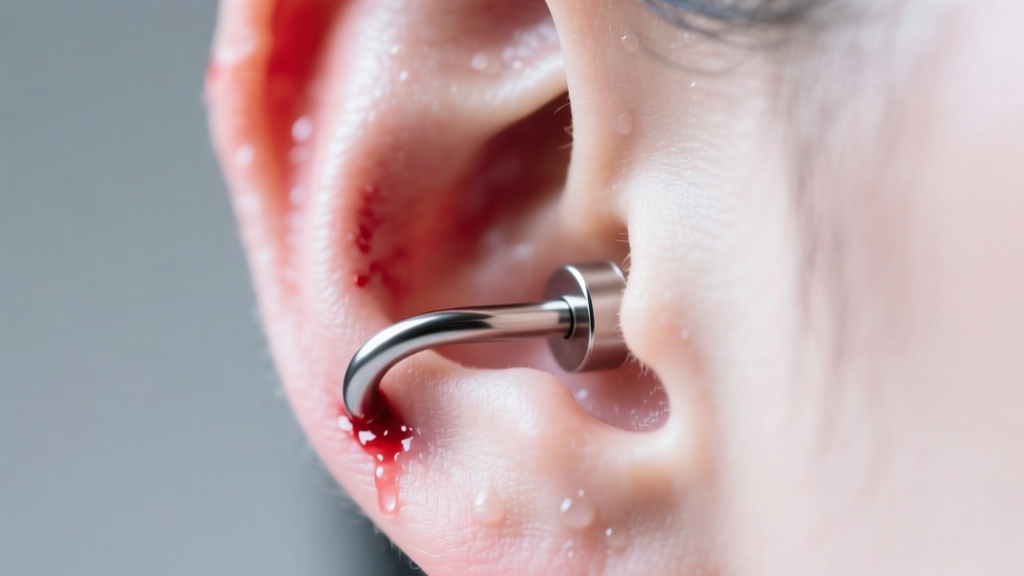
The Anatomy of a Bleeding Piercing: Why It Happens
Waking up to a blood-stained pillowcase or noticing a crimson crust forming around your favorite studs can trigger immediate panic. While a minor earring piercing bleeding incident is relatively common, it is your body's biological alarm system signaling that the delicate fistula (the tube of healing tissue inside your piercing) has been compromised. To effectively troubleshoot the issue, we first need to understand the vascular differences between earlobe and cartilage piercings.
The earlobe is highly vascularized, meaning it contains a dense network of capillaries. When a lobe piercing is snagged or irritated, it tends to bleed quickly and noticeably, but it also possesses a robust blood supply that promotes rapid healing. Cartilage, on the other hand, is entirely avascular—it contains no blood vessels of its own. It receives nutrients and oxygen via diffusion from the perichondrium (the connective tissue membrane covering the cartilage). If your cartilage earring piercing is bleeding, it indicates that the trauma was severe enough to damage the surrounding perichondrium or the entry/exit points of the skin. This requires immediate, targeted intervention to prevent complications like hypertrophic scarring or perichondritis.
Top 5 Triggers for Earring Piercing Bleeding
Before you can stop the bleeding, you must identify the mechanical or chemical catalyst. Here are the five most frequent culprits identified by professional piercers and dermatologists.
1. Trauma and Snagging (The Mechanical Tear)
The most common cause of sudden bleeding is blunt force or snagging. Hairbrushes, terry-cloth towels, over-ear headphones, and even sleeping on a firm cotton pillowcase can catch the edge of a butterfly backing or a hoop clasp. This sudden lateral force creates micro-tears in the fragile epithelial lining of the fistula. According to the Association of Professional Piercers (APP), consistent micro-trauma from sleeping on fresh or irritated piercings is the leading cause of delayed healing and intermittent bleeding.
2. The Cheese-Cutter Effect (Gauge Mismatch)
Standard earlobe piercings are typically performed at 18-gauge (1.0mm) or 16-gauge (1.2mm), while many commercial fashion earrings are manufactured at a much thinner 20-gauge (0.81mm) or 22-gauge (0.64mm). When you hang a heavy dangle earring or a large hoop on a thin 22-gauge wire, the jewelry acts like a cheese wire slicing through the tissue. This downward pressure slowly cuts through the bottom of the fistula, resulting in a slow, persistent earring piercing bleeding scenario that worsens with movement.
3. Allergic Contact Dermatitis (The Chemical Irritant)
If your piercing is weeping clear fluid mixed with blood, and the surrounding skin is red, itchy, and flaky, you are likely experiencing allergic contact dermatitis. The primary offender is nickel, which is present in up to 10% of the alloys used in standard 'surgical steel' jewelry. When sweat and sebum interact with the metal, nickel ions leach into the tissue, triggering an aggressive immune response that breaks down the skin barrier and causes bleeding.
4. Moisture Trap and Bacterial Overgrowth
Leaving your ear wet after showering or swimming creates a macerated environment. Excess moisture softens the skin around the entry and exit points, making it highly susceptible to tearing. Furthermore, trapped moisture breeds bacteria like Pseudomonas aeruginosa, which can cause low-grade infections that present as localized bleeding, swelling, and a distinct sweet or foul odor.
5. Migration and Rejection
If your surface-level cartilage piercing (like an industrial or a snug) is bleeding accompanied by visible shifting of the jewelry, your body may be rejecting it. The immune system identifies the jewelry as a foreign invader and begins pushing it toward the surface of the skin, tearing tissue as it migrates.
Troubleshooting Matrix: Symptom vs. Solution
Use this diagnostic table to pinpoint your exact issue and apply the correct remedy.
| Primary Symptom | Probable Cause | Immediate Action | Long-Term Jewelry Swap |
|---|---|---|---|
| Sudden, bright red blood after sleep | Snagging / Pressure trauma | Apply sterile saline and gentle pressure | Flat-back threadless labret (ASTM F136 Titanium) |
| Slow oozing, tearing at the bottom | Cheese-cutter effect (heavy jewelry) | Remove heavy jewelry, clean the area | Thicker 16G or 14G lightweight huggie or stud |
| Weeping blood/clear fluid, severe itch | Nickel allergy (Contact dermatitis) | Remove offending metal, wash with mild soap | Implant-grade Titanium or 14k/18k Solid Gold |
| Bleeding with foul odor and swelling | Bacterial infection / Moisture trap | Consult a doctor, do NOT remove jewelry | N/A (Wait for medical clearance before swapping) |
| Bleeding with visible jewelry shifting | Migration / Rejection | See a professional piercer immediately | Remove jewelry to prevent permanent scarring |
Immediate First Aid: How to Stop the Bleeding
When active bleeding occurs, your goal is hemostasis (stopping the blood flow) without introducing cytotoxic chemicals that will destroy the healing fibroblasts inside the fistula.
Step-by-Step Hemostasis Protocol
- Step 1: Wash Your Hands.Use an antibacterial soap and warm water for a full 20 seconds. Never touch a bleeding piercing with unwashed hands.
- Step 2: Apply Gentle Pressure.Take a piece of sterile, non-woven medical gauze and apply firm but gentle pressure directly to the entry and exit points for 3 to 5 minutes. Do not peek or release pressure early, as this disrupts clot formation.
- Step 3: Flush with Sterile Saline.Once the active bleeding has stopped, spray the area generously with a sterile 0.9% sodium chloride wound wash. This flushes away dried blood and debris without stinging.
- Step 4: Avoid Cytotoxic Agents.Under no circumstances should you apply rubbing alcohol, hydrogen peroxide, tea tree oil, or antibiotic ointments. The Mayo Clinic explicitly warns against using harsh chemicals on piercings, as they dry out the tissue, kill regenerating cells, and trap bacteria beneath a layer of ointment.
"The biggest mistake people make when a piercing bleeds is twisting the jewelry to 'clean inside.' Twearing a fresh or torn fistula acts like a saw blade, ripping the newly formed scab tissue and restarting the bleeding cycle." — Senior APP-Certified Piercer

Long-Term Prevention: Upgrading Your Jewelry Arsenal
To permanently resolve recurring earring piercing bleeding, you must audit your jewelry collection. The physical design and metallurgical composition of your earrings dictate the health of your fistula.
Metallurgy Matters: What to Wear
Ditch the mystery metals. For a compromised, bleeding fistula, you need biocompatible materials that will not react with your body's chemistry. Implant-grade titanium (ASTM F136) is the gold standard because it contains zero nickel and is highly polished to prevent bacterial adhesion. If you prefer the look of gold, ensure it is 14k or 18k solid, nickel-free, and alloyed for body jewelry. Avoid gold-plated or gold-filled earrings, as the thin outer layer will quickly wear away inside the friction-heavy environment of a healing piercing, exposing the reactive base metals underneath.
Design Mechanics: Threadless and Internally Threaded
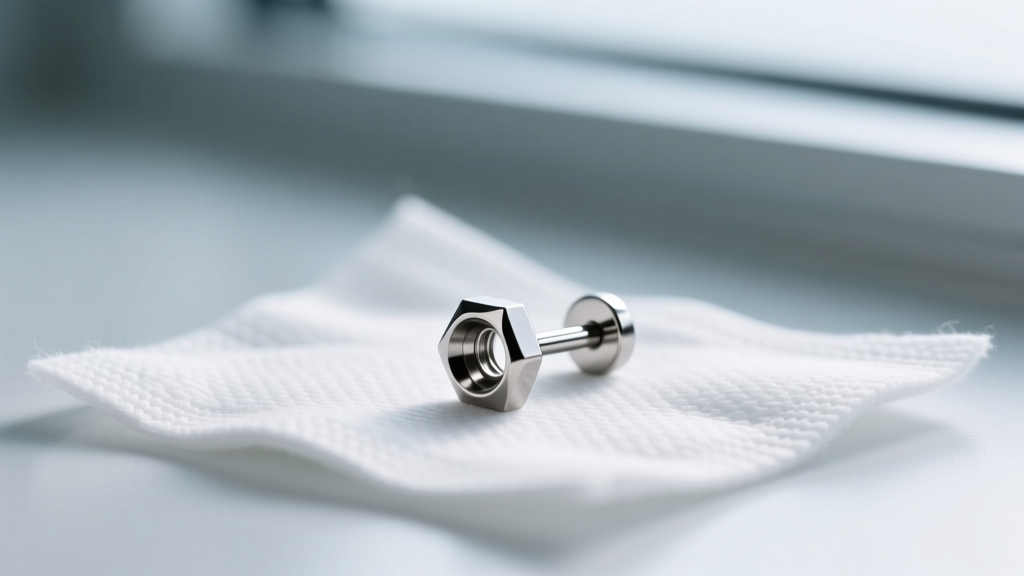
Externally threaded earrings (where the screw pattern is on the post that passes through the ear) are notorious for causing micro-tears. Every time you insert or remove them, the sharp metal threads scrape the fistula wall, leading to irritation and bleeding. Transition to internally threaded jewelry (where the screw is on the decorative end) or, even better, threadless (press-fit) jewelry. Threadless labrets use tension to stay secure, offering a perfectly smooth, seamless post that glides through the tissue without causing mechanical trauma.
When to See a Professional Piercer or Dermatologist
While most minor bleeding incidents can be managed at home with proper aftercare and a jewelry downgrade, certain red-flag symptoms require professional intervention. If the bleeding is accompanied by a fever, if the redness spreads outward from the ear in warm streaks, or if you experience a throbbing pain that radiates down your neck, seek medical attention immediately, as these are signs of a systemic infection or cartilage abscess. For non-infected but chronic bleeding, book a consultation with an APP-certified piercer who can assess your piercing angle, jewelry fit, and anatomy to provide a customized troubleshooting plan.


