Are Bold Hoop Earrings Worth the Investment? A Value Guide
Discover if bold hoop earrings are worth your budget. We assess material grades, price tiers, and long-term value to help you invest wisely.

The True Cost of Statement Hoops: Beyond the Price Tag
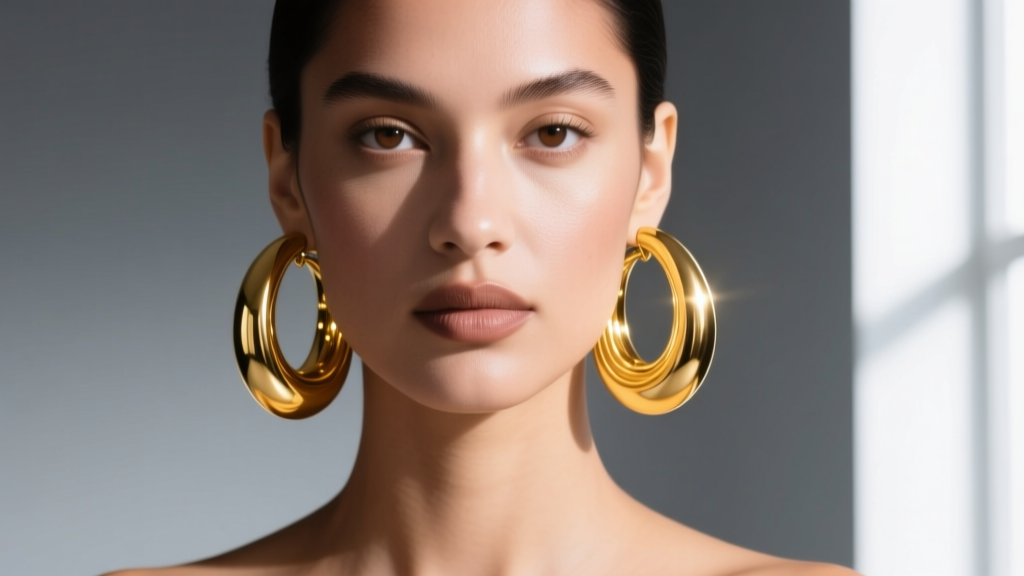
When building a versatile jewelry wardrobe, bold hoop earrings are frequently marketed as a non-negotiable staple. However, as precious metal markets fluctuate and manufacturing techniques evolve in 2026, the gap between a $30 fashion hoop and a $600 fine jewelry hoop has become increasingly complex to navigate. Assessing the true value of statement hoops requires looking far beyond the initial price tag. You must evaluate material longevity, structural engineering, and cost-per-wear metrics to determine if a specific pair is a genuine investment or a depreciating accessory.
This comprehensive value assessment breaks down the anatomy, metallurgy, and hardware mechanics of large-scale hoops. Whether you are eyeing chunky gold-filled tubes or solid 14k wire hoops, understanding these technical nuances will ensure your budget aligns with your long-term expectations.
Construction Mechanics: Tubing vs. Solid Wire
The most critical factor in the pricing and durability of bold hoop earrings is the construction method. Manufacturers primarily use two techniques to create volume: hollow tubing and solid wire.
Hollow Tubing
Tubing involves shaping thin sheets of metal into hollow cylinders, typically ranging from 2mm to 6mm in diameter. This method allows brands to offer visually massive hoops at a fraction of the weight and cost of solid metal. While comfortable for all-day wear, hollow tubing has a significant failure mode: it dents easily. If dropped on a hard surface or squeezed in a jewelry box, the thin metal walls can crimp, creating permanent deformities that are virtually impossible to repair without visible solder marks.
Solid Wire and Cast Hoops
Solid wire hoops are extruded from a single, thick piece of metal, usually ranging from 12-gauge (2.05mm) to 8-gauge (3.26mm) for bold styles. While significantly more expensive due to the raw material weight, solid wire is incredibly resilient. Instead of denting, solid wire bends. A bent solid hoop can be easily reshaped by a jeweler or even carefully manipulated at home, making it a superior choice for generational value retention.
Material Grades and Long-Term Value Retention
The base metal and plating thickness dictate how long your hoops will survive daily exposure to oils, friction, and environmental humidity. According to the Federal Trade Commission Jewelry Guides, strict definitions govern how brands can label their metal compositions, which directly impacts your budget strategy.
Gold Vermeil vs. Gold-Filled
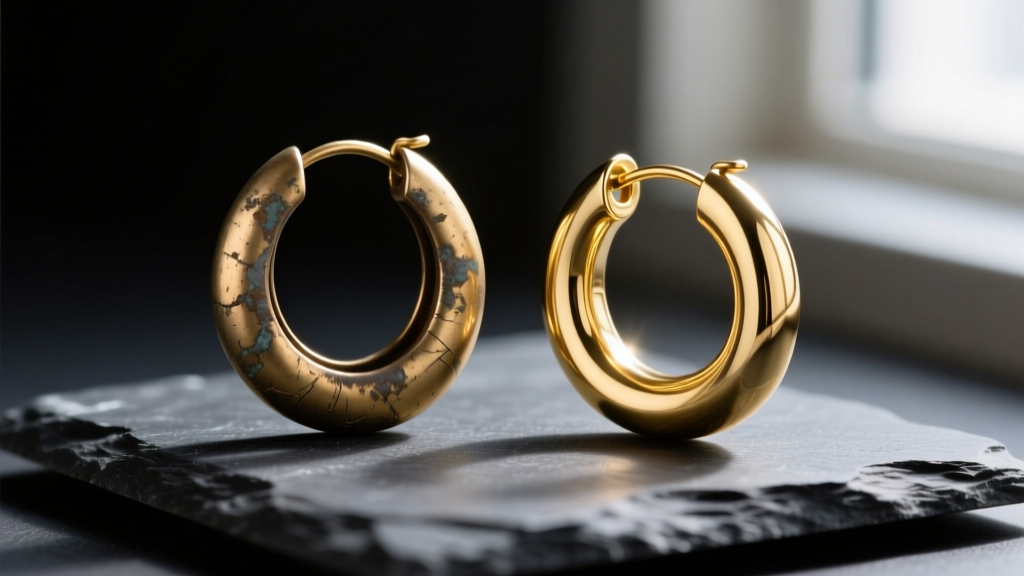
For budget-conscious buyers, the debate usually centers on vermeil versus gold-filled. Gold vermeil requires a sterling silver base plated with at least 2.5 microns of gold. While the silver base prevents the 'green skin' effect associated with brass, the thin plating will eventually wear through on high-friction areas like the clasp and post. Gold-filled jewelry, conversely, features a much thicker layer of gold (legally required to be at least 1/20th of the total weight) mechanically bonded to a brass core. For bold hoops that are frequently taken on and off, 14k gold-filled options offer vastly superior abrasion resistance, often lasting a decade or more without exposing the base metal.
Solid Gold Alloys
When stepping into fine jewelry, you will choose between 14k and 18k gold. The Gemological Institute of America (GIA) notes that 18k gold (75% pure) offers a richer, warmer yellow hue but is softer and more prone to scratching. 14k gold (58.5% pure) is alloyed with more copper and silver, making it harder, more scratch-resistant, and generally more cost-effective for heavy, bold hoops that endure daily wear and tear.
Price Tier Breakdown: What Should You Actually Pay?
To contextualize the market, we have categorized bold hoops (typically 40mm to 60mm in diameter) into three distinct value tiers based on current market averages.
| Value Tier | Price Range | Typical Materials | Expected Lifespan | Best For |
|---|---|---|---|---|
| Fashion / Plated | $25 - $75 | Brass base, gold vermeil, cubic zirconia | 1 - 3 Years | Trend-chasing, occasional wear |
| Demi-Fine / Bridge | $90 - $220 | 14k gold-filled, sterling silver, lab-grown accents | 5 - 15 Years | Daily wear, high cost-per-wear value |
| Fine / Investment | $450 - $1,500+ | Solid 14k/18k gold, seamless tubing, natural diamonds | Generational | Heirloom building, metal value retention |
Hardware and Clasp Mechanics: Where Budget Hoops Fail
A bold hoop is only as secure as its clasp. The hardware is the most common point of structural failure, especially on heavier, larger-diameter earrings. When assessing value, scrutinize the clasp mechanism before purchasing.
- Saddleback Clasps: The gold standard for heavy hoops. A hinged saddle snaps securely over a grooved post. While more expensive to manufacture, they offer the highest security against accidental loss.
- Clicker Hinges: Common in modern demi-fine jewelry. The post clicks into a tubular receiver. Ensure the post is at least 18-gauge (1.02mm); anything thinner will bend under the weight of a 50mm hoop.
- Continuous / Endless Hoops: A thin wire threads into a hollow tube. While visually seamless, these are notorious for losing their tension over time, leading to the wire slipping out and the earring being lost. Avoid this clasp type for heavy or bold styles.
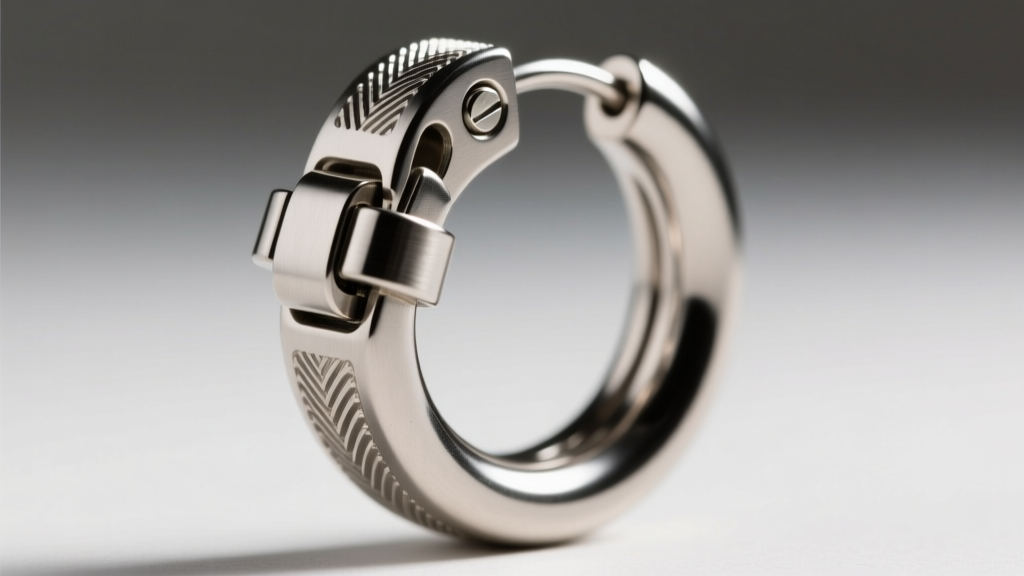
Expert Troubleshooting Tip: If your hinged hoop feels loose or fails to 'click' shut, do not discard it. The hinge pin may simply be misaligned, or the clasp may have accumulated compacted skin cells and lotion. A professional ultrasonic cleaning and a micro-adjustment of the tension post by a jeweler can restore the clasp for under $20, saving a $200 pair of earrings.
Weight, Proportions, and Earlobe Health
Value is not just about the metal; it is about wearability. Bold hoop earrings exert significant downward leverage on the earlobe piercing. A 50mm hollow tube might weigh a comfortable 4 grams, while a 50mm solid 12-gauge wire hoop can exceed 12 grams per earring.
Prolonged wear of heavy solid hoops can cause 'earlobe migration,' where the piercing hole slowly stretches and elongates downward. To mitigate this without sacrificing the bold aesthetic, look for hoops designed with a 'comfort fit' or flattened backing where the post meets the lobe. This distributes the weight across a wider surface area of the skin, reducing point-pressure and preserving the structural integrity of your piercing over decades of wear.
Final Verdict: How to Maximize Your Budget
So, are bold hoop earrings worth the investment? The answer depends entirely on your chosen tier. If you are buying for pure aesthetic impact and plan to rotate your jewelry frequently, high-quality 14k gold-filled hoops in the $100 to $150 range offer the undisputed best cost-per-wear ratio. They provide the visual weight and tarnish resistance of fine jewelry without the exorbitant raw material premiums.
However, if you are seeking a true financial investment and an heirloom piece, bypass hollow tubing entirely. Allocate your budget toward solid 14k gold wire hoops with a robust saddleback clasp. While the initial entry price is steep, the scrap value retention, repairability, and indestructible nature of solid wire ensure that your bold hoops will outlast fleeting trends and remain a permanent fixture in your collection.


