The Ultimate Technical Guide to Wooden Hoop Earrings
Discover the material science, hardware specs, and care protocols for wooden hoop earrings. An expert guide to wood types, gauges, and finishes.

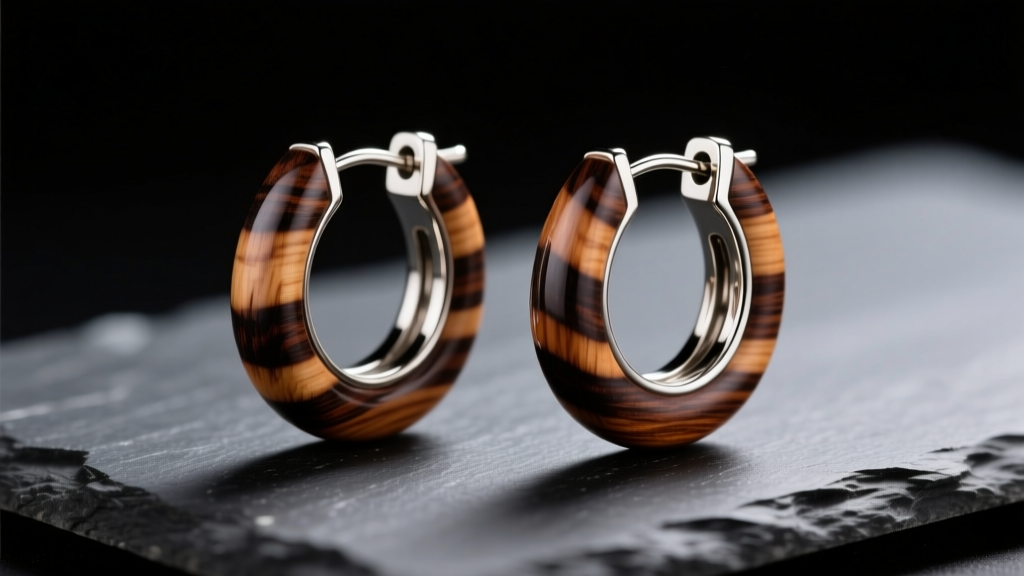
Wooden hoop earrings are frequently categorized as lightweight, casual accessories, often overshadowed by precious metals in fine jewelry discussions. However, from a materials engineering and biomechanical perspective, crafting a durable, hypoallergenic wooden hoop requires navigating complex challenges. These include managing anisotropic moisture expansion, ensuring structural integrity at the microscopic hinge point, and maintaining fistula health. As of 2026, advancements in micro-lathe turning and botanical sealants have elevated wood from a novelty material to a highly technical medium in contemporary ear styling.
The Material Science of Wood in Jewelry
Unlike homogenous metals, wood is an anisotropic material, meaning its physical properties change depending on the direction of the grain. It expands and contracts differently along the radial, tangential, and longitudinal axes. For a circular hoop earring, tangential expansion is the primary enemy of structural stability. If a hoop is cut improperly from a board, seasonal humidity changes can warp the circle into an oval or cause micro-fractures along the grain lines.
Expert jewelers select wood species based on the Janka Hardness Test, which measures the resistance of wood to denting and wear, and dimensional stability. According to The Wood Database, woods with high interlocked grain patterns are preferred for hoops because the alternating grain directions naturally reinforce the circular shape against snapping.
| Wood Species | Janka Hardness (lbf) | Density (g/cm³) | Dimensional Stability |
|---|---|---|---|
| African Blackwood | 3,220 | 1.27 | Exceptional |
| Hard Maple | 1,450 | 0.70 | Moderate |
| Zebrawood | 1,830 | 0.80 | Good |
| Bamboo (Grass) | 1,380 | 0.65 | High (Tensile) |
Hardware Integration and Gauge Specifications
The most catastrophic failure point in any wooden hoop earring is the piercing channel. A standard earlobe piercing is 20-gauge (0.81mm) or 18-gauge (1.02mm). Drilling a 0.8mm hole directly through a 3mm thick wooden wire creates a massive shear failure risk; the wood surrounding the wire is simply too thin to withstand the lateral torque of daily wear.
The Grommet Solution
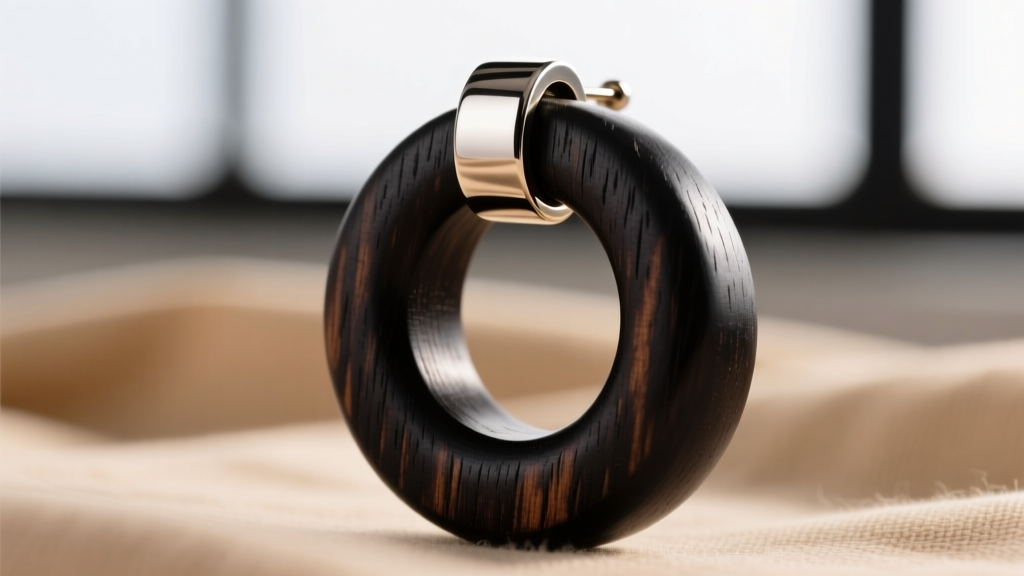
To circumvent this, master jewelers employ co-lathe turned metal grommets. A surgical steel or implant-grade titanium sleeve is permanently friction-fitted or bonded into the wooden hoop at the piercing site. This serves a dual purpose: it provides the necessary shear strength to prevent the wood from snapping, and it creates a biocompatible barrier. The Association of Professional Piercers strongly advises against wearing raw, unsealed porous materials directly inside a healing or mature fistula, as wood can harbor bacteria and absorb sebum. The titanium grommet ensures that only inert metal touches the skin.
Hinge Mechanics and Clasp Tolerances
Wooden hoops cannot be easily soldered, meaning traditional hinge pins must be adapted. High-end wooden hoops utilize a 'snap-bar' mechanism where a 16-gauge stainless steel wire is embedded into the wood using a two-part marine epoxy, curing for 72 hours to ensure maximum tensile adhesion. The clasp tolerances must be machined to within 0.05mm to prevent the 'click' closure from loosening over time due to the natural vibrations of walking and talking.
Weight Distribution and Lobe Biomechanics
One of the most significant advantages of wooden hoop earrings is their exceptional strength-to-weight ratio. A 60mm diameter hoop crafted from solid Bubinga wood weighs approximately 3.4 grams. In contrast, a 60mm hoop made from solid 14k yellow gold or even dense brass can easily exceed 12 to 15 grams.
'The pendulum effect of a heavy hoop creates micro-tears in the inferior aspect of the fistula over time. Lightweight materials like stabilized wood or bamboo drastically reduce this kinetic trauma, preserving the lobe's elasticity and preventing irreversible stretching.' — Dr. Aris Thorne, Biomechanical Jewelry Researcher
However, weight distribution is just as critical as total mass. If a wooden hoop is carved with an uneven cross-section—thicker at the bottom and tapering at the top—the center of gravity shifts downward. This causes the earring to swing excessively, leading to metal fatigue at the hinge point. Precision CNC routing ensures a uniform 3.5mm radial thickness throughout the entire circumference, optimizing the aerodynamic profile and keeping the earring flush against the jawline.
Finishing Techniques and Moisture Sealing
Raw wood is entirely unsuitable for jewelry due to its porosity. Human sweat, sebum, and environmental humidity will rapidly degrade untreated cellular structures, leading to warping, odor, and bacterial proliferation. The finishing process is where the true technical expertise of the jeweler is revealed.
- Tung Oil and Polymerized Linseed Oil: These penetrating finishes harden within the wood's pores. They offer a natural, matte aesthetic and allow the wood to 'breathe' slightly. However, they require reapplication every 6 to 12 months and offer only moderate resistance to prolonged water exposure.
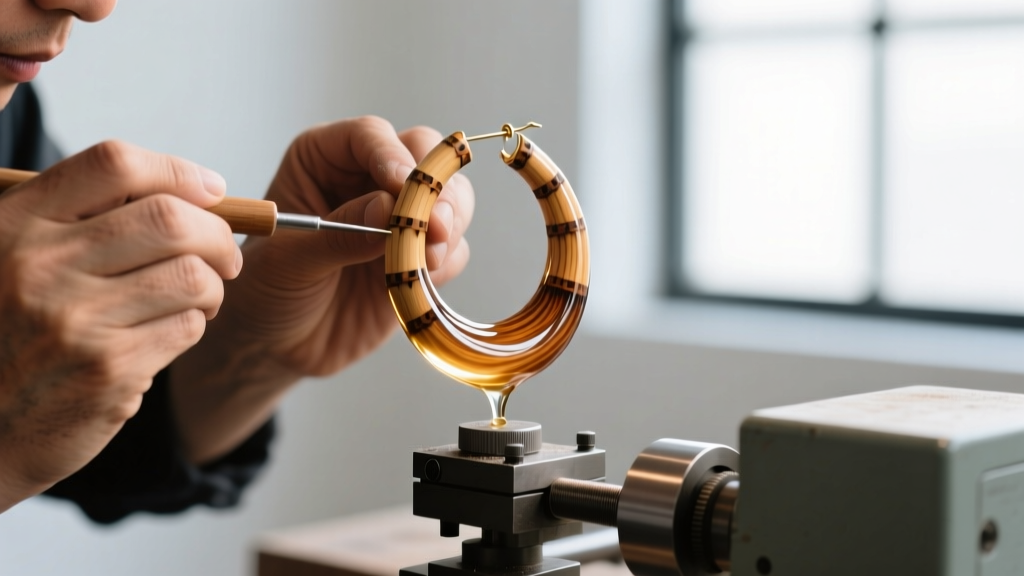
- Cyanoacrylate (CA) Friction Polishing: Borrowed from high-end woodturning, CA glue is applied to the spinning hoop on a lathe. The friction generates heat, instantly polymerizing the cyanoacrylate into a hard, acrylic-like plastic shell. This creates a 100% waterproof, glass-smooth barrier that is completely hypoallergenic and requires zero maintenance.
- Carnauba Wax Blends: Often used as a topcoat over oil finishes, carnauba provides a soft luster and excellent moisture resistance, though it can melt if exposed to high heat (e.g., left on a car dashboard in summer).
In modern 2026 jewelry manufacturing, UV-cured resin dips are also emerging, allowing for micro-thin, perfectly uniform coatings that do not obscure the delicate chatoyancy of highly figured woods like Koa or Burl Maple.
Maintenance and Environmental Degradation
Even with advanced sealants, wooden hoop earrings require specific care protocols to maintain their structural and aesthetic integrity. Ultrasonic jewelry cleaners, which are standard for diamonds and metals, will violently shake the cellular matrix of wood, potentially shattering the CA finish or delaminating the hinge epoxy.
For routine cleaning, a microfiber cloth lightly dampened with a 50/50 mix of distilled water and isopropyl alcohol is sufficient to remove surface oils without degrading the sealant. If the earrings feature an oil finish, owners should apply a single drop of pure, cold-pressed jojoba oil once a quarter. Jojoba oil closely mimics human sebum but does not oxidize or turn rancid, keeping the wood fibers supple and preventing micro-cracking in arid climates. By understanding the intersection of botany, metallurgy, and biomechanics, wearers can appreciate wooden hoops not just as organic fashion statements, but as marvels of micro-engineering.


