Diamond Earrings Studs Screw Back: An Expert Engineering Guide
Discover the technical mechanics of diamond earrings studs screw back systems, including thread pitches, gauge sizes, and metal durability.

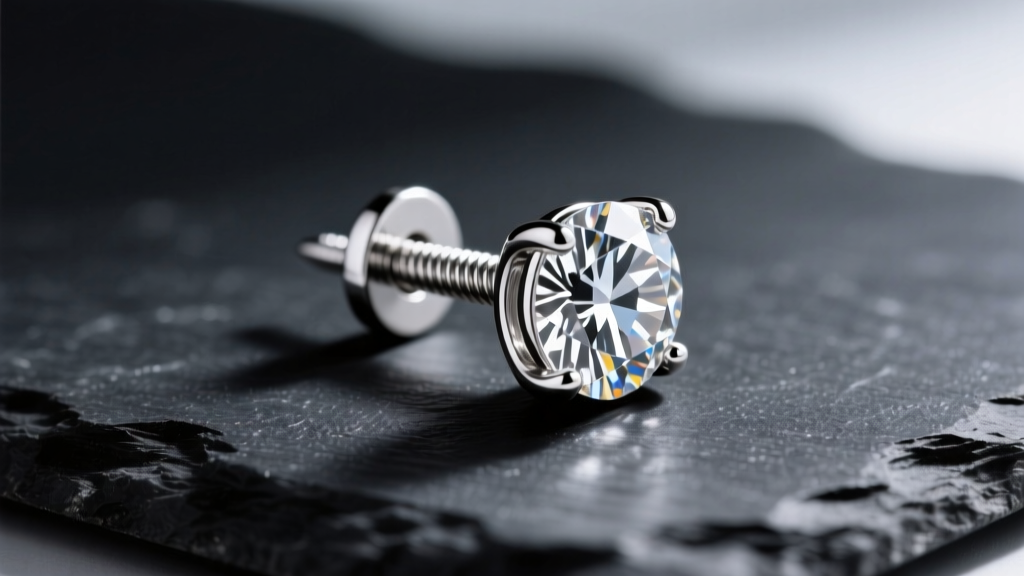
The security of a high-value gemstone relies entirely on the mechanical interface between the earring post and its backing. While friction backs dominate the mass-market jewelry sector, they are fundamentally inadequate for securing significant carat weights. When evaluating diamond earrings studs screw back mechanisms, we must shift our perspective from aesthetic design to precision engineering. A screw back is not merely an accessory; it is a micro-machined fastener subject to shear forces, tensile stress, and metallurgical fatigue. In this expert deep dive, we examine the exact specifications, material sciences, and failure modes of threaded earring systems to ensure your investments remain secure.
The Physics of Retention: Friction vs. Threaded Mechanics
Standard push-backs (or friction backs) rely on the static tension of a metal spring or silicone sleeve gripping a notched post. The human earlobe is highly dynamic; it experiences continuous kinetic movement from talking, chewing, and sleeping. Over time, this kinetic energy degrades the friction coefficient of the backing, leading to catastrophic failure (loss of the earring). Furthermore, the shear force required to pull a friction back off a standard notched post is often less than 3 pounds of force.
Conversely, a threaded screw back utilizes mechanical interference. The helical ridge (thread) converts rotational torque into linear clamping force. When the nut is tightened against the earlobe, it creates a zero-clearance sandwich that eliminates micro-movements. According to manufacturing data from Stuller, a properly torqued micro-threaded earring nut can withstand over 15 pounds of direct tensile pull before the metal yields, making it the undisputed standard for diamonds exceeding 0.50 carats.
Thread Pitch, Gauge, and Tolerance Specifications
The most critical, yet least understood, aspect of threaded earrings is the relationship between post gauge and thread depth. Jewelry manufacturers typically use 20-gauge (0.81mm) or 18-gauge (1.02mm) wire for earring posts. However, cutting a thread into a wire removes material, reducing the 'core diameter'—the solid center of the post that bears the actual structural load.
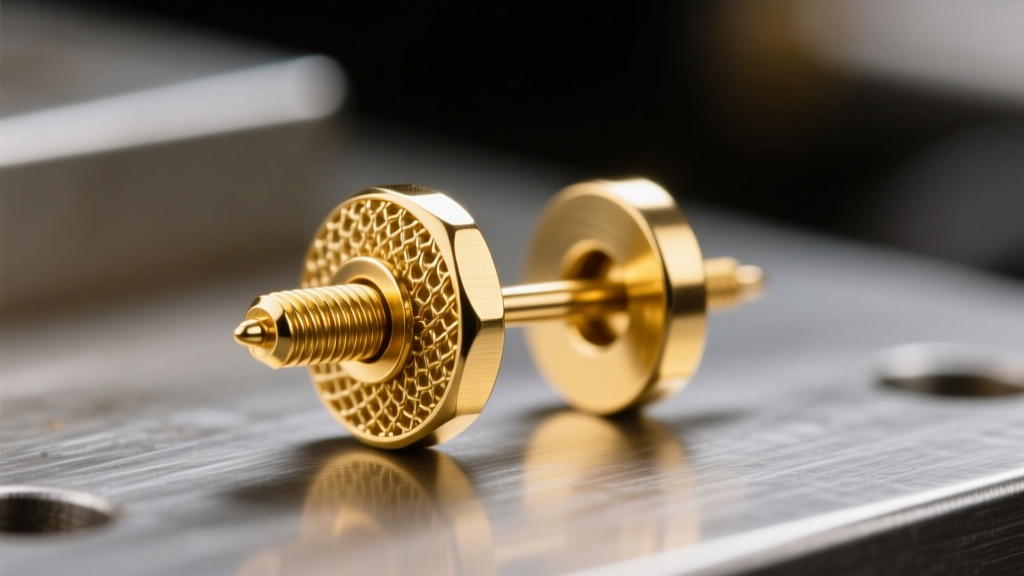
Fine jewelry micro-threads generally operate at 40 to 60 TPI (Threads Per Inch). At 50 TPI, the thread depth is approximately 0.15mm. If a manufacturer cuts a 50 TPI thread into a 20-gauge (0.81mm) post, the core diameter shrinks to a mere 0.51mm. This severely compromises the post's shear strength, making it prone to snapping under the weight of a heavy diamond during an accidental snag.
Technical Specifications Chart
| Post Gauge | Outer Diameter | Standard TPI | Core Diameter (Post-Threading) | Max Recommended Diamond Weight |
|---|---|---|---|---|
| 20-Gauge | 0.812 mm | 50 TPI | ~0.512 mm | Up to 0.75 ct |
| 18-Gauge | 1.024 mm | 40 TPI | ~0.744 mm | 0.75 ct to 2.00 ct |
| 16-Gauge | 1.291 mm | 35 TPI | ~0.981 mm | 2.00 ct to 5.00+ ct |
Expert Recommendation: For any diamond stud exceeding 1.00 carat per ear, insist on an 18-gauge or 16-gauge CNC-machined post. Avoid 20-gauge threaded posts entirely, as the core diameter is insufficient for long-term structural integrity.
Metallurgy: How Metal Hardness Affects Thread Longevity
The choice of precious metal drastically alters the performance of a screw back system. The threads must withstand repeated rotational friction without degrading. We measure this resistance using the Vickers Hardness (HV) scale.
- Platinum (950/50): While platinum is incredibly durable and hypoallergenic, it is relatively soft (approx. 120-135 HV) and highly susceptible to 'galling'. Galling is a form of wear caused by adhesion between sliding surfaces; essentially, the platinum nut can cold-weld to the platinum post if forced or cross-threaded.
- 18K Gold: With a hardness of roughly 140-160 HV (depending on the alloy mix), 18K gold offers a good balance of richness and thread durability. However, it can still strip if over-torqued.
- 14K Gold: Harder (approx. 170-190 HV) and more rigid, 14K gold is metallurgically superior for threaded posts. The higher copper and zinc content increases the alloy's yield strength, making the threads highly resistant to stripping.
'The greatest enemy of a platinum screw back is impatience. Because platinum is malleable, forcing a misaligned nut will not cut a new thread; it will displace the existing metal, permanently ruining the post through galling.' — Master Bench Jeweler Principles, Santa Fe Symposium
Manufacturing Methods: Cast vs. CNC Machined Threads
Not all threads are created equal. In lower-tier manufacturing, earring posts are cast directly in investment molds with the threads already formed. Cast threads are inherently flawed; the rapid cooling of the molten metal creates microscopic porosity, and the crystalline structure at the surface is brittle. Cast threads will wear down and flatten within a few years of daily use.
High-end manufacturers utilize CNC (Computer Numerical Control) lathes or specialized thread-rolling dies to cut or press threads into hardened wire stock. Thread rolling is particularly superior because it work-hardens the surface of the metal, compressing the grain structure and increasing the surface hardness by up to 30%. When purchasing premium diamond studs, always verify with the jeweler that the findings feature CNC-cut or rolled threads, rather than cast-in-place threads.
Common Failure Modes and Bench-Level Troubleshooting
Even precision-engineered screw backs can fail if mishandled. Understanding these failure modes allows for proactive maintenance and timely repairs.
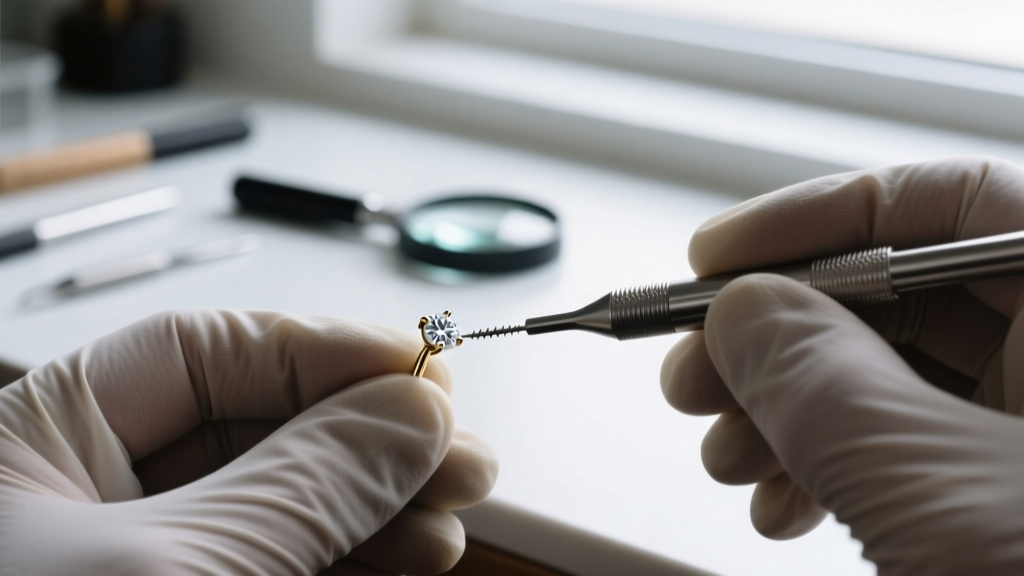
1. Cross-Threading
This occurs when the nut is forced onto the post at an incorrect angle, cutting a rogue path through the existing threads. Solution: Never force a screw back. Always start by turning the nut counter-clockwise (left) until you feel a subtle 'click' as the threads align, then proceed clockwise. If cross-threading occurs, a jeweler must use a micro-thread file to chase and clean the damaged grooves.
2. Thread Stripping
Stripping happens when the shear strength of the metal is exceeded, tearing the threads completely off the core diameter. This is most common in 20-gauge posts or high-karat (22K/24K) gold. Solution: The post cannot be re-threaded if the core is compromised. A bench jeweler must laser-weld a new, heavier-gauge wire to the base of the diamond setting and machine new threads.
3. Debris Locking
Sebum, dead skin cells, and cosmetic powders accumulate in the helical grooves, acting like an abrasive grinding paste that slowly destroys the thread peaks. Solution: Regular ultrasonic cleaning. However, caution is required: while ultrasonic cleaners are excellent for degreasing metal threads, they can loosen the prongs holding the diamond if the setting is already worn. According to the Gemological Institute of America (GIA), prong integrity should be checked under 10x magnification before subjecting diamond studs to high-frequency ultrasonic vibrations.
Maintenance Protocols for Long-Term Durability
To maximize the lifespan of your threaded mechanisms, implement the following maintenance protocol:
- Weekly Degreasing: Soak the earrings in a mild solution of warm water and ammonia-free dish soap. Use a soft-bristled infant toothbrush to gently sweep along the axis of the threads, dislodging microscopic debris.
- Avoid Chemical Lubricants: Never apply oils, lotions, or synthetic lubricants to the threads. These substances attract dust and create a sludge that accelerates abrasive wear. The threads should operate completely dry.
- Annual Bench Inspection: Have a professional jeweler inspect the post for micro-fractures at the solder joint (where the post meets the diamond basket). The rotational torque applied during daily removal places cyclical stress on this exact junction.
Final Verdict on Investment Protection
Securing a high-value diamond requires respecting the laws of physics and metallurgy. A screw back system is a marvel of micro-engineering, but it demands precise tolerances, appropriate gauge thicknesses, and correct alloy hardness. By prioritizing 18-gauge or 16-gauge CNC-machined posts in 14K or 18K gold, and adhering to strict alignment and cleaning protocols, you transform your diamond earrings from a fragile liability into a permanently secure, heirloom-grade asset.