Dark Purple Earrings: Troubleshooting Fading, Tarnish & Skin Stains
Discover expert troubleshooting for dark purple earrings. Learn how to fix fading amethyst, stop dye bleeding, and prevent skin stains.

The Unique Vulnerabilities of Dark Purple Gemstones
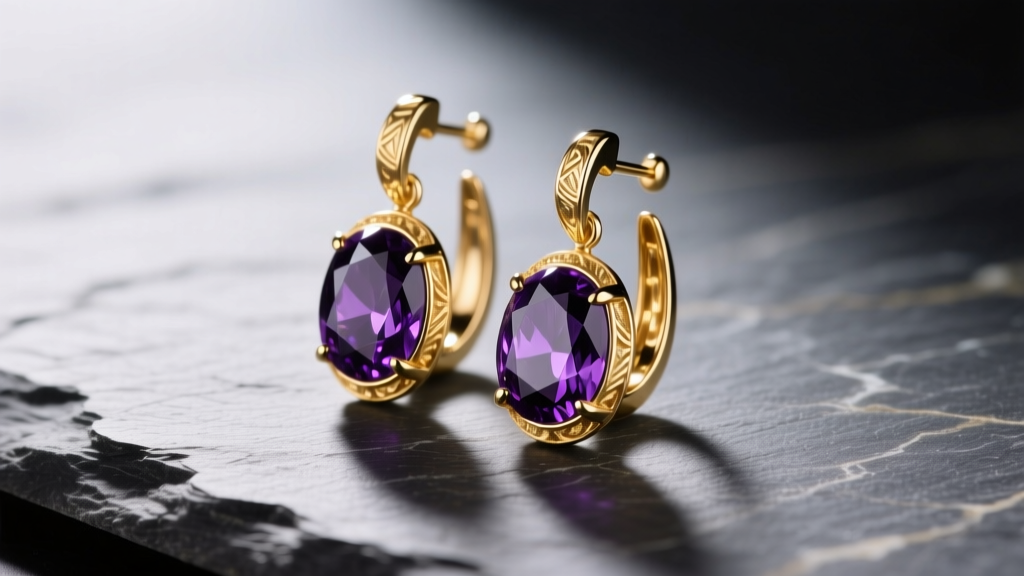
Dark purple earrings remain a dominant force in jewelry styling, offering a rich, regal aesthetic that ranges from deep violet tanzanite to moody, plum-hued sapphires. However, the very depth of color that makes these pieces so desirable also masks a host of structural and chemical vulnerabilities. As of 2026, the market has seen a massive influx of both high-quality lab-grown purple corundum and heavily treated, dyed quartz alternatives. While the former offers incredible durability, the latter frequently leads to consumer frustration through color bleeding, rapid fading, and severe skin irritation.
Troubleshooting issues with dark purple earrings requires a precise understanding of gemological properties, metallurgy, and the chemical interactions between your skin's microbiome and the earring's alloy composition. Whether you are dealing with a prized pair of Siberian amethyst drops or a trendy set of dyed agate huggies, identifying the root cause of degradation is the first step toward restoration and long-term preservation.
Troubleshooting Color Fading and Dye Bleeding
Color instability is the most common complaint among owners of dark purple earrings. This issue generally stems from two distinct sources: natural gemstone sensitivity to environmental factors, or the chemical breakdown of artificial dyes used on porous stones.
UV and Heat Sensitivity in Natural Amethyst
Amethyst, the most popular natural dark purple gemstone, is a variety of quartz that owes its color to iron impurities and natural irradiation. According to the GIA's Amethyst Care Guide, prolonged exposure to direct ultraviolet light or extreme heat can cause the crystal lattice to alter, resulting in a muddy, brownish-yellow fade. If your amethyst earrings are left on a sunlit vanity or worn frequently during outdoor summer activities, the dark purple hue will inevitably wash out. Unfortunately, this type of fading is permanent and cannot be reversed through cleaning or polishing.
The Dyed Quartz and Agate Problem
To meet the demand for deep, saturated purple tones at lower price points, manufacturers frequently dye porous stones like agate, howlite, or low-grade quartz. The dark purple dyes used in these processes are rarely colorfast. When exposed to the acidic pH of human sweat, alcohol-based perfumes, or sulfur-rich environments, the dye molecules break down and leach out of the stone. This not only ruins the earring but causes severe staining on clothing and skin.
Why Dark Purple Earrings Cause Skin Discoloration
A frequent and alarming troubleshooting scenario involves removing dark purple earrings to find the earlobe stained green, black, or even purple. This is rarely an allergic reaction and almost always a chemical oxidation issue exacerbated by the earring's design.
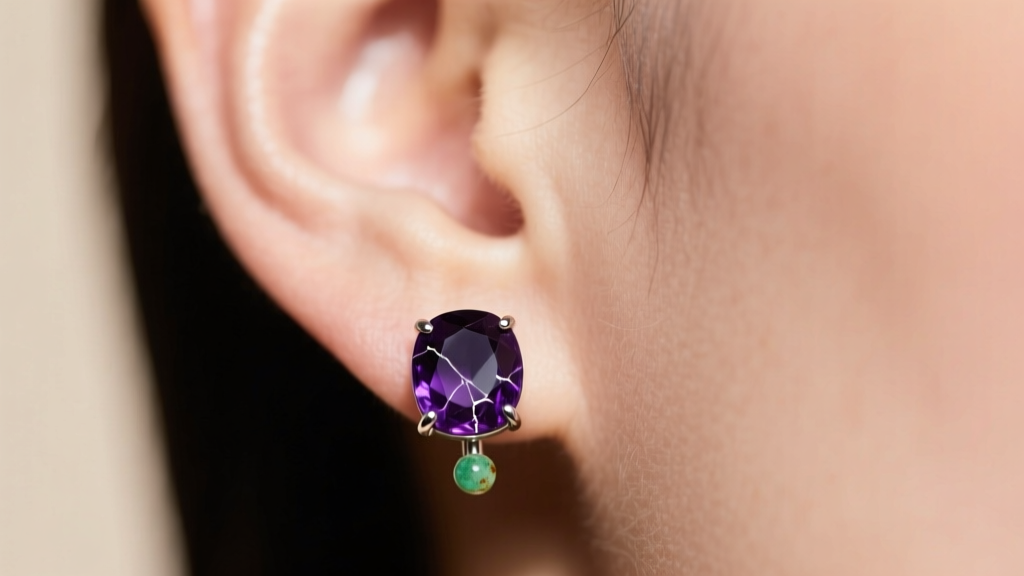
Dark stones, particularly those set in bezel or flush settings, create a micro-environment that traps moisture, dead skin cells, and sebum against the metal post and backing. When base metals or lower-karat gold alloys are exposed to this trapped moisture and the sulfur naturally present in human sweat, they rapidly oxidize. Copper, a common alloying metal in both sterling silver and rose gold, reacts to form copper chloride and copper sulfate, which manifest as a vivid green stain on the skin. Black stains are typically the result of silver sulfide tarnish transferring from 925 sterling silver posts.
| Metal Grade | Standard Stamp | Tarnish Risk | Skin Reaction / Stain Risk |
|---|---|---|---|
| Platinum | PT950 | None | None |
| Implant-Grade Titanium | ASTM F-136 | None | None |
| 18k Yellow Gold | 18k / 750 | Very Low | Very Low |
| 14k Rose Gold | 14k / 585 | Low | Low (High copper content) |
| Sterling Silver | 925 | High (Sulfides) | Moderate (Copper alloy) |
| Brass / Copper Base | Unstamped | Extreme | High (Severe green stains) |
To troubleshoot active skin staining, immediately switch to earrings with ASTM F-136 titanium or PT950 platinum posts. For existing 925 silver or 14k gold posts, clean the post with a specialized silver dip or a mild baking soda paste to strip the oxidized layer, and apply a micro-thin layer of clear nail polish or a specialized jewelry barrier coating to seal the metal from sweat.
Structural Failures: Inspecting Prongs and Bezels
Dark purple gemstones are notorious for hiding structural damage. The deep saturation of a dark tanzanite or purple sapphire absorbs light, making it incredibly difficult for the naked eye to detect internal fractures, loose prongs, or worn bezel walls. This optical illusion often leads to catastrophic stone loss.
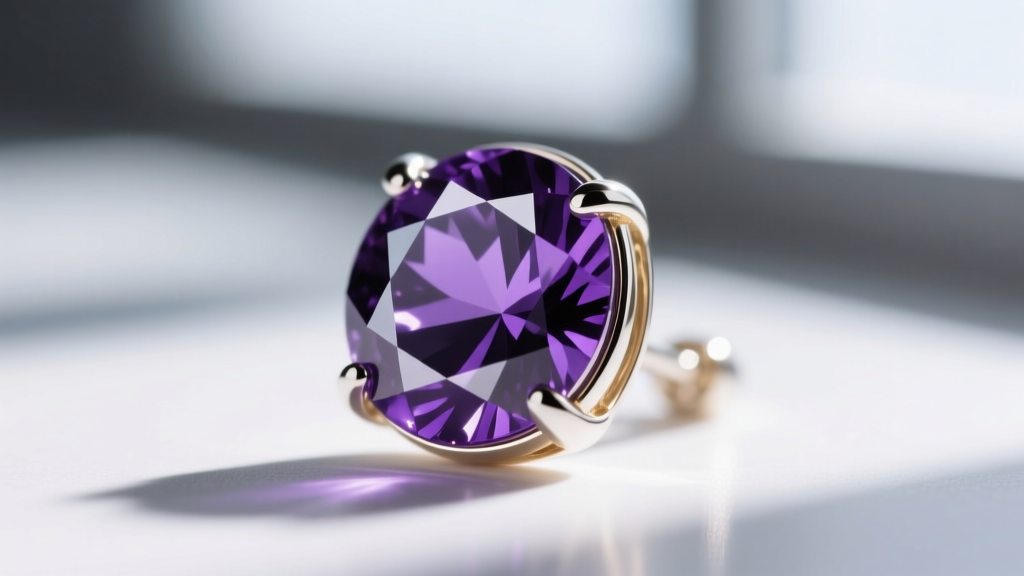
Tanzanite, while beautiful, possesses perfect cleavage in one direction and ranks only 6 to 7 on the Mohs hardness scale. The GIA's Tanzanite Care Guide explicitly warns that tanzanite is highly susceptible to chipping from the sharp impacts common in dangle and drop earring styles. Furthermore, if a tanzanite is held by four standard V-prongs, the dark color can mask the fact that one prong has lifted by a fraction of a millimeter.
The 10-Second Earring Security Checklist
- The Paper Test: Gently run the earring over a piece of tissue paper or fine silk. If the prongs catch or snag the fibers, they have lifted and require immediate professional retipping.
- The Rattle Test: Hold the earring close to your ear and gently tap the setting with a wooden toothpick. A faint buzzing or clicking indicates the stone is loose within the bezel or prong basket.
- Profile Inspection: View the earring strictly from the side profile. Ensure the culet (the bottom point of the gemstone) is not protruding below the metal gallery, which exposes it to snapping against your neck or collarbone.
The Safe Cleaning and Restoration Protocol
When dark purple earrings accumulate a film of lotion, hairspray, and sebum, they lose their brilliance and appear dull or black. However, standard jewelry cleaning methods can destroy these specific stones. Never use ultrasonic cleaners or steam cleaners on dark purple earrings unless you are 100% certain the stones are natural, untreated sapphires. Ultrasonic vibrations will shatter tanzanite along its cleavage planes and will strip the dye from treated agate or quartz in seconds.
Step-by-Step Safe Cleaning Method
- Prepare a Neutral Bath: Mix three drops of phosphate-free, mild dish soap (like Dawn) into a bowl of lukewarm distilled water. Avoid hot water, which can cause thermal shock to tanzanite and accelerate dye bleeding in porous stones.
- Soak Briefly: Submerge the earrings for no more than 3 to 5 minutes. This loosens surface debris without allowing water to penetrate microscopic fractures.
- Agitate Gently: Use an ultra-soft, baby-hair toothbrush to gently sweep the back of the setting (the pavilion) and the earring post. Do not scrub the crown (top) of the stone aggressively.
- Rinse and Dry: Rinse under a gentle stream of lukewarm water. Pat dry with a lint-free microfiber cloth, and use a can of compressed air to blow out any trapped moisture from behind the setting.
Expert Sourcing: Buying Dark Purple Earrings That Last
If you are repeatedly troubleshooting fading, bleeding, or skin irritation, the ultimate solution is to upgrade your sourcing criteria. When shopping for dark purple earrings, demand transparency regarding gemstone treatments. Ask the jeweler explicitly: "Is this stone dyed, irradiated, or heat-treated?"
"In 2026, the smartest investment for dark purple jewelry is lab-grown purple sapphire or high-grade Zambian amethyst. Lab-grown sapphires offer the deep, moody purple of rare natural stones with a Mohs 9 hardness that guarantees the setting will outlast the wearer, while Zambian amethyst naturally possesses the deep, saturated plum tones that lesser stones require dye to achieve."
Furthermore, prioritize earrings that utilize threaded 18G or 16G titanium posts for cartilage piercings, and friction-backed 14k or 18k gold for standard lobe piercings. By understanding the specific chemical and structural vulnerabilities of dark purple gems, you can transition from constantly repairing damaged jewelry to confidently wearing pieces that retain their rich, violet brilliance for a lifetime.
For those experiencing persistent earlobe irritation or rashes that do not resolve after switching to inert metals, consult a dermatologist to rule out systemic contact dermatitis, as outlined by the American Academy of Dermatology (AAD) guidelines on metal allergies.


