Evaluating Patterns for Beaded Earrings: A Buyer's Guide
Discover what to look for when buying handcrafted beaded earrings. Learn to evaluate weave patterns, thread strength, and bead quality like an expert.

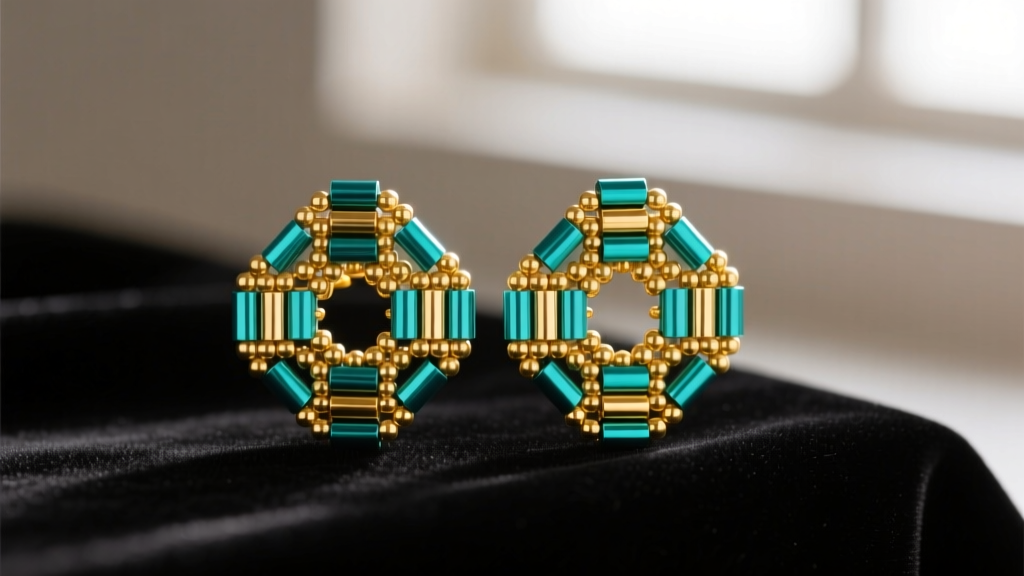
The Architecture of Beadwork: Beyond the Surface
When shopping for handcrafted jewelry, the untrained eye often focuses solely on color palettes and overall silhouette. However, when evaluating patterns for beaded earrings, structural integrity is just as critical as aesthetic appeal. Unlike stamped metal or cast resin, beadwork is a flexible, tension-based textile. The longevity, drape, and durability of a pair of beaded earrings depend entirely on the specific weaving pattern employed by the artisan, the grade of the seed beads, and the tensile strength of the thread.
Mass-produced beaded earrings often rely on basic stringing or adhesive-backed findings, which inevitably fail under the kinetic stress of daily wear. True artisan beadwork utilizes interlocking weaving techniques that distribute tension evenly across hundreds of individual beads. This guide will teach you how to decode these structural patterns, assess material grades, and make informed purchasing decisions that guarantee your earrings will last for years without warping, snapping, or fraying.
Decoding the Weave: Top Structural Patterns
The foundation of any high-quality beaded earring is its stitch pattern. According to master weaving resources like Bead&Button, different stitches serve distinct structural purposes. Here is what you need to look for when inspecting the weave.
Peyote Stitch (Flat and Tubular)
Peyote stitch creates a dense, interlocking zigzag matrix that resembles a flexible fabric. In flat peyote, beads sit in staggered rows, locking into the grooves of the adjacent row. When buying flat peyote earrings, inspect the edges. If the perimeter beads appear loose or the pattern warps like a bowl, the artisan used inconsistent thread tension or mixed bead sizes (such as combining size 11/0 with size 15/0 improperly). Tubular peyote, often used for beaded hoop earrings or rope-style drops, should feel like a firm but flexible straw. It should not collapse inward when gently squeezed.
Brick Stitch
Brick stitch is the gold standard for fringe earrings and geometric, tapering shapes. Each bead is anchored to the thread loop of the row below it, mimicking the staggered layout of a masonry wall. The critical failure point in brick stitch patterns is the anchor row (the base). If the base row lacks a rigid backing or is strung too loosely, the entire earring will droop and lose its geometric precision. High-end brick stitch earrings often utilize a stiff backing material or a tightly tensioned ladder stitch base to maintain structural memory.
Right-Angle Weave (RAW)
Right-Angle Weave creates a mesh of interlocking rings, resulting in a highly fluid, draped fabric. RAW is frequently used for elaborate chandelier earrings or collar-style pieces that must move dynamically with the wearer. When evaluating RAW patterns, check the 'windows' (the empty spaces between the bead rings). They should be uniform in size. Irregular windows indicate sloppy thread paths, which can lead to premature fraying as the thread rubs against the sharp edges of the seed beads.
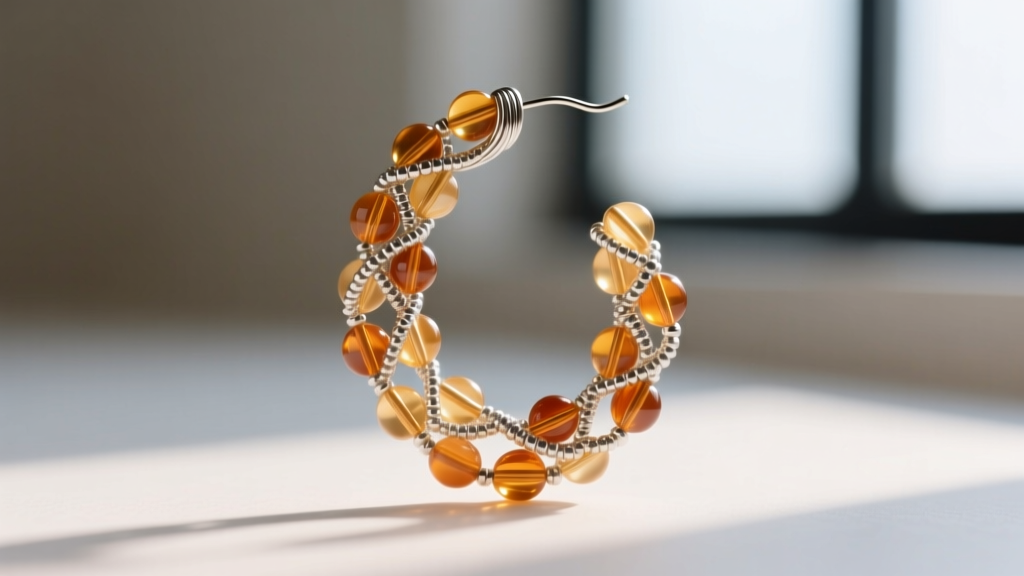
Material Integrity: Beads and Thread Matrix
The most exquisite pattern will fail if executed with inferior materials. Premium bead weavers invest heavily in precision-manufactured beads and specialized threads. The Fire Mountain Gems Encyclopedia notes that uniform bead sizing is non-negotiable for complex tension-based patterns.
| Material Component | Premium Grade (Look For) | Budget Grade (Avoid/Limit) | Structural Impact |
|---|---|---|---|
| Seed Beads | Miyuki Delica or Toho Treasures (Cylinder) | Standard Czech Round Seed Beads | Cylinder beads lock together seamlessly, preventing pattern warping and gaps. |
| Thread | Fireline (6lb or 8lb braided polyethylene) | Nymo or standard cotton/silk thread | Braided poly resists cutting against sharp bead edges and requires no waxing. |
| Accent Beads | Swarovski/Preciosa Crystal Bicones | Acrylic or glass-plastic imitations | True crystal has smooth, polished holes that will not abrade the structural thread. |
When reading product descriptions, look specifically for the mention of 'Delica' or 'Fireline'. Artisans who use these premium materials are usually transparent about them because they represent a significant investment in the piece's longevity.
Hardware and Findings: The Critical Junctions
A beaded earring is only as strong as the finding that connects it to your ear. The junction where the beadwork meets the ear wire is the highest stress point. Avoid earrings where the beadwork is simply tied to a thin jump ring with a single knot. Instead, look for integrated wire-wrapping techniques or heavy-gauge, soldered jump rings.
- Ear Wire Gauge: Optimal French hooks should be crafted from 20-gauge or 22-gauge wire. Anything thinner (like 24-gauge) will bend under the weight of a large beaded dangle.
- Metallurgy: Because bead weaving takes dozens of hours, artisans typically pair their work with high-quality metals to prevent skin irritation. Look for Niobium, Grade 23 Titanium, or 14k Gold-Filled wires. Avoid base metals or unverified 'silver-plated' hooks, which can tarnish and leave green or black marks on the beadwork.
- Thread Protection: Premium patterns often include a tiny metal crimp cover or a seed bead acting as a 'bumper' where the thread loops through the metal eye of the ear wire, preventing the metal from slicing the thread over time.
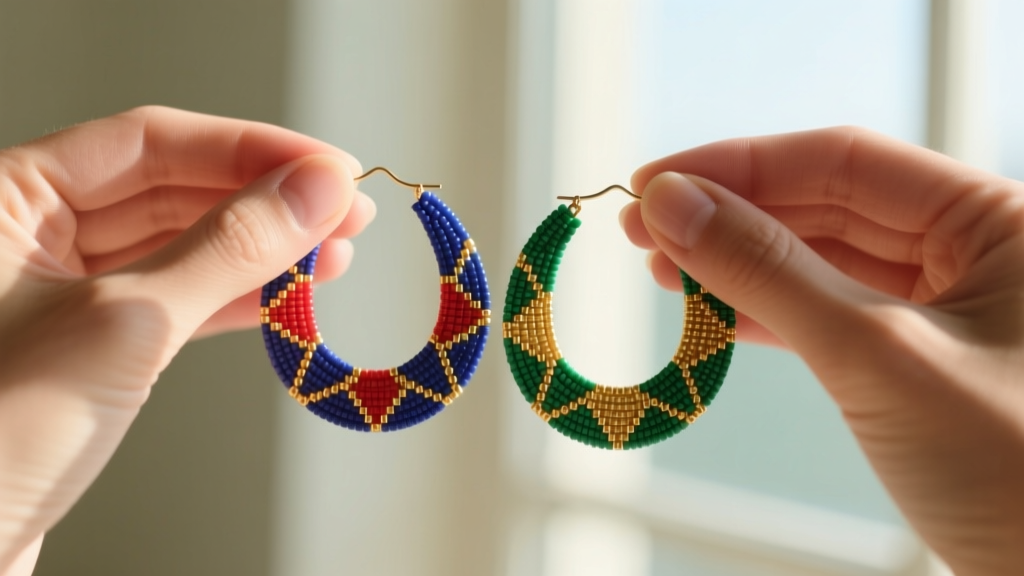
Pricing Framework: Artisan vs. Mass-Produced
Understanding the pricing of beaded earrings requires an appreciation of the labor involved. A complex pair of brick stitch fringe earrings can take an experienced artisan between 10 to 25 hours to complete, involving thousands of individual bead passes.
"If a pair of intricate, hand-woven beaded earrings is priced under $30, you are likely purchasing machine-assisted stringing, glued components, or mass-produced imports where tension and thread quality have been severely compromised."
Expected Pricing Tiers:
- $15 - $35: Simple stringing, basic wire-wrapping, or very small, single-row bead studs. Often utilizes round seed beads and nylon thread.
- $45 - $95: Genuine hand-woven patterns (peyote, brick stitch) of moderate size. Utilizes Miyuki beads, Fireline thread, and gold-filled or sterling silver findings.
- $120 - $250+: Large-scale, complex architectural pieces, heavy fringe, or patterns incorporating premium gemstones and precious metal clay (PMC) elements. These are wearable art pieces requiring master-level tension control.
The Buyer's Inspection Checklist
Whether you are purchasing at a juried art show or ordering from an online boutique, run through this rapid inspection checklist to ensure you are investing in quality craftsmanship:
- The Light Test: Hold the earring up to a light source. Look for dark shadows between the beads, which indicate loose thread tension or warped patterns.
- The Drape Test: Gently swing a dangle or fringe earring. The fringe should move fluidly and return to a straight, parallel alignment immediately. Fringe that stays tangled or curls inward was woven with overly tight thread tension.
- The Edge Check: Run your finger lightly along the perimeter of a flat peyote piece. It should feel smooth and unified, without individual beads jutting out or catching on your skin.
- The Finding Pull: Apply very gentle pressure between the ear wire and the top of the beadwork. There should be zero visible gap or thread stretching.
By shifting your focus from mere color combinations to the underlying architecture, you can confidently evaluate patterns for beaded earrings and curate a collection of handcrafted jewelry that is as durable as it is beautiful.


