Why Do My Earrings Hurt? Top Causes and Easy Fixes
Discover exactly why do my earrings hurt with our expert guide. Learn about metal allergies, gauge mismatches, and piercing aftercare to find relief.

The Anatomy of Ear Pain: Why Your Piercings Are Protestings
If you have ever asked yourself, "why do my earrings hurt?" you are not alone. Ear pain is one of the most common complaints among both newly pierced individuals and seasoned jewelry collectors. However, pain is never random; it is your body's way of signaling a mechanical, chemical, or biological issue. To solve the problem, we must move past vague advice and look at the exact material grades, gauge sizes, and structural mechanics of your jewelry.
In this beginner-friendly explainer, we will break down the five primary reasons your earrings are causing discomfort and provide actionable, expert-backed solutions to get your ears back to a happy, pain-free state.
Reason 1: Contact Dermatitis and Hidden Metal Allergies
The most frequent culprit behind itchy, burning, or aching earlobes is allergic contact dermatitis. Many beginners assume that if jewelry is labeled "hypoallergenic" or "surgical steel," it is safe. This is a dangerous misconception.
- Surgical Steel (316L): Contains up to 10-14% nickel. While the nickel is bound in the alloy, sweat and friction can cause it to leach out, triggering a reaction.
- Brass and Copper Alloys: Often used as the base metal for cheap gold-plated earrings. Once the thin plating wears off, the reactive base metal touches your skin.
- The Nickel Threshold: According to the Mayo Clinic, nickel allergy is one of the most common causes of allergic contact dermatitis, affecting up to 36% of women.
The Fix: Upgrade to Implant-Grade Metals
Stop wearing fashion jewelry in sensitive piercings. Transition exclusively to ASTM F136 Implant-Grade Titanium, Niobium, or solid 14k/18k Gold (yellow or rose, as white gold often contains nickel). Titanium contains zero nickel and is the gold standard recommended by the Association of Professional Piercers (APP) for both healing and sensitive ears.
Reason 2: Gauge and Post Thickness Mismatches
Earring thickness is measured in "gauge" (g). The gauge system is inverse: the higher the number, the thinner the metal. Wearing the wrong gauge causes two distinct types of pain: friction from a post that is too thin, or micro-tearing from forcing a post that is too thick.
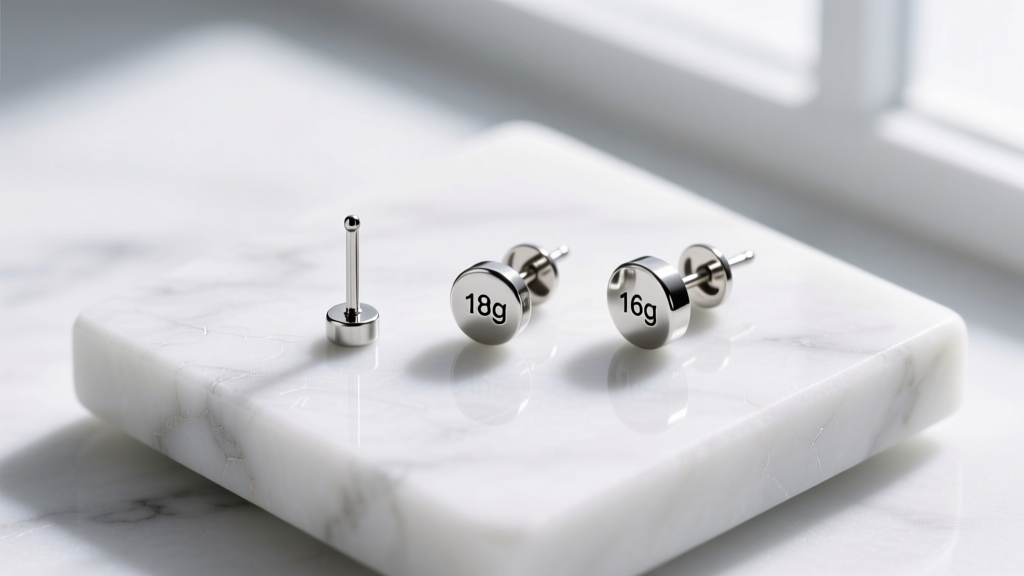
Standard Gauge Size Chart
| Gauge Size | Millimeter (mm) | Common Placement | Pain Risk if Mismatched |
|---|---|---|---|
| 20g | 0.81 mm | Standard earlobe (mall/kiosk piercings) | High movement, cheese-cutter effect in larger holes |
| 18g | 1.02 mm | Earlobe, upper lobe, some nostrils | Moderate friction if worn in 16g cartilage holes |
| 16g | 1.29 mm | Cartilage (helix, tragus, conch) | Micro-tearing if forced into an 18g or 20g lobe hole |
| 14g | 1.63 mm | Industrial, daith, rook, stretched lobes | Severe tissue damage if forced into standard holes |
Actionable Advice: If you experience a dull, stretching ache, your earring post is likely too thick for your fistula (the piercing channel). If you experience sharp, localized pinching, your post is too thin and is moving excessively, creating micro-abrasions inside the channel. Always match your jewelry gauge to your original piercing needle size.
Reason 3: Weight, Tension, and the "Cheese Cutter" Effect
Heavy dangle earrings, large thick hoops, and gemstone clusters look stunning, but gravity is the enemy of earlobe tissue. When a heavy earring rests on the bottom of the piercing channel, it creates downward tension. Over time, this mimics the mechanics of a cheese cutter, slowly migrating the piercing downward and causing a deep, throbbing ache.
"Tissue migration from heavy jewelry is often irreversible without surgical intervention or dermal punching. Prevention through weight management is critical."
The Fix: Reserve heavy statement pieces for short-term wear (under 4 hours). For all-day wear, utilize silicone earring support patches (like Bling Patch or LobeWonder) which distribute the weight of the earring across a wider surface area of the earlobe, completely eliminating the downward drag on the fistula.
Reason 4: Friction Backs and Sleeping Pressure
If your ears hurt primarily in the morning or after a long day, the issue is likely your earring backs. The traditional "butterfly" or friction clutch is inherently flawed for long-term comfort.
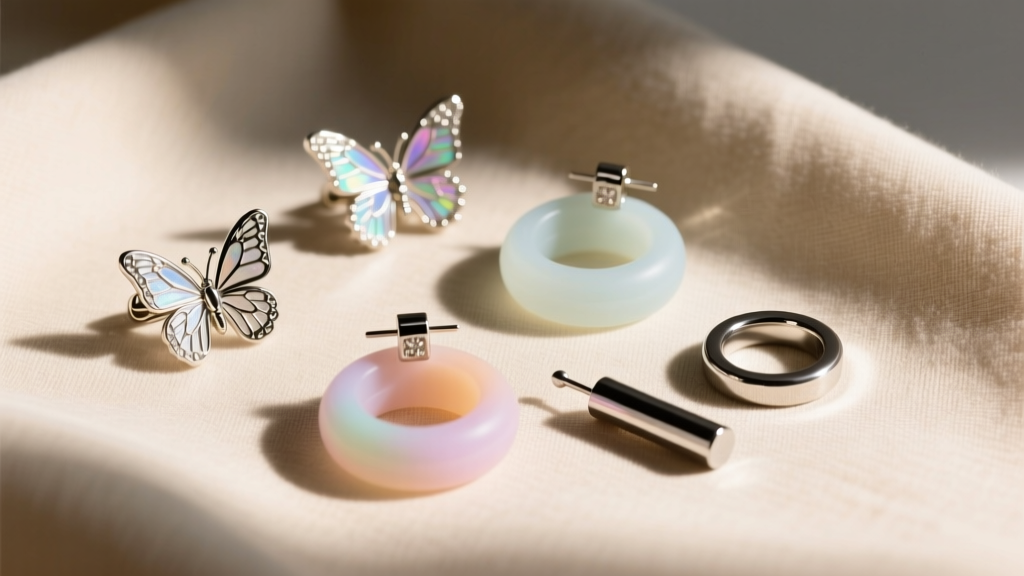
Why Butterfly Backs Cause Pain
- Pressure Necrosis: The small surface area of a metal butterfly back presses deeply into the skin behind the ear, especially when sleeping, cutting off local circulation.
- Bacterial Traps: The tiny crevices in friction backs trap dead skin cells, sebum, and shampoo residue, leading to foul odors and localized infections.
- Embedding: If the earlobe swells due to heat or minor irritation, a tight friction back can become embedded inside the tissue, requiring medical removal.
The Fix: Switch to flat-back labrets. These feature a flat titanium disc that sits flush against the back of the ear, distributing pressure evenly and making sleeping completely painless. Look for "threadless" (push-pin) or "internally threaded" mechanisms to avoid the sharp external threads of cheap jewelry scraping your piercing channel during insertion.
Reason 5: Unhealed Piercings and Irritation Bumps
Beginners often confuse an infection with an irritation bump (hypertrophic scarring). If your cartilage piercing hurts, is swollen, and has a small bump next to it, it is rarely an infection. It is almost always mechanical irritation caused by sleeping on it, changing jewelry too early, or using harsh cleaning chemicals like rubbing alcohol or hydrogen peroxide.
Troubleshooting Your Symptoms
- Clear/White Fluid (Lymph): Normal healing byproduct. Do not pick at it.
- Yellow/Green Pus + Heat + Fever: Signs of a true bacterial infection. See a doctor immediately; do not remove the jewelry, or the hole will close and trap the abscess.
- Red, Angry Bump + Tenderness: Irritation bump. Stop touching it, switch to a flat-back titanium labret, and use sterile saline spray (0.9% sodium chloride) twice daily.
For a comprehensive guide on distinguishing between piercing infections and irritation, consult the Cleveland Clinic's resources on contact dermatitis and localized skin reactions.
Your 24-Hour Action Plan for Pain Relief
If your ears are hurting right now, follow this immediate protocol:
- Remove the Offending Jewelry: Take out any brass, silver, or nickel-containing pieces.
- Cleanse Gently: Wash the front and back of the earlobe with a mild, fragrance-free glycerin soap and warm water. Pat dry with a non-woven gauze (cotton balls leave fibers that cause irritation).
- Insert Safe Metal: Insert a sterilized, ASTM F136 titanium flat-back labret or a seamless, polished hoop of the correct gauge.
- Apply a Cold Compress: If the lobe is swollen and throbbing, apply a clean ice pack wrapped in a paper towel for 10 minutes to reduce vascular inflammation.
Conclusion
Understanding why do my earrings hurt comes down to respecting the biology of your tissue and the chemistry of your metals. By abandoning porous, nickel-heavy fashion jewelry in favor of implant-grade titanium, matching your gauge sizes perfectly, and switching to ergonomic flat backs, you can eliminate 99% of earring-related pain. Treat your piercings with the precision they deserve, and they will remain comfortable, beautiful canvases for your favorite jewelry for a lifetime.


