Easter Egg Earrings: Material Safety & Enamel Guide
Discover the hidden metals and enamel types in Easter egg earrings. Learn how to choose hypoallergenic, lead-free novelty designs for sensitive ears.

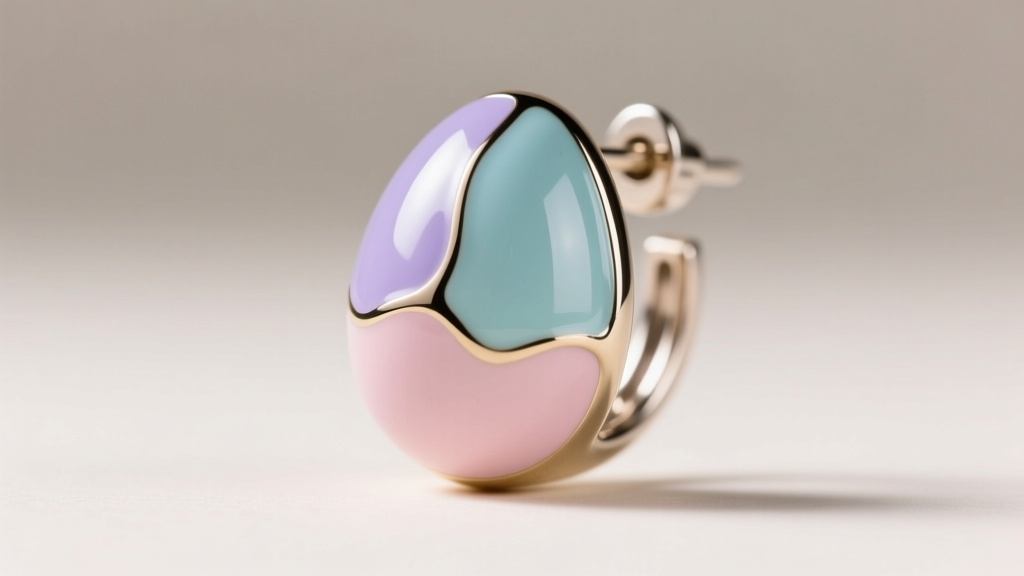
The Anatomy of Easter Egg Earrings: Beyond the Pastel Glaze
When spring arrives, jewelry boxes everywhere are suddenly populated with pastel hues, metallic speckles, and whimsical shapes. Easter egg earrings are a seasonal staple, but beneath their cheerful, candy-colored exteriors lies a complex composite structure that dictates their longevity, safety, and comfort. As a domain expert in jewelry metallurgy and trend analysis, I often see consumers and boutique buyers overlook the material science of novelty jewelry. An enameled or painted egg earring is never just one material; it is a layered system comprising a base metal armature, an adhesive or primer layer, a colorant (enamel, resin, or paint), and a protective topcoat.
Understanding these layers is critical, especially in 2026, as the market is flooded with both high-end artisanal cloisonné pieces and mass-produced, potentially toxic fast-fashion alternatives. This guide breaks down the exact material properties, gauge specifications, and safety profiles of Easter egg earrings to help you make informed, skin-safe choices.
Base Metal Breakdown: What’s Hiding Under the Color?
The base metal provides the structural integrity of the earring. Because the metal is usually completely encased in enamel or resin, manufacturers of cheap novelty earrings often use highly reactive alloys, assuming the coating will protect the wearer's skin. However, micro-fractures in the enamel inevitably expose the base metal to sweat and skin oils.
| Base Metal | Nickel Content | Weight / Density | Best Application | Avg. Price Range |
|---|---|---|---|---|
| Brass / Copper Alloy | High (often 10-15%) | Heavy | Vitreous enamel (requires high heat tolerance) | $15 - $45 |
| 316L Surgical Steel | Trace (8-10%, but tightly bound) | Medium-Heavy | Cold enamel and epoxy resin drops | $12 - $30 |
| ASTM F136 Titanium | Zero (0%) | Lightweight | Hypoallergenic studs and sensitive cartilage | $35 - $85+ |
| Zinc Alloy (Pewter) | Variable (often mixed) | Medium | Cast 3D novelty eggs (fast fashion) | $5 - $15 |
The Post vs. The Hook: A Bimetallic Problem
A frequent failure mode in mid-tier Easter egg earrings is the use of a titanium or sterling silver post soldered to a brass hook or jump ring. While the post touching the piercing may be safe, the brass components can oxidize rapidly when exposed to spring humidity, leaving green stains on the neck and degrading the structural joint over time.
The Enamel Spectrum: Vitreous vs. Cold Enamel vs. Epoxy
The "shell" of the Easter egg earring is where the artistic expression happens, but the chemical properties of the coating dictate how the earring will age.
1. Vitreous Enamel (Fired Glass)
True vitreous enamel is created by fusing powdered glass to a metal substrate at extreme temperatures, typically between 1400°F and 1650°F (760°C - 900°C). This technique, often seen in high-end champlevé or cloisonné Easter egg designs, results in a surface with a Mohs hardness of 5 to 7. It is completely UV-resistant, waterproof, and will never yellow. However, it is brittle; dropping a vitreous enamel egg earring on a hard tile floor will likely shatter the glass coating.
2. Cold Enamel (Epoxy Resin)
Approximately 85% of modern novelty Easter egg earrings utilize cold enamel, which is technically a two-part epoxy resin mixed with pigment. It cures at room temperature and is poured into metal bezels. While it offers vibrant, opaque pastel colors and is shatter-resistant, epoxy resin has a Mohs hardness of only 2 to 3. It scratches easily and is highly susceptible to UV degradation. By 2026, advanced UV-inhibitor resins have reduced the "yellowing" effect on white and baby-blue eggs, but prolonged sun exposure will still cause chemical breakdown over several seasons.
3. Ceramic and Sol-Gel Coatings
An emerging trend in luxury spring jewelry is the use of sol-gel derived ceramic coatings. These offer the scratch resistance of glass with the flexibility of resin, allowing for intricate, multi-layered Easter egg patterns without the risk of shattering.
Gauge Sizes and the "Cheese-Cutter" Effect
One of the most critical, yet ignored, aspects of novelty earring design is the wire gauge. Because Easter egg earrings are often drops or dangles, they carry more kinetic energy and weight than a simple stud.
- 22-Gauge (0.64mm) & 24-Gauge (0.51mm): Frequently used in mass-produced novelty eggs to save on metal costs. These thin wires are prone to bending and, worse, cause the "cheese-cutter effect," where the thin wire slowly slices through the earlobe tissue due to the pendulum weight of the enamel egg.
- 20-Gauge (0.81mm): The industry standard for standard lobe piercings. Acceptable for lightweight, hollow resin eggs.
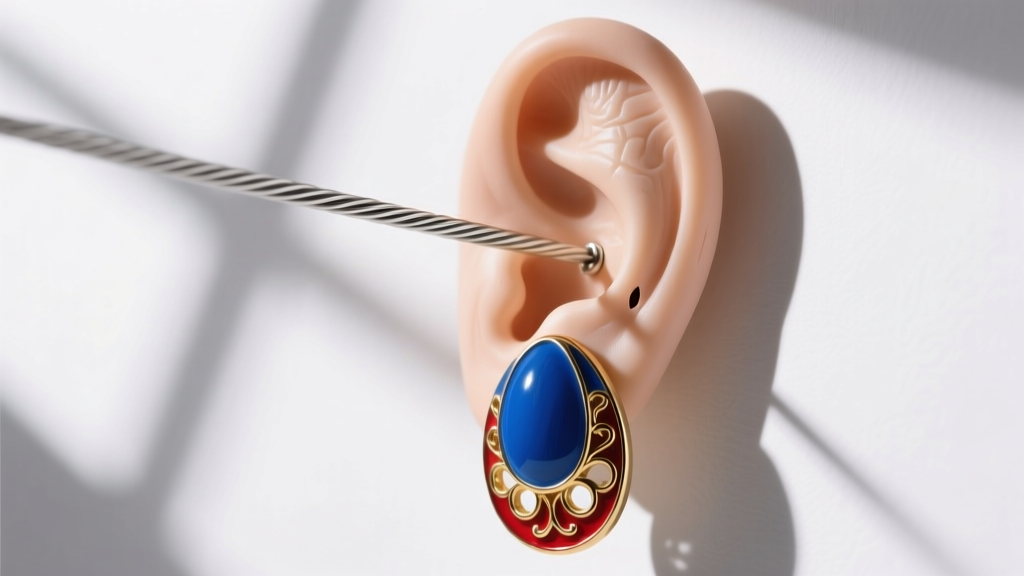
- 18-Gauge (1.02mm) & 16-Gauge (1.29mm): The mandatory minimum for heavy, solid enamel or stone-inlaid Easter egg dangles. This thickness distributes the weight across the fistula (the piercing hole), preventing tissue migration and discomfort.
Toxicity and Safety: The Hidden Risks of Fast-Fashion Novelty
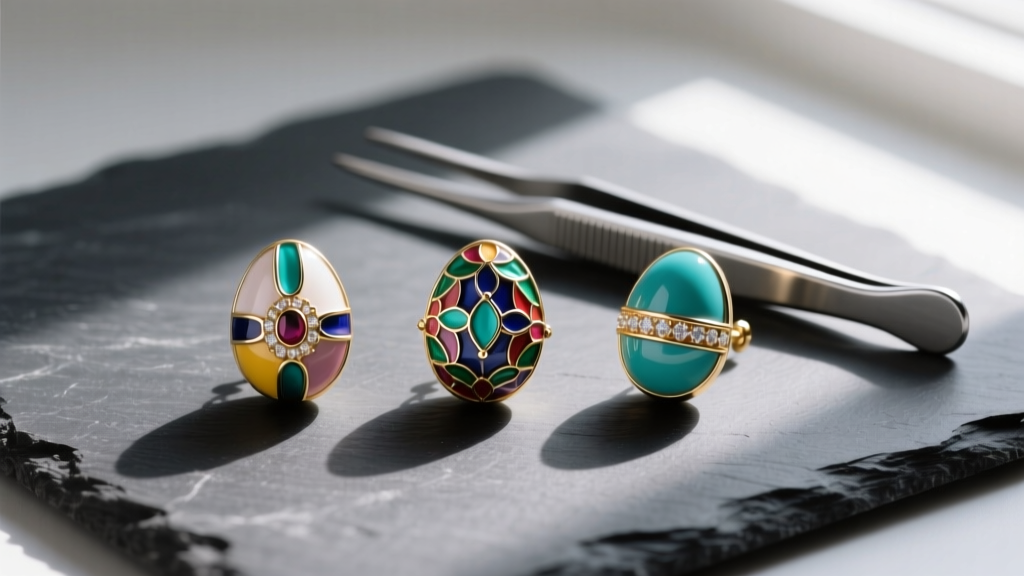
When purchasing brightly colored, budget-friendly jewelry, material safety must be a primary concern. The pigments used to achieve vivid pastel pinks, yellows, and greens in unregulated markets have historically contained heavy metals.
According to guidelines enforced by the Consumer Product Safety Commission (CPSC), jewelry intended for children must contain less than 100 parts per million (ppm) of lead. However, adult novelty jewelry often bypasses strict testing, and cheap cadmium-based pigments are sometimes used as a lead substitute, which carries its own severe toxicity risks if ingested or if the coating degrades into the skin's micro-abrasions.
Furthermore, nickel allergy remains the most common cause of contact dermatitis in jewelry wearers. The National Institutes of Health (NIH) notes that nickel ions can leach through porous or micro-cracked cold enamel when exposed to the slightly acidic pH of human sweat (typically 4.5 to 7.0). If you have a known nickel allergy, you must ensure the earring post is explicitly marked as ASTM F136 Titanium or Niobium, and avoid uncoated brass jump rings.
How to Retrofit and Wear Easter Egg Earrings Safely
If you have purchased a beautiful but poorly constructed Easter egg earring, you do not necessarily have to discard it. As a jewelry specialist, I recommend the following retrofitting framework to make novelty pieces safe for daily wear:
- Swap the Ear Wire: Use flush cutters to remove cheap 22G base-metal French hooks. Open a heavy-duty 18G titanium or niobium leverback wire and attach it to the earring's top loop using a tiny, stainless steel jump ring.
- Add Silicone O-Rings: For heavy dangle eggs, slide a 2mm silicone O-ring onto the post before securing the earring back. This increases the surface area against the back of the earlobe, stabilizing the earring and preventing it from drooping forward.
- Seal the Post Junction: If the post is soldered to a reactive metal base, apply a micro-layer of clear, jewelry-grade cyanoacrylate or a specialized nail polish barrier to the solder joint to prevent galvanic corrosion and skin exposure.
Care and Maintenance for Enameled Egg Designs
Proper maintenance ensures your seasonal pieces can be worn year after year. Never place enameled or resin Easter egg earrings in an ultrasonic cleaner. The high-frequency cavitation bubbles will easily fracture cold enamel and can cause vitreous enamel to delaminate from the brass substrate.
Instead, clean your egg earrings using a soft microfiber cloth dampened with a solution of warm water and a single drop of pH-neutral dish soap. For intricate filigree or cloisonné wirework on the egg's surface, use a soft-bristled baby toothbrush to gently dislodge sebum and cosmetic buildup. Store them in a dark, velvet-lined box to prevent UV exposure and keep the metal hooks separated to avoid scratching the delicate resin surfaces.