How to Identify and Style Vintage Art Deco Earrings
Learn how to identify, authenticate, and style vintage Art Deco earrings. Discover key materials, hallmark guides, and pricing for 1920s jewelry.

What Defines the Art Deco Era in Jewelry?
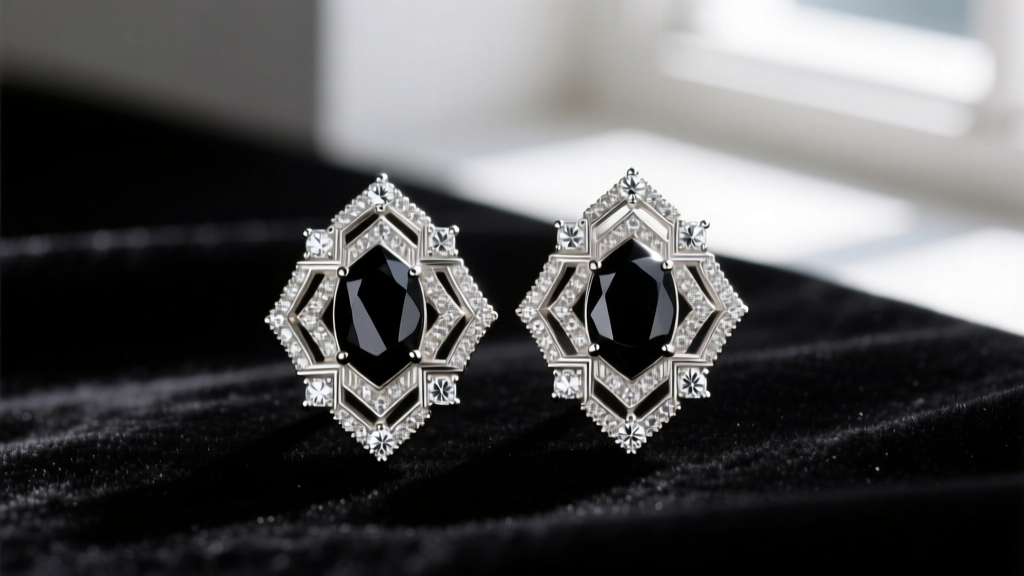
The Art Deco period, spanning roughly from 1920 to 1935, marked a radical departure from the flowing, nature-inspired motifs of the preceding Art Nouveau era. Driven by the industrial boom, the discovery of King Tutankhamun’s tomb in 1922, and the rise of the Cubist art movement, jewelry design shifted toward rigid geometry, bold color contrasts, and architectural symmetry. When shopping for vintage art deco earrings, you are looking for pieces that embody this machine-age elegance: think stepped motifs, sunbursts, chevrons, and stark black-and-white material pairings.
For beginners, the antique jewelry market can be a minefield of modern reproductions masquerading as 1920s originals. Understanding the specific construction techniques, metal purities, and gemstone cuts of the era is your first line of defense. According to the Victoria and Albert Museum, the hallmark of true Deco jewelry is its meticulous hand-fabrication, a standard that modern cast reproductions rarely replicate.
Key Materials and Gemstone Cuts to Look For
Authentic vintage art deco earrings rely on a specific palette of metals and stones. Platinum was the undisputed king of the 1920s, prized for its strength, which allowed jewelers to create impossibly delicate, lace-like filigree and secure stones with minimal metal visibility.
| Material / Cut | Characteristics in Deco Earrings | Authentication Tip |
|---|---|---|
| Platinum (900 or 950) | Used for intricate filigree, milgrain edges, and invisible settings. | Look for a dull, grayish-white hue. Modern rhodium-plated white gold is often too bright and reflective. |
| White Gold (14k/18k) | A more affordable alternative to platinum, often heavily rhodium-plated. | Check for wear on the rhodium plating revealing a faint yellowish undertone near the earring posts. |
| Old European Cut (OEC) | Round diamonds with a high crown, small table, and large culet. | Under a loupe, the culet (bottom point) should look like a flat, open circle, not a sharp point. |
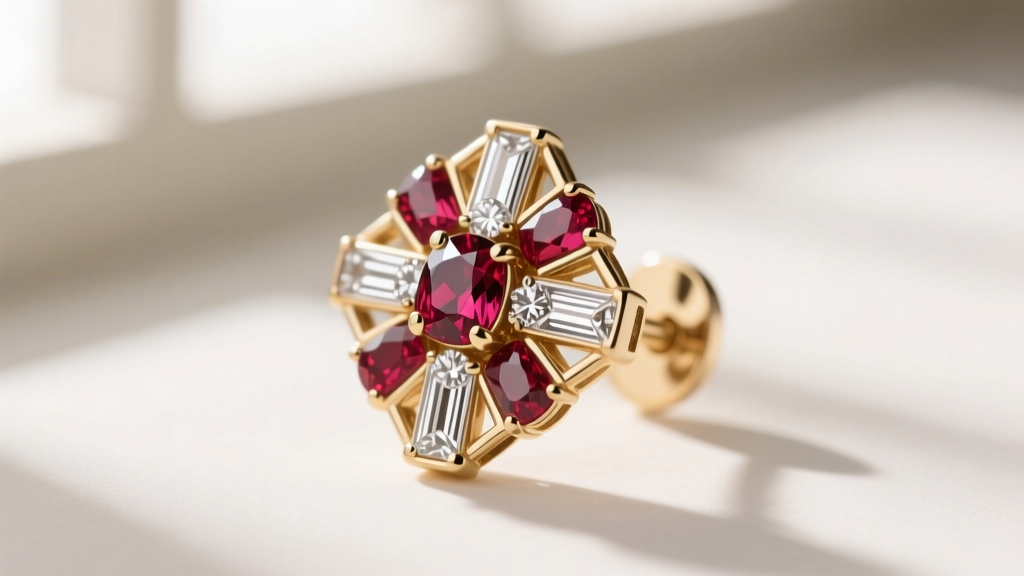
| Calibre-Cut Stones | Custom-shaped rubies, sapphires, or emeralds cut to fit perfectly into geometric channels. | Gaps between stones should be virtually nonexistent. Modern reproductions often use standard round stones in square settings. |
| Onyx, Coral, and Jade | Carved into geometric plaques or stepped drops for high color contrast. | Onyx should be deeply black and opaque; coral should show natural, subtle grain patterns under magnification. |
Authenticating Vintage Art Deco Earrings: A Beginner’s Checklist
Distinguishing a genuine 1920s piece from a 1980s or modern reproduction requires examining the findings (the functional parts of the jewelry) and the metalwork. The Lang Antique Jewelry University emphasizes that the back of an earring tells just as much of a story as the front.
The Clasp and Post Test
Earring mechanics evolved significantly during the Deco era. If you are examining a pair of dangling vintage art deco earrings, pay close attention to the ear wires and backs:
- Screw-Backs: Patented in the early 1900s and wildly popular in the 1920s. These feature a threaded post and a nut that screws down. If a piece has an original, unaltered screw-back, it is a strong indicator of age.
- Lever-Backs: A hinged wire that snaps into a catch. Commonly used for heavier drop earrings in the 1920s and 30s.
- Omega Backs: Introduced in the late 1930s. If a piece claims to be from 1925 but features an original Omega clip, it is likely a later Retro-era piece or a reproduction.
- Modern Friction Posts (Butterfly Backs): If the earring has a standard modern post and push-back, it is either a modern reproduction, or an authentic antique that has been altered (which significantly decreases its collector value).
Examining Metal, Patina, and Milgrain
Milgrain is the delicate, beaded edging applied to metal borders. In the 1920s, this was applied by hand using a knurling tool. Over 100 years of wear, authentic milgrain will show slight softening, asymmetry, or wear on the high points. Modern reproductions use CAD/CAM casting, resulting in milgrain that is perfectly uniform, overly rounded, and sometimes slightly porous under a 10x jeweler's loupe.
Additionally, look for natural patina. Antique platinum and white gold develop a soft, muted luster over decades. If the metal is blindingly white and reflective, it has likely been recently polished or rhodium-plated, which can obscure historical tool marks.
Pricing Guide: What Should You Expect to Pay?
The market for vintage art deco earrings is highly stratified based on materials, brand provenance, and condition. Below is a realistic pricing framework for the current market:
| Tier | Typical Materials | Estimated Price Range (USD) |
|---|---|---|
| Entry-Level / Costume | Sterling silver, marcasite, Bakelite, enamel. | $150 – $600 |
| Mid-Range / Fine | 14k white gold, synthetic spinels, small OEC diamonds, carved jade. | $800 – $2,500 |
| High-End / Collector | Platinum, high-carat OEC diamonds, calibre-cut sapphires, onyx. | $4,000 – $18,000 |
| Signed / Museum Quality | Platinum, flawless gems, signed by Cartier, Boucheron, or Van Cleef. | $35,000 – $250,000+ |
Styling and Wearing Heavy Deco Drops
One of the most common issues beginners face when wearing authentic vintage art deco earrings is the weight. Platinum is an incredibly dense metal. A pair of solid platinum, diamond-and-onyx geometric drop earrings from 1928 can easily weigh 15 to 22 grams. For context, a modern standard gold hoop weighs about 3 to 5 grams.
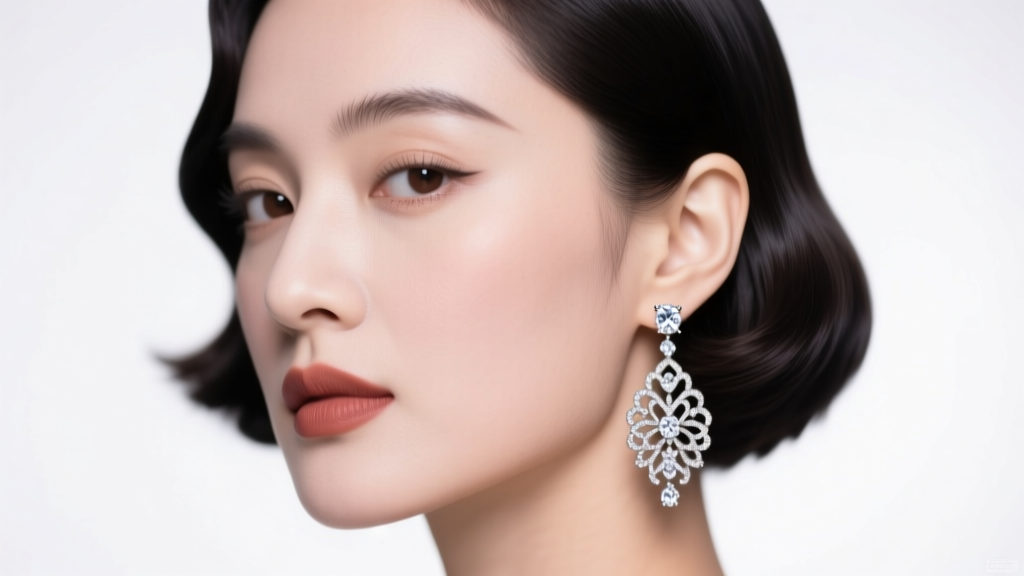
Face Shape and Silhouette: The long, linear geometry of Deco drop earrings is exceptionally flattering for round and square face shapes, as the sharp vertical lines elongate the facial profile. If you have a long or oblong face, opt for wider, geometric Deco studs or ear clips that add horizontal volume rather than vertical length.
Gauge Sizing and Lobe Support: Vintage earring posts were often manufactured at 18-gauge or even 17-gauge thickness, whereas modern lobe piercings are typically done at 20-gauge. Forcing a thicker vintage post into a modern hole can cause micro-tearing. Furthermore, to prevent heavy platinum drops from stretching your earlobe over time, always use a supportive earring backing. Silicone earring lifters or small plastic support discs distribute the weight across a wider surface area of the lobe, keeping the earring upright and preventing tissue damage.
Caring for 100-Year-Old Ear Jewelry
Maintaining antique jewelry requires unlearning modern cleaning habits. The biggest mistake a beginner can make is dropping vintage art deco earrings into an ultrasonic cleaner.
Warning: Never use ultrasonic cleaners or steamers on Art Deco earrings featuring emeralds, opals, coral, jade, or onyx. The high-frequency vibrations can shatter brittle stones, and the heat can melt the natural resins or oils used to treat them.
Instead, clean your pieces using a lukewarm solution of distilled water and a few drops of mild, phosphate-free dish soap. Use an extra-soft baby toothbrush to gently agitate dirt from behind the diamond settings. Dry immediately with a microfiber cloth. If your earrings feature early plastics like Bakelite or celluloid, avoid soaking them entirely; simply wipe them with a dry, soft cloth, as water exposure can cause irreversible clouding or cracking in century-old polymers.
By understanding the historical context, mastering the authentication checklist, and respecting the physical weight and fragility of these pieces, you can confidently build a collection of vintage art deco earrings that will last for another century.


