Affordable Rhinestone Earrings for Wedding: 2026 Value Guide
Discover how to choose affordable rhinestone earrings for wedding events. We compare crystal grades, metal bases, and settings to maximize your bridal budget.
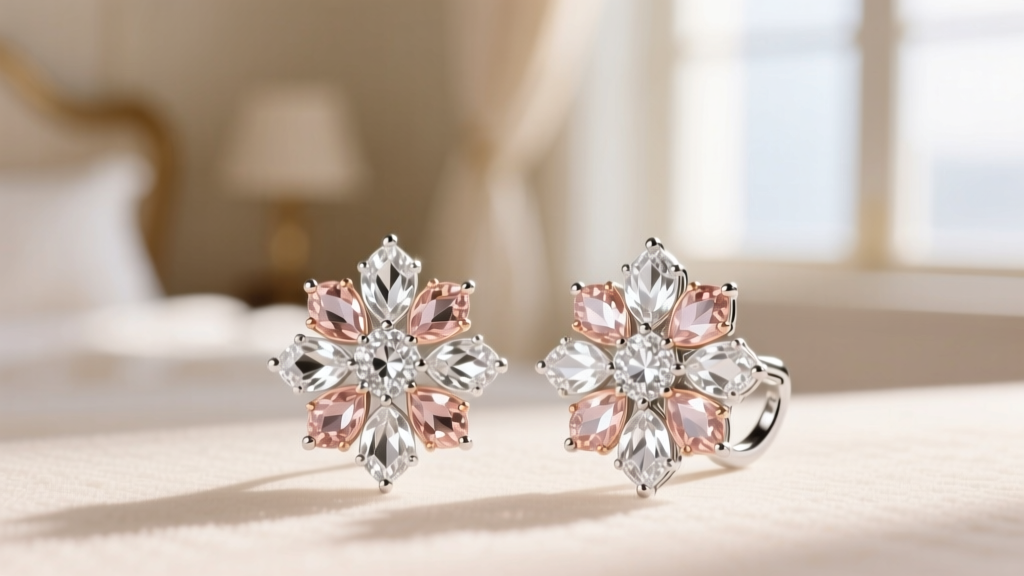
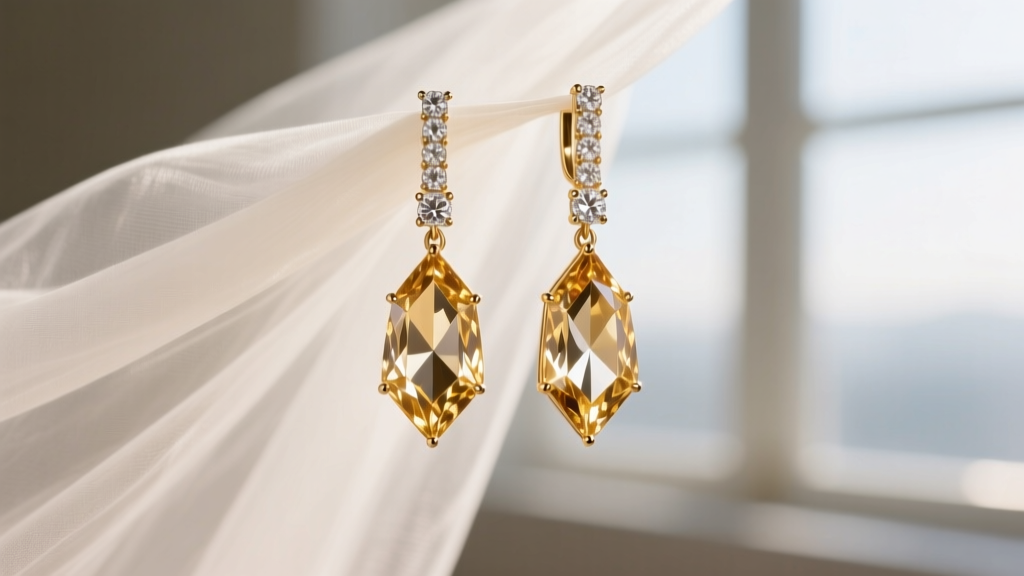
The Bridal Illusion: Why Rhinestones Are Dominating 2026
As couples reallocate their budgets toward experiential elements and honeymoon upgrades in 2026, the demand for high-impact, budget-conscious bridal accessories has surged. The search for the perfect rhinestone earrings for wedding events often leads brides down a confusing path of terminology, where "crystal," "cubic zirconia," and "glass" are used interchangeably by fast-fashion retailers. However, from a gemological and metallurgical standpoint, these materials perform vastly differently under the hot lights of a reception tent or the humidity of a summer ceremony.
This guide strips away the marketing fluff to provide a rigorous budget and value assessment of bridal rhinestone earrings. We will analyze refractive indices, base metal integrity, and structural failure points to help you secure diamond-level sparkle without the diamond-level price tag.
Optics and Anatomy: Crystal vs. CZ vs. Glass
To evaluate value, you must first understand what you are actually buying. True rhinestones are historically defined as quartz or glass stones with a metallic foil backing applied to the pavilion (the bottom) to reflect light. Today, the bridal market loosely groups foil-backed glass, lead-free crystal, and cubic zirconia (CZ) under the "rhinestone" umbrella. Here is how they compare optically.
The Refractive Index (RI) Breakdown
The Gemological Institute of America (GIA) notes that a diamond's legendary brilliance comes from its high Refractive Index (RI) of 2.42. When shopping on a budget, you are essentially paying for how closely a material mimics this light return:
- Cubic Zirconia (RI 2.15 - 2.18): The closest optical match to a diamond. CZ is a solid, lab-created simulant that does not require a foil backing. It offers exceptional fire and brilliance but is heavier than crystal.
- Leaded Crystal (RI ~1.70): Traditionally used in high-end vintage pieces. The lead content increases the RI, but due to modern safety regulations, it is largely phased out of 2026 bridal jewelry.
- Lead-Free Preciosa Crystal (RI ~1.55): The modern standard for premium "rhinestones." While the base RI is lower, precision machine-cutting and high-quality silver foil backing create a mirror effect that rivals CZ in overall sparkle.
- Standard Glass (RI ~1.50): Found in ultra-budget pieces. Even with foil backing, glass lacks the "fire" (color dispersion) of CZ or precision crystal, often looking flat in professional photography.
Value Verdict: For maximum photographic brilliance on a budget, AAA-grade CZ offers the best optical return. If you prefer the lightweight, vintage-inspired mirror sparkle, opt for precision-cut lead-free crystal with a sealed foil backing.
Base Metals and Plating: Avoiding the Green Ear Catastrophe
The most common failure point in budget bridal jewelry is not the stone, but the metal. Wedding days involve tears, sweat, and hours of wear. If the base metal reacts with your skin's pH, you risk the dreaded "green ear" or severe contact dermatitis right before you walk down the aisle.
| Base Metal & Plating | Typical Price Range | Durability & Skin Safety | Best For |
|---|---|---|---|
| Zinc Alloy / Flash Plated | $10 - $25 | Poor. Plating is <0.1 microns. High risk of tarnishing and nickel reactions. | Bridesmaids, single-use events. |
| Brass / Rhodium Plated | $30 - $65 | Good. Rhodium is hypoallergenic and mimics white gold. Ensure plating is >0.5 microns. | Budget brides, outdoor summer weddings. |
| Surgical Stainless Steel | $20 - $45 | Excellent. Highly durable, waterproof, and hypoallergenic, but heavier and harder to cast into intricate designs. | Sensitive ears, minimalist stud styles. |
| Sterling Silver / Gold Vermeil | $70 - $150 | Superior. Vermeil requires >2.5 microns of gold over silver. Heirloom potential. | Brides wanting post-wedding reusability. |
Prong-Set vs. Glued: The Humidity Test
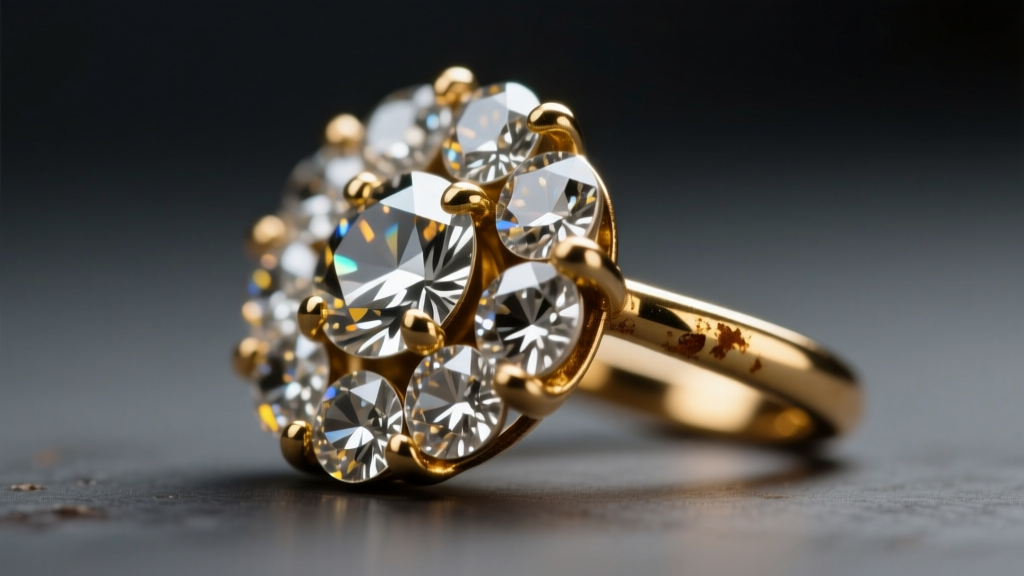
When assessing the value of rhinestone earrings for wedding wear, you must inspect the setting. Ultra-budget manufacturers use cyanoacrylate (super glue) or epoxy to adhere stones to the metal base. While this keeps labor costs low, it introduces a massive structural vulnerability.
Wedding environments are notoriously hostile to adhesives. The heat from professional styling tools, the humidity of a botanical garden ceremony, and the body heat generated during hours of dancing can soften cheap glues, causing stones to pop out. Furthermore, glue can seep over the edges of the stone, clouding the foil backing and dulling the sparkle.
The E-E-A-T Standard: Always insist on prong-set or bezel-set stones for your primary bridal earrings. Prong settings mechanically lock the stone into the metal framework. If a prong bends, it can be tightened with a simple jewelry tool; if glue fails, the stone is lost on the dance floor.
Weight Distribution: Gauge Sizes and Lobe Fatigue
A frequent oversight in budget bridal shopping is ignoring the earring post gauge and overall weight. Elaborate chandelier rhinestone earrings can easily weigh between 15 and 25 grams per ear.
Standard lobe piercings are typically 20-gauge (0.8mm) or 18-gauge (1.0mm). If a heavy 20-gram earring is hung on a thin, 22-gauge (0.6mm) wire to save on metal costs, the wire will bend, and the earring will droop forward, ruining your silhouette and causing lobe fatigue or tearing.
Pro-Tip for Heavy Drops: If you fall in love with a heavy, budget-friendly chandelier pair, check the post thickness. Look for 18G or 16G posts. Alternatively, purchase silicone earring backers or "lobe support patches" to distribute the weight across a wider surface area of the ear.
The 2026 Value Matrix: Where to Spend and Where to Save
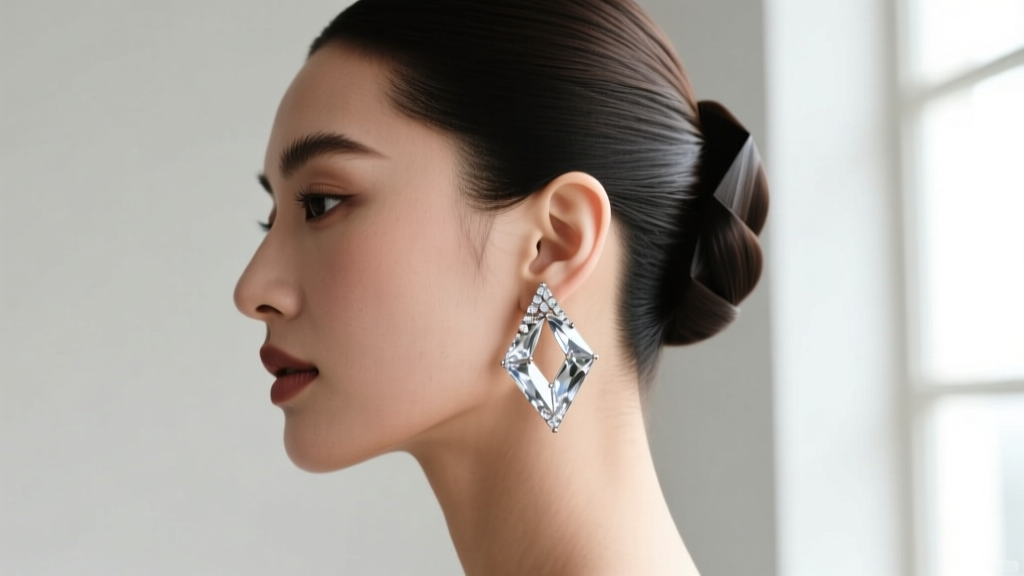
Maximizing your bridal budget requires knowing which design elements actually translate to visual value. Here is a practical decision framework for 2026:
Where to Spend Your Money
- The Base Metal: Never compromise on the metal touching your skin. Pay the $15-$20 premium for rhodium-plated brass or sterling silver to guarantee you won't develop a rash mid-ceremony.
- The Setting: Prong-setting requires skilled labor and costs more than glue, but it ensures the earrings survive the night and can be worn again for anniversaries.
Where You Can Safely Save
- Stone Origin: You do not need legacy Austrian crystal names to get brilliance. High-quality, machine-cut lead-free crystal from reputable optical manufacturers offers 95% of the visual impact at 40% of the cost.
- Solid vs. Hollow Metalwork: Intricate, hollow-cast brass designs provide the visual volume and size of expensive solid silver pieces but weigh significantly less, saving your earlobes and your wallet.
Final Verdict on Budget Bridal Sparkle
According to recent wedding budget analyses by The Knot, modern couples are increasingly prioritizing financial mindfulness without sacrificing aesthetic luxury. The key to successfully pulling off affordable rhinestone earrings for wedding events lies in looking past the initial price tag and evaluating the cost-per-wear and structural integrity.
By prioritizing AAA cubic zirconia or precision-cut lead-free crystal, demanding prong settings over glue, and verifying that the base metal is at least rhodium-plated brass or surgical steel, you can secure a pair of breathtaking, photograph-ready earrings for under $60. True value in bridal jewelry isn't about finding the cheapest option; it is about finding the piece that performs flawlessly when the spotlight hits it.


