Teardrop Stud Earrings: The Ultimate Beginner Style Guide
Discover how to choose, style, and care for teardrop stud earrings. Learn about face shapes, hypoallergenic metals, and the best post backings.

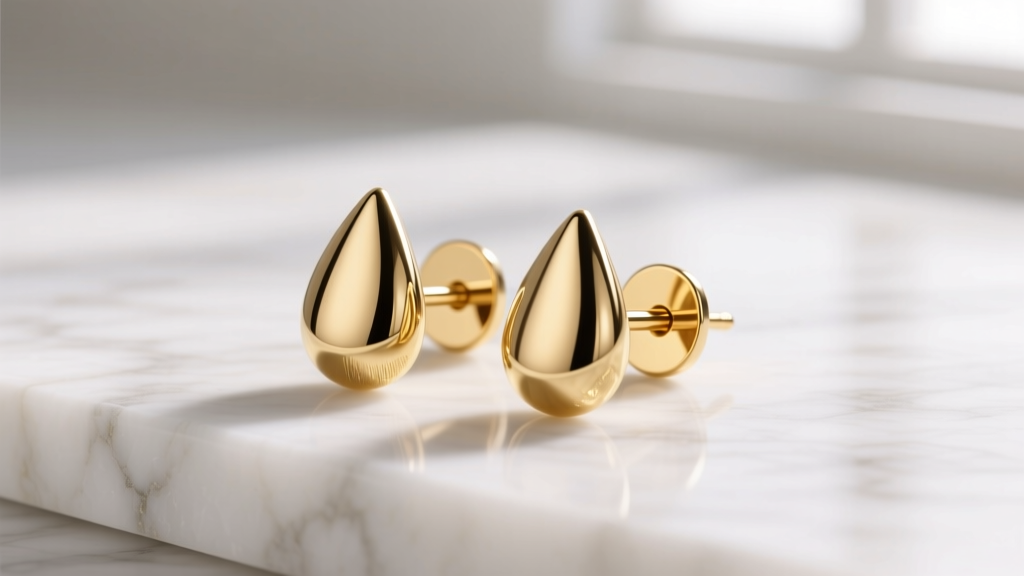
When building a foundational jewelry collection, teardrop stud earrings occupy a unique and highly versatile middle ground. They offer more visual interest and elongation than a standard round diamond or pearl stud, yet they remain far more practical and lightweight than full-length dangle or chandelier earrings. For beginners, navigating the subtle differences in proportions, metal grades, and post mechanics can be overwhelming. This guide breaks down everything you need to know to select, style, and maintain teardrop studs that sit perfectly and last a lifetime.
What Exactly Are Teardrop Stud Earrings?
In jewelry terminology, the distinction between a 'stud' and a 'drop' earring comes down to length and movement. A true stud earring sits snugly against the earlobe or extends downward by no more than one inch (25mm) without articulating hinges. Teardrop studs typically range from 12mm to 22mm in length. They feature a tapered top that widens into a rounded, symmetrical bottom, mimicking the shape of a falling tear.
Because they lack the swinging momentum of dangle earrings, teardrop studs are ideal for active lifestyles, professional environments, and even sleeping (provided you choose the right backing). However, their asymmetrical weight distribution introduces a specific structural challenge that beginners often overlook: the dreaded 'earring droop.'
The Physics of the Droop: Choosing the Right Backing
The most common complaint among first-time buyers of teardrop studs is that the earring refuses to sit straight, instead tilting awkwardly to the side or pointing outward. This happens because the center of gravity in a teardrop shape sits below the actual piercing hole. When paired with a standard friction backing (commonly known as a butterfly back), the earring lacks the structural support to remain upright.
"The most common mistake beginners make with teardrop studs is ignoring the center of gravity. A heavy teardrop on a thin, friction-backed post will inevitably droop, making the earring look broken or poorly fitted." — Jewelry Styling Radar Editorial Team
To solve this, you must upgrade your backing mechanism. Here are the three best options for teardrop studs:
- Flat-Back (Labret) Posts: The gold standard for teardrop studs. The flat disc rests flush against the back of the earlobe, providing a wide base of support that prevents the heavier front from pulling the post downward.
- Screw Backs: These feature a threaded post and a backing that screws into place. They offer superior security and prevent the backing from sliding down the post, which helps maintain the earring's vertical alignment.
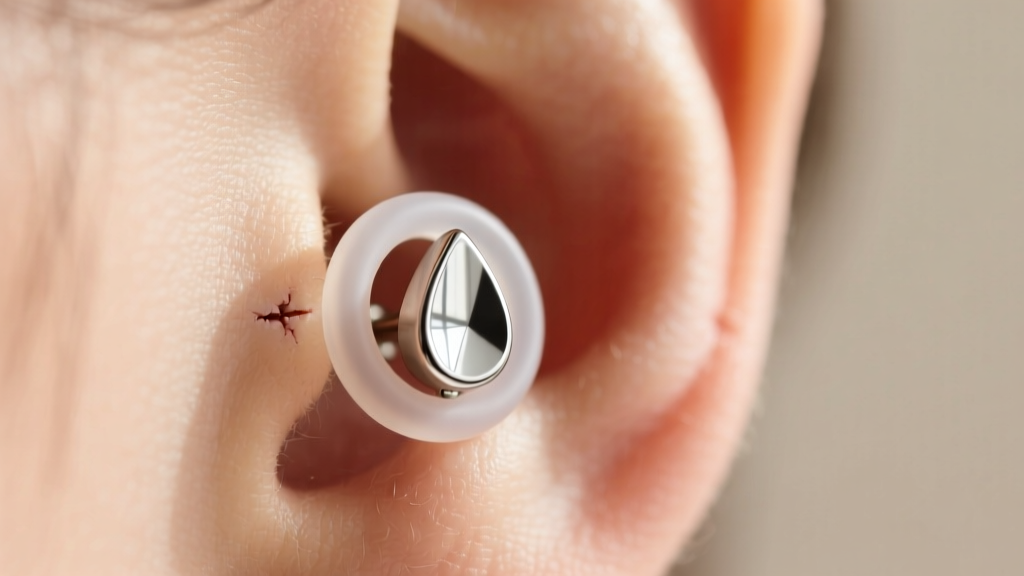
- Silicone O-Rings: If your teardrop studs come with standard friction posts, you can purchase tiny silicone O-rings. Sliding these onto the post behind the metal backing creates high-friction tension, locking the earring in an upright position.
Matching Teardrop Proportions to Your Face Shape
Teardrop earrings are inherently elongating. Because they draw the eye vertically, choosing the correct width-to-length ratio is crucial for balancing your natural facial features. Use the framework below to identify the ideal teardrop proportions for your specific face shape.
| Face Shape | Ideal Teardrop Proportion | Length Recommendation | Styling Note |
|---|---|---|---|
| Round | Elongated & Narrow | 18mm - 22mm | Creates a vertical illusion, lengthening the face. |
| Square | Soft & Rounded Base | 15mm - 18mm | Curved bottoms soften angular jawlines and wide cheekbones. |
| Heart | Wider Bottom Teardrop | 14mm - 16mm | A slightly flared base adds visual weight to balance a narrower chin. |
| Oval | Classic Symmetrical | 12mm - 15mm | Highly versatile; avoid extreme lengths that over-elongate the face. |
| Long/Oblong | Short & Wide Teardrop | 10mm - 12mm | Wider, shorter drops add horizontal width without dragging the face down. |

Material Grades: Protecting Sensitive Piercings
Because teardrop studs are often worn daily, the metal grade is just as important as the aesthetic. The earlobe is highly vascular and prone to contact dermatitis if exposed to reactive alloys. According to guidelines published by the Association of Professional Piercers (APP), only specific implant-grade metals should be worn in healing or highly sensitive piercings.
The Standard Gauge Sizes Explained
Before selecting a metal, you must know your piercing gauge. The 'gauge' refers to the thickness of the metal post that passes through your ear. Standard lobe piercings are typically done at 20G (0.81mm) or 18G (1.02mm). If you are buying teardrop studs for a cartilage piercing (like the helix or tragus), the standard is usually 16G (1.2mm). Buying a post that is too thick will cause micro-tears, while a post that is too thin can lead to the 'cheese-cutter effect,' where the heavy earring slowly migrates downward through the tissue.
Here are the safest metals for daily-wear teardrop studs:
- ASTM F136 Implant-Grade Titanium: The absolute best choice for sensitive ears. It contains zero nickel, is highly polished, and will not tarnish or react with bodily fluids.
- Niobium: Another highly biocompatible, nickel-free metal that is slightly softer than titanium, allowing piercers to safely bend the post for a custom fit.
- 14k or 18k Solid Gold: Ensure it is alloyed for body jewelry (nickel-free). As noted by the Nickel Institute, white gold alloys often contain nickel to achieve their color, so opt for yellow or rose gold if you have known metal allergies.
Warning: Avoid 'gold-plated' or 'gold vermeil' teardrop studs for daily wear. These feature a brass or copper core that will eventually cause green discoloration and severe irritation once the thin outer layer of gold wears away from friction.
Troubleshooting: Why Your Teardrop Stud Won't Sit Straight
Even with the correct backing, you may find your teardrop stud tilting. This is rarely a defect in the jewelry; rather, it is an anatomical reality. Human ear piercings are almost never pierced at a perfectly perpendicular 90-degree angle to the ground. If your piercing channel naturally angles slightly upward or downward, a rigid metal post will force the teardrop to follow that exact trajectory.
The Fix: If your teardrop studs are made of solid 14k or 18k gold, you can use a pair of nylon-jaw pliers to gently bend the post by 2 to 3 degrees. This micro-adjustment compensates for the angle of your specific piercing channel, allowing the teardrop to hang perfectly straight. Never attempt this with titanium or steel posts, as they are too hard and will snap or damage the threading.
Care and Maintenance Routine
Teardrop studs require specific care to maintain their structural integrity and shine. Because the post bears the weight of the elongated front piece, improper storage is the number one cause of bent posts and ruined jewelry.
- Cleaning: Once a week, soak your teardrop studs in a small bowl of warm water mixed with a few drops of mild, fragrance-free dish soap. Use an extra-soft baby toothbrush to gently sweep away sebum and dead skin cells that accumulate behind the teardrop's widest point. Rinse with distilled water and dry with a lint-free microfiber cloth.
- Storage: Never toss teardrop studs loosely into a jewelry box where heavier items can crush the posts. Store them upright in a dedicated earring organizer with individual slots, or secure them through a piece of stiff felt or foam to keep the posts perfectly straight.
- Chemical Avoidance: Remove your teardrop studs before swimming in chlorinated pools or using harsh household cleaners. Chlorine can permanently weaken the structural integrity of gold alloys, making the thin post susceptible to snapping under the weight of the teardrop.
Final Thoughts on Building Your Collection
Teardrop stud earrings are a masterclass in subtle elegance. By prioritizing flat-back mechanics, selecting biocompatible metals like ASTM F136 titanium or solid 14k gold, and mapping the proportions to your unique face shape, you can curate a collection that looks custom-made for you. Start with a versatile mid-sized pair in yellow gold or polished titanium, and gradually expand into wider or more elongated silhouettes as you refine your personal style.


