Stud Earrings 5mm: Budget vs. Quality Value Guide
Discover the true value of stud earrings 5mm in size. We break down metal grades, gemstone costs, and backing security to help you budget wisely.

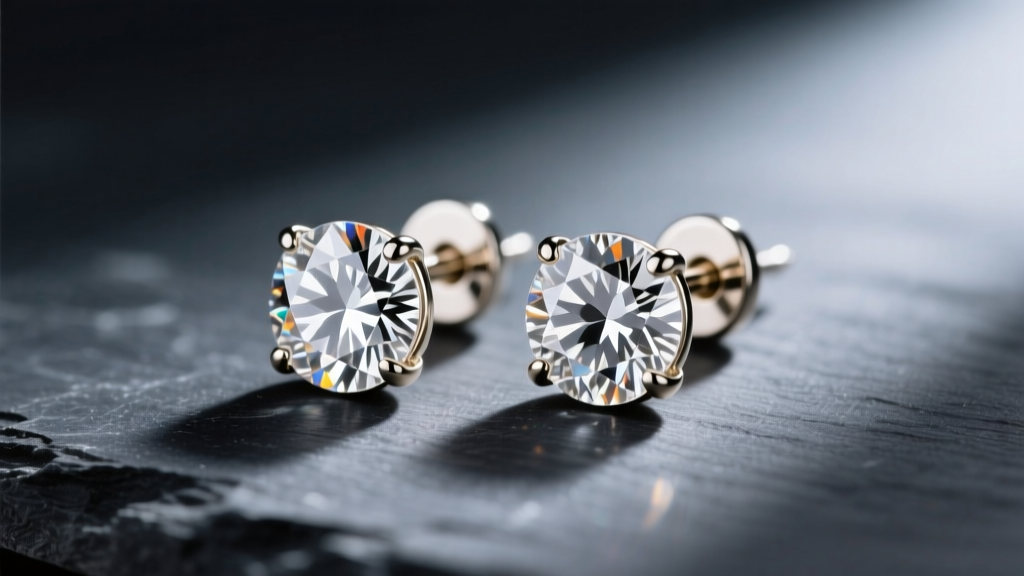
When it comes to everyday fine jewelry, the 5mm stud earring occupies the ultimate 'Goldilocks' zone. It is large enough to catch the light and make a definitive style statement, yet compact enough to sleep in, wear to the gym, and pair with any wardrobe. However, because this specific size is the most commercially popular, the market is flooded with options ranging from $20 costume pieces to $5,000 luxury investments. For the smart consumer, the challenge is not finding a pair of stud earrings 5mm in diameter, but rather deciphering which combinations of metal, gemstone, and hardware actually deliver long-term value.
In this comprehensive budget and value assessment, we strip away the marketing fluff and examine the exact material grades, gemstone equivalencies, and mechanical failure points that dictate the true cost of 5mm studs. Whether you are allocating $100 or $2,000, this guide will ensure your investment survives daily wear.
The True Cost of 5mm Stud Earrings: Breaking Down the Tiers
Before diving into metallurgy and gemology, it is crucial to understand how the market segments pricing for a 5mm stone (which equates to approximately 0.50 carats in a round brilliant cut). The table below outlines what you should realistically expect to pay in 2026 across three distinct budget tiers, assuming a standard 14k gold setting.
| Budget Tier | Price Range (Per Pair) | Expected Materials | Value Proposition |
|---|---|---|---|
| Entry-Level | $40 - $150 | Cubic Zirconia, 10k/14k Gold Plated over Brass or Silver | High visual impact, low longevity. Plating will eventually wear off. |
| Mid-Tier | $250 - $800 | Lab-Grown Diamond or Moissanite, Solid 14k Gold | The ultimate sweet spot for value. Lifetime durability with excellent brilliance. |
| Luxury | $1,200 - $3,500+ | Mined or Premium Lab Diamond, 18k Gold or Platinum | Investment grade. Focuses on rare color/clarity grades and premium hardware. |
As the data illustrates, the steepest value curve exists between the Entry-Level and Mid-Tier categories. Spending an additional $150 to cross the threshold into solid 14k gold and lab-grown stones exponentially increases the lifespan and resale value of the earrings.
Material Grades & Failure Modes: Where Budget Buys Fail
The most common point of failure in budget stud earrings is not the gemstone, but the post and the setting. When evaluating stud earrings 5mm in size, the post gauge and metal alloy are critical to both comfort and longevity.
The Post Gauge Dilemma: 18g vs. 20g
Earring posts are measured in gauges. A standard lobe piercing is usually 20-gauge (0.81mm) or 18-gauge (1.02mm). Budget manufacturers almost exclusively use 20-gauge or even 22-gauge posts to save on precious metal weight. The problem? A 20-gauge post supporting a 5mm gemstone is highly susceptible to bending. If you sleep on your side or accidentally snag the earring on a sweater, a thin 20g post will warp, making it painful to insert and weakening the structural integrity of the setting.
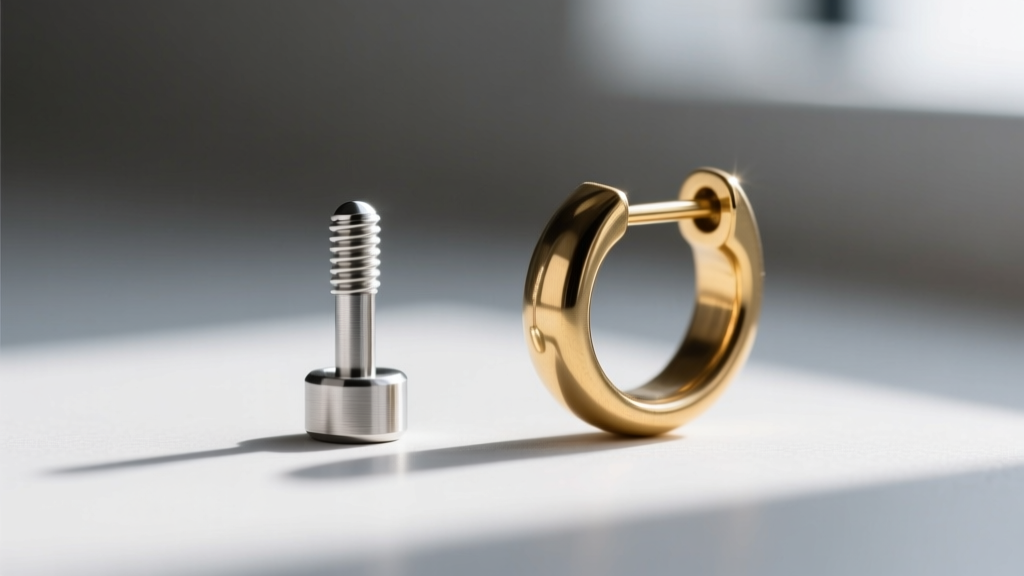
For a 5mm stone, which carries a noticeable amount of weight, you should actively seek out 18-gauge (1.0mm) or 17-gauge (1.14mm) posts. While this adds marginally to the upfront metal cost, it prevents the frustrating cycle of trying to bend a warped post back into shape, which often leads to metal fatigue and snapping.
Metallurgy: Surgical Steel vs. Implant-Grade Titanium vs. Gold
Many budget brands advertise 'surgical steel' as a hypoallergenic solution. However, 316L surgical stainless steel contains between 8% and 10.5% nickel. According to the Association of Professional Piercers (APP), nickel exposure is the leading cause of contact dermatitis in jewelry wearers. If you have sensitive lobes, 316L steel is a poor long-term investment.
- ASTM F136 Titanium: The gold standard for sensitive ears. It is entirely nickel-free and biocompatible. Plain 5mm titanium bezel studs typically cost between $60 and $120, offering incredible value for daily wearers prone to metal allergies.
- 14k Solid Gold: Composed of 58.5% pure gold alloyed with metals like copper, silver, and zinc. It is hard enough to resist scratching and bending, making it the most practical choice for fine jewelry posts.
- 18k Solid Gold: Contains 75% pure gold. While it offers a richer, warmer yellow hue, it is significantly softer than 14k. An 18k post is more likely to bend under the weight of a 5mm stone if subjected to pressure.
Gemstone Sizing & Quality: Is a 5mm Stone Always 0.50 Carats?
When shopping for stud earrings 5mm in diameter, you will frequently see the term '0.50 carat' used interchangeably with '5mm'. While a 5mm round brilliant diamond does indeed weigh approximately 0.50 carats, this math does not apply universally across all gemstones due to differences in specific gravity (density).
According to the Gemological Institute of America (GIA), carat is a measure of weight, not physical dimensions. Here is how different 5mm stones break down in terms of actual weight, durability, and budget value:
Cubic Zirconia (CZ)
A 5mm CZ weighs roughly 0.65 carats because it is denser than diamond. While a pair of 5mm CZ studs might only cost $30 to $80, they represent poor long-term value. CZ ranks at 8 to 8.5 on the Mohs hardness scale. Over time, microscopic scratches accumulate on the surface, and the stone absorbs oils from lotions and soaps, causing it to look cloudy and dull within 6 to 12 months of daily wear.
Moissanite
Moissanite is less dense than diamond, meaning a 5mm round moissanite actually weighs about 0.43 carats (though retailers often sell it as '0.50ct Diamond Equivalent Weight'). Ranking at 9.25 on the Mohs scale, it is exceptionally durable and will never cloud. A pair of 5mm moissanite studs in 14k gold usually retails between $150 and $350. Because moissanite has a higher refractive index than diamond, it exhibits more 'fire' (rainbow flashes), offering massive visual value for a fraction of the cost of mined diamonds.
Lab-Grown vs. Mined Diamonds
A 5mm lab-grown diamond is chemically, physically, and optically identical to a mined diamond, weighing exactly 0.50 carats. The primary value difference lies in the pricing model. In 2026, a pair of 5mm (0.50ct total weight) lab-grown diamond studs with VS clarity and F/G color set in 14k gold will cost between $300 and $600. The exact same specifications in mined diamonds will command $1,200 to $2,500. From a pure budget-to-value perspective, lab-grown diamonds allow you to allocate your funds toward higher clarity and better cut grades rather than paying for geological rarity.
The Hidden Value in Backing Mechanisms
The most catastrophic failure mode in jewelry ownership is losing a high-value earring because of a low-value backing. When budgeting for stud earrings 5mm in size, the backing mechanism should account for at least 10% of your total valuation.
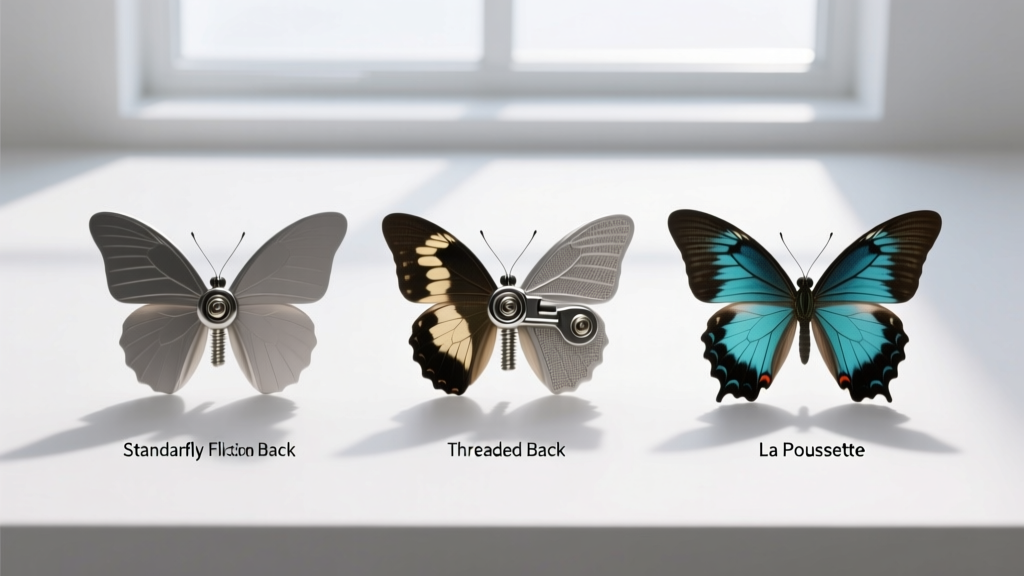
Friction Backs (Butterfly Backs)
These are the standard backs included with 90% of earrings. They rely on a small metal scroll that pushes onto a notched post. The flaw: The notches on the post wear down over time, and the tension in the metal scroll weakens. If you pull a sweater over your head, a friction back can easily snag and slide off. They are acceptable for $50 CZ studs, but a massive liability for $1,000 diamonds.
Screw Backs
Screw backs feature a post with threaded grooves. The backing must be twisted on and off. The value: It is physically impossible for a screw back to fall off on its own. The only downside is that threading a tiny earring post requires a bit of patience and good eyesight. Many mid-tier jewelers charge a $30 to $50 premium for threaded posts, which is a mandatory upgrade for any stone valued over $300.
La Pousette (Push-Pull Locking Backs)
Originally designed in France, La Pousette backs use a spring-loaded internal clutch mechanism. You push them on, and they lock securely into a groove; to remove them, you pinch two small tabs and pull. The value: They offer the security of a screw back with the ease of a friction back. They typically add $75 to $150 to the cost of a pair of studs, but they provide unparalleled peace of mind for active individuals or those who frequently travel.
Final Verdict: How to Allocate Your Budget for Maximum Value
If you are shopping for stud earrings 5mm in size, the ultimate value strategy requires shifting your budget away from brand prestige and geological rarity, and toward structural integrity and optical performance.
The Optimal Value Blueprint: Allocate your budget toward a 5mm Lab-Grown Diamond (VS clarity, Excellent cut) or a high-grade Moissanite, set in solid 14k gold with an 18-gauge post and a La Pousette or Screw backing. This combination guarantees lifetime durability, secure wear, and maximum brilliance, typically landing in the $400 to $700 range per pair.
By understanding the exact mechanics of post gauges, the reality of gemstone density, and the critical importance of locking hardware, you can confidently navigate the market. You will no longer be paying for marketing illusions; instead, you will be investing in precision-engineered jewelry designed to last a lifetime.


