What Does the Bible Say About Earrings? Historical & Metal Guide
Explore what the Bible says about earrings through an expert lens of ancient Near Eastern metallurgy, archaeology, and modern faith-based styling.

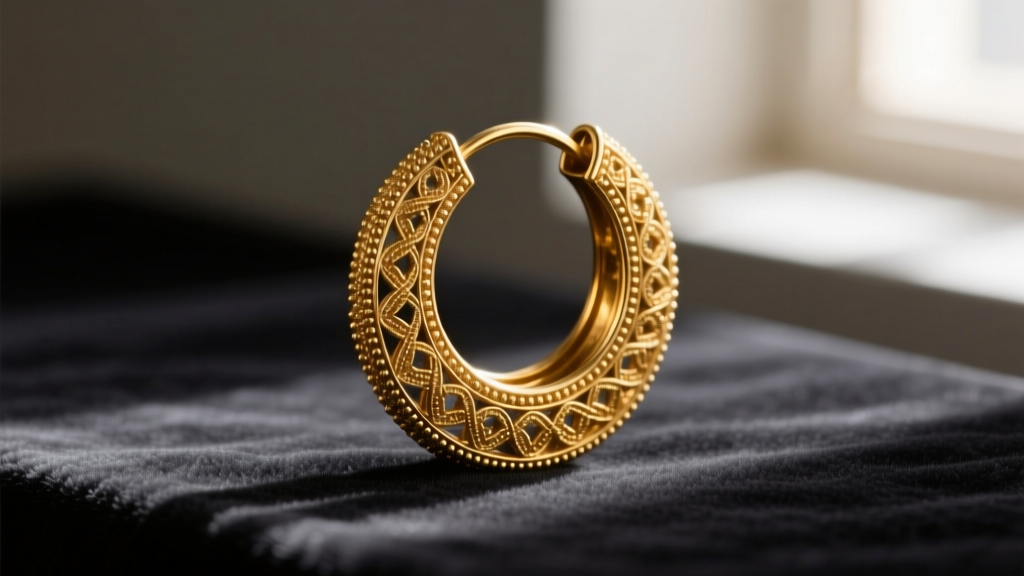
When exploring the intersection of faith, history, and personal adornment, a common inquiry among believers and historians alike is: what does the bible say about earrings? While theological debates often focus on modesty and vanity, the material reality of biblical-era jewelry reveals a fascinating world of ancient metallurgy, cultural identity, and structural mechanics. To truly understand the scriptural references to ear adornments, we must look beyond modern 20-gauge mass-produced studs and examine the heavy, high-karat artifacts of the ancient Near East.
This expert deep dive bridges exegesis with materials science, analyzing the Hebrew terminology of adornment, the gauge and weight of ancient Israelite hoops, and how modern believers can navigate faith-based styling using contemporary hypoallergenic standards.
Theological Texts vs. Archaeological Artifacts
The Bible mentions earrings in several contexts, ranging from idolatrous melting pots to symbols of divine restoration. However, translating ancient texts into modern jewelry concepts often leads to misunderstandings. The physical artifacts unearthed in the Levant tell a highly technical story of goldsmithing that differs vastly from today's commercial jewelry.
Decoding the Hebrew Lexicon of Adornment
According to the Jewish Virtual Library, biblical Hebrew utilizes specific terms for jewelry that denote structural differences:
- Nezem (נֶזֶם): Frequently translated as 'earring' in Genesis 35:4 and Exodus 32:2, archaeological evidence suggests the nezem was often a heavy nose ring or a massive, thick-gauge ear hoop that stretched the lobe.
- Agil (עָגִיל): Found in Numbers 31:50 and Ezekiel 16:12, this term specifically refers to round ear ornaments or hoops, derived from a root word meaning 'to twist' or 'to bore through.'
- Tifah (טִפָּה): Referenced in Judges 8:21, denoting crescent-shaped pendants or heavy ear drops that hung from the primary piercing.
In Ezekiel 16:12, God's adornment of Jerusalem is described with profound metallurgical intent: 'I put a ring on your nose, earrings in your ears, and a beautiful crown on your head.' Here, the jewelry signifies covenant and high status, crafted from the purest materials available to ancient artisans.
Metallurgical Profile of the Ancient Near East
When Jacob commands his household to bury their foreign gods and their nezem under the oak at Shechem (Genesis 35:4), he is collecting significant wealth. Ancient earrings were not lightweight stamped alloys; they were dense, cast, and hand-forged investment pieces.
Granulation and Electrum Alloys
Ancient Israelite and Canaanite goldsmiths primarily worked with electrum (a natural alloy of gold and silver) and high-karat gold (typically 20k to 22k). Because pure 24k gold is too malleable to support heavy pendants, artisans alloyed it with silver or copper to increase tensile strength. The hallmark of biblical-era luxury earrings was granulation—a complex technique where microscopic spheres of gold are fused to a backplate without the use of modern solders, relying instead on copper salts and organic glues that burn away in the kiln, leaving a pure metallic bond.
Unlike modern jewelry, which often contains nickel or zinc to lower costs and increase hardness, ancient biblical earrings were entirely nickel-free. This made them remarkably biocompatible, albeit incredibly heavy.
Gauge, Weight, and the Mechanics of Ancient Piercings
One of the most striking technical differences between ancient and modern earrings is the wire gauge. Modern standard lobe piercings are typically performed at 20-gauge (0.81mm) or 18-gauge (1.0mm). In contrast, the structural demands of ancient agil and nezem required vastly thicker wire.
| Specification | Ancient Near East (c. 1200 BCE) | Modern Standard (2026) |
|---|---|---|
| Gauge (Thickness) | 10g - 6g (2.4mm - 4.0mm) | 20g - 18g (0.81mm - 1.0mm) |
| Primary Material | Electrum, 22k Gold, Bronze | 316L Steel, 14k Gold, Titanium |
| Closure Mechanism | Wire wrap, friction tension | Hinged, clicker, butterfly back |
| Average Weight (Per Ear) | 15g - 35g | 1g - 4g |
Because these ancient hoops were often 10-gauge (2.4mm) or thicker, wearing them required either piercing the ear with a thick needle or gradually stretching the lobe over time. The 'cheese-cutter effect'—where a thin, heavy wire migrates through the tissue—was avoided by using thick-gauge wire that distributed the weight of the heavy gold drops across a wider surface area of the earlobe.
Modern Faith-Based Jewelry: Material Standards & Modesty
For modern believers researching what the Bible says about earrings to guide their personal styling, the focus generally shifts from the literal replication of ancient 10-gauge gold hoops to the principles of modesty, stewardship, and bodily care. While GotQuestions.org notes that the New Testament emphasizes inner adornment over outward prohibition, the technical execution of modern faith-based jewelry requires strict adherence to bodily safety.

Hypoallergenic Requirements for Devout Wearers
Treating the body with respect means avoiding materials that cause contact dermatitis or heavy metal toxicity. Many commercial 'fashion' earrings contain high levels of nickel, lead, or cadmium. Believers seeking high-quality, modest, and safe adornment should look for specific metallurgical certifications:
Expert Sourcing Tip: When purchasing earrings for daily, modest wear, bypass the term 'surgical steel'—which is unregulated and often contains nickel. Instead, demand ASTM F136 Titanium or Niobium. As outlined by the Association of Professional Piercers, these materials are completely inert, ensuring the piercing remains healthy without the risk of allergic rejection.
Modest Sizing and Structural Integrity
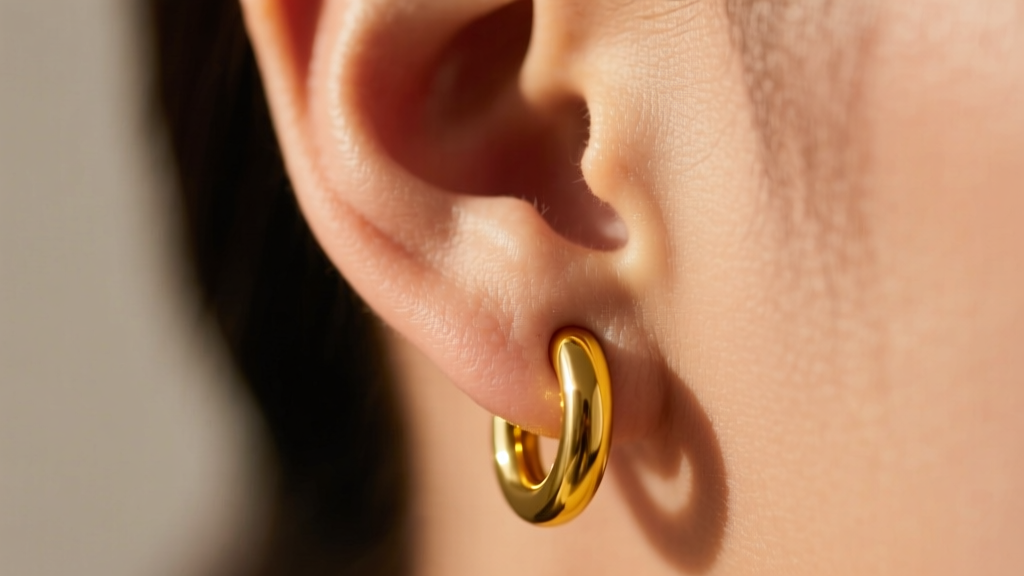
Modesty in jewelry often translates to structural minimalism. Rather than large, ostentatious drops that draw excessive attention, many faith-based dressers opt for high-quality, small-diameter huggies or flush-set gemstone studs. From a technical standpoint, a 14k or 18k solid gold huggie with an internal diameter of 10mm and a thickness of 1.2mm (16-gauge) offers the perfect balance. It is thick enough to prevent the cheese-cutter effect during sleep, heavy enough to feel substantial, yet visually understated.
Conclusion: Honoring History and Faith
Understanding what the Bible says about earrings requires a dual lens: appreciating the rich, heavy, high-karat metallurgy of the ancient Near East, and applying principles of modesty and bodily stewardship today. Whether you are studying the granulation techniques of the Levant or sourcing an ASTM-certified titanium stud for your daily wear, the intersection of faith and jewelry is deeply rooted in intentionality, material purity, and historical reverence.


