How to Clean Vintage & Faux Turtle Shell Nugget Earrings
Learn expert cleaning, polishing, and storage tips for vintage and faux turtle shell nugget earrings to prevent warping, clouding, and hardware damage.

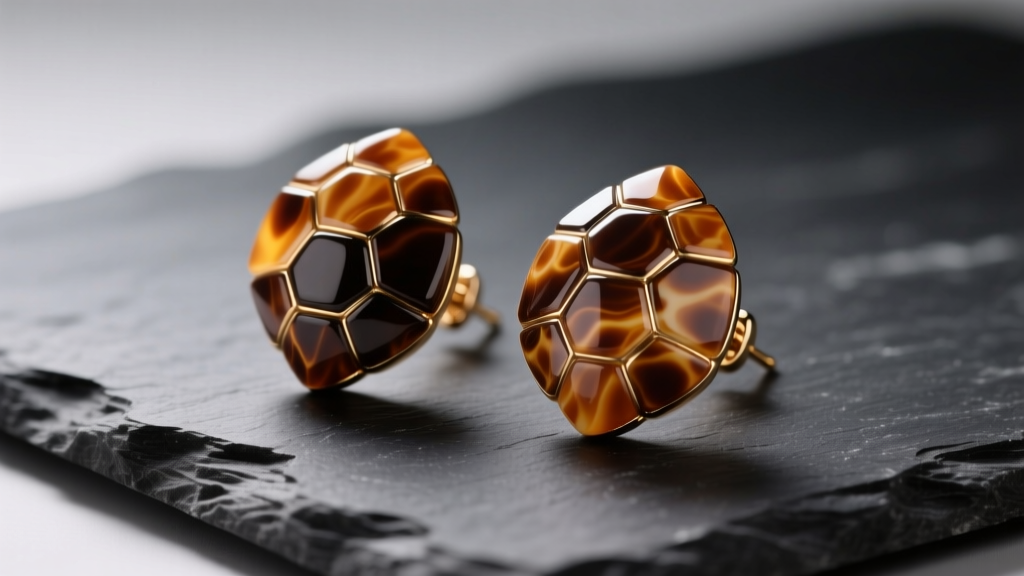
Turtle shell nugget earrings are a staple of organic, textural jewelry design. Their chunky, asymmetrical silhouettes and mesmerizing mottled patterns—ranging from deep mahogany to translucent amber—make them a versatile choice for both lobe and stretched cartilage piercings. However, the term "turtle shell" in the modern jewelry market encompasses two vastly different materials: genuine vintage hawksbill tortoiseshell (pre-1973) and modern luxury cellulose acetate or bio-resin. Because these materials possess entirely different chemical structures, applying a one-size-fits-all cleaning approach is a guaranteed way to ruin your investment. This comprehensive care guide breaks down the exact maintenance protocols required to preserve the luster, structural integrity, and hardware of your turtle shell nugget earrings in 2026 and beyond.
The Material Matrix: Identifying Your Nuggets
Before you introduce any moisture or polish to your earrings, you must definitively identify the material. The international trade of genuine hawksbill turtle shell was banned under Appendix I of the CITES treaty in 1973. Therefore, any genuine tortoiseshell nugget earrings on the market today are strictly vintage or antique.
Visual and Tactile Clues
- Genuine Vintage Shell: Composed of keratin (like human fingernails), genuine shell features overlapping microscopic layers. Under magnification, you will see tiny, natural striations and occasional micro-pitting. The mottled patterns are deeply suspended within the material, not painted on the surface.
- Modern Cellulose Acetate: High-end luxury acetate is poured in blocks and hand-carved. It feels slightly warmer to the touch than glass or standard plastic and possesses a distinct, deep optical clarity. Over time, acetate can develop a white, powdery "bloom" as plasticizers migrate to the surface.
- Bio-Resins and Polymers: Often used in more affordable, mass-market nugget earrings, these materials are molded rather than carved. They may feature visible seam lines and lack the deep, multi-dimensional chatoyancy of carved acetate or real shell.
Step-by-Step Cleaning Protocols
Human sebum, hairspray, and environmental pollutants quickly dull the high-gloss finish of organic and semi-organic materials. Here is how to safely remove buildup without compromising the material.
Protocol A: Genuine Vintage Tortoiseshell
Vintage keratin is highly susceptible to desiccation (drying out). When it loses its natural moisture, it becomes brittle and prone to delamination (flaking).
- Dust Removal: Use a clean, ultra-soft makeup brush or a dry microfiber cloth to gently sweep away loose dust. Never use a bristled toothbrush, which can lodge into micro-fissures.
- Hydration Wipe: Dampen a cotton pad with distilled water (tap water contains minerals that can leave spotting). Wring it out until it is barely moist. Gently wipe the surface of the nugget.
- Re-Oiling: Once a month, apply a single drop of pharmaceutical-grade mineral oil to a soft cloth. Buff the shell in circular motions. The keratin will absorb the oil, restoring its flexibility and deep amber translucency. Wipe away any excess after 10 minutes.
Protocol B: Modern Luxury Acetate & Bio-Resin
Acetate is remarkably durable but highly reactive to harsh solvents. The FTC Jewelry Guides dictate strict labeling for these materials, but care instructions are often omitted by retailers.
- The Wash: Mix one drop of pH-neutral dish soap (like Dawn) into a bowl of lukewarm distilled water. Never use hot water, as heat can warp the asymmetrical nugget shape.
- The Soak: Submerge the earrings for no more than 60 seconds to loosen oils.
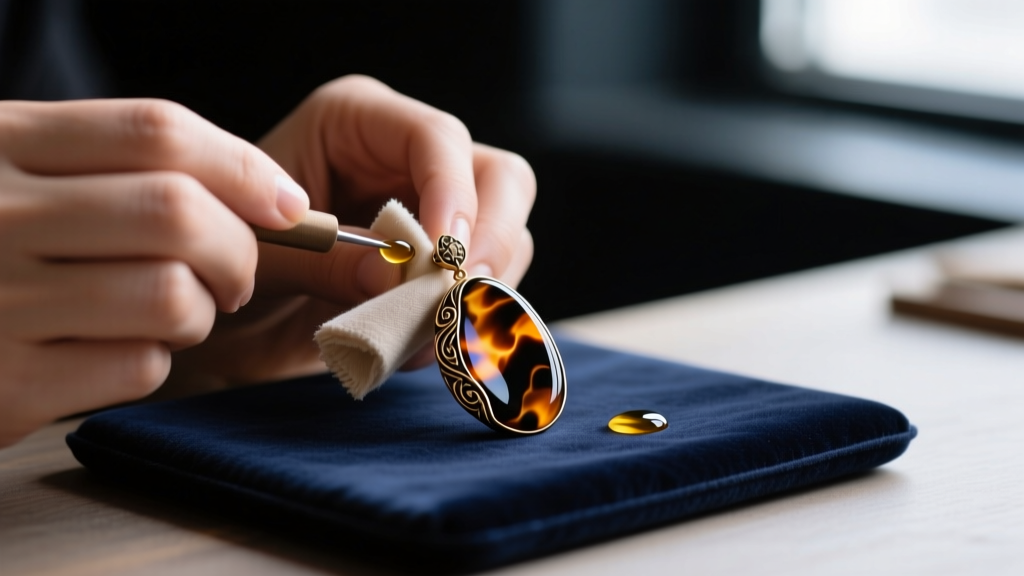
- The Polish: Remove and immediately dry with a lint-free microfiber cloth. Buff vigorously to restore the factory shine.
The Cleaning Agent Danger Zone
To prevent catastrophic damage, memorize this compatibility chart. Using the wrong solvent can permanently cloud acetate or shatter vintage shell.
| Cleaning Agent | Genuine Vintage Shell | Modern Acetate / Resin | Chemical Effect & Risk |
|---|---|---|---|
| Isopropyl Alcohol | NEVER USE | NEVER USE | Strips essential oils; causes immediate micro-cracking and irreversible clouding. |
| Ultrasonic Cleaners | NEVER USE | NEVER USE | High-frequency vibrations shatter organic layers and detach earring post solder joints. |
| Ammonia / Glass Cleaner | NEVER USE | NEVER USE | Alkaline solutions break down keratin bonds and melt acetate surfaces. |
| Warm Distilled Water | Damp cloth only | Safe for brief soak | Safely removes surface sebum without degrading the material matrix. |
| Mineral Oil | Excellent (Monthly) | Avoid (Causes clouding) | Rehydrates keratin layers; sits on top of acetate, attracting dust and dulling the finish. |
| Carnauba Wax Polish | Excellent (Buffing) | Excellent (Buffing) | Fills micro-scratches and provides a protective, high-gloss barrier against humidity. |
Hardware & Post Maintenance
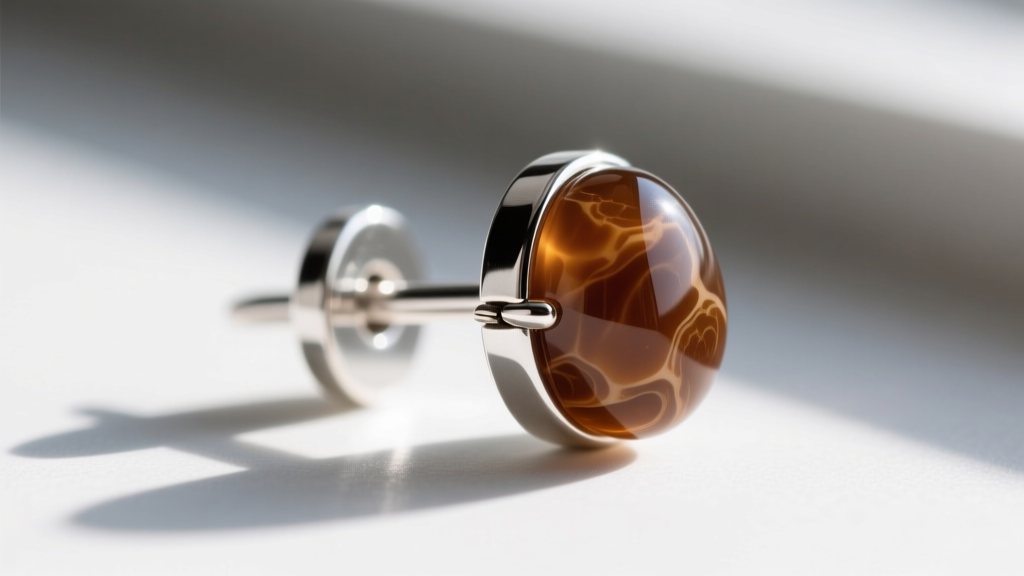
The "nugget" silhouette is inherently heavy and asymmetrical. This creates a continuous torque on the earring post, particularly where the metal meets the organic material. Most high-quality turtle shell nugget earrings utilize 18-gauge or 20-gauge sterling silver or gold vermeil posts.
Inspecting the Solder and Epoxy Joint
Because you cannot solder metal directly to acetate or shell, jewelers use a two-part jeweler's epoxy or a mechanical rivet hidden inside a metal backing plate.
- The Wiggle Test: Once a month, gently hold the metal post and the nugget body. If you feel any microscopic give or hear a faint clicking, the epoxy bond is failing.
- The Fix: Do not attempt to superglue the post back on. Cyanoacrylate (Super Glue) will permanently fog the acetate and leave a brittle, white residue. Take the earrings to a professional jeweler to have the old epoxy cleaned with a precision burr and re-set with a flexible, jewelry-grade two-part epoxy.
Cleaning the Metal Hardware
When polishing the sterling silver or gold posts, use a treated polishing cloth (like a Sunshine cloth) only on the metal. Keep the cloth away from the turtle shell material, as the mild abrasives and anti-tarnish chemicals embedded in the cloth will scratch and dull the organic finish.
Storage & Environmental Control
Proper storage is just as critical as active cleaning. Both vintage shell and modern acetate are highly reactive to their environment.
Master Jeweler's Rule of Thumb: "Treat your turtle shell jewelry like a living organism. It breathes, it expands, and it contracts. Extreme shifts in temperature and humidity are its greatest enemies."
- UV Degradation: Prolonged exposure to direct sunlight will bleach the rich brown and amber pigments in both real shell and dyed acetate, leaving them looking washed out and yellow. Always store them in a closed jewelry box or drawer.
- Humidity Control: Ideal storage humidity is between 40% and 50% Relative Humidity (RH). In arid climates (or during winter when indoor heating drops humidity below 30%), vintage shell will dry out and crack. Place a small, damp sponge inside a perforated plastic bag within your jewelry drawer to maintain ambient moisture.
- Avoid Plastic Bags: Never store acetate earrings in sealed PVC or polyethylene plastic bags. Acetate requires a slight exchange of air; sealing it traps outgassing plasticizers, accelerating the formation of the dreaded white surface bloom.
Troubleshooting Common Damage
1. The "White Bloom" on Acetate
If your modern acetate nuggets develop a chalky, white haze, the plasticizers are crystallizing on the surface. Do not wash them with soap. Instead, apply a tiny amount of plastic polish (such as Novus 2 Fine Scratch Remover) to a microfiber cloth and buff the surface firmly. This removes the oxidized layer and restores optical clarity.
2. Micro-Scratches and Dullness
Over time, friction from hair and clothing will introduce micro-scratches. For genuine shell, a gentle buffing with a specialized horn and shell wax will fill these scratches. For acetate, a light application of liquid carnauba car wax (applied sparingly and buffed to a hard shine) will create a sacrificial layer that protects the nugget while restoring a glass-like finish.
3. Warping
If you leave your acetate nugget earrings on a bathroom counter near a heat source (like a hair dryer or radiator), they can warp. If this happens, you can sometimes reshape them by gently warming the material with a hair dryer on a low, warm setting (never hot) and carefully applying manual pressure to bend it back into shape. Let it cool completely in your hands before releasing the pressure.
Final Thoughts
Whether you are wearing a pair of ethically sourced, hand-carved luxury acetate nuggets or a rare, museum-quality pair of vintage tortoiseshell drops, the key to longevity is proactive, material-specific care. By avoiding harsh solvents, monitoring your hardware joints, and controlling your storage environment, your turtle shell nugget earrings will retain their organic beauty and structural integrity for decades to come. For further reading on the identification and care of organic gemstones, consult the GIA Gem Encyclopedia.


