A Step-by-Step Guide to Choosing Male Silver Earrings
Master the art of selecting male silver earrings. This step-by-step guide covers 925 vs Argentium grades, gauge sizing, face shapes, and tarnish care.


The landscape of men's jewelry has evolved significantly. In 2026, male silver earrings are no longer limited to basic wire hoops or generic studs; they are a cornerstone of curated personal style. Whether you are building a multi-piercing cartilage stack or selecting a single, impactful lobe piece, understanding the metallurgy, anatomy, and aesthetics of your jewelry is critical. This step-by-step guide will walk you through the exact specifications needed to choose, fit, and maintain high-quality silver earrings, ensuring your piercings remain healthy and your style remains sharp.
Step 1: Decode Silver Grades and Alloys
Not all silver is created equal, and wearing the wrong alloy can lead to severe contact dermatitis or rapid oxidation. When shopping for male silver earrings, you will encounter three primary categories.
First is 925 Sterling Silver. By definition, this alloy contains 92.5% pure silver and 7.5% copper. The copper provides the necessary tensile strength for earring posts, but it is also the culprit behind tarnishing. When copper reacts with sulfur in the air or your sweat, it creates silver sulfide—the black film that ruins the finish.
Second is Argentium Silver. This is a modern, premium alloy where some of the copper is replaced with germanium. According to The Silver Institute, germanium forms a transparent, protective oxide layer that makes Argentium highly tarnish-resistant. For men who want a low-maintenance hoop or stud that stays bright without daily polishing, Argentium is the superior choice, though it typically costs 20% to 30% more than standard sterling.
Finally, avoid "Silver-Plated" or "Tibetan Silver" at all costs. Plated earrings feature a microscopic layer of silver over a brass or nickel core. Once the plating wears off from friction against the earlobe, the base metal is exposed, frequently causing green skin discoloration or severe nickel allergies. "Tibetan Silver" is often a misnomer for a zinc-nickel-lead alloy that contains zero actual silver and poses serious toxicity risks for unhealed piercings.
Step 2: Master Gauge Sizes and Threading Types
The structural integrity of your piercing depends heavily on the gauge (thickness) and threading of the earring post. The gauge system is inverse; the higher the number, the thinner the metal. Wearing a heavy hoop on a thin 22-gauge wire can cause the "cheese-cutter effect," where the wire slowly slices through the earlobe tissue due to the weight and tension.
| Gauge Size | Millimeters | Best Use Case |
|---|---|---|
| 20G | 0.81mm | Standard lobe piercings (mall kiosks/guns) |
| 18G | 1.02mm | Professional lobe piercings, lightweight cartilage |
| 16G | 1.29mm | Helix, tragus, and conch cartilage setups |
| 14G | 1.60mm | Industrial barbells, daith, and rook piercings |
Equally important is the threading mechanism. The Association of Professional Piercers strongly advises against externally threaded jewelry. Externally threaded posts have the screw ridges carved directly into the metal that passes through your skin. Pushing these sharp ridges through the fistula (the piercing tunnel) causes micro-tears and scar tissue buildup. Always opt for internally threaded earrings (where the screw is on the decorative end) or threadless tension-fit jewelry, which slides in smoothly and locks via a slight bend in the pin.
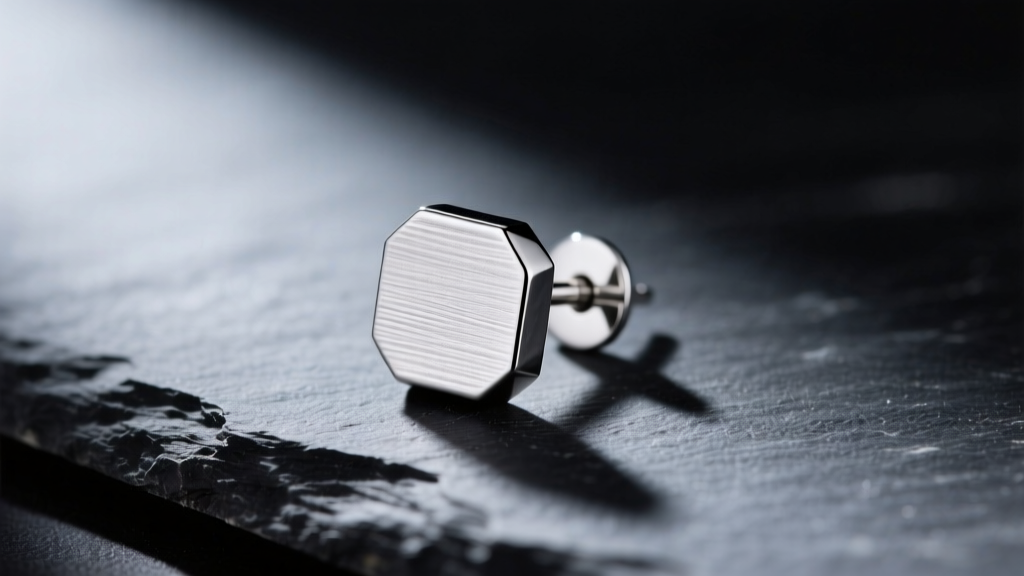
Step 3: Match Earring Styles to Your Face Shape
The visual weight of male silver earrings can dramatically alter the perceived proportions of your face. Treat your earrings as a tool for facial balancing.
If you have a square or angular jawline, your facial structure already possesses strong, sharp lines. To prevent your features from looking overly harsh, introduce curvature. Medium-sized silver hoops (12mm to 15mm in diameter) or circular barbells soften the jawline and draw the eye laterally.
Conversely, if you have a round or soft facial structure, you want to introduce geometry and verticality. Angular drop earrings, geometric shield studs, or elongated silver spikes create an illusion of length and structure, adding a masculine edge to softer features.
For oval faces, the proportions are naturally balanced, meaning you can experiment with almost any style, from heavy silver huggies to intricate ear cuffs that wrap around the helix without requiring an additional piercing.
Step 4: Implement a Tarnish-Proof Maintenance Routine
Even the highest quality 925 sterling silver will eventually oxidize if neglected. However, the way you clean your male silver earrings can either restore them to a mirror finish or permanently scratch the surface.
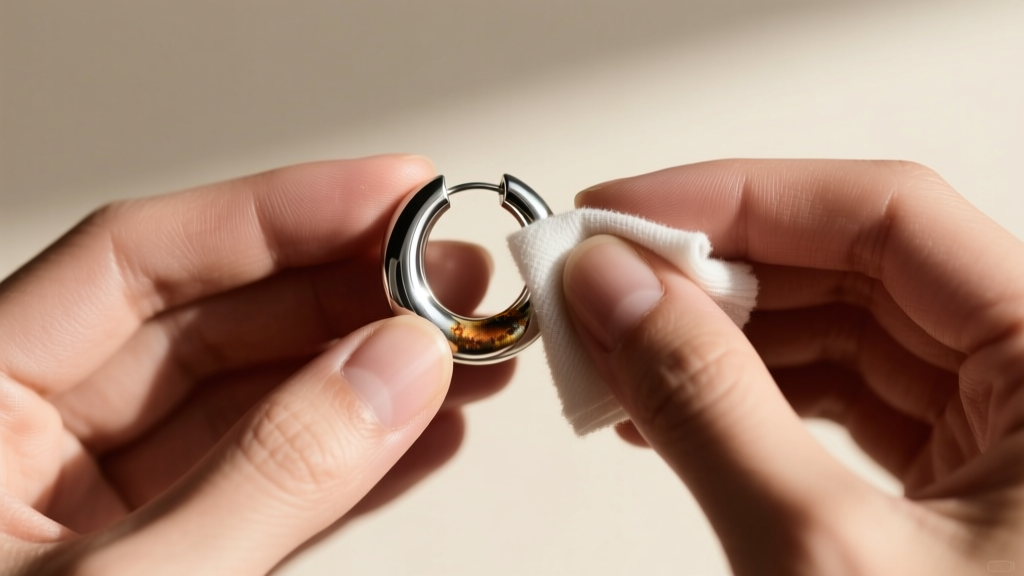
Never use abrasive toothpaste or stiff-bristled brushes on polished silver. Instead, rely on an electrochemical reduction method for heavy tarnish. Line a glass bowl with aluminum foil (shiny side up). Place your tarnished silver earrings on the foil. Add one tablespoon of baking soda and a pinch of salt, then pour boiling water over the jewelry. The chemical reaction transfers the sulfur from the silver to the aluminum foil, instantly lifting the black tarnish without removing any of the underlying silver metal. Rinse with distilled water and dry completely.
For daily maintenance, simply wearing your silver earrings is often enough. The natural oils and friction from your skin act as a mild, continuous polish that prevents silver sulfide from forming in the first place. When not wearing them, store your silver in an airtight ziplock bag with an anti-tarnish silica gel packet or a piece of activated charcoal to absorb ambient moisture and sulfur compounds.
Step 5: Navigate Pricing and Authenticity
Understanding the market rate for male silver earrings protects you from both overpriced fashion brands and dangerously cheap counterfeits. In the current market, a pair of high-quality, internally threaded 925 sterling silver stud ends should range from $35 to $75. If you are purchasing a seamless silver hoop or a huggie with a secure clicker hinge, expect to pay between $60 and $150, depending on the complexity of the clasp mechanism.
Designer or artisan pieces featuring hand-carved motifs, oxidized detailing, or mixed-metal inlays will typically sit in the $150 to $400 bracket. Always inspect the jewelry for a "925" or "Argentium" hallmark stamp. While stamps can be faked on mass-produced items, their absence on a purportedly solid silver piece is an immediate red flag. When buying online, require vendors to provide the exact gram weight of the item; genuine silver has a specific density, and knowing the weight helps verify the material's authenticity and justifies the price point.


