Sterling Silver Threader Earrings: Material Properties Compared
Discover the metallurgical properties of sterling silver threader earrings. Compare 925 silver to gold and titanium for durability, gauge, and care.

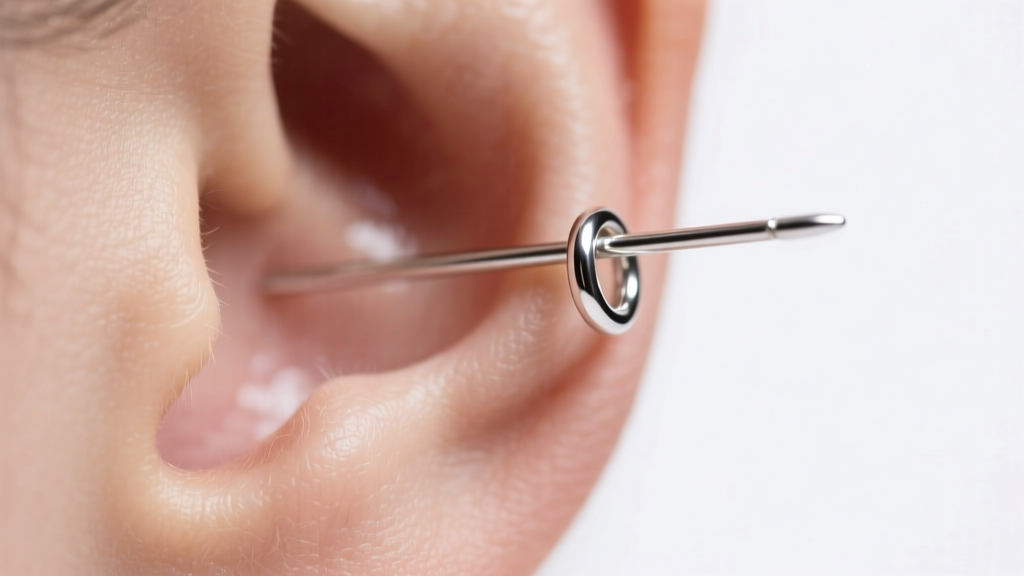
Threader earrings represent a unique category in jewelry design, relying on a delicate balance of gravity, friction, and tensile strength to stay in place. Unlike standard stud or hoop earrings that lock into a fixed position, threaders feature a rigid wire that transitions into a flexible chain, requiring the wearer to physically pull the metal through the ear fistula. When evaluating sterling silver threader earrings from a material science perspective, we must look beyond aesthetics and examine how 925 silver behaves under the specific mechanical and chemical stresses of daily wear.
In this comprehensive guide, we break down the metallurgical properties of sterling silver, compare it against alternative threader materials, and provide a data-driven framework for selecting, wearing, and maintaining your pieces in 2026.
The Metallurgy of 925 Sterling Silver in Threaders
Pure silver (99.9%) is far too soft for functional jewelry; it possesses a Vickers Hardness (HV) of roughly 25, meaning it would bend under its own weight if fashioned into a thin wire. To create sterling silver, metallurgists alloy 92.5% pure silver with 7.5% copper. This copper addition is critical for threader earrings, as it increases the hardness to approximately 65-70 HV, providing the necessary rigidity for the leading wire to pierce through the ear lobe without buckling.
However, the copper content introduces specific vulnerabilities. According to the Silver Institute, copper is highly reactive to sulfur and moisture. In the context of threaders, the wire is in constant, sliding contact with the skin's natural oils, sweat, and environmental humidity, making the alloy susceptible to oxidation. Furthermore, the standard gauge for the solid wire portion of a silver threader is typically 22-gauge (0.64mm) or 20-gauge (0.81mm). A 22-gauge wire is preferred for comfort, as it glides seamlessly through standard 20g or 18g lobe piercings without causing micro-tears in the fistula tissue.
Sterling Silver vs. Alternative Threader Materials
When shopping for threaders, you will frequently encounter 14k gold, implant-grade titanium, and surgical steel. Each material interacts with the ear's biology and the mechanical demands of the threader design differently. Below is a comparative analysis of the most common threader materials available on the market.
| Material | Hardness (HV) | Tarnish Risk | Nickel Allergy Risk | Avg. Price Range |
|---|---|---|---|---|
| 925 Sterling Silver | 65 - 70 | High | None (if nickel-free) | $25 - $85 |
| 14k Yellow Gold | 120 - 150 | None | Low (alloy dependent) | $120 - $300 |
| Implant Grade Titanium (ASTM F136) | 334 | None | None | $30 - $90 |
| Surgical Steel (316L) | 220 | Low | Moderate to High | $10 - $25 |
While titanium offers superior hardness and biocompatibility, it lacks the malleability required to create the ultra-fine, flexible chains often paired with threader wires. 14k gold provides an excellent middle ground but commands a premium price. Sterling silver remains the most popular choice due to its optimal balance of affordability, brilliant luster, and adequate workability for intricate chain soldering.
The Work-Hardening Problem: Bending and Breakage
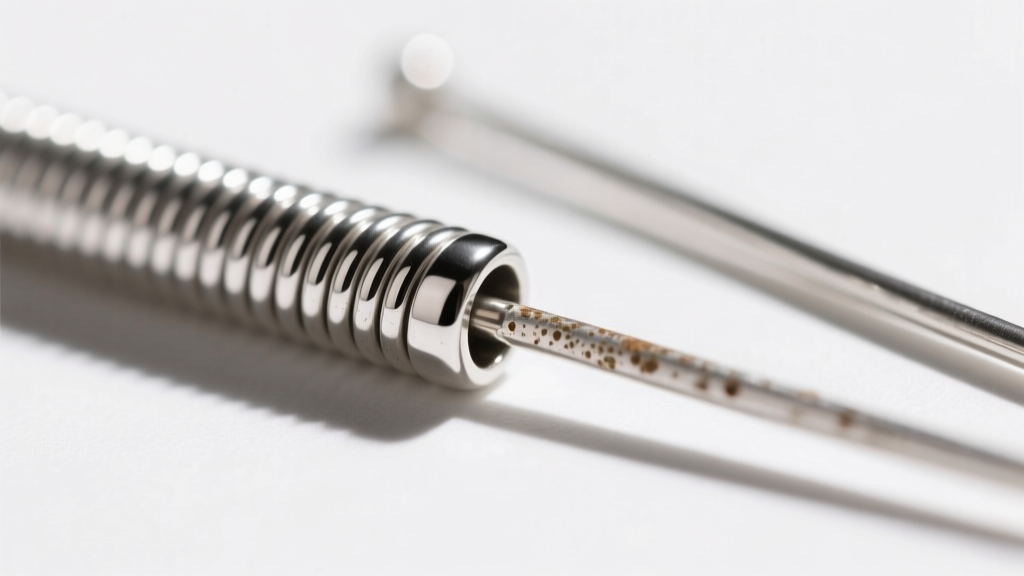
The most common failure mode for sterling silver threader earrings is not tarnish, but mechanical fatigue at the solder joint. Threaders consist of two distinct parts: the solid leading wire and the flexible chain. These two components are joined via a microscopic solder ring.
Understanding Metal Fatigue
Sterling silver is prone to work-hardening. When the metal is bent or stressed, its crystal lattice structure deforms, becoming harder but significantly more brittle. If a threader earring snags on a sweater or a towel, the sudden tensile force is concentrated entirely on the solder joint. Because the silver wire has work-hardened from repeated insertions into the ear, the stress causes micro-fractures. Over time, this leads to the chain snapping cleanly off the wire.
Pro-Tip for Longevity: Never pull a threader earring by the chain if you feel resistance in the earlobe. Always grasp the solid wire or the chain immediately adjacent to the solder joint to distribute the mechanical load and prevent fatigue snapping.
Oxidation, Rhodium Plating, and Skin Reactions
Because of the 7.5% copper content, bare sterling silver will react with sulfur compounds in the air and on the skin, forming silver sulfide—a black tarnish. In threader earrings, this can lead to the dreaded "black ear" phenomenon, where the friction of the chain pulling through the lobe deposits microscopic tarnish particles onto the skin.
To combat this, many high-end jewelers apply a rhodium flash. Rhodium is a platinum-group metal that is highly resistant to oxidation and provides a bright, white-metal finish. However, rhodium plating on threaders presents a unique wear problem. The plating is typically only 0.1 to 0.5 microns thick. The friction of pulling the wire through the earlobe acts as a natural abrasive, wearing away the rhodium on the leading wire much faster than on the dangling chain. Once the rhodium breaches, the underlying copper-rich silver is exposed to sweat, accelerating localized tarnishing.
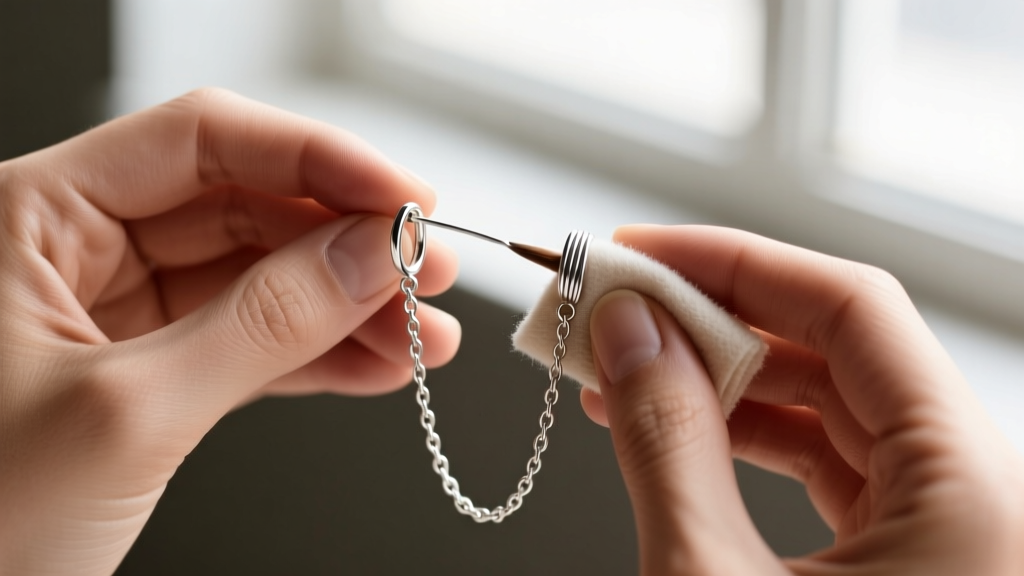
For individuals with highly acidic skin pH, bare sterling silver threaders may require weekly polishing. According to the Gemological Institute of America (GIA), regular use of a treated silver polishing cloth can remove early-stage oxidation without stripping the underlying metal, whereas harsh liquid dips can degrade the delicate solder joints of the chain.
2026 Buying Framework: What to Look For
When investing in sterling silver threader earrings, visual appeal should be secondary to structural integrity and material transparency. Use this checklist to evaluate quality before purchasing:
- Hallmark Verification: Ensure the piece is stamped with "925". Be wary of pieces stamped only "Silver" or "Sterling" without the numerical hallmark, as these may be silver-plated base metals that will eventually flake inside your piercing.
- Solder Joint Inspection: Use a jeweler's loupe or your phone's macro camera to inspect the connection between the wire and the chain. High-quality threaders use laser welding or precision torch soldering, resulting in a smooth, seamless transition. A visible, bulky blob of solder indicates poor craftsmanship and a higher risk of snagging.
- Wire Finish: The leading wire must be mirror-polished. Any microscopic scratches or burrs on a 20-gauge or 22-gauge wire will act like a saw blade against the delicate epithelial tissue of your ear fistula, causing irritation bumps.
- Nickel Testing: While true sterling silver does not contain nickel, some cheap alloys masquerading as silver do. If you have a known contact allergy, the American Academy of Dermatology recommends using a dimethylglyoxime (DMG) spot test on the wire before inserting it into a healed piercing.
Pricing Expectations and Value
In the current market, a well-crafted pair of sterling silver threader earrings with a standard 2-inch chain and a minimalistic bezel-set gemstone should range between $35 and $65. Pieces priced below $20 often utilize hollow-link chains that crush easily and feature thin, sub-micron silver plating over brass cores. Conversely, artisan-crafted threaders featuring heavy-gauge 18k gold solder joints and premium rhodium e-coating can push into the $90 to $120 range, offering significantly extended lifespans.
Ultimately, sterling silver threader earrings offer an unmatched combination of fluid movement and accessible luxury. By understanding the metallurgical realities of 925 silver—respecting its work-hardening limits and managing its oxidation profile—you can ensure your threaders remain a staple in your jewelry rotation for years to come.


